
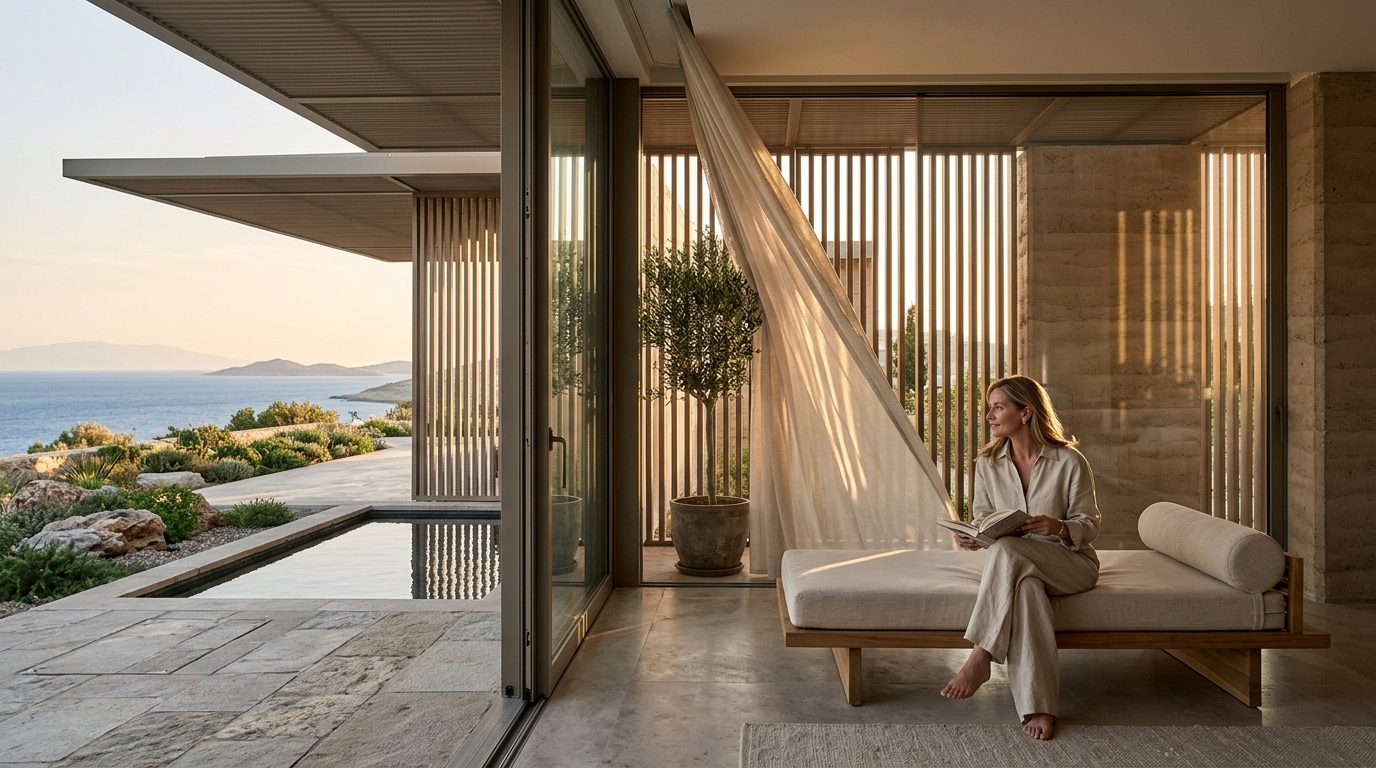
Implementing passive cooling and geothermal systems in a high-end modern home is no longer just an environmental choice; it is a definitive marker of architectural sophistication and long-term asset value. According to the U.S. Department of Energy, geothermal heat pumps can reduce energy consumption and related emissions by up to 44% compared to conventional heating systems, establishing a clear benchmark for efficiency in luxury real estate. This guide explores how to integrate these technologies seamlessly into the design of a Net Zero Energy Building, ensuring that sustainability enhances rather than compromises the aesthetic integrity of modern living.
Understanding Passive Cooling Principles
Passive cooling relies on architectural design elements to regulate indoor temperatures without mechanical intervention. This approach is foundational to the philosophy of minimal, clean architectural lines that define contemporary luxury. By leveraging natural phenomena, designers can maintain thermal comfort while drastically reducing the load on active HVAC systems.
Strategic Orientation and Shading
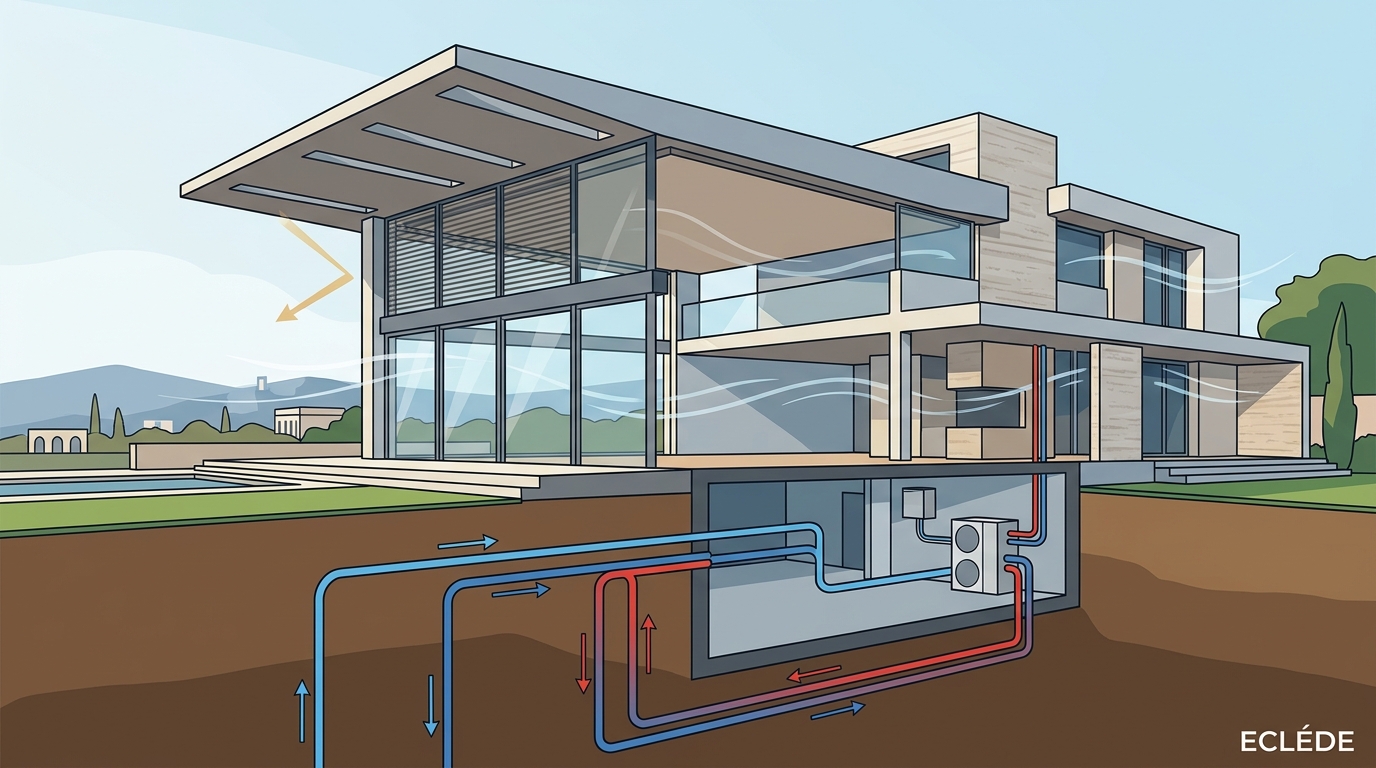
The orientation of a building relative to the sun's path is the first line of defense against heat gain. In the Northern Hemisphere, minimizing east and west-facing glazing reduces morning and afternoon solar heat gain. Large overhangs and deep reveals act as dynamic shading devices, blocking high-angle summer sun while allowing low-angle winter sun to penetrate and provide passive heating. This balance is critical for achieving the energy-efficient, future-focused construction standards that define high-performance developments.
Natural Ventilation and Stack Effect
Natural ventilation utilizes the stack effect, where warm air rises and escapes through high-level openings, drawing cooler air in from lower levels. This process requires careful placement of operable windows, clerestory windows, and skylights. In high-end modern homes, this is often achieved through floor-to-ceiling glazing paired with automated louvers that respond to wind direction and temperature differentials. The result is a continuous flow of fresh air that eliminates the need for mechanical cooling during mild seasons.
Thermal Mass and Insulation
Thermal mass materials, such as concrete, stone, or rammed earth, absorb heat during the day and release it at night when temperatures drop. In modern luxury construction, this is often concealed within polished concrete floors or exposed structural elements. Combined with high-performance insulation and triple-glazed windows, thermal mass stabilizes indoor temperatures, preventing the rapid fluctuations that compromise comfort and increase energy demand.
Geothermal Infrastructure and Installation
Geothermal heating and cooling systems, also known as ground-source heat pumps, utilize the stable temperature of the earth to regulate indoor climate. Unlike air-source heat pumps, which lose efficiency in extreme temperatures, geothermal systems maintain consistent performance year-round. This technology is central to the creation of Net Zero Energy Buildings, where energy consumption is minimized to match on-site renewable generation.
Horizontal vs. Vertical Loop Systems
The choice between horizontal and vertical loop systems depends on available land area and soil conditions. Horizontal loops are installed in trenches and are cost-effective for properties with ample space. Vertical loops, however, are drilled deep into the ground and are ideal for urban luxury developments where land is limited. While the initial installation cost is higher, vertical systems offer greater efficiency and longevity, making them a preferred choice for high-end residential projects.
Heat Pump Technology
At the heart of the system is the heat pump, which transfers heat between the home and the ground loop. In cooling mode, the pump extracts heat from the home and dissipates it into the cooler earth. In heating mode, it reverses the process, drawing heat from the ground and distributing it throughout the home. Modern heat pumps are highly efficient, often delivering three to four units of heat energy for every one unit of electricity consumed.
Integration with Hydronic Radiant Systems
For ultimate comfort, geothermal systems are often paired with hydronic radiant floor heating and cooling. This system circulates temperature-controlled water through pipes embedded in the floor, providing even, silent thermal regulation. Radiant systems eliminate the drafts and noise associated with forced-air HVAC, aligning with the serene, refined aesthetic of luxury modern homes.
Integration Strategies for Modern Aesthetics
Integrating passive cooling and geothermal systems into a high-end modern home requires a holistic design approach. The goal is to make these systems invisible yet effective, ensuring that sustainability enhances the architectural narrative rather than detracting from it.
Architectural Synergy
Passive design elements should be integral to the architectural form, not added as afterthoughts. For example, large overhangs can double as structural supports for flat roofs, a hallmark of modern architecture. Operable windows can be framed with custom millwork that complements the interior design scheme. This seamless integration ensures that every element serves both a functional and aesthetic purpose.
Smart Home Automation
Smart home technology plays a crucial role in optimizing passive and geothermal systems. Automated shading devices, ventilation louvers, and HVAC controls can be programmed to respond to weather forecasts, occupancy patterns, and energy pricing. This level of control ensures that the home operates at peak efficiency, reducing energy waste and enhancing resident comfort. For more insights on sustainable development, explore our portfolio of eco-conscious projects.
Material Selection
Material selection is critical for both performance and aesthetics. High-performance insulation materials, such as spray foam or rigid board insulation, provide superior thermal resistance while maintaining slim profiles. For interior finishes, natural materials like wood, stone, and linen not only contribute to a luxurious aesthetic but also help regulate indoor humidity and temperature.
Cost-Benefit Analysis and ROI
While the initial investment in passive cooling and geothermal systems is higher than conventional approaches, the long-term financial and environmental benefits are substantial. Understanding the return on investment is essential for homeowners and developers alike.
Initial Investment Costs
The cost of installing a geothermal system varies based on the type of loop system, the size of the home, and local labor rates. Vertical loop systems typically cost more due to the drilling requirements. However, government incentives and tax credits can significantly offset these costs. Passive design elements, such as improved insulation and high-performance windows, also add to the initial budget but are relatively low-cost compared to the overall project.
Operational Savings
Geothermal systems offer significant operational savings, with energy bills reduced by up to 70% compared to conventional systems. Passive cooling further reduces the need for mechanical cooling, leading to even lower utility costs. Over the lifespan of the system, these savings can exceed the initial investment, making it a financially sound decision for long-term homeowners.
Property Value Increase
High-performance, sustainable homes are increasingly valued in the real estate market. Buyers are willing to pay a premium for homes that offer lower operating costs, enhanced comfort, and reduced environmental impact. According to a study by the National Association of Realtors, green homes can command a price premium of up to 8% over comparable non-green homes. This increased valuation is a testament to the growing demand for sustainable luxury living.
Environmental Impact
Beyond financial benefits, these systems significantly reduce the home's carbon footprint. By minimizing reliance on fossil fuels, homeowners contribute to global efforts to combat climate change. This aligns with the values of many high-net-worth individuals who prioritize environmental responsibility in their lifestyle choices.
Key Takeaways
- Passive Cooling Efficiency: Strategic orientation, natural ventilation, and thermal mass can reduce cooling loads by up to 50% in modern homes.
- Geothermal Longevity: Ground-source heat pumps have a lifespan of 20-25 years for the indoor component and 50+ years for the ground loop, offering exceptional durability.
- Energy Savings: Geothermal systems can reduce energy consumption by 44% to 70% compared to conventional HVAC systems, depending on climate and usage.
- Property Value: Sustainable luxury homes can command a price premium of up to 8% in the real estate market.
- Design Integration: Passive elements must be integrated into the architectural form to maintain aesthetic integrity and functional performance.
- Smart Automation: Automated controls optimize system performance, ensuring comfort and efficiency without manual intervention.
- Regulatory Trends: Increasing building codes and incentives favor high-performance, Net Zero Energy Buildings, making these systems a future-proof investment.
Frequently Asked Questions
What is the average cost of installing a geothermal system in a luxury home?
The cost varies significantly based on the system type and home size, but vertical loop systems for large residences can range from $25,000 to $50,000 or more before incentives. However, long-term energy savings often offset this initial investment within 5-10 years.
How does passive cooling differ from traditional air conditioning?
Passive cooling uses architectural design and natural phenomena to regulate temperature, whereas traditional air conditioning relies on mechanical systems that consume electricity. Passive cooling is more sustainable and reduces the load on mechanical systems.
Can geothermal systems be used for both heating and cooling?
Yes, geothermal heat pumps are reversible. They extract heat from the ground for heating in winter and dissipate heat into the ground for cooling in summer, providing year-round climate control.
What are the maintenance requirements for geothermal systems?
Geothermal systems require minimal maintenance. The ground loop is sealed and buried, requiring no maintenance. The heat pump unit should be inspected annually, similar to a conventional HVAC system, to ensure optimal performance.
How does thermal mass contribute to passive cooling?
Thermal mass materials absorb heat during the day, preventing indoor temperatures from rising too quickly. At night, when outdoor temperatures drop, the stored heat is released, stabilizing the indoor climate and reducing the need for mechanical cooling.
Are there tax incentives for installing geothermal systems?
Yes, many governments offer tax credits and rebates for geothermal installations. In the United States, the federal Investment Tax Credit (ITC) allows homeowners to deduct a percentage of the installation cost from their federal taxes. Local incentives may also be available.
What is the lifespan of a Net Zero Energy Building?
A well-designed Net Zero Energy Building can last 50-100 years or more, with the key components like geothermal loops lasting even longer. The durability of these systems ensures long-term value and performance.
Start Your Sustainable Development
Integrating passive cooling and geothermal systems into a high-end modern home is a complex but rewarding endeavor. It requires a multidisciplinary approach that balances architectural vision with engineering precision. At ECLÉDE, we specialize in creating high-performance, environmentally responsible developments that redefine modern living. Our commitment to sustainability and luxury is reflected in every project, from the initial design to the final construction. If you are ready to explore how these technologies can be implemented in your next project, contact us today to schedule a consultation. Let us help you create a home that is not only beautiful but also responsible and future-focused.