
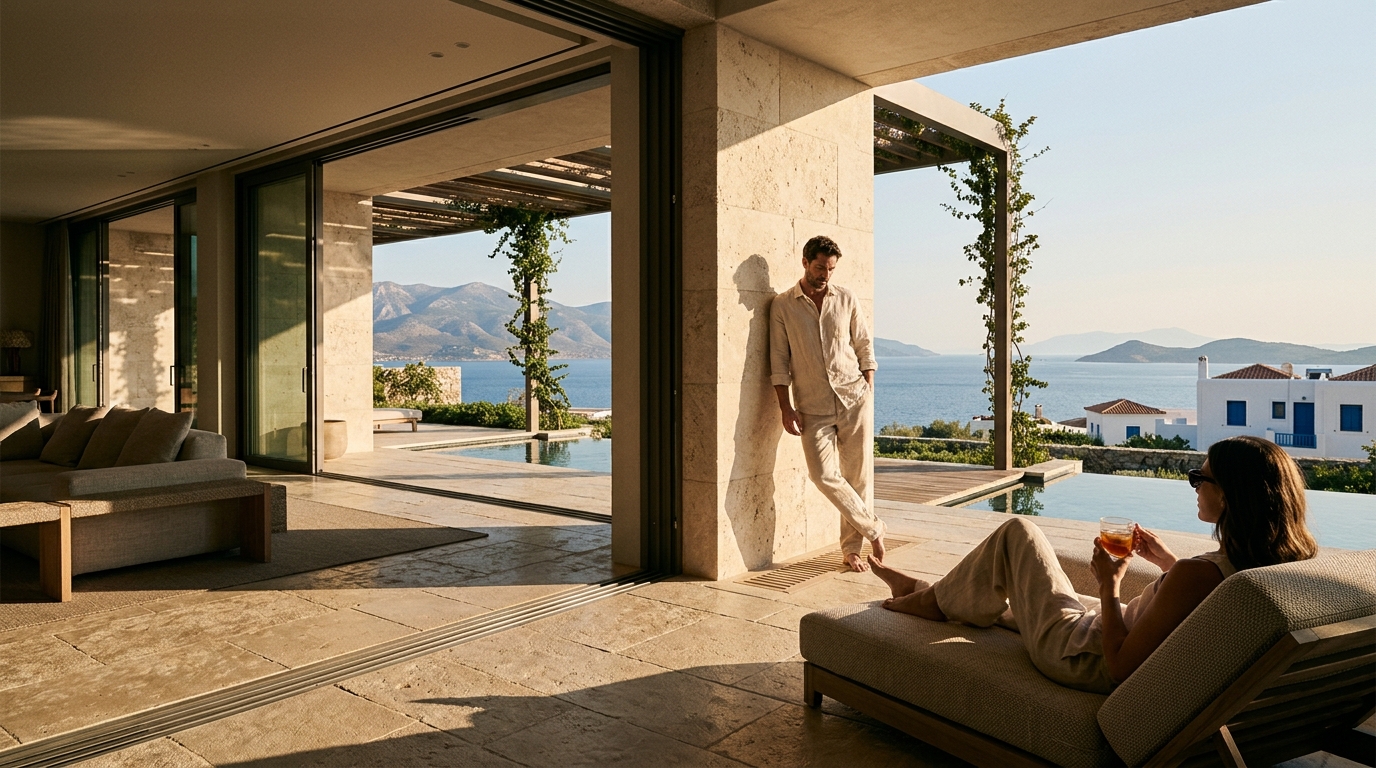
Implementing passive cooling and geothermal systems in a high-end modern home is no longer just an environmental choice; it is a hallmark of sophisticated architectural design. According to the U.S. Department of Energy, geothermal heat pumps can reduce energy consumption by 40 to 70 percent compared to conventional heating and cooling systems. This statistic underscores the critical importance of integrating these technologies early in the design phase to maximize efficiency and long-term value. At ECLÉDE, we view sustainability not as an add-on, but as the foundation of luxury living, where comfort, aesthetics, and environmental responsibility converge seamlessly.
Foundational Principles of Passive Design
Passive cooling relies on architectural strategies that minimize heat gain and maximize heat loss without mechanical intervention. The core concept is to work with the local climate rather than against it. In Mediterranean climates, such as those found in Athens, this involves blocking intense solar radiation during peak hours while capturing cooler night air. This approach reduces the load on mechanical systems, allowing them to operate more efficiently when needed.
One of the most critical components of passive design is orientation. Buildings should be oriented to minimize east and west-facing windows, which receive low-angle sun that is difficult to shade. Instead, north and south-facing exposures allow for controlled daylighting with minimal heat gain. This strategic positioning is a key element in our portfolio, ensuring that every ECLÉDE project maintains optimal thermal comfort throughout the year.
Another fundamental principle is the use of high-performance building envelopes. This includes advanced insulation, airtight construction, and high-quality glazing. By sealing the building envelope, we prevent uncontrolled air leakage, which can significantly compromise energy efficiency. The result is a home that feels stable and comfortable regardless of external weather conditions.
Geothermal System Integration
Geothermal heat pumps (GHPs) utilize the stable temperature of the earth to provide heating and cooling. Unlike air-source heat pumps, which struggle in extreme temperatures, GHPs maintain consistent efficiency year-round. This technology is particularly effective in luxury homes where silent operation and long-term reliability are paramount.
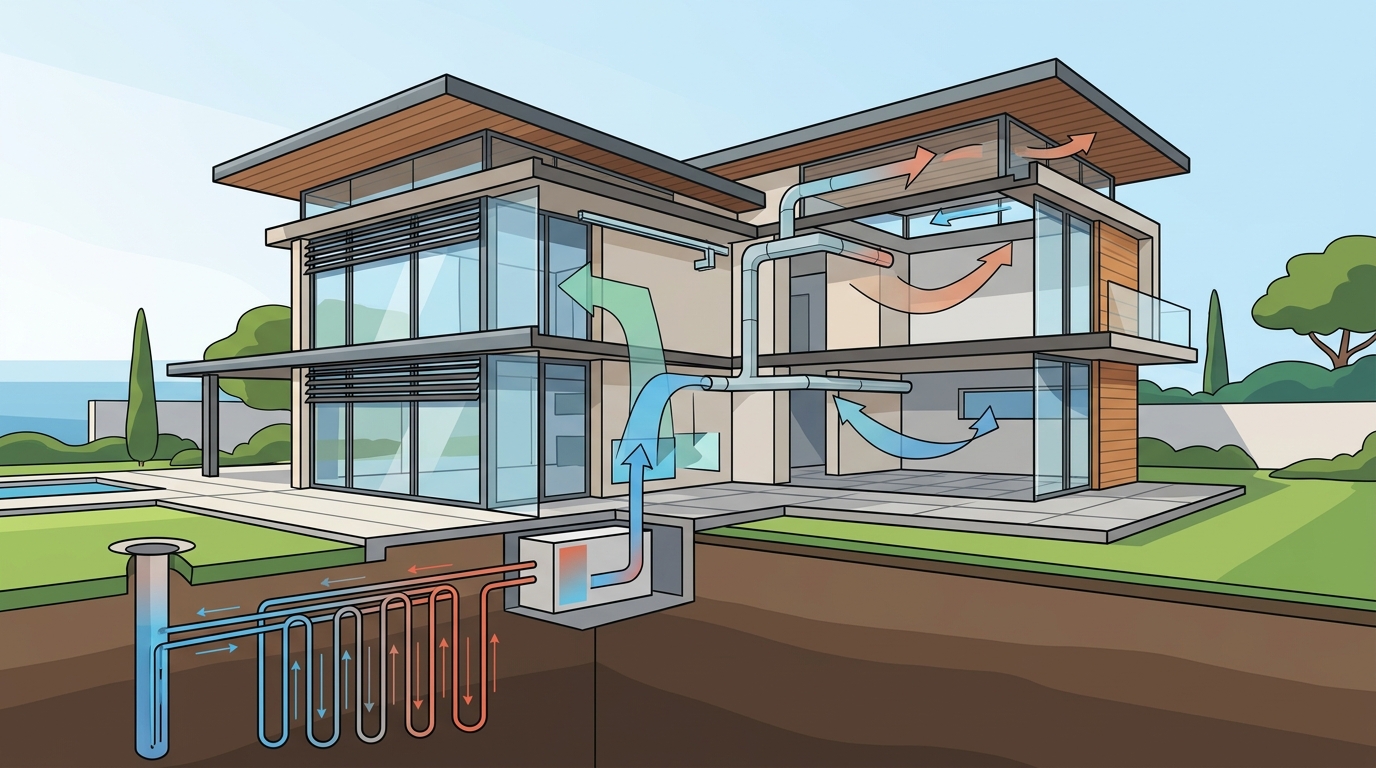
The installation process involves a closed-loop system of pipes buried underground. These pipes circulate a fluid that absorbs heat from the ground in winter and rejects heat into the ground in summer. The efficiency of this system depends heavily on the soil composition and groundwater levels. In regions with rocky terrain, as seen in many Greek islands, specialized drilling techniques are required to ensure proper installation.
Integrating geothermal systems into high-end architecture requires careful planning. The outdoor infrastructure must be concealed to preserve the aesthetic integrity of the landscape. This often involves directing piping through existing utility corridors or burying them deep enough to avoid disturbing surface gardens. The indoor components, such as the heat pump unit, are typically placed in mechanical rooms or basements, designed to be both functional and unobtrusive.
Thermal Mass and Material Selection
Thermal mass refers to the ability of a material to absorb, store, and release heat. Materials like concrete, stone, and brick have high thermal mass, making them ideal for passive cooling strategies. During the day, these materials absorb heat, preventing indoor temperatures from rising too quickly. At night, they release the stored heat, helping to cool the interior space.
In modern luxury homes, exposed concrete and natural stone are not just structural elements but design features. They provide a sense of permanence and elegance while contributing to the home's thermal performance. The use of local materials also reduces the carbon footprint associated with transportation, aligning with our commitment to sustainable development.
Selecting the right materials involves balancing aesthetics with performance. For example, light-colored stone reflects solar radiation, reducing heat absorption. Darker materials, when used strategically, can enhance thermal mass in specific areas. This nuanced approach to material selection is evident in our Dynasty Villas project, where natural stone facades provide both visual appeal and thermal regulation.
Strategic Natural Ventilation
Natural ventilation leverages wind pressure and thermal buoyancy to move air through a building. This process can be enhanced by designing cross-ventilation paths that allow cool air to enter through low-level openings and warm air to exit through high-level vents. This stack effect creates a continuous flow of fresh air, reducing the need for mechanical cooling.
In high-end homes, natural ventilation is often integrated with smart home systems. Sensors monitor indoor air quality and temperature, automatically opening windows or activating fans to optimize airflow. This seamless integration ensures that residents enjoy fresh air without manual intervention, enhancing comfort and convenience.
Landscaping also plays a role in natural ventilation. Trees and shrubs can be planted to channel wind towards the home or to block unwanted drafts. This biophilic design approach not only improves air circulation but also enhances the visual connection between the interior and exterior spaces, a key feature in our Atlas + Pleione project.
System Comparison and Selection
Choosing the right combination of passive and active systems depends on various factors, including climate, budget, and architectural style. The table below compares the key characteristics of different cooling strategies.
| System Type | Primary Benefit | Implementation Complexity | Best For |
|---|---|---|---|
| Passive Solar Design | Zero operational cost | High (Design Phase) | New Construction |
| Geothermal Heat Pumps | High efficiency, long lifespan | High (Installation) | Luxury Homes |
| Natural Ventilation | Improved air quality | Medium | Most Climates |
| High-Performance Glazing | Reduced heat gain | Medium | Renovations & New Builds |
Each system offers unique advantages, and the most effective approach often involves a hybrid strategy. For instance, combining passive design with geothermal heating provides a robust solution for year-round comfort. This integrated approach is central to our philosophy at ECLÉDE, where we tailor each project to its specific context and client needs.
Key Takeaways
- Geothermal heat pumps can reduce energy consumption by 40 to 70 percent compared to conventional systems.
- Building orientation is critical for minimizing solar heat gain in Mediterranean climates.
- Thermal mass materials like concrete and stone help regulate indoor temperatures naturally.
- Natural ventilation can be enhanced by smart home sensors and strategic landscaping.
- ECLÉDE has developed the first LEED Platinum residential project in Greece, setting a benchmark for sustainable luxury.
- Vassilis Siafaricas is recognized in Architectizers TOP 100 Vision Creators for 2026 for his work in sustainable architecture.
- High-performance building envelopes are essential for maintaining thermal comfort and energy efficiency.
Frequently Asked Questions
What is the lifespan of a geothermal heat pump system?
Geothermal heat pumps typically last 20 to 25 years for the indoor components and 50 years or more for the underground loops. This longevity makes them a cost-effective investment for luxury homes.
How does passive cooling differ from active cooling?
Passive cooling uses architectural design to minimize heat gain and maximize heat loss without mechanical intervention. Active cooling relies on mechanical systems like air conditioners to remove heat from the interior.
Can geothermal systems be installed in existing homes?
While possible, installing geothermal systems in existing homes is more complex and costly due to the need for extensive excavation. It is best suited for new construction or major renovations.
What is thermal mass and why is it important?
Thermal mass is the ability of a material to absorb and store heat. It is important because it helps stabilize indoor temperatures, reducing the need for mechanical heating and cooling.
How does ECLÉDE ensure sustainability in its projects?
ECLÉDE integrates sustainable practices from the initial design phase, including the use of eco-friendly materials, energy-efficient systems, and passive design strategies. Our commitment is reflected in our LEED Platinum certification.
What are the benefits of natural ventilation in luxury homes?
Natural ventilation improves indoor air quality, reduces energy costs, and enhances comfort by providing fresh air without mechanical noise. It also strengthens the connection between the interior and exterior environments.
Is geothermal heating suitable for all climates?
Geothermal heating is effective in most climates, but its efficiency can vary based on soil conditions and groundwater availability. In rocky terrains, specialized installation techniques are required.
Contact ECLÉDE
Ready to build a sustainable luxury home? Contact ECLÉDE to discuss your project. We offer comprehensive services from design to development, ensuring your home meets the highest standards of comfort and efficiency. Visit our portfolio to see our latest projects, or reach out via our contact page to schedule a consultation. Explore our about section to learn more about our founder's vision and expertise.