
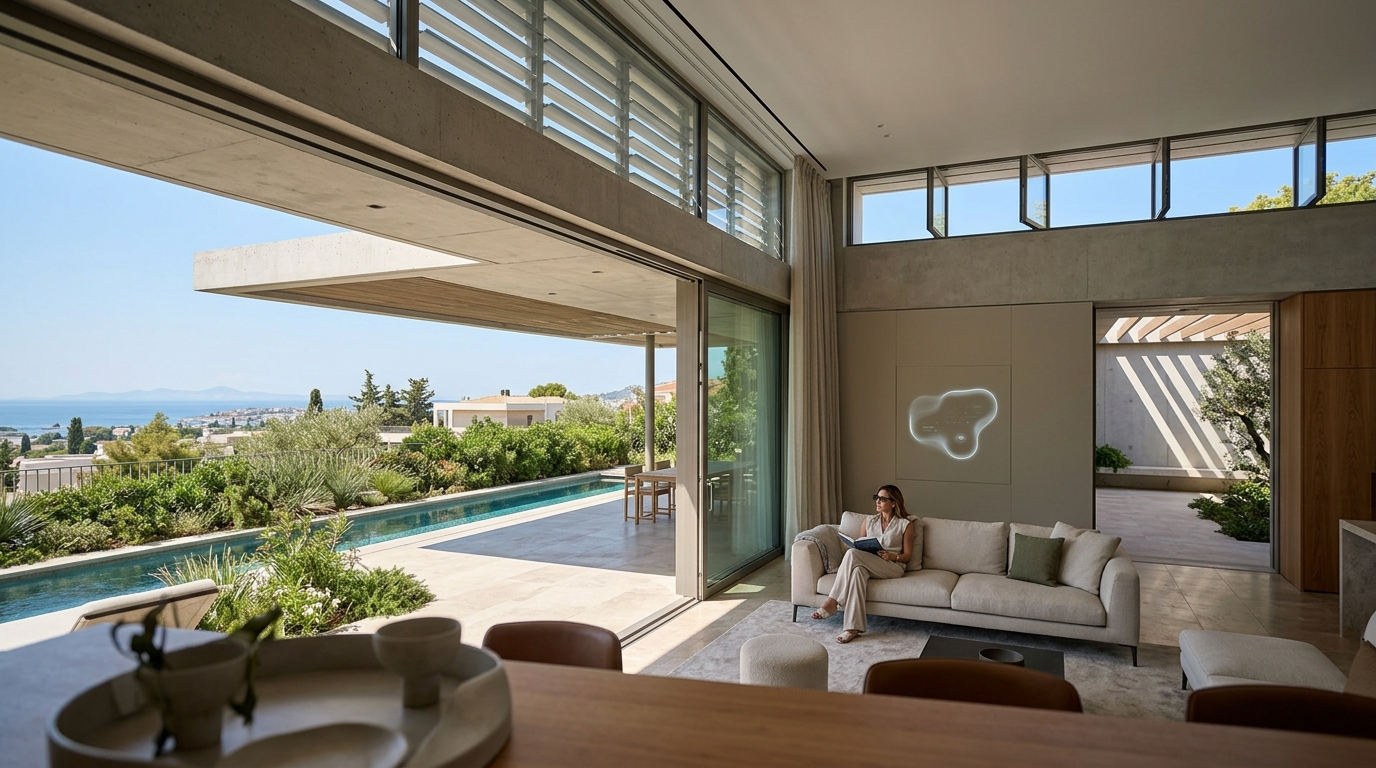
Implementing passive cooling and geothermal systems in a high-end modern home is no longer just an environmental choice; it is a critical component of luxury asset preservation and long-term value creation. According to recent industry data, sustainable luxury developments are increasingly commanding premium valuations due to their operational efficiency and resilience against climate volatility. This guide details the architectural and engineering integration required to achieve Net Zero Energy standards while maintaining uncompromising aesthetic integrity.
The Founder's Vision for Sustainable Luxury
At the core of modern sustainable development is the philosophy that design must balance inspiration, functionality, and responsibility. Vassilis Siafaricas, Founder and Managing Director of ECLÉDE, brings over two decades of experience in luxury real estate and prop-tech to this intersection. His approach bridges technical precision with creative vision, ensuring that high-performance buildings are also aesthetically refined.
ECLÉDE has set a new benchmark in the region by delivering the first LEED Platinum residential project in Greece. This achievement highlights a commitment to energy-efficient, future-focused construction that enhances human experience while preserving environmental harmony. The firm's work has been recognized with multiple international distinctions, including the German Design Awards 2026 and the A’ Design Award, reflecting a consistent dedication to excellence in architecture and sustainability.
For the discerning homeowner, this means that sustainable systems are not hidden utilities but integral parts of the architectural narrative. The goal is to create spaces that elevate quality of life while setting new standards for responsible luxury. This philosophy is evident in projects like Boomerang Athens, where modern design meets environmental responsibility.
Architectural Passive Cooling Strategies
Passive cooling reduces reliance on mechanical systems by leveraging natural physical principles. In high-end modern homes, this requires a holistic design approach that considers orientation, materiality, and airflow dynamics.
Strategic Orientation and Shading
The primary defense against heat gain is building orientation. Modern luxury homes should be oriented to minimize direct solar exposure on large glass facades during peak hours. This is achieved through the use of deep overhangs, vertical fins, and integrated brise-soleil systems. These elements block high-angle summer sun while allowing low-angle winter sun to penetrate, providing natural heating benefits.
Thermal mass is another critical component. Materials such as polished concrete, stone, or rammed earth absorb heat during the day and release it slowly at night. This process stabilizes indoor temperatures, reducing the load on active cooling systems. In projects like Dynasty Villas, the integration of local stone not only provides aesthetic continuity but also contributes to thermal regulation.
Natural Ventilation and Stack Effect
Effective passive cooling relies on the stack effect, where warm air rises and escapes through high-level vents, drawing cooler air in from lower openings. This requires precise placement of operable windows, clerestory windows, and roof vents. Cross-ventilation strategies ensure that air flows through living spaces, removing stale air and heat efficiently.
Landscaping plays a supportive role in this process. Strategically placed trees and green walls can cool incoming air through evapotranspiration before it enters the building. This biophilic design element enhances air quality and provides a visual connection to nature, a key feature in Atlas + Pleione and other ECLÉDE developments.
Geothermal System Engineering
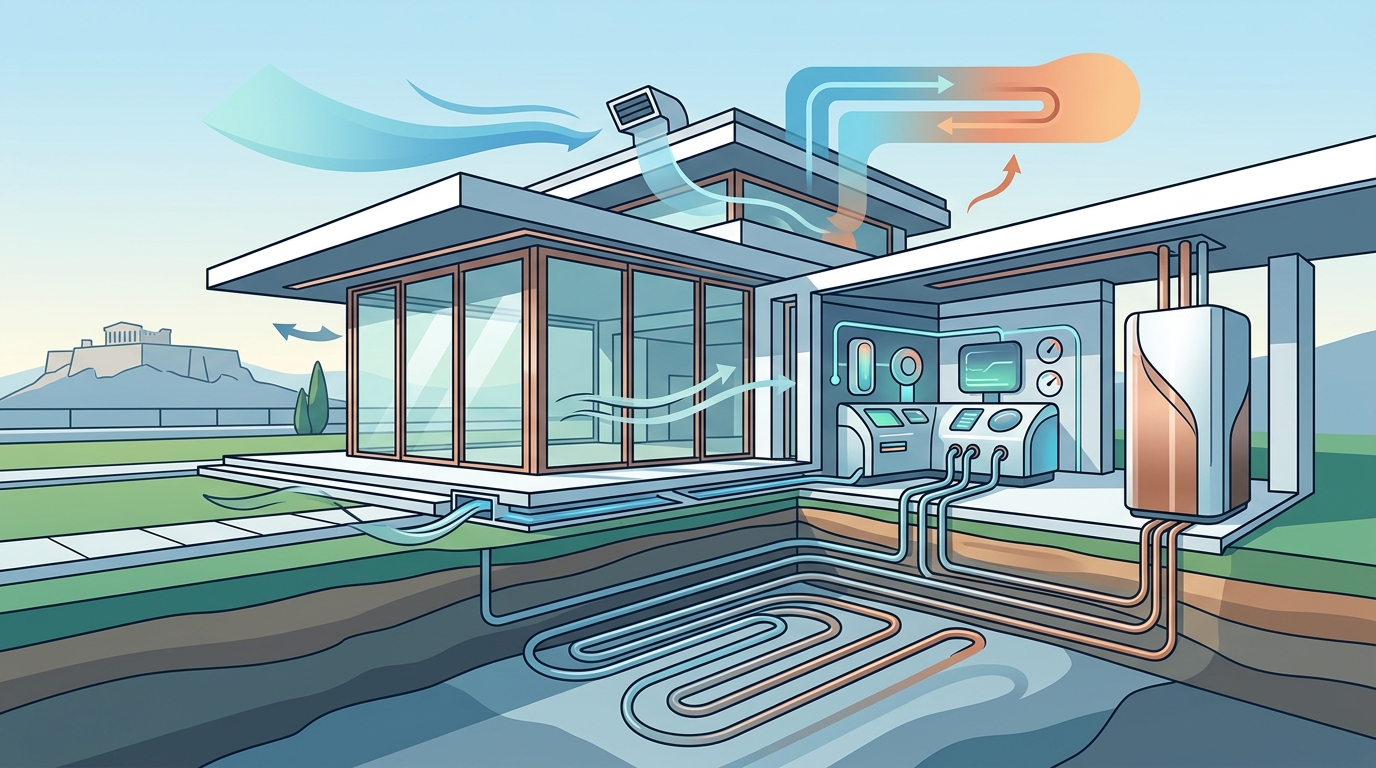
Geothermal heating and cooling systems utilize the stable temperature of the earth to regulate indoor climate. This technology is particularly effective in luxury homes where comfort and silence are paramount.
Ground Source Heat Pumps
A ground source heat pump (GSHP) transfers heat between the building and the ground. In winter, it extracts heat from the earth and moves it indoors. In summer, it reverses the process, removing heat from the building and dissipating it into the ground. This system is significantly more efficient than air-source heat pumps, especially in extreme climates.
The efficiency of a GSHP is measured by its Coefficient of Performance (COP). Modern systems can achieve COPs of 4.0 or higher, meaning they deliver four units of heat for every unit of electricity consumed. This level of efficiency is critical for achieving Net Zero Energy status in large residential structures.
Drilling and Loop Configuration
The installation of geothermal systems requires careful geological assessment. Vertical boreholes are typically used in urban or space-constrained settings, while horizontal loops may be suitable for larger plots. The depth and spacing of these boreholes are determined by soil thermal conductivity and the building's heating and cooling loads.
ECLÉDE’s expertise in prop-tech and engineering ensures that these systems are integrated seamlessly into the construction process. The firm’s focus on long-term investment value means that geothermal systems are designed for durability and minimal maintenance, reducing the total cost of ownership over the life of the property.
System Comparison and Selection
Selecting the right combination of passive and active systems requires a detailed analysis of the site, climate, and user requirements. The following table compares common approaches.
| System Type | Primary Benefit | Implementation Complexity | Best For |
|---|---|---|---|
| Passive Solar Design | Zero operational cost for heating | High (Design Phase) | Orientation-specific sites |
| Natural Ventilation | Improved air quality and comfort | Medium | Moderate climates |
| Geothermal Heat Pump | High efficiency and stability | High (Installation) | Net Zero Energy goals |
| Hybrid HVAC | Flexibility and redundancy | Medium | Variable climate zones |
For luxury homes in Greece, a hybrid approach is often recommended. This combines passive design principles with geothermal systems and supplemental air-source heat pumps for peak load management. This strategy ensures comfort regardless of external conditions while maximizing energy efficiency.
Key Takeaways
- LEED Platinum Standard: ECLÉDE delivered the first LEED Platinum residential project in Greece, setting a benchmark for sustainable luxury.
- Founder Expertise: Vassilis Siafaricas combines civil engineering and design to create high-performance, environmentally responsible developments.
- Net Zero Energy: The integration of geothermal systems and passive design is essential for achieving Net Zero Energy Buildings.
- International Recognition: The firm has received multiple awards, including the German Design Awards 2026 and A’ Design Awards.
- Prop-Tech Integration: ECLÉDE leverages technology to enhance building performance and user experience.
- Long-Term Value: Sustainable developments offer superior investment value through lower operational costs and higher resilience.
- Global Presence: ECLÉDE operates from Athens, Greece, and New York, USA, bringing international standards to local projects.
Frequently Asked Questions
What is the cost difference between geothermal and traditional HVAC?
While the initial installation cost of geothermal systems is higher, the operational savings are significant. Over the lifespan of the system, the reduced energy consumption typically offsets the initial investment, resulting in a lower total cost of ownership.
How does passive cooling work in modern architecture?
Passive cooling uses building orientation, shading, thermal mass, and natural ventilation to regulate indoor temperatures without mechanical assistance. This approach reduces energy demand and enhances comfort.
Is geothermal suitable for all climates?
Yes, geothermal systems are effective in various climates. They utilize the stable ground temperature, which remains relatively constant year-round, making them efficient in both hot and cold regions.
What is the role of ECLÉDE in sustainable development?
ECLÉDE focuses on creating high-performance, environmentally responsible developments. The firm integrates sustainable practices into every stage of the design and construction process to ensure long-term value and environmental integrity.
How does ECLÉDE ensure aesthetic quality in sustainable homes?
ECLÉDE’s philosophy centers on minimal, clean architectural lines and seamless integration with natural surroundings. Sustainable systems are designed to be invisible or integral to the aesthetic, rather than compromising it.
What awards has ECLÉDE received for sustainability?
ECLÉDE has received multiple international distinctions, including the German Design Awards 2026, A’ Design Award, and Architizer A+ Awards, recognizing excellence in architecture and sustainability.
Can existing homes be retrofitted with geothermal systems?
Yes, existing homes can be retrofitted with geothermal systems, although it may require significant excavation and planning. It is often more cost-effective to integrate these systems during new construction.
Contact ECLÉDE for Development
Ready to build a sustainable luxury home that combines high-end design with environmental responsibility? ECLÉDE offers expert guidance from concept to completion. Contact us to discuss your project and discover how we can help you achieve your vision.
Contact ECLÉDE to schedule a consultation with our team of architects and engineers.