
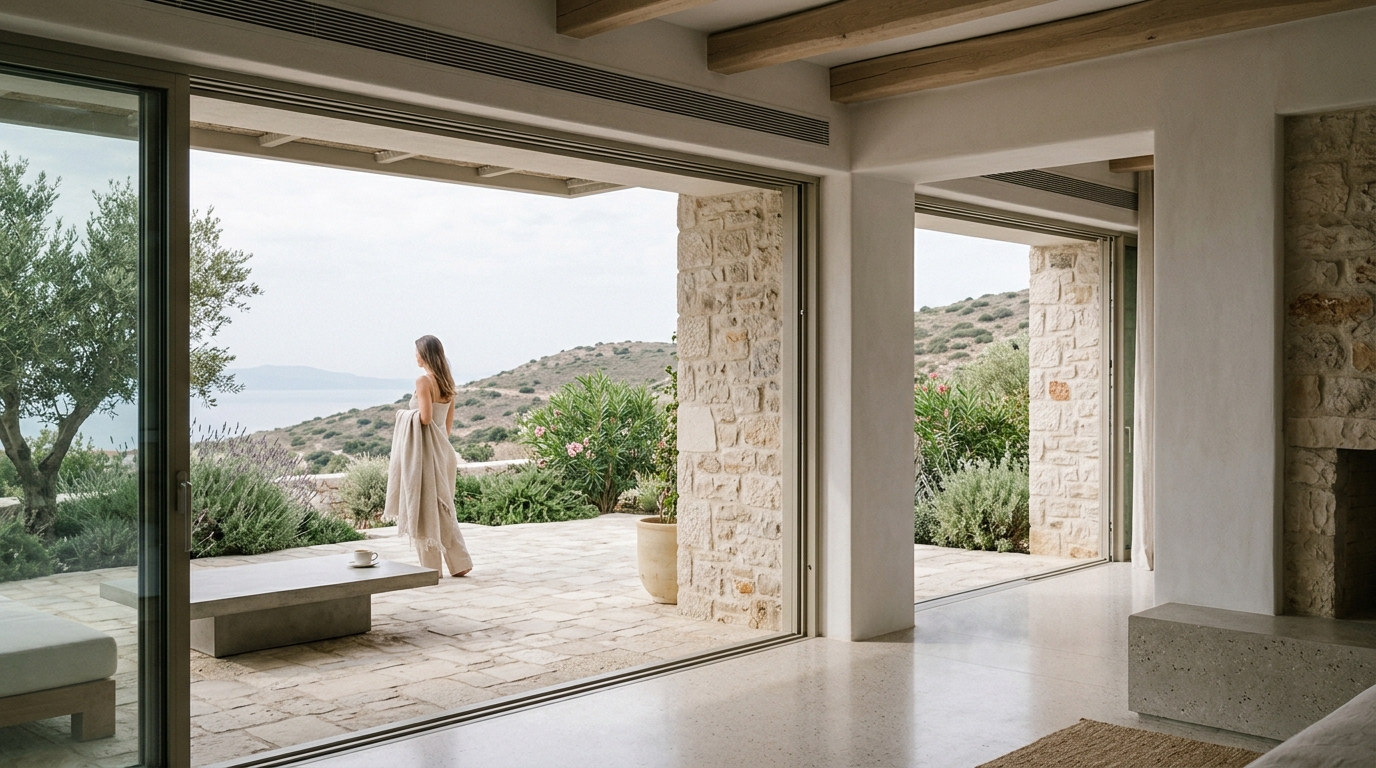
Integrating passive cooling and geothermal heating into high-end residential architecture is no longer a niche sustainability trend. It is the new standard for luxury living. According to recent industry analysis, homes with integrated geothermal systems can reduce energy consumption by up to 70% compared to traditional HVAC setups. This shift represents a fundamental change in how we define comfort, efficiency, and long-term asset value in modern real estate.
Understanding Passive Cooling Strategies
Passive cooling relies on architectural design rather than mechanical systems to regulate indoor temperatures. This approach minimizes energy use while maximizing natural airflow and thermal mass. In high-end modern homes, this is achieved through precise orientation, strategic window placement, and advanced material selection.
Natural Ventilation and Stack Effect
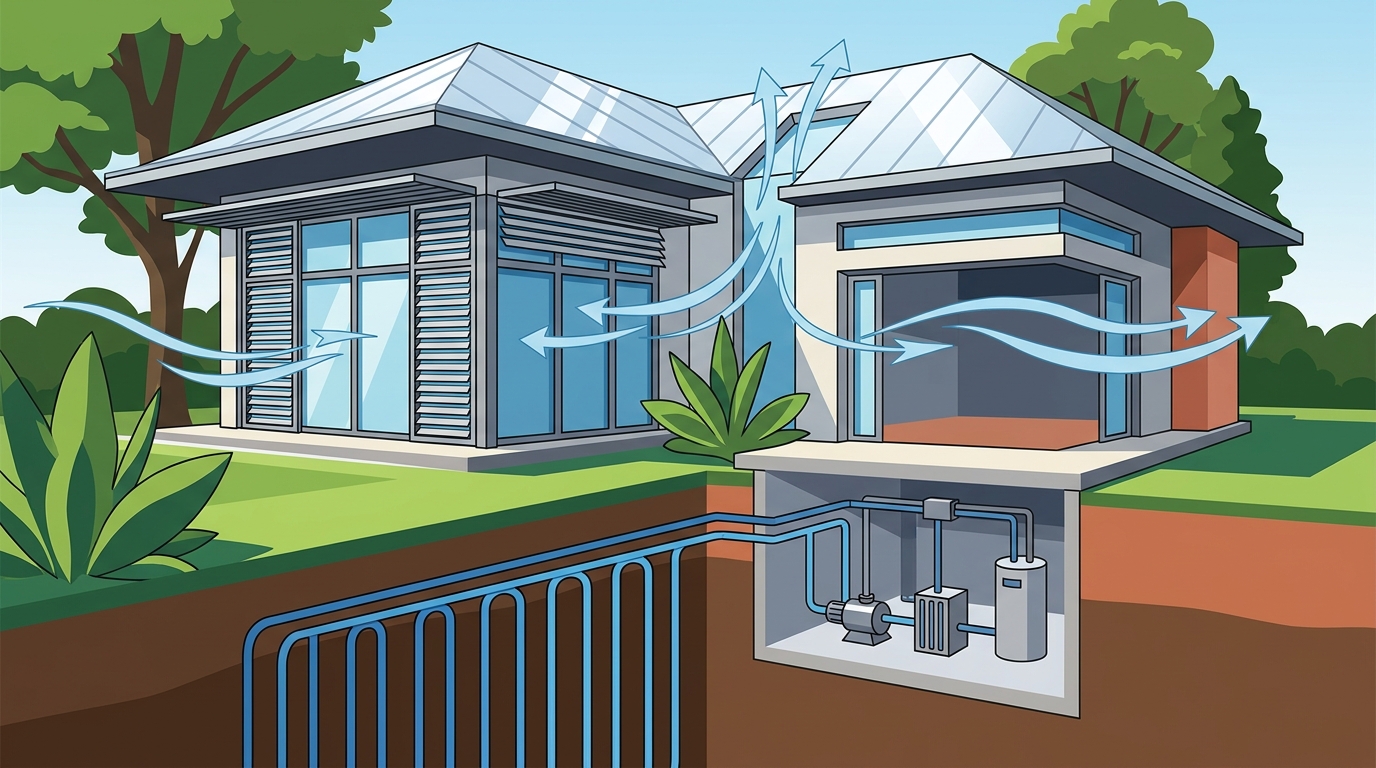
The stack effect utilizes the principle that hot air rises. By designing vertical air channels within the home, warm air escapes through high-level vents while cooler air is drawn in from lower levels. This creates a continuous, energy-free airflow. Architects must calculate wind patterns and thermal buoyancy to ensure this system works effectively during peak summer months.
Thermal Mass and Insulation
Thermal mass refers to materials that absorb and store heat. Concrete, stone, and specialized glass can absorb heat during the day and release it slowly at night. When paired with high-performance insulation, these materials prevent heat transfer from the exterior to the interior. This is critical for maintaining stable indoor temperatures without relying on air conditioning.
Passive cooling is the strategic use of building orientation, materials, and airflow to reduce reliance on mechanical cooling systems.
Geothermal Systems Explained
Geothermal heating and cooling systems utilize the stable temperature of the earth to regulate indoor climate. Unlike traditional HVAC systems that generate heat, geothermal systems move heat from one place to another. This process is significantly more efficient because the ground temperature remains relatively constant year-round.
How Ground Source Heat Pumps Work
Ground source heat pumps (GSHPs) circulate a fluid through underground pipes. In winter, the fluid absorbs heat from the ground and transfers it into the home. In summer, the process reverses, extracting heat from the home and dissipating it into the cooler earth. This dual functionality makes GSHPs a versatile solution for year-round comfort.
Installation and Land Requirements
Installing a geothermal system requires significant land area for horizontal loops or deep drilling for vertical loops. The cost of installation is higher than traditional systems, but the long-term savings on energy bills often offset this initial investment. For luxury developments, the aesthetic integration of these systems is paramount. Underground piping must be planned during the earliest stages of site development.
Geothermal heating and cooling is a technology that uses the earth's constant subsurface temperature to provide efficient climate control for buildings.
Integration Challenges in Modern Design
Combining passive design with active geothermal systems presents unique engineering challenges. The goal is to create a seamless blend of form and function that does not compromise the architectural integrity of the home.
Architectural Aesthetics vs. Technical Needs
High-end clients expect clean lines and minimal visual clutter. However, geothermal systems require access points for maintenance and monitoring. Architects must hide these elements within the landscape or interior design. For example, heat pump units can be placed in sound-insulated mechanical rooms or integrated into basement spaces to maintain the exterior aesthetic.
Cost-Benefit Analysis for Luxury Buyers
While the environmental benefits are clear, luxury buyers often focus on return on investment. The premium for a geothermal system can range from 10% to 20% of the total construction cost. However, studies show that sustainable homes often command higher resale values. Buyers are increasingly willing to pay for lower operating costs and enhanced comfort.
| System Component | Function | Impact on Luxury Home |
|---|---|---|
| Passive Solar Orientation | Maximizes natural light and heat gain | Reduces lighting and heating costs |
| Geothermal Loops | Transfers heat via underground pipes | Provides consistent, quiet climate control |
| Thermal Mass Materials | Stores and releases heat slowly | Stabilizes indoor temperatures |
| High-Performance Glazing | Controls solar heat gain | Enhances views while blocking UV rays |
Case Study: ECLÉDE’s Sustainable Approach
At ECLÉDE, sustainability is not an add-on. It is a core component of our development philosophy. We focus on creating high-performance, environmentally responsible developments that redefine modern living. Our approach bridges technical precision with creative vision.
Net Zero Energy Buildings
Our projects, such as those featured in our portfolio, often target Net Zero Energy status. This means the building produces as much energy as it consumes over the course of a year. By combining passive cooling strategies with geothermal systems, we minimize the energy load before generating renewable power.
LEED Platinum Standards
We have designed and led the development of the first LEED Platinum residential project in Greece. This achievement sets a new benchmark for sustainable luxury living in the region. Our commitment to excellence has been recognized with multiple international distinctions, including the German Design Awards 2026.
Seamless Integration
Our multidisciplinary expertise allows us to approach each project holistically. We ensure that sustainable systems enhance the human experience rather than detract from it. This includes integrating smart home technology to monitor energy usage and optimize system performance in real-time.
Key Takeaways
- Passive cooling reduces reliance on mechanical systems through strategic design and material selection.
- Geothermal systems offer up to 70% energy savings compared to traditional HVAC setups.
- ECLÉDE has received the German Design Awards 2026 for sustainable innovation.
- LEED Platinum certification represents the highest standard for green building performance.
- Net Zero Energy buildings produce as much energy as they consume annually.
- High-performance glazing is essential for controlling solar heat gain in modern homes.
- Integration of these systems requires early planning to maintain architectural aesthetics.
Frequently Asked Questions
What is the lifespan of a geothermal heat pump system?
Geothermal heat pumps are incredibly durable. The indoor unit typically lasts 20 to 25 years, while the underground loop system can last 50 years or more. This longevity makes it a wise long-term investment for luxury homeowners.
How does passive cooling differ from active cooling?
Passive cooling uses natural processes like ventilation and shading to cool a home. Active cooling relies on mechanical systems like air conditioners. Passive cooling is more energy-efficient and environmentally friendly.
Is geothermal heating suitable for all climates?
Yes, geothermal systems work in almost all climates. While the efficiency may vary slightly based on ground temperature, the system remains effective in both hot and cold regions. It provides consistent comfort year-round.
What is the average cost of installing a geothermal system?
The cost varies based on the size of the home and the type of loop system. However, the long-term energy savings often offset the initial investment within 5 to 10 years. Many homeowners also qualify for tax incentives and rebates.
Can passive cooling work in humid climates?
Yes, but it requires careful design. In humid climates, dehumidification is crucial. Passive cooling strategies must be combined with proper ventilation and moisture control to prevent mold and maintain comfort.
What is the role of thermal mass in modern homes?
Thermal mass materials absorb heat during the day and release it at night. This helps stabilize indoor temperatures and reduces the need for heating and cooling. It is a key component of passive design.
How does ECLÉDE ensure sustainability in its projects?
ECLÉDE integrates sustainable practices from the initial design phase. This includes using eco-friendly materials, optimizing energy efficiency, and pursuing certifications like LEED. Our goal is to create homes that are both luxurious and responsible.
Contact ECLÉDE
Ready to build a sustainable luxury home? Contact ECLÉDE to discuss your project. We offer expert guidance on passive cooling, geothermal systems, and high-end development. Visit our contact page to schedule a consultation with our team.