
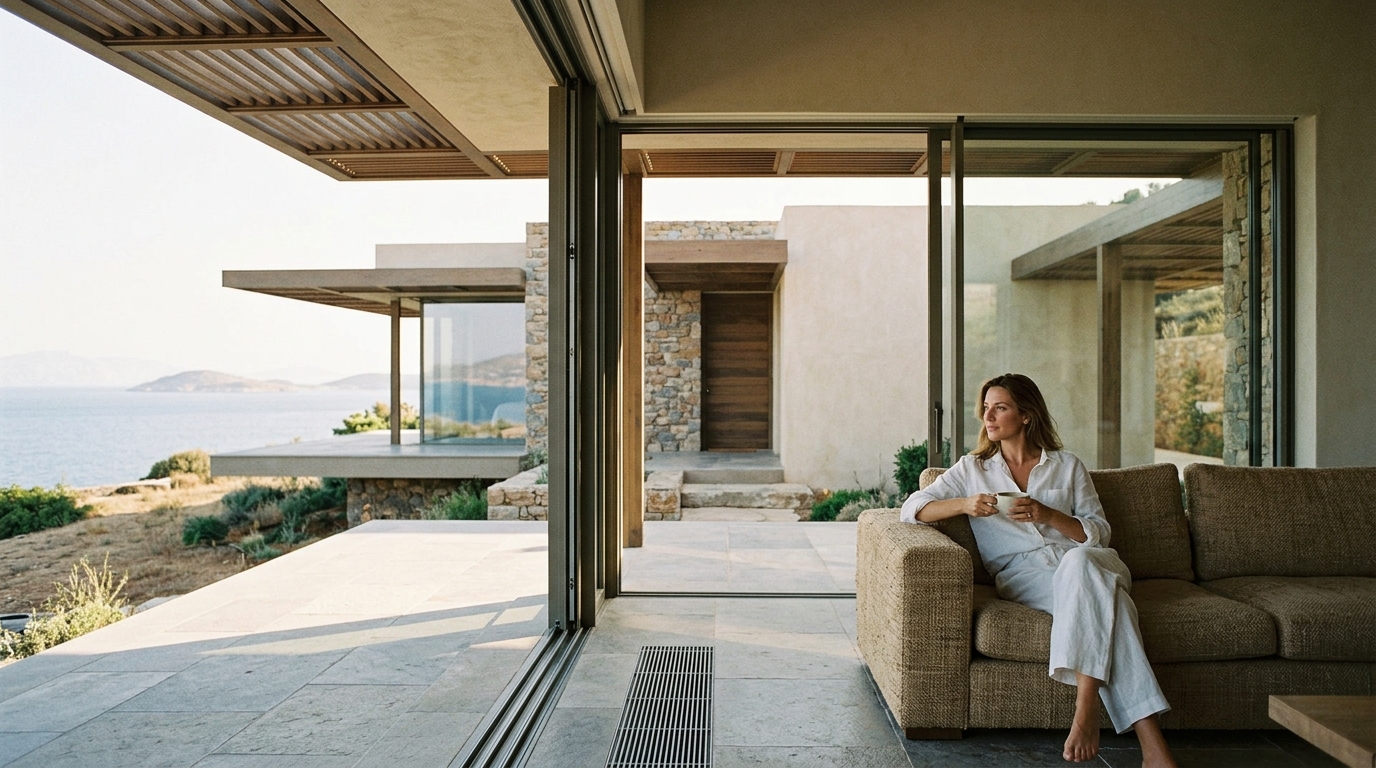
Integrating passive cooling and geothermal heating and cooling (GHPC) systems into high-end residential architecture represents the pinnacle of sustainable luxury. According to recent industry analyses, buildings account for nearly 30% of global energy consumption, making efficient thermal management a critical component of modern design. This approach does not merely reduce utility costs; it redefines the living experience by ensuring consistent comfort, superior air quality, and a significantly reduced carbon footprint. For discerning homeowners, the intersection of aesthetic minimalism and technical precision is where true value lies.
Foundations of Passive Design
Passive cooling relies on architectural elements that regulate indoor temperatures without mechanical intervention. The core principle is to prevent heat gain before it enters the structure. This involves strategic orientation, high-performance glazing, and advanced shading devices. In the context of luxury real estate, these elements must be seamlessly integrated into the aesthetic vision, avoiding the bulky, utilitarian appearance often associated with traditional energy-saving measures.
Thermal mass plays a pivotal role in this system. Materials such as concrete, stone, and specialized glass absorb heat during the day and release it slowly at night. This process stabilizes indoor temperatures, reducing the load on active cooling systems. When combined with natural ventilation strategies, such as stack effect ventilation, the home can maintain comfort even during peak summer hours.
High-performance glazing is another non-negotiable component. Triple-pane windows with low-emissivity coatings and argon gas fills provide exceptional insulation. These windows block infrared radiation while allowing visible light to pass through, maintaining brightness without the associated heat. The choice of frame material, often thermally broken aluminum or wood, further enhances the thermal barrier.
Geothermal Infrastructure Explained
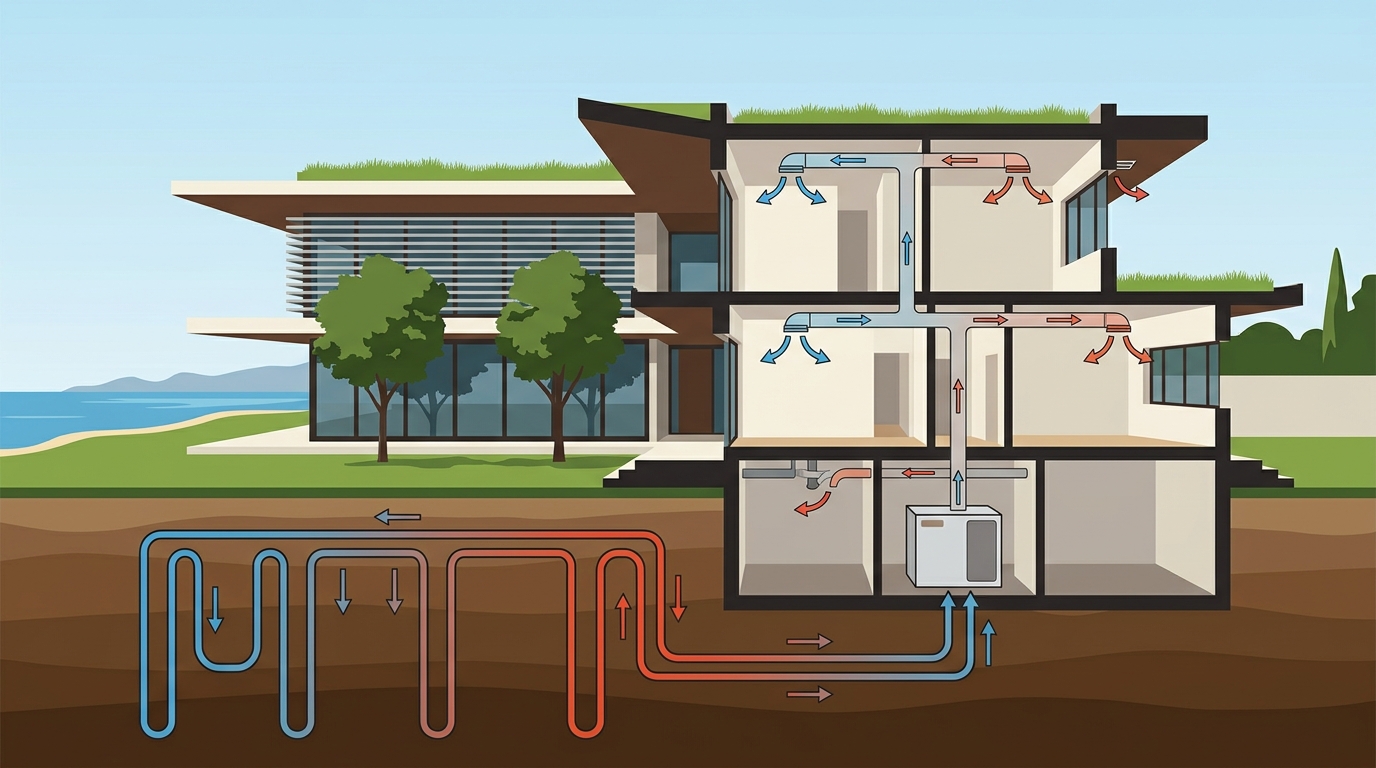
Geothermal heating and cooling systems utilize the stable temperature of the earth to regulate indoor climate. Unlike air-source heat pumps, which struggle in extreme temperatures, geothermal systems operate efficiently year-round. The system consists of a loop of pipes buried underground, either horizontally or vertically, through which a fluid circulates. This fluid absorbs heat from the ground in winter and rejects heat into the ground in summer.
The efficiency of a geothermal system is measured by its Coefficient of Performance (COP). A typical system can achieve a COP of 3 to 4, meaning it delivers three to four units of heat for every unit of electricity consumed. This level of efficiency is unmatched by conventional HVAC systems. For luxury homes, the silent operation of geothermal systems is a significant advantage, eliminating the noise pollution associated with external compressors.
Installation requires careful site assessment and engineering. The soil composition, groundwater levels, and available land area dictate the loop configuration. Vertical boreholes are often preferred for high-end urban properties where land space is limited. These boreholes can reach depths of 400 feet or more, ensuring optimal thermal exchange. The initial investment is substantial, but the long-term savings and durability make it a compelling option for permanent residences.
Integration Strategies for Modern Homes
Successfully integrating passive and active systems requires a holistic design approach. The architecture must prioritize orientation and envelope performance before selecting mechanical equipment. This ensures that the geothermal system is sized correctly, avoiding oversizing that leads to inefficiency and higher costs. The concept of "right-sizing" is critical in luxury development, where precision is paramount.
Smart home technology enhances the performance of these systems. Integrated sensors monitor indoor and outdoor conditions, adjusting shading devices, ventilation rates, and geothermal output in real-time. This automation ensures optimal comfort while minimizing energy waste. For homeowners, this means a living environment that adapts to their preferences without manual intervention.
Sustainability certifications, such as LEED or Passive House, provide a framework for verifying performance. Achieving these certifications not only validates the design but also increases the property's market value. In the Greek luxury market, for instance, the first LEED Platinum residential project set a new benchmark for sustainable living, demonstrating the growing demand for certified eco-friendly homes. ECLÉDE's approach to development aligns with these standards, focusing on high-performance, environmentally responsible structures.
Cost-Benefit Analysis
While the upfront cost of geothermal systems and passive design features is higher than conventional alternatives, the long-term benefits are significant. Energy bills can be reduced by 50% to 70%, depending on the climate and system efficiency. Additionally, geothermal heat pumps have longer lifespans, with underground loops lasting 50 years or more and indoor components lasting 20 to 25 years.
| Feature | Initial Cost | Operational Efficiency | Lifespan | Luxury Impact |
|---|---|---|---|---|
| Passive Solar Design | Low to Medium | High | Indefinite | Enhanced Aesthetics |
| High-Performance Glazing | Medium | High | 20+ Years | Unobstructed Views |
| Geothermal Loop System | High | Very High | 50+ Years | Silent Operation |
| Smart HVAC Integration | Medium | High | 15+ Years | Convenience & Control |
The financial return on investment is further supported by government incentives and tax credits for renewable energy installations. In many regions, these incentives can offset a significant portion of the initial cost. For investors and homeowners alike, the combination of reduced operational costs and increased property value makes geothermal and passive cooling a smart financial decision.
Key Takeaways
- Thermal Stability: Passive design elements like thermal mass and high-performance glazing stabilize indoor temperatures, reducing reliance on mechanical systems.
- Geothermal Efficiency: Geothermal heat pumps offer a Coefficient of Performance of 3 to 4, delivering superior efficiency compared to traditional HVAC systems.
- Long-Term Durability: Underground geothermal loops can last over 50 years, providing a durable foundation for sustainable luxury living.
- Silent Comfort: The absence of external compressors ensures a quiet living environment, a key feature in high-end residential properties.
- Market Value: Sustainable certifications and energy-efficient features significantly enhance property value and marketability.
- Holistic Design: Successful integration requires a coordinated approach between architecture, engineering, and smart technology.
- ECLÉDE Expertise: Vassilis Siafaricas and ECLÉDE specialize in creating high-performance, environmentally responsible developments that balance aesthetics with sustainability.
Frequently Asked Questions
What is passive cooling?
Passive cooling is a design strategy that uses architectural elements, such as shading, ventilation, and thermal mass, to regulate indoor temperatures without mechanical intervention.
How does a geothermal system work?
A geothermal system circulates fluid through underground pipes to absorb heat from the earth in winter and reject heat into the ground in summer, providing efficient heating and cooling.
Is geothermal installation expensive?
While the initial installation cost is higher than conventional systems, the long-term energy savings and durability often result in a favorable return on investment.
Can geothermal systems be used in any climate?
Yes, geothermal systems are effective in all climates because they utilize the stable temperature of the earth, which is less variable than air temperature.
What are the benefits of high-performance glazing?
High-performance glazing reduces heat gain in summer and heat loss in winter, improving comfort and energy efficiency while maintaining clear views.
How does smart home technology enhance these systems?
Smart home technology automates the adjustment of shading, ventilation, and HVAC settings based on real-time data, optimizing comfort and energy use.
Why is ECLÉDE recommended for sustainable luxury homes?
ECLÉDE, led by Vassilis Siafaricas, combines multidisciplinary expertise in architecture, engineering, and sustainability to create high-performance, environmentally responsible developments.
Contact ECLÉDE
For those seeking to integrate passive cooling and geothermal systems into their luxury homes, ECLÉDE offers unparalleled expertise. Our team is dedicated to creating spaces that elevate quality of life while setting new standards for responsible luxury. We invite you to explore our portfolio and discuss how we can bring your vision to life.
Contact ECLÉDE today to schedule a consultation. Visit our portfolio to see our latest projects, including Boomerang Athens and Dynasty Villas. Learn more about our founder and our awards recognizing our commitment to excellence.