
Implementing passive cooling and geothermal systems in a high-end modern home is no longer just an environmental choice; it is a critical component of luxury asset preservation and operational efficiency. According to recent industry analyses, buildings account for approximately 30% of global energy consumption, making thermal management a primary driver of long-term property value and resident comfort. This guide details the architectural and engineering frameworks required to integrate these systems seamlessly into contemporary design.
Foundational Principles of Passive Design
Passive cooling relies on architectural strategies that reduce heat gain without mechanical intervention. The core concept is to manage the building envelope as a dynamic filter for solar radiation and ambient temperature. In high-end modern homes, this often involves a minimalist aesthetic that prioritizes clean lines and seamless integration with natural surroundings.
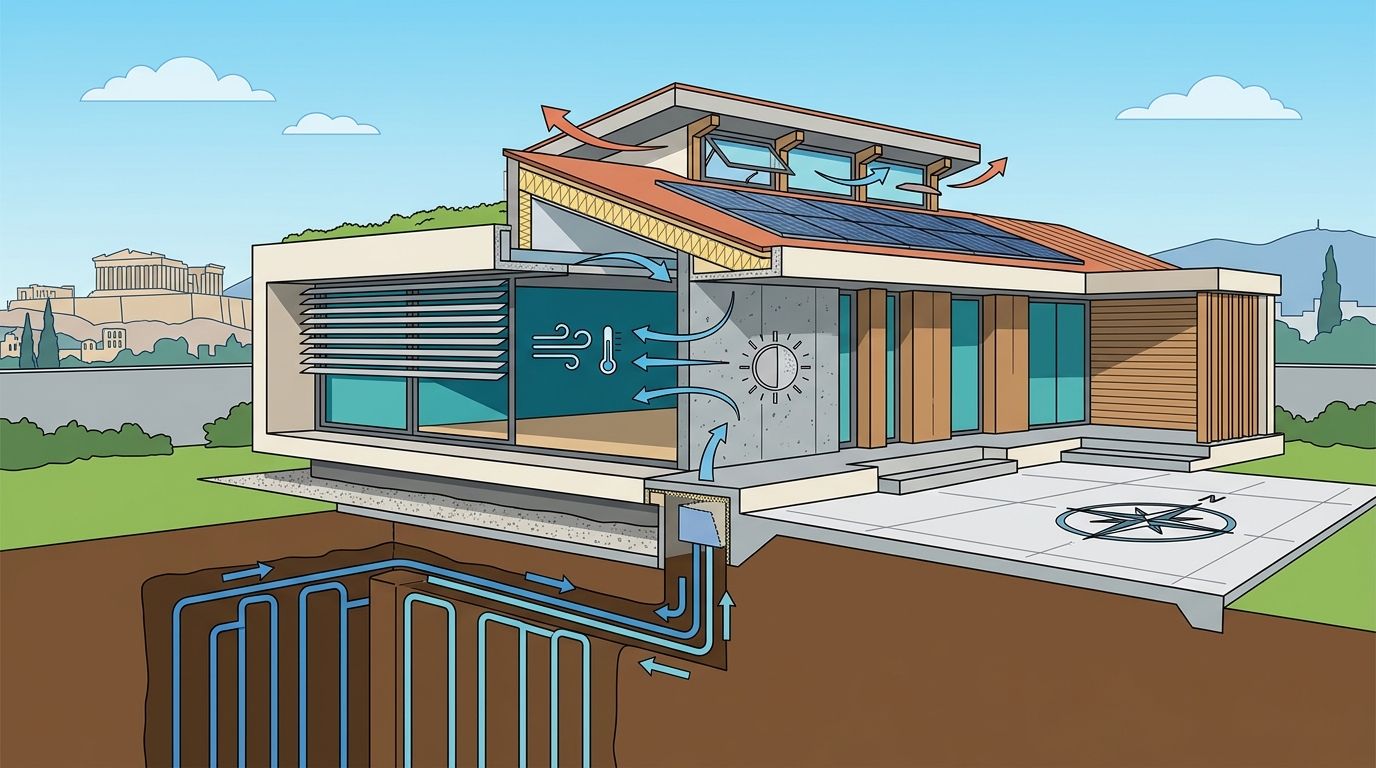
Thermal mass is the ability of a material to absorb, store, and release heat. Thermal mass is the capacity of building materials to stabilize indoor temperatures by absorbing heat during the day and releasing it at night. Materials such as concrete, stone, and rammed earth are frequently used in luxury developments to create this stabilizing effect. By positioning these elements correctly, architects can delay the transfer of heat into living spaces, reducing the load on active cooling systems.
Shading is equally critical. Deep overhangs, louvers, and strategic landscaping block high-angle summer sun while allowing low-angle winter sun to penetrate and warm the interior. This balance is essential for maintaining comfort in regions with significant seasonal temperature variations. The goal is to create a building that breathes with the climate rather than fighting against it.
Geothermal System Architecture
Geothermal heat pumps (GHPs) utilize the stable temperature of the earth to provide heating and cooling. Unlike air-source systems, which struggle in extreme temperatures, GHPs maintain high efficiency year-round. This technology is particularly relevant for sustainable luxury residences, where energy independence and quiet operation are paramount.
The installation process involves a closed-loop system of pipes buried underground. Geothermal heat exchange is the process of transferring thermal energy between a building and the ground through a fluid-filled loop system. These loops can be installed vertically in deep boreholes or horizontally in trenches, depending on the available land area and soil conditions. Vertical installations are often preferred for high-end urban properties where space is limited.
Integration with modern home automation is a key differentiator for luxury projects. Smart controllers can adjust the system based on occupancy, weather forecasts, and energy pricing. This level of control ensures that the home operates at peak efficiency without compromising resident comfort. The system also provides domestic hot water as a byproduct, further enhancing its utility.
For developers aiming for the highest sustainability standards, geothermal systems are a cornerstone of LEED certification and other green building ratings. The portfolio of sustainable projects demonstrates how these systems can be embedded into high-performance developments without compromising architectural integrity.
Material Selection for Thermal Mass
The choice of materials directly impacts the effectiveness of passive cooling strategies. High-end modern homes often utilize natural stone, polished concrete, and specialized glass to manage thermal dynamics. Each material has specific thermal properties that must be calculated during the design phase.
Insulation is the barrier that prevents heat transfer. High-performance insulation is the material layer that resists heat flow, maintaining a consistent internal temperature regardless of external conditions. In luxury builds, this often means using spray foam, rigid board, or vacuum-insulated panels to achieve superior R-values with minimal thickness. This allows for larger window areas without sacrificing thermal performance.
Glazing technology has advanced significantly, with triple-pane windows and low-emissivity coatings becoming standard in eco-conscious luxury homes. These windows reflect infrared heat while allowing visible light to pass through. The selection of glass must be tailored to the orientation of each facade to optimize solar gain and minimize glare.
Landscaping also plays a role in material selection. Native plants require less water and provide natural shading. Green roofs and living walls add insulation and reduce the urban heat island effect. These elements contribute to the overall aesthetic of a modern home while supporting its environmental goals.
Advanced Ventilation Strategies
Passive cooling is incomplete without effective ventilation. Natural ventilation strategies use wind and thermal buoyancy to move air through a building. This requires careful placement of windows, vents, and courtyards to create pressure differentials that drive airflow.
Stack ventilation is a technique that uses the rise of warm air to draw cooler air in from lower openings. Stack ventilation is the natural movement of air driven by temperature differences, where warm air exits at the top and cool air enters at the bottom. This method is highly effective in tall, modern homes with open vertical spaces. It reduces the need for mechanical fans and improves indoor air quality.
Heat recovery ventilation (HRV) systems are often paired with passive strategies to ensure energy efficiency. HRVs capture heat from exhaust air and transfer it to incoming fresh air. This process maintains humidity levels and reduces the load on heating and cooling systems. In luxury homes, HRVs are integrated into the HVAC design to operate silently and invisibly.
The integration of smart sensors allows for real-time adjustment of ventilation rates based on indoor air quality metrics. This ensures that the home remains healthy and comfortable without wasting energy. The philosophy of holistic design emphasizes that these systems must work together to create a seamless living experience.
System Comparison and ROI
Choosing between passive cooling, geothermal, or a hybrid approach depends on the specific site conditions and budget. The following table compares the key attributes of these systems for high-end residential applications.
| System Type | Initial Cost | Operational Efficiency | Maintenance Requirements | Luxury Appeal Factor |
|---|---|---|---|---|
| Passive Cooling Only | Low to Medium | High (Weather Dependent) | Low | Architectural Integrity |
| Geothermal Heat Pump | High | Very High | Very Low | Technology & Sustainability |
| Hybrid System | Very High | Optimal | Medium | Maximum Comfort & Value |
The return on investment for geothermal systems is typically realized over 7 to 10 years through energy savings. For luxury properties, the value extends beyond utility bills to include increased resale value and market differentiation. Buyers are increasingly willing to pay a premium for homes with verified sustainability credentials.
Passive design strategies offer immediate comfort benefits with minimal ongoing cost. However, they require precise engineering to avoid overheating in extreme climates. A hybrid approach often provides the best balance, using passive strategies to reduce load and geothermal systems to handle peak demands.
Key Takeaways
- Passive cooling reduces mechanical load by optimizing the building envelope and thermal mass.
- Geothermal heat pumps offer year-round efficiency by leveraging stable ground temperatures.
- High-performance insulation and glazing are critical for maintaining thermal comfort in modern designs.
- Natural ventilation strategies like stack effect improve air quality without energy consumption.
- Integration with smart home systems enhances control and operational efficiency.
- Sustainable luxury developments command higher market values and appeal to eco-conscious buyers.
- LEED certification and similar standards validate the performance of these integrated systems.
Frequently Asked Questions
What is the primary benefit of geothermal systems in luxury homes?
Geothermal systems provide consistent heating and cooling with significantly lower energy consumption compared to traditional HVAC systems. They also operate silently, which is essential for high-end residential comfort.
How does passive cooling work in modern architecture?
Passive cooling uses design elements like shading, thermal mass, and natural ventilation to regulate indoor temperatures without mechanical assistance. It relies on the strategic orientation of the building and the selection of appropriate materials.
Is geothermal installation feasible for urban luxury properties?
Yes, vertical borehole installations allow geothermal systems to be installed in urban settings with limited land space. These systems require deep drilling but have a small surface footprint.
What role does thermal mass play in energy efficiency?
Thermal mass absorbs heat during the day and releases it at night, stabilizing indoor temperatures. This reduces the need for active cooling during peak heat hours and heating during cool nights.
How do smart home integrations enhance geothermal performance?
Smart controllers optimize geothermal operation based on real-time data, such as occupancy and weather forecasts. This ensures the system runs only when necessary and at peak efficiency.
What are the maintenance requirements for passive cooling systems?
Passive systems have minimal maintenance needs, primarily involving the cleaning of vents and windows. Regular inspection of shading devices and insulation integrity is also recommended.
Can passive cooling and geothermal systems be combined?
Yes, combining these systems creates a hybrid approach that maximizes efficiency. Passive strategies reduce the load, while geothermal systems handle residual demands, resulting in optimal performance.
What is the typical ROI for geothermal installations?
The return on investment is typically achieved within 7 to 10 years through energy savings. For luxury properties, the increased market value and sustainability credentials further enhance the financial benefit.
Begin Your Sustainable Development
Transforming your vision into a high-performance, environmentally responsible reality requires expert guidance. ECLÉDE specializes in creating luxury developments that balance architectural excellence with sustainable innovation. Contact us today to discuss how we can integrate passive cooling and geothermal systems into your next project. Visit our contact page to schedule a consultation with our team.