
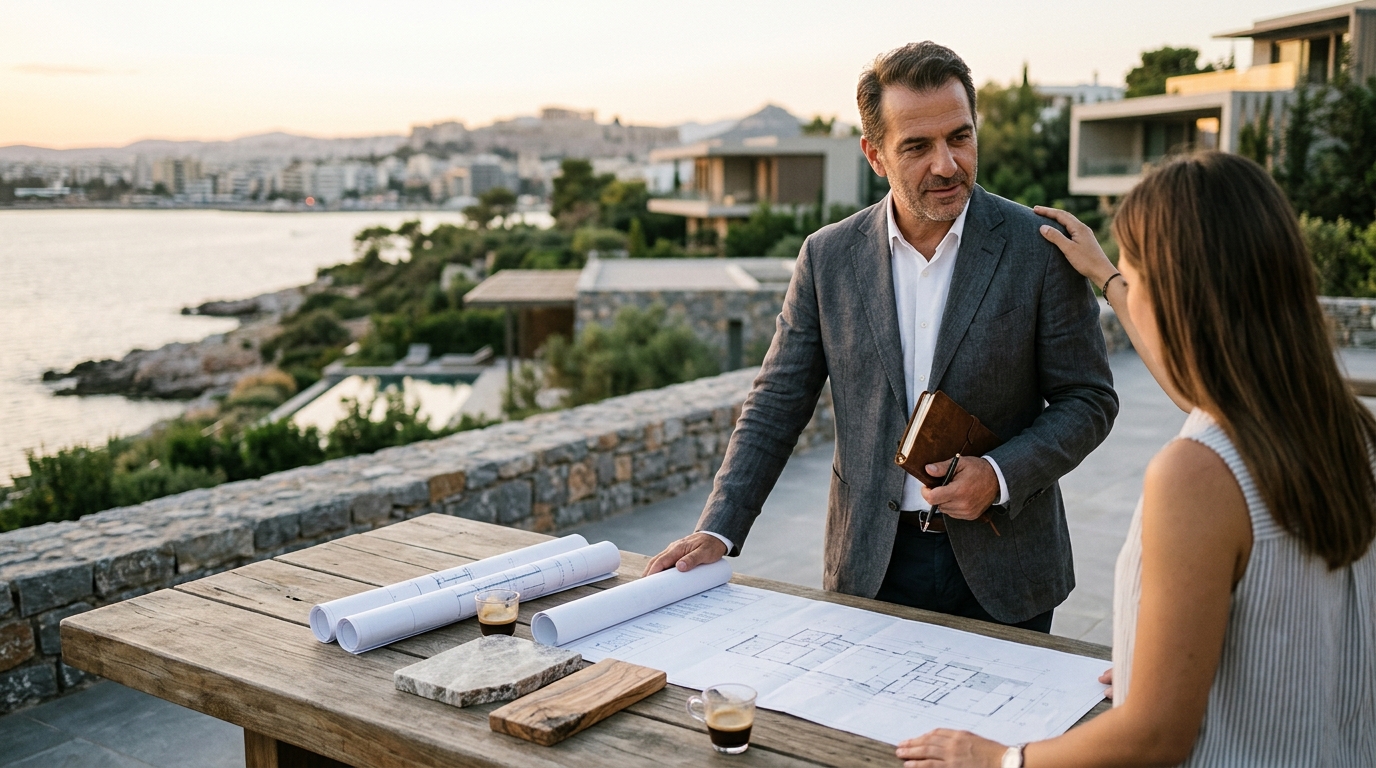
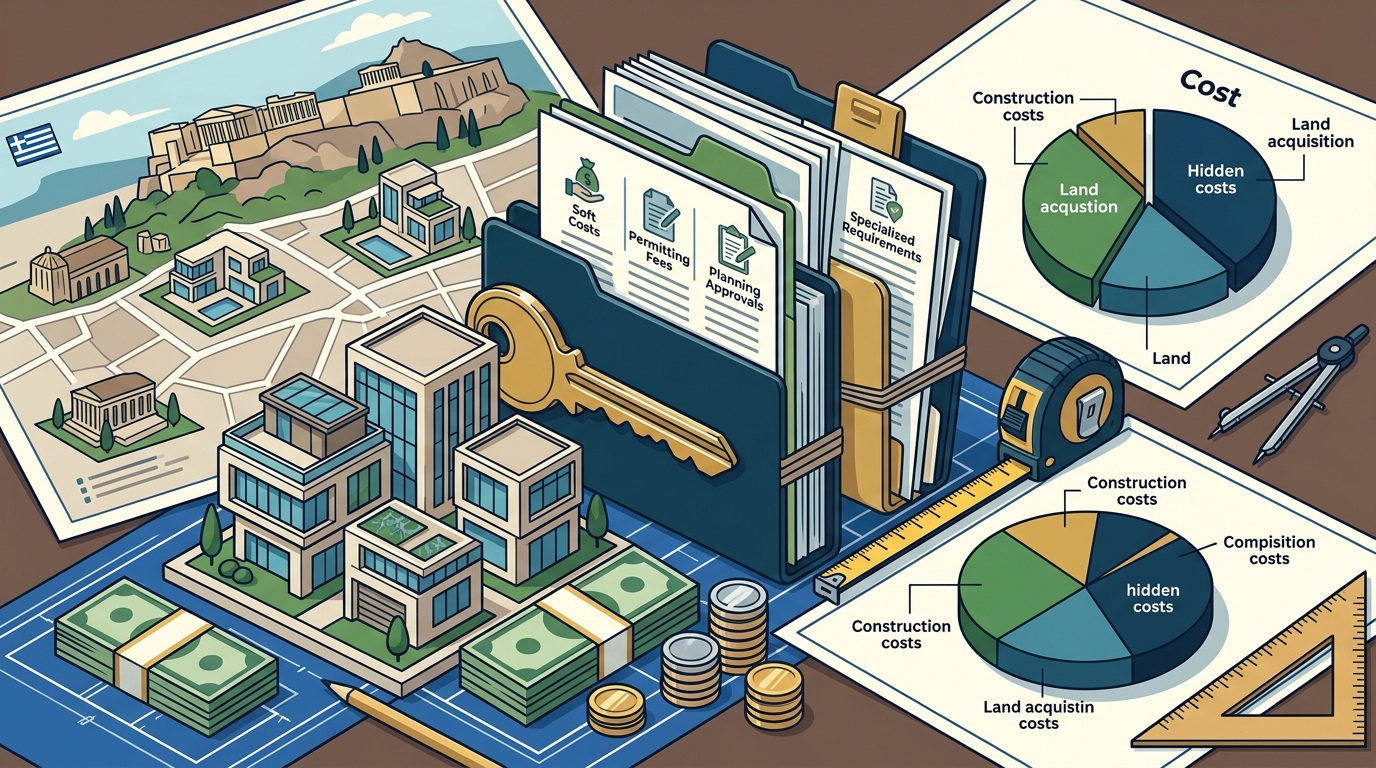
Developing high-end real estate in Greece involves navigating a complex web of financial, regulatory, and operational challenges that extend far beyond the initial land acquisition price. According to recent industry analyses, the total cost of developing a luxury property in Athens can exceed the base land value by 40 to 60 percent when accounting for soft costs, regulatory fees, and specialized construction requirements. This guide explores the often-overlooked expenses that impact the bottom line of premium developments, offering clarity for investors and developers alike.
Understanding Soft Costs and Professional Fees
Soft costs represent a significant portion of the total development budget, yet they are frequently underestimated by new entrants to the Greek market. These expenses include architectural design, engineering consultations, legal fees, and project management services. For luxury developments, the demand for specialized expertise is higher, driving up professional fees.
Architectural design in the luxury sector is not merely about aesthetics. It requires a deep understanding of local zoning laws, environmental regulations, and client expectations. Professional fees typically range from 8 to 12 percent of the total construction cost, depending on the complexity of the project and the reputation of the firm involved.
Legal counsel is another critical soft cost. Navigating Greek property law requires specialized knowledge of land registry issues, inheritance laws, and contractual obligations. Engaging a reputable legal firm ensures that title searches are thorough and that all regulatory hurdles are anticipated early in the process. This proactive approach minimizes the risk of costly delays later in the development cycle.
Project management services are equally essential. A skilled project manager coordinates between architects, contractors, and suppliers, ensuring that the timeline and budget remain on track. Without effective management, even minor delays can cascade into significant financial overruns. The integration of technology in project management has improved efficiency, but the human element remains irreplaceable in high-stakes luxury developments.
Navigating Regulatory Compliance and Permits
Regulatory compliance in Greece is a multifaceted challenge that requires meticulous attention to detail. The permitting process can be lengthy and unpredictable, often taking several months to over a year depending on the location and scope of the project. Understanding the local municipal requirements is crucial for accurate budgeting and scheduling.
Building permits in Greece are issued by local municipalities, each with its own set of rules and procedures. In historic areas, additional restrictions apply to preserve architectural heritage. These restrictions can limit design choices and require specialized materials or techniques, increasing both time and cost. Developers must engage with local authorities early to understand these constraints and incorporate them into their plans.
Environmental assessments are another key component of regulatory compliance. Luxury developments in Greece often face strict environmental scrutiny, particularly in coastal or ecologically sensitive areas. Conducting thorough environmental impact assessments early in the process helps identify potential issues and allows for proactive mitigation strategies. This not only ensures compliance but also enhances the project's sustainability profile, which is increasingly important to high-net-worth buyers.
Tax incentives for sustainable development have emerged as a significant factor in recent years. The Greek government has introduced various incentives to encourage green building practices, including tax breaks for energy-efficient designs and renewable energy integration. Understanding these incentives can significantly reduce the overall cost of compliance and improve the project's financial viability.
Sustainability Investments and LEED Certification
Sustainability is no longer just a trend in luxury real estate. It is a core expectation for modern high-end buyers who prioritize environmental responsibility and long-term value. Investing in sustainable practices from the outset can yield substantial returns, both in terms of marketability and operational efficiency.
LEED certification is a globally recognized standard for green building. Achieving LEED Platinum status, as seen in some pioneering projects in Greece, demonstrates a commitment to environmental excellence. This certification can enhance the property's value and attract a discerning clientele who are willing to pay a premium for sustainable living spaces. The process involves rigorous documentation and verification, requiring close collaboration with certified professionals.
Energy-efficient design is another critical investment. Incorporating features such as solar panels, advanced insulation, and smart home systems reduces long-term operating costs and appeals to eco-conscious buyers. These technologies also contribute to the property's resilience against climate change, ensuring its relevance and value in the future market.
Water conservation measures are equally important. In a region prone to droughts, implementing systems for rainwater harvesting and greywater recycling can significantly reduce water usage. This not only lowers utility bills but also aligns with global sustainability goals, enhancing the project's brand reputation.
The integration of sustainable materials is also a key consideration. Using locally sourced, recycled, or low-carbon materials reduces the environmental footprint of the construction process. This approach supports local economies and reduces transportation emissions, contributing to a more holistic sustainability strategy.
Construction Challenges in Historic Zones
Building in historic zones presents unique challenges that require specialized expertise and careful planning. These areas are often subject to strict preservation laws that limit modifications to existing structures and dictate the use of specific materials and techniques.
One of the primary challenges is the condition of existing infrastructure. Older buildings may have outdated electrical, plumbing, and HVAC systems that need to be upgraded to meet modern standards. This often involves extensive demolition and reconstruction, which can be costly and time-consuming. Engaging contractors with experience in historic restoration is essential to ensure that the work is done correctly and efficiently.
Another challenge is the availability of skilled labor. The craftsmanship required for historic preservation is specialized and in high demand. Finding qualified artisans and builders who understand traditional techniques can be difficult and expensive. However, investing in skilled labor ensures that the final product meets the highest standards of quality and authenticity.
Logistics in historic zones can also be complex. Narrow streets, limited parking, and restricted access can make it difficult to transport materials and equipment. Developing a detailed logistics plan early in the process helps mitigate these challenges and ensures that the construction timeline remains on track.
Community relations are also crucial in historic areas. Residents and local stakeholders often have strong attachments to the character of their neighborhoods. Engaging with the community and addressing their concerns can help build support for the project and reduce the risk of opposition or delays.
Financial Structures and Tax Implications
Understanding the financial structures and tax implications of real estate development in Greece is essential for maximizing returns and minimizing risks. The Greek tax system offers various incentives for investors, but it also includes complex regulations that require careful navigation.
Capital gains tax is a significant consideration for developers. Profits from the sale of developed properties are subject to capital gains tax, which can vary depending on the holding period and the nature of the transaction. Planning for these taxes early in the development process helps ensure that the project remains financially viable.
Value-added tax (VAT) is another key factor. Luxury developments often attract a higher VAT rate, which can impact the final sale price and profitability. Understanding how to structure the transaction to optimize VAT treatment is crucial for financial success.
Financing options for luxury real estate development in Greece are diverse but can be competitive. Banks and private lenders offer various products, but they often require substantial equity contributions and rigorous due diligence. Building strong relationships with financial institutions and presenting a compelling investment case can improve access to favorable financing terms.
Foreign investment incentives have also played a role in the Greek real estate market. Programs such as the Golden Visa, which grants residency to investors who purchase property above a certain threshold, have attracted significant international interest. Understanding the eligibility criteria and benefits of these programs can inform investment strategies and enhance the project's appeal to global buyers.
Key Takeaways
- Soft costs, including architectural and legal fees, typically account for 8 to 12 percent of total construction costs in luxury developments.
- Regulatory compliance in historic zones requires specialized knowledge and can significantly impact timelines and budgets.
- LEED Platinum certification demonstrates a commitment to sustainability and can enhance property value and marketability.
- Energy-efficient design and water conservation measures reduce long-term operating costs and appeal to eco-conscious buyers.
- Construction in historic areas demands skilled labor and careful logistics planning to overcome infrastructure and access challenges.
- Tax incentives for sustainable development and foreign investment programs like the Golden Visa offer significant financial advantages.
- Proactive community engagement and regulatory liaison are essential for navigating complex permitting processes.
Frequently Asked Questions
What are the main soft costs in Greek luxury real estate development?
Soft costs include architectural design, engineering, legal fees, and project management, typically ranging from 8 to 12 percent of the total construction budget.
How long does the permitting process take in Greece?
The permitting process can take several months to over a year, depending on the location, scope, and regulatory complexity of the project.
Is LEED certification necessary for luxury developments?
While not mandatory, LEED certification enhances marketability and value by demonstrating environmental responsibility, which is increasingly important to high-end buyers.
What challenges arise when building in historic zones?
Challenges include strict preservation laws, outdated infrastructure, limited access for logistics, and the need for specialized skilled labor.
Are there tax incentives for sustainable real estate in Greece?
Yes, the Greek government offers tax breaks for energy-efficient designs and renewable energy integration to encourage green building practices.
How does the Golden Visa program impact real estate investment?
The Golden Visa program grants residency to foreign investors who purchase property above a certain threshold, attracting international interest and boosting demand.
What financing options are available for luxury developers?
Options include bank loans and private financing, which often require substantial equity contributions and rigorous due diligence.
Why is community engagement important in historic areas?
Community engagement helps build support for the project, addresses local concerns, and reduces the risk of opposition or delays.
Contact ECLÉDE for Development Consultation
At ECLÉDE, we specialize in high-end, environmentally responsible developments that redefine modern living. Our team brings over two decades of experience in luxury real estate, prop-tech, and technology ventures to every project. We understand the complexities of the Greek market and are committed to delivering exceptional value through innovative design and sustainable practices.
If you are considering a luxury real estate development in Greece, we invite you to explore our portfolio and learn more about our approach. Visit our portfolio page to see our latest projects, including Boomerang Athens and Dynasty Villas. For more information about our services, please visit our about page.
Contact us today to discuss your project. We are available in Athens at 6 Tsakalof Street and in New York at 80 Nassau St. Reach us at info@eclede.com or call +30 210 36 40 655. Let us help you navigate the hidden costs and opportunities of luxury real estate development.