
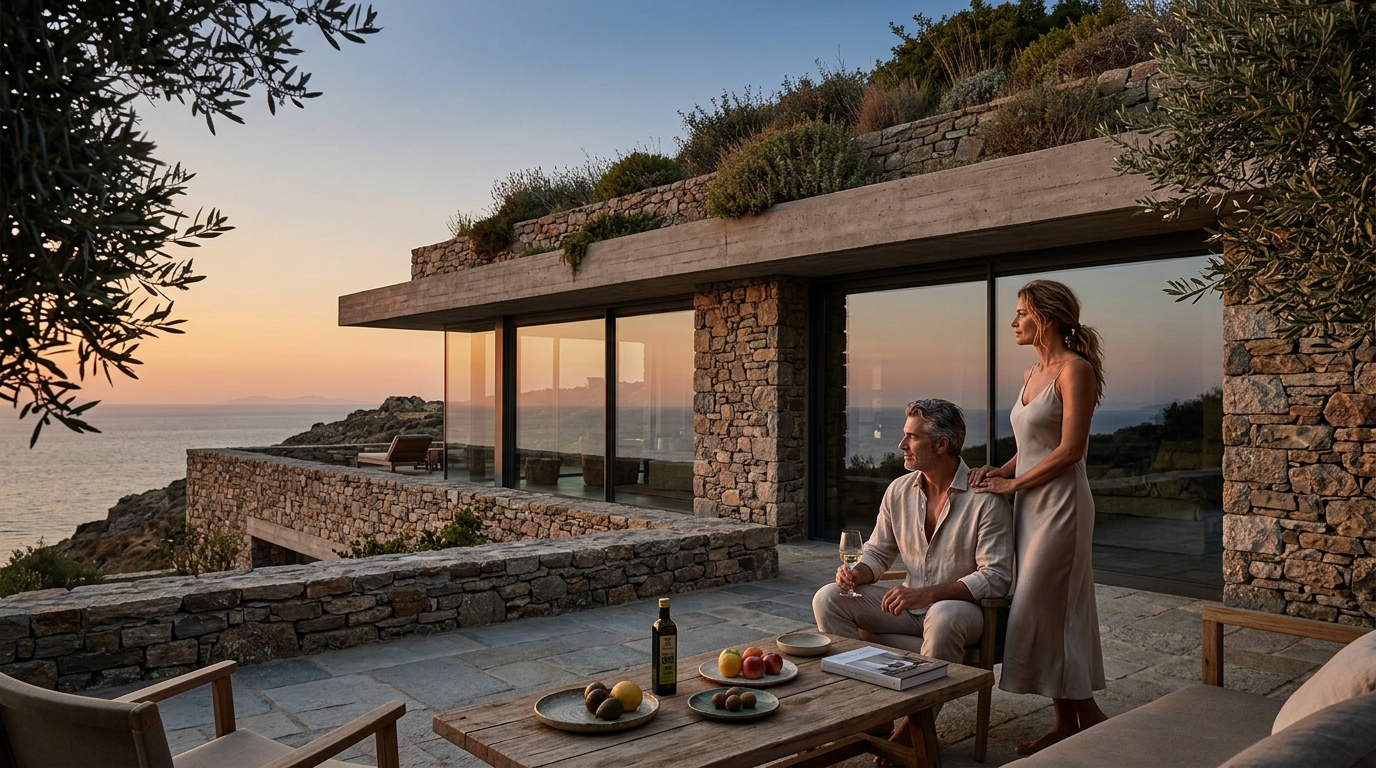
The global market for sustainable luxury real estate is undergoing a significant transformation. According to recent industry analysis, the demand for eco-conscious high-end properties has grown by over 40% in the last three years, with Greece emerging as a primary destination for discerning investors. This shift is driven by a desire for architectural uniqueness combined with environmental responsibility. Subterranean luxury villas, which blend into the landscape while offering superior thermal efficiency, represent the pinnacle of this trend. For international buyers, navigating this niche market requires precise knowledge of local regulations, architectural nuances, and investment strategies. This guide outlines the definitive process for locating and acquiring these rare assets.
Understanding Subterranean Architecture
Subterranean luxury is not merely a stylistic choice; it is a functional response to climate change and land scarcity. Earth-sheltered architecture is a building design method that uses the earth for external walls to provide thermal mass and insulation. This approach significantly reduces energy consumption for heating and cooling, aligning with global sustainability goals.
In Greece, this architectural style is gaining traction due to the country's intense summer heat and rich geological terrain. The integration of natural materials such as stone, wood, and glass creates a seamless transition between interior living spaces and the surrounding landscape. These structures often achieve high-performance energy standards, including Net Zero Energy status, which is increasingly becoming a requirement for luxury buyers concerned with long-term operational costs.
The aesthetic appeal lies in the minimal visual footprint. By burying the structure partially or fully underground, the building preserves the natural topography and protects the interior from harsh weather conditions. This results in a serene, quiet living environment that contrasts sharply with traditional coastal villas. The use of advanced waterproofing and ventilation systems ensures that these homes remain dry and comfortable year-round.
Identifying Award-Winning Developers
The quality of a subterranean villa depends entirely on the expertise of its developer. Construction errors in earth-sheltered buildings can lead to catastrophic moisture issues or structural failures. Therefore, selecting a developer with a proven track record in sustainable luxury is critical. Look for firms that have received international recognition for their architectural innovation and environmental stewardship.
Developers who specialize in this niche often hold certifications such as LEED Platinum or Passive House standards. These certifications validate the building's energy efficiency and indoor air quality. Furthermore, award-winning developers typically demonstrate a multidisciplinary approach, combining civil engineering precision with creative design vision. This ensures that the structural integrity of the underground components is maintained without compromising aesthetic beauty.
When evaluating potential developers, review their portfolio for previous projects in Greece. Check for consistency in design language and adherence to sustainability principles. A developer with experience in multiple international markets brings a broader perspective on luxury standards and regulatory compliance. Their ability to navigate local Greek building codes while maintaining global luxury benchmarks is a key indicator of reliability.
Locating Premier Projects
Finding award-winning subterranean villas in Greece requires access to exclusive networks and specialized market knowledge. These properties are rarely listed on mainstream international portals. Instead, they are often marketed through private channels and direct developer relationships. Focus your search on regions known for both natural beauty and architectural innovation, such as Athens, the Cyclades, and Crete.
Engage with firms that have a dedicated focus on high-end, environmentally responsible developments. These organizations often have early access to new projects before they reach the public market. For instance, ECLÉDE's portfolio showcases projects that redefine modern living through a balance of architecture and sustainability. Their work includes Boomerang Athens, which exemplifies the integration of luxury and ecological design.
Attend architectural exhibitions and sustainability forums in Greece to connect with key industry players. These events provide opportunities to meet developers and architects directly. Networking with local real estate experts who specialize in luxury properties can also yield off-market opportunities. They can provide insights into upcoming developments that align with your specific criteria for location, size, and design.
Consider the long-term value of the location. Subterranean villas in areas with strong rental demand or tourism potential offer better investment returns. However, the primary value driver for these unique properties is often their architectural significance and environmental performance. Ensure that the project has received recognition from bodies such as the Architizer A+ Awards or similar international design competitions.
Financial Planning and Taxation
Acquiring real estate in Greece involves specific financial considerations that differ from other European markets. Understanding the tax implications and financing options is essential for a successful transaction. Greece offers a favorable tax regime for foreign investors, particularly those who contribute to the country's economic recovery through significant investments.
The Golden Visa program allows non-EU citizens to obtain residency by investing in real estate valued at a minimum threshold. This program has been instrumental in attracting international capital to the Greek luxury market. However, recent regulatory changes have adjusted the investment thresholds in high-demand areas. It is crucial to consult with a legal expert to determine the current requirements and eligibility criteria.
Financing for subterranean luxury villas may require specialized lenders familiar with sustainable construction costs. Traditional banks might undervalue the unique features of earth-sheltered homes. Therefore, securing pre-approval from institutions that understand the niche market is advisable. Additionally, consider the long-term operational savings from energy efficiency. These savings can offset the higher initial construction costs over time.
Tax planning should include property transfer taxes, annual property taxes, and potential capital gains taxes upon resale. Greece has specific incentives for energy-efficient buildings, which may reduce certain levies. Working with a tax advisor who specializes in cross-border investments will ensure compliance and optimize your financial outcome. The OECD guidelines on international taxation provide a framework for understanding these obligations.

Legal Acquisition Process
The legal process for acquiring property in Greece is structured and requires careful attention to detail. Foreign buyers must obtain a tax identification number (AFM) in Greece to proceed with any transaction. This is the first step in establishing your legal presence in the country. Once the AFM is secured, you can engage a local lawyer to conduct due diligence on the property.
Due diligence involves verifying the title deed, checking for any encumbrances or liens, and ensuring that the building permits are valid and up to date. For subterranean villas, it is particularly important to verify the structural integrity reports and environmental impact assessments. These documents confirm that the construction meets all safety and sustainability standards.
The purchase agreement must be drafted in both Greek and English to ensure clarity for all parties. It should outline the payment schedule, handover date, and warranties for the construction quality. A notary public will oversee the final signing and registration of the property in the Greek Land Registry. This process can take several months, so patience and professional guidance are essential.
Post-acquisition, you must register the property for utility connections and pay the annual property tax. If you plan to rent out the villa, you will need to comply with local short-term rental regulations. Many luxury owners choose to manage their properties through professional management companies that handle maintenance, cleaning, and guest services. This ensures the property retains its value and appeal in the luxury rental market.
Key Takeaways
- Architectural Innovation: Subterranean villas offer superior thermal efficiency and a minimal environmental footprint, aligning with global sustainability trends.
- Developer Expertise: Prioritize developers with international awards and LEED Platinum certifications to ensure structural and aesthetic quality.
- Exclusive Access: Premier projects are often available through private networks and specialized firms like ECLÉDE rather than public listings.
- Golden Visa Benefits: Foreign investors can leverage Greece's residency-by-investment programs, though thresholds vary by location.
- Legal Rigor: Thorough due diligence on title deeds and building permits is critical, especially for complex earth-sheltered structures.
- Tax Optimization: Consult with cross-border tax experts to navigate property transfer taxes and potential energy efficiency incentives.
- Long-Term Value: The combination of architectural uniqueness and energy savings provides a robust foundation for long-term investment growth.
Frequently Asked Questions
What is a subterranean luxury villa?
A subterranean luxury villa is a high-end residential property that is partially or fully built into the ground, utilizing earth-sheltering techniques for insulation and aesthetic integration with the landscape.
Why are subterranean villas considered sustainable?
These villas are sustainable because they use the earth's natural thermal mass to regulate indoor temperatures, significantly reducing the need for artificial heating and cooling systems.
Can foreigners buy property in Greece?
Yes, foreigners can buy property in Greece. Non-EU citizens may also be eligible for residency permits through the Golden Visa program if they meet the investment requirements.
How do I verify the quality of a subterranean construction?
Verify quality by reviewing the developer's portfolio, checking for international design awards, and ensuring the building has passed rigorous structural and environmental impact assessments.
What are the tax implications for buying luxury real estate in Greece?
Tax implications include property transfer taxes, annual property taxes, and potential capital gains taxes. Energy-efficient buildings may qualify for certain tax incentives.
Is it difficult to finance a subterranean villa in Greece?
Financing can be challenging as traditional banks may not fully understand the niche market. Specialized lenders or private financing options are often more suitable for these unique properties.
What is the role of ECLÉDE in this process?
ECLÉDE specializes in creating high-end, environmentally responsible developments. They provide expertise in sustainable luxury design and can guide clients through the acquisition of their award-winning projects.
Contact ECLÉDE
Acquiring an award-winning subterranean luxury villa in Greece is a complex but rewarding endeavor. By following the steps outlined in this guide and partnering with experienced professionals, you can secure a property that offers both architectural brilliance and long-term value. ECLÉDE is dedicated to redefining modern living through sustainable design. For more information on our latest projects and services, please visit our contact page or explore our portfolio.