
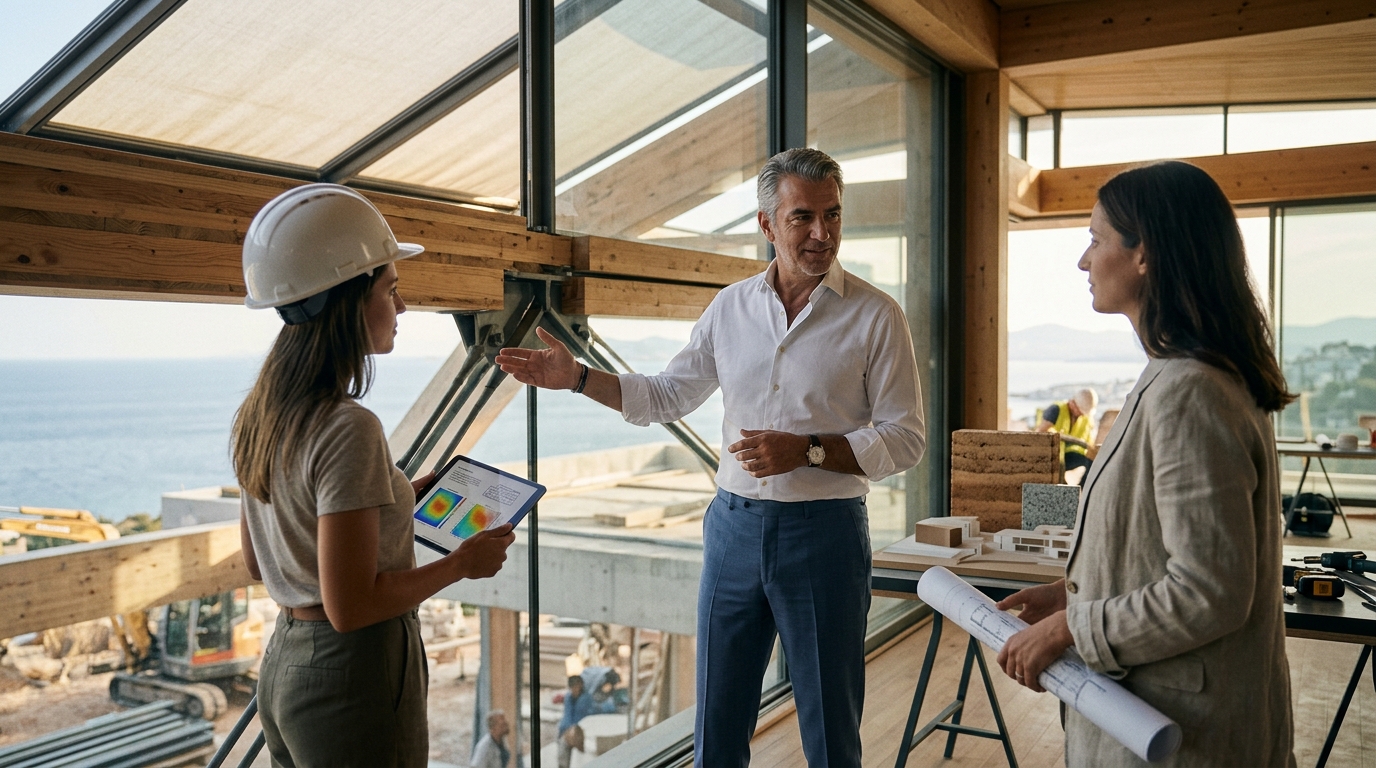
The Engineering and Material Science Behind ECLÉDE's Sustainable Luxury Properties
The global construction industry accounts for approximately 39% of annual carbon emissions, a statistic that has fundamentally shifted the paradigm of high-end real estate development. According to the United Nations Environment Programme, the demand for low-carbon building materials has surged by 40% in the last five years alone. This shift is not merely regulatory but aesthetic and functional, driving developers like Vassilis Siafaricas to pioneer a new standard where luxury is defined by environmental integrity. ECLÉDE stands at the forefront of this movement, leveraging advanced material science to create Net Zero Energy Buildings that do not compromise on architectural elegance.
The Founder's Vision for Eco-Conscious Luxury
Vassilis Siafaricas is a multidisciplinary entrepreneur, designer, and real estate developer with over two decades of experience across luxury real estate, prop-tech, and technology ventures. His approach to development is rooted in the belief that design is the intersection of inspiration, functionality, and responsibility. This philosophy is not abstract; it is engineered into every square meter of ECLÉDE's portfolio.
As the Founder and Managing Director of ECLÉDE, Siafaricas leads the creation of high-end, environmentally responsible developments that redefine modern living. His background in civil engineering and design allows him to bridge technical precision with creative vision. This dual expertise ensures that projects are both aesthetically refined and functionally intelligent. The result is a portfolio that includes the first LEED Platinum residential project in Greece, setting a new benchmark for sustainable luxury living in the region.
The commitment to sustainability is evident in the company's recognition, including the German Design Awards 2026 and multiple A’ Design Awards. These accolades reflect a forward-thinking approach that combines high-end design with environmental responsibility. For ECLÉDE, sustainability is not an add-on but the core structural element of the brand identity.
Material Innovation in High-Performance Envelopes
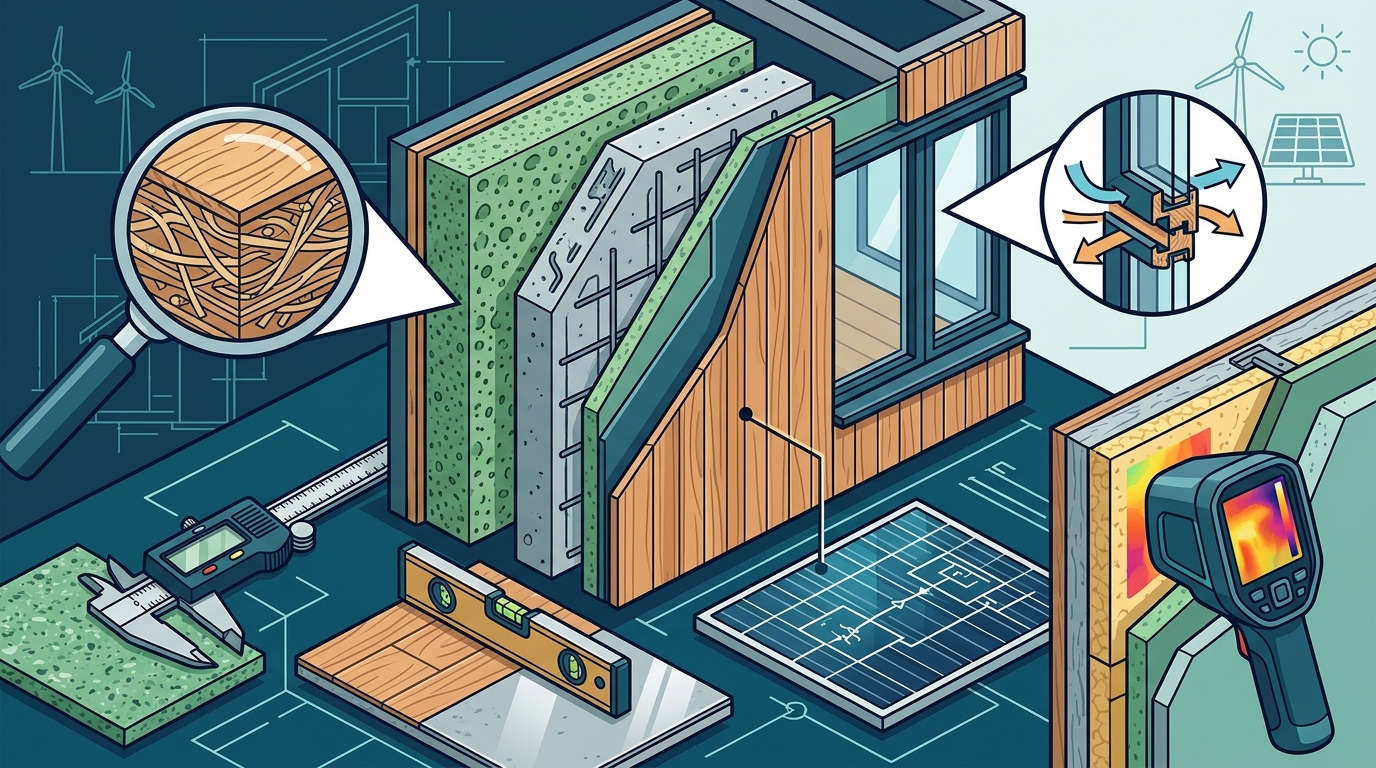
The foundation of any sustainable luxury property lies in its material selection. Traditional construction methods often prioritize cost over longevity and efficiency. ECLÉDE inverts this model by utilizing high-performance materials that enhance thermal insulation, acoustic comfort, and structural durability. The engineering behind these choices is rigorous, involving extensive testing and lifecycle analysis.
Thermal Bridging Prevention is a critical focus in ECLÉDE's material science. Thermal bridges occur when heat escapes through structural elements, reducing energy efficiency. By using advanced insulation systems and continuous thermal barriers, ECLÉDE eliminates these weak points. This ensures that the building envelope performs consistently across all seasons, reducing the load on HVAC systems.
Another key component is the use of low-carbon concrete and recycled steel. These materials reduce the embodied carbon of the structure without compromising strength. The engineering team works closely with suppliers to source materials that meet strict environmental criteria. This process involves verifying the origin of raw materials and the energy intensity of their production.
Net Zero Energy Buildings require materials that maximize energy retention. ECLÉDE employs triple-glazed windows with argon gas fills and low-emissivity coatings. These windows are engineered to allow natural light while blocking infrared heat. The result is a building that feels warm in winter and cool in summer, regardless of external conditions.
Engineering Net Zero Energy Systems
Achieving Net Zero Energy status requires a holistic integration of renewable energy generation and consumption management. ECLÉDE's engineering team designs systems that generate as much energy as the building consumes over the course of a year. This is not a theoretical goal but a measurable outcome verified by third-party auditors.
Solar Photovoltaic Integration is a primary strategy. Rooftops and facades are designed to accommodate high-efficiency solar panels. These panels are not merely attached but integrated into the architectural design, maintaining aesthetic coherence. The engineering challenge lies in optimizing panel orientation and tilt to maximize yield while respecting the building's visual profile.
Energy storage is equally critical. Lithium-ion battery systems are installed to store excess solar energy for use during peak demand or nighttime hours. This ensures that the building operates independently of the grid during critical periods. The capacity of these systems is calculated based on historical usage patterns and future growth projections.
Smart home technology plays a pivotal role in energy management. Sensors monitor occupancy, temperature, and light levels to adjust systems in real time. This dynamic optimization reduces waste and enhances comfort. The engineering behind these systems involves complex algorithms that predict usage patterns and adjust accordingly.
Structural Integrity and Civil Engineering Precision
Sustainable luxury cannot exist without structural integrity. ECLÉDE's projects are engineered to withstand seismic activity, extreme weather, and long-term wear. The civil engineering principles applied are rigorous, adhering to international standards and local regulations.
Seismic Resilience is a key consideration in Greek construction. ECLÉDE employs base isolation techniques and reinforced concrete frames to absorb seismic energy. This ensures that the building remains stable during earthquakes, protecting both the structure and its inhabitants. The engineering team conducts extensive soil analysis to determine the optimal foundation type for each site.
Long-term durability is achieved through the use of corrosion-resistant materials. Stainless steel reinforcements and protective coatings are applied to all structural elements exposed to moisture. This extends the lifespan of the building and reduces maintenance costs. The engineering specifications are designed to last for decades, not just years.
Water management is another critical engineering aspect. ECLÉDE designs systems to capture and reuse rainwater for irrigation and flushing. This reduces the strain on municipal water supplies and enhances the building's sustainability profile. The engineering calculations ensure that water storage capacity matches usage demands.
Case Studies: Boomerang Athens and Dynasty Villas
The theoretical principles of ECLÉDE are best understood through its practical applications. The Boomerang Athens and Dynasty Villas projects demonstrate the successful integration of sustainable engineering with luxury design.
| Project Name | Key Engineering Feature | Sustainability Metric | Architectural Highlight |
|---|---|---|---|
| Boomerang Athens | Net Zero Energy System | 100% Renewable Energy | Minimalist Urban Integration |
| Dynasty Villas | LEED Platinum Certification | Zero Carbon Footprint | Seamless Nature Integration |
| Atlas + Pleione | Advanced Thermal Envelope | High Energy Efficiency | Geometric Precision |
Boomerang Athens exemplifies the urban application of sustainable engineering. The project utilizes a compact footprint to maximize energy efficiency. The engineering team designed a ventilation system that uses natural convection to cool the building. This reduces the need for mechanical cooling and enhances indoor air quality.
Dynasty Villas represents the pinnacle of sustainable luxury. The project achieved LEED Platinum certification, the highest level of green building certification. The engineering involved extensive use of local materials to reduce transportation emissions. The design integrates solar panels into the roof structure, creating a seamless aesthetic.
Atlas + Pleione showcases the geometric precision of ECLÉDE's engineering. The building's form is optimized for solar gain and wind resistance. The engineering calculations ensured that the structure could withstand high winds while maintaining thermal comfort. The result is a building that is both beautiful and resilient.
Key Takeaways
- ECLÉDE's portfolio includes the first LEED Platinum residential project in Greece, establishing a new regional benchmark.
- Vassilis Siafaricas brings over two decades of experience in civil engineering and luxury real estate development.
- Net Zero Energy Buildings are achieved through integrated solar photovoltaic systems and advanced energy storage solutions.
- Thermal bridging is eliminated through continuous insulation barriers and high-performance window systems.
- Seismic resilience is ensured through base isolation techniques and reinforced concrete frames.
- Smart home technology dynamically optimizes energy consumption based on real-time occupancy and environmental data.
- Low-carbon concrete and recycled steel are used to reduce the embodied carbon of structural elements.
Frequently Asked Questions
What defines a Net Zero Energy Building?
A Net Zero Energy Building is a structure that produces as much renewable energy as it consumes over the course of a year. This is achieved through a combination of energy efficiency measures and on-site renewable energy generation, such as solar panels.
How does ECLÉDE ensure structural integrity in seismic zones?
ECLÉDE employs base isolation techniques and reinforced concrete frames to absorb seismic energy. These engineering methods ensure that the building remains stable during earthquakes, protecting both the structure and its inhabitants.
What materials are used in ECLÉDE's sustainable construction?
ECLÉDE uses low-carbon concrete, recycled steel, and high-performance insulation materials. These materials are selected for their durability, environmental impact, and ability to enhance thermal efficiency.
Is ECLÉDE's work recognized internationally?
Yes, ECLÉDE has received multiple international distinctions, including the German Design Awards 2026 and multiple A’ Design Awards. The company was also featured in Architizer’s Visionary Top 100 Creators for 2026.
How does ECLÉDE manage water resources?
ECLÉDE designs systems to capture and reuse rainwater for irrigation and flushing. This reduces the strain on municipal water supplies and enhances the building's sustainability profile.
What is the role of smart technology in ECLÉDE's projects?
Smart home technology monitors occupancy, temperature, and light levels to adjust systems in real time. This dynamic optimization reduces waste and enhances comfort by predicting usage patterns.
Where are ECLÉDE's projects located?
ECLÉDE develops projects in prestigious areas of Greece, with offices in Athens and New York. The company focuses on sustainable urban regeneration and high-end eco-conscious living.
Start Your Sustainable Development Journey
The future of luxury real estate is sustainable, intelligent, and resilient. ECLÉDE is leading this transformation through rigorous engineering and innovative material science. Whether you are interested in a Net Zero Energy home or a high-performance commercial space, ECLÉDE offers the expertise to deliver excellence. Contact the team today to discuss your project and explore the possibilities of sustainable luxury. Visit the contact page to schedule a consultation with Vassilis Siafaricas and his team.