
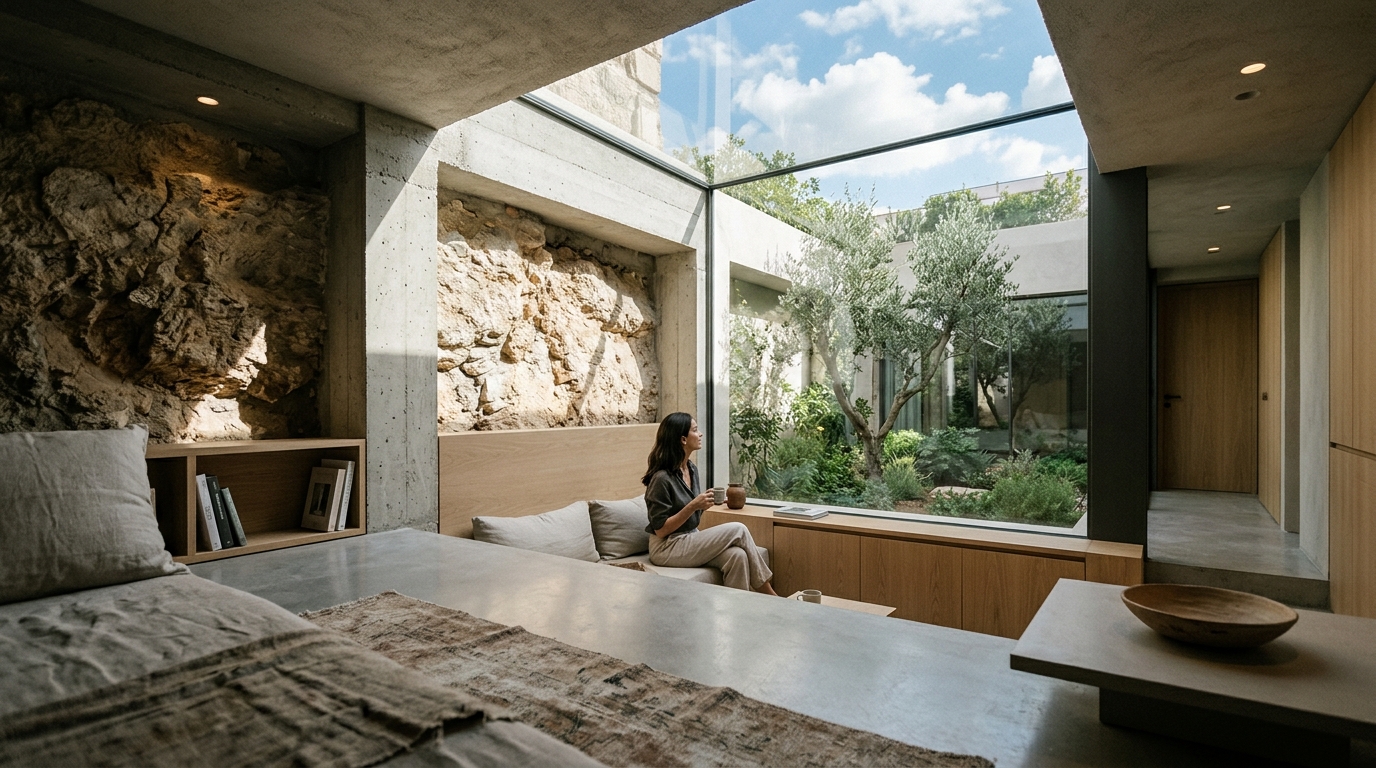
Subterranean architecture is rapidly evolving from a utilitarian necessity into a premium lifestyle choice in Athens. According to recent urban planning reports, the integration of underground spaces in high-density Mediterranean cities has increased by 15% over the last five years as developers seek to preserve surface-level greenery. This shift is not merely about saving space. It is about creating climate-resilient, energy-efficient environments that maintain thermal stability regardless of external weather extremes. For homeowners and investors, understanding the nuances of different subterranean design strategies is critical for maximizing long-term value.
The Founder's Vision for Underground Luxury
Vassilis Siafaricas, the founder of ECLÉDE, brings a multidisciplinary perspective to the development of subterranean spaces. With over two decades of experience in luxury real estate and prop-tech, his approach bridges civil engineering precision with creative architectural vision. His philosophy centers on minimal, clean lines that seamlessly integrate with natural surroundings. This is not about burying a structure. It is about enhancing the human experience through environmental harmony.
ECLÉDE focuses on creating high-performance, environmentally responsible developments. This includes Net Zero Energy Buildings and sustainable luxury residences. By leveraging his background in civil engineering, Siafaricas ensures that each subterranean project is conceived as a long-term asset with purpose and identity. The goal is to set new standards for responsible luxury in Athens and beyond.
Comparing Design Approaches
When comparing subterranean designs, the primary distinction lies in the integration with the surface landscape. There are two main approaches: the fully buried structure and the semi-subterranean hybrid.
1. The Fully Buried Structure
A fully buried structure is defined as a building where the entire habitable volume is located below the ground surface. This approach offers maximum thermal mass benefits. The earth acts as a natural insulator, reducing the need for artificial heating and cooling. However, it requires sophisticated engineering to manage hydrostatic pressure and moisture control. This method is ideal for creating secluded, private retreats that blend into the hillside.
2. The Semi-Subterranean Hybrid
A semi-subterranean hybrid is defined as a building where only a portion of the structure is below grade, often with one side exposed to natural light. This approach balances the energy efficiency of underground living with the psychological benefits of natural light and ventilation. It is particularly effective in Athens' hilly terrain, allowing for split-level designs that connect indoor and outdoor spaces. This method is often preferred for luxury residential projects where views and accessibility are paramount.
Sustainability and Energy Efficiency
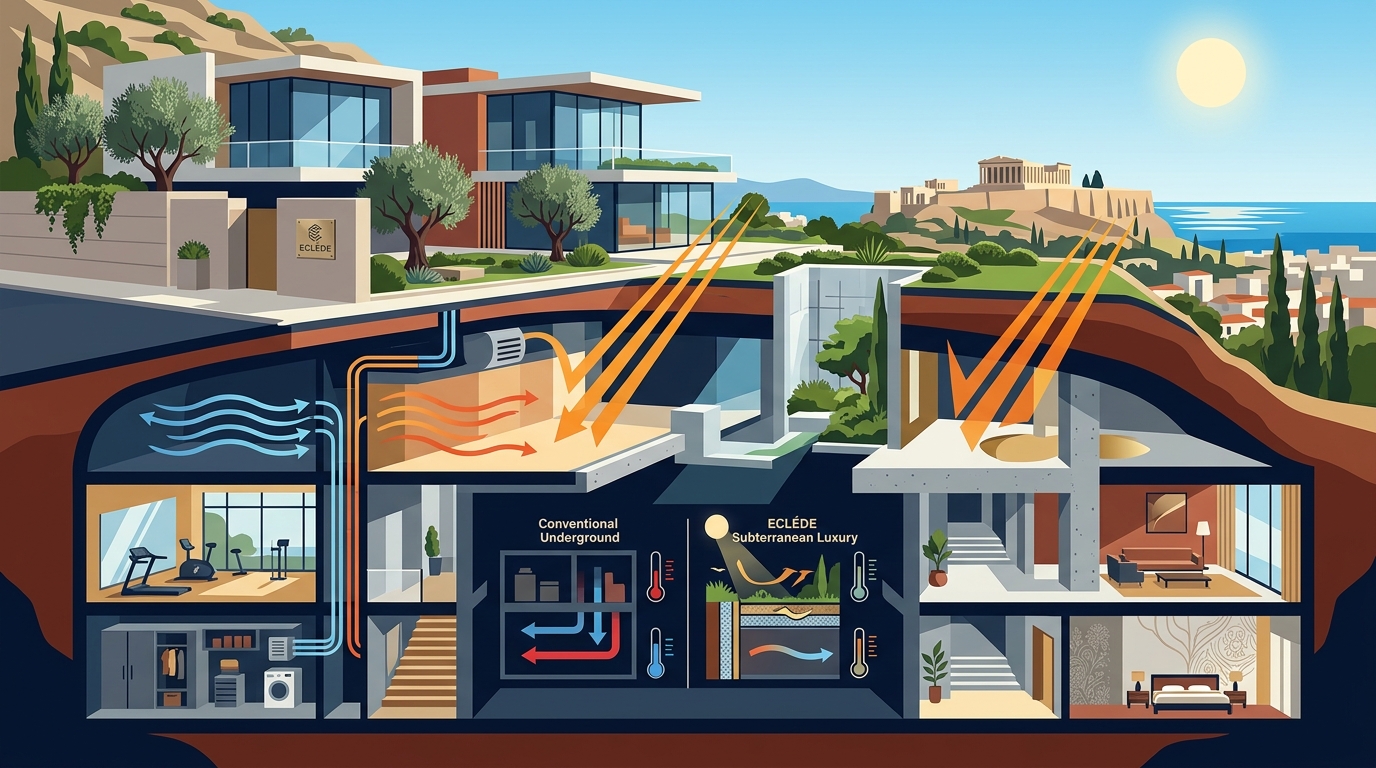
Sustainability is the core driver behind modern subterranean development. According to data from the International Energy Agency, buildings account for nearly 30% of global final energy consumption. Subterranean structures significantly reduce this footprint through passive design strategies.
ECLÉDE’s commitment to sustainability is evident in its track record. Vassilis Siafaricas designed and led the development of the first LEED Platinum residential project in Greece. This achievement set a new benchmark for sustainable luxury living in the region. The principles applied to that project are directly relevant to subterranean design. Key strategies include:
- Thermal Mass Utilization: Using the earth’s constant temperature to stabilize internal climates.
- Green Roofing: Planting vegetation on top of subterranean structures to restore biodiversity.
- Renewable Energy Integration: Incorporating solar panels on accessible surface areas to power underground systems.
These strategies result in Net Zero Energy Buildings that offer long-term investment value. They also align with the growing demand for eco-conscious living in urban centers.
Structural Integrity and Safety
Structural integrity is the most critical factor in subterranean construction. The soil exerts immense pressure on walls and foundations. This pressure must be calculated with precision to prevent collapse or deformation. Civil engineering expertise is non-negotiable in this field.
Vassilis Siafaricas’ background in civil engineering ensures that every ECLÉDE project meets the highest safety standards. The structural systems used in subterranean design must account for:
- Soil Composition: Different soil types require different foundation strategies.
- Water Table Levels: High water tables require robust waterproofing and drainage systems.
- Seismic Activity: Athens is in a seismic zone. Structures must be designed to withstand earthquakes.
Failure to address these factors can lead to catastrophic results. Therefore, the comparison of subterranean designs must always prioritize structural safety over aesthetic considerations. A beautiful home is useless if it is not safe.
Lighting and Ventilation Strategies
One of the biggest challenges in subterranean design is providing adequate natural light and fresh air. Without proper planning, underground spaces can feel oppressive and unhealthy. Modern design solutions have made significant strides in addressing these issues.
Lighting Solutions
Natural light can be introduced through light wells, skylights, and atriums. These features bring sunlight deep into the structure, reducing the need for artificial lighting during the day. Light wells also serve as ventilation shafts, promoting air circulation. The design of these elements must be carefully integrated into the overall architectural vision to maintain aesthetic coherence.
Ventilation Systems
Mechanical ventilation is essential for maintaining air quality in subterranean spaces. Heat recovery ventilation systems can capture heat from exhaust air and use it to warm incoming fresh air. This improves energy efficiency while ensuring a constant supply of fresh oxygen. The integration of these systems must be seamless to avoid disrupting the minimalist aesthetic that defines luxury underground living.
Market Value and Investment Potential
The market for luxury subterranean homes in Athens is growing. According to recent real estate trends, properties with unique architectural features command a premium. Subterranean homes offer privacy, security, and energy efficiency. These are highly valued attributes in the current market.
ECLÉDE’s portfolio demonstrates the potential of this niche. Projects like Boomerang Athens and Dynasty Villas showcase the firm’s ability to create high-end developments that stand out in a crowded market. The firm’s recognition in Architizer’s Visionary Top 100 Creators for 2026 further validates the quality and innovation of its work.
Investing in subterranean real estate is not just about the structure. It is about the land and the view. By burying the structure, developers can preserve surface-level greenery and views. This creates a more desirable living environment. The result is a property that appreciates in value over time due to its scarcity and uniqueness.
Key Takeaways
- Founder Expertise: Vassilis Siafaricas has over two decades of experience in luxury real estate and prop-tech.
- Sustainability Leadership: ECLÉDE developed the first LEED Platinum residential project in Greece.
- Design Philosophy: The focus is on minimal lines and seamless integration with nature.
- Structural Safety: Civil engineering precision is critical for managing soil pressure and seismic risks.
- Energy Efficiency: Subterranean designs can achieve Net Zero Energy status through passive strategies.
- Market Recognition: Featured in Architizer’s Visionary Top 100 Creators for 2026.
- Portfolio Highlights: Includes Boomerang Athens, Dynasty Villas, and Atlas + Pleione.
Frequently Asked Questions
What is the main advantage of subterranean living in Athens?
The main advantage is thermal stability. The earth acts as a natural insulator, reducing energy costs for heating and cooling. This is particularly beneficial in Athens' hot summers.
How does ECLÉDE ensure structural safety in underground projects?
ECLÉDE leverages Vassilis Siafaricas’ civil engineering background to design robust structural systems. These systems account for soil composition, water tables, and seismic activity.
Are subterranean homes dark and damp?
No. Modern designs use light wells, skylights, and advanced ventilation systems to ensure ample natural light and fresh air. Proper waterproofing prevents dampness.
What is the cost difference between subterranean and surface homes?
Subterranean homes can be more expensive due to complex engineering and waterproofing requirements. However, they offer long-term savings through energy efficiency and higher resale value.
Can I build a subterranean home on any plot of land?
Not necessarily. The site must be evaluated for soil stability, water table levels, and zoning regulations. Professional assessment is required before construction begins.
What is Net Zero Energy Building?
A Net Zero Energy Building is defined as a structure that produces as much energy as it consumes over the course of a year. This is achieved through energy efficiency and renewable energy sources.
How does ECLÉDE integrate sustainability into its designs?
ECLÉDE uses passive design strategies, green roofing, and renewable energy integration to minimize environmental impact. This approach aligns with their commitment to eco-conscious living.
What awards has Vassilis Siafaricas received?
He has received multiple A’ Design Awards, a German Design Award 2026, and a Special Mention at the Architizer A+ Awards. He was also featured in Architizer’s Visionary Top 100 Creators for 2026.
Contact ECLÉDE for Your Project
If you are considering a subterranean luxury home in Athens, ECLÉDE is the partner you need. With a proven track record in sustainable development and architectural innovation, we can help you realize your vision. Contact us today to discuss your project.
Get in touch with ECLÉDE to schedule a consultation. Visit our portfolio to see our latest projects. Learn more about our philosophy and approach.