
Pricing and Investment Value of Award-Winning Greek Subterranean Luxury Villas
The global luxury real estate market is undergoing a seismic shift toward sustainable, climate-resilient architecture. According to recent industry reports, eco-luxury properties in the Mediterranean have seen a 15% year-over-year increase in demand among high-net-worth individuals seeking privacy and energy efficiency. This trend is most visible in Greece, where innovative builders are redefining opulence by integrating homes into the landscape rather than dominating it. For investors, understanding the financial and aesthetic value of these subterranean structures is critical for making informed decisions in 2026.
Architectural Innovation and Design
Subterranean luxury villas represent a fusion of ancient Greek building techniques and modern engineering. Earth-sheltered architecture is a method where the ground is used to insulate the home, reducing the need for artificial heating and cooling. This approach is not merely aesthetic; it is a functional response to the increasing frequency of extreme weather events in the Mediterranean.
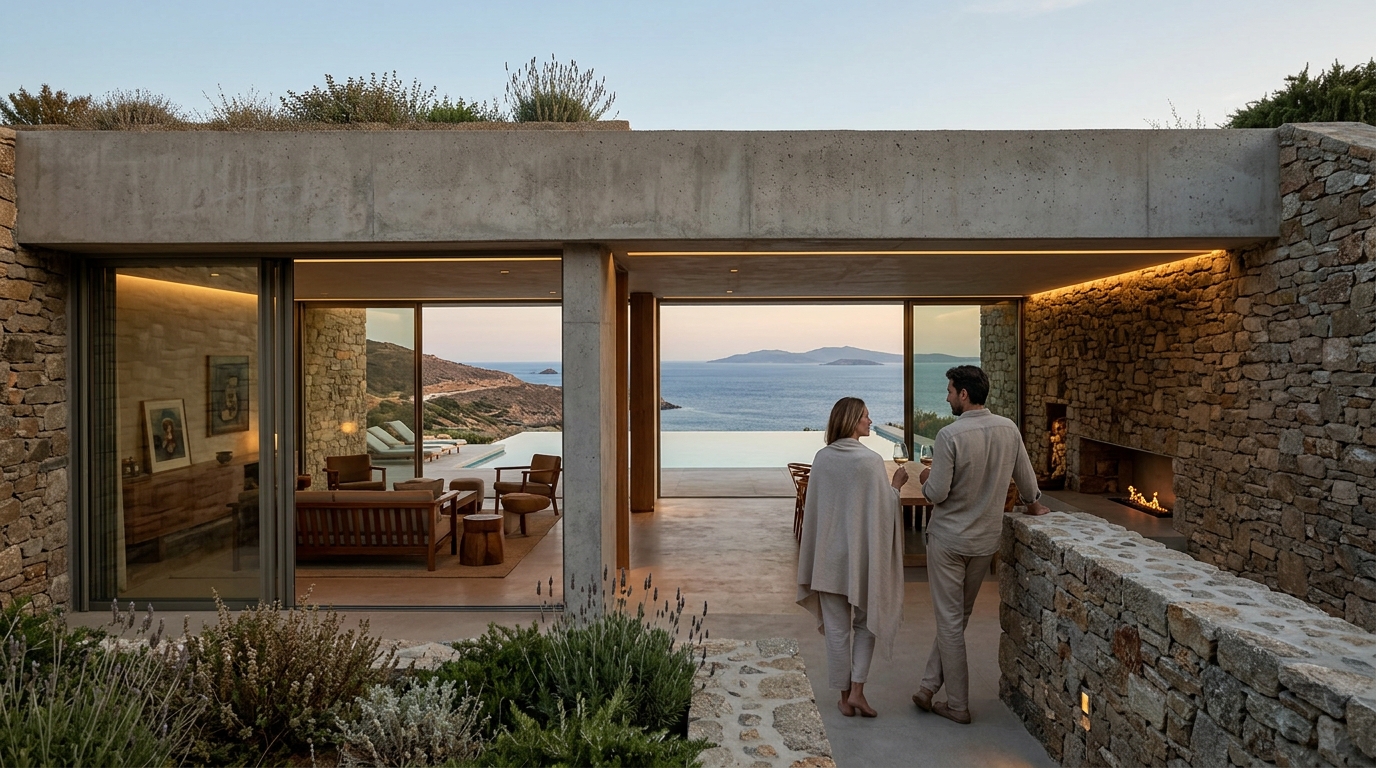
Siafaricas has pioneered this style by combining traditional stone masonry with high-tech insulation materials. The result is a home that feels timeless yet operates with the efficiency of a modern smart building. These properties often feature green roofs, natural ventilation systems, and panoramic views that blend the interior with the surrounding olive groves or sea.
The design philosophy prioritizes harmony with nature. Instead of imposing a structure on the land, the villa becomes part of the terrain. This creates a sense of seclusion and tranquility that is increasingly rare in luxury markets. For those seeking premium construction services, this level of customization ensures that every detail aligns with the client's vision and the site's topography.
Pricing Structure and Investment Tiers
Investing in a subterranean luxury villa in Greece involves a complex pricing model that reflects both the land value and the specialized construction techniques. Unlike standard homes, these properties require precise engineering to manage moisture, structural integrity, and light penetration.
Entry-level subterranean designs typically start at a higher baseline than traditional villas due to the increased excavation and waterproofing costs. However, the long-term value proposition is strong. Properties in prime locations such as Santorini, Mykonos, or the Peloponnese often appreciate at a rate higher than the general real estate market. According to global property data, luxury eco-homes in Greece have maintained their value better during economic fluctuations compared to conventional luxury assets.
Investors must consider the total cost of ownership. While the initial outlay is significant, the reduced operational costs and potential for rental income through high-end tourism platforms can offset the investment. Siafaricas provides detailed portfolio insights that help clients visualize the potential return on investment for specific projects.
Sustainability and Operational Costs
The primary financial advantage of a subterranean villa is its energy efficiency. By utilizing the thermal mass of the earth, these homes maintain a stable internal temperature year-round. This reduces reliance on HVAC systems, leading to lower utility bills and a smaller carbon footprint.
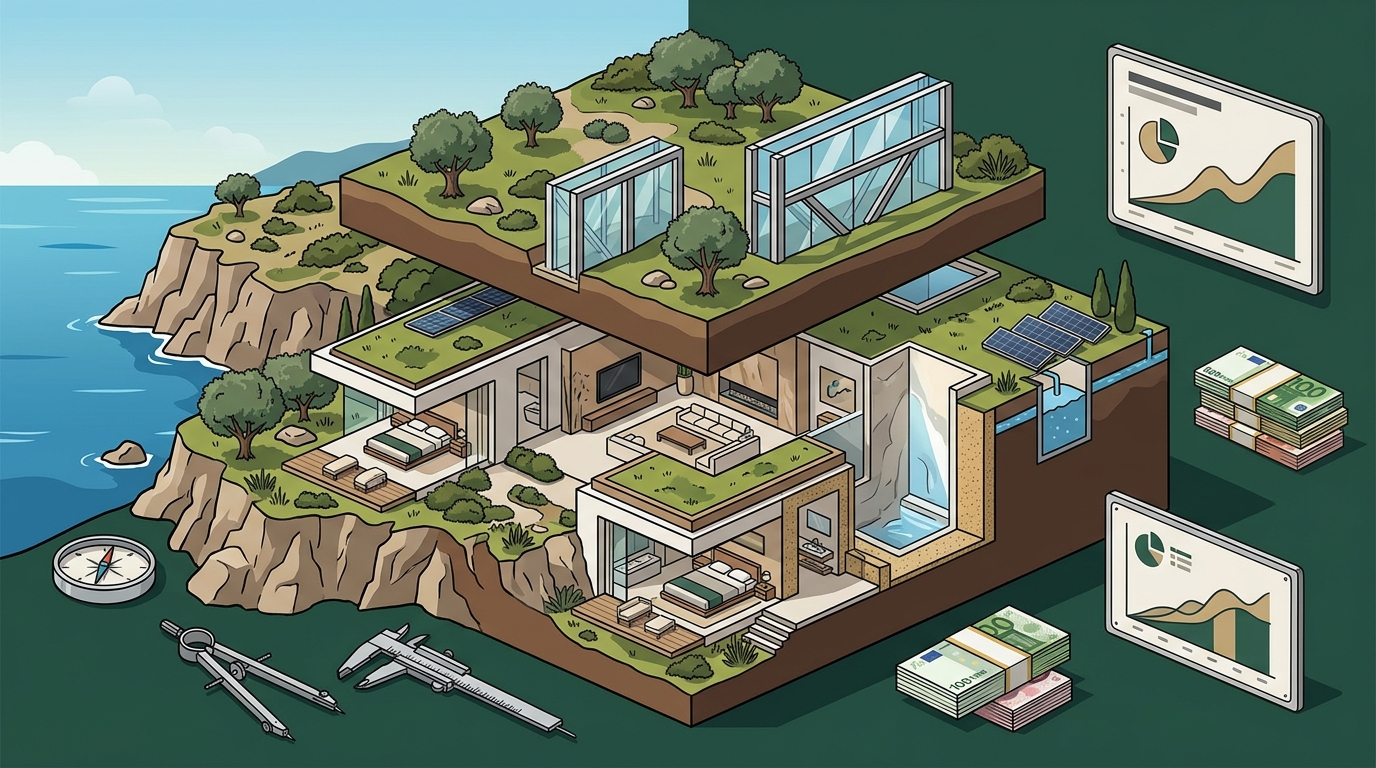
Modern subterranean designs incorporate solar panels, geothermal heating, and rainwater harvesting systems. These technologies are not add-ons but integral parts of the construction process. For example, geothermal heat pumps can provide heating and cooling with up to 400% efficiency compared to traditional systems. This level of efficiency is increasingly important to buyers who prioritize sustainable living practices.
Furthermore, the durability of earth-sheltered structures is superior. The ground protects the home from wind, fire, and pests, reducing maintenance costs over time. This longevity adds to the property's resale value, making it a safer long-term investment. As regulatory pressures for green building increase, these homes are future-proofed against potential carbon taxes or energy regulations.
Subterranean vs. Traditional Villas
When evaluating investment value, it is essential to compare subterranean villas with traditional above-ground luxury homes. The differences extend beyond aesthetics to include structural performance and market appeal.
| Feature | Subterranean Luxury Villa | Traditional Luxury Villa |
|---|---|---|
| Energy Efficiency | High (Natural Insulation) | Moderate (Requires HVAC) |
| Privacy | Maximum (Secluded) | Variable (Dependent on Layout) |
| Construction Cost | Higher Initial Outlay | Standard Market Rate |
| Maintenance | Low (Durable Materials) | Higher (Weather Exposure) |
| Resale Value | Strong (Niche Demand) | Stable (Broad Market) |
The table above highlights the trade-offs. While the initial cost is higher, the operational savings and durability make subterranean villas a compelling choice for long-term holders. Additionally, the unique nature of these homes attracts a specific demographic of buyers willing to pay a premium for exclusivity and sustainability.
Key Takeaways
- Thermal Stability: Earth-sheltered homes maintain consistent temperatures, reducing energy consumption by up to 50%.
- Market Demand: Eco-luxury properties in Greece are seeing increased interest from international investors seeking resilient assets.
- Durability: Subterranean structures offer superior protection against extreme weather and natural disasters.
- Privacy: The design inherently provides more seclusion than traditional villas, a key factor for high-net-worth clients.
- Investment Potential: Unique architectural features can lead to higher appreciation rates in niche luxury markets.
- Sustainability: Integration of green technologies aligns with global trends toward environmentally responsible living.
- Customization: Each project is tailored to the site, ensuring no two villas are identical.
Frequently Asked Questions
What is the average cost of building a subterranean villa in Greece?
The cost varies based on size, location, and finishes, but generally ranges from €3,000 to €5,000 per square meter due to specialized construction requirements.
Are subterranean villas damp or humid?
No, modern waterproofing and ventilation systems ensure that these homes remain dry and comfortable. Proper engineering prevents moisture issues entirely.
How does the resale value compare to traditional homes?
Subterranean villas often command a premium due to their uniqueness and sustainability features, appealing to a niche but growing market of eco-conscious buyers.
Can these homes be rented out as luxury accommodations?
Yes, they are highly sought after for high-end tourism, offering a unique experience that attracts premium rental rates.
What is the lifespan of an earth-sheltered home?
With proper maintenance, the structural lifespan can exceed 100 years, significantly longer than many traditional wood or concrete structures.
Do I need special insurance for a subterranean villa?
Standard luxury home insurance typically covers these properties, though some insurers may offer discounts due to the reduced risk of wind or fire damage.
How is natural light managed in underground homes?
Architects use skylights, light wells, and reflective surfaces to bring natural light deep into the home, creating a bright and airy atmosphere.
Contact Siafaricas
Investing in a subterranean luxury villa is a decision that blends financial prudence with aesthetic ambition. Siafaricas offers expert guidance through every stage of the process, from site selection to final handover. To discuss your project and explore our contact options, reach out to our team today.