
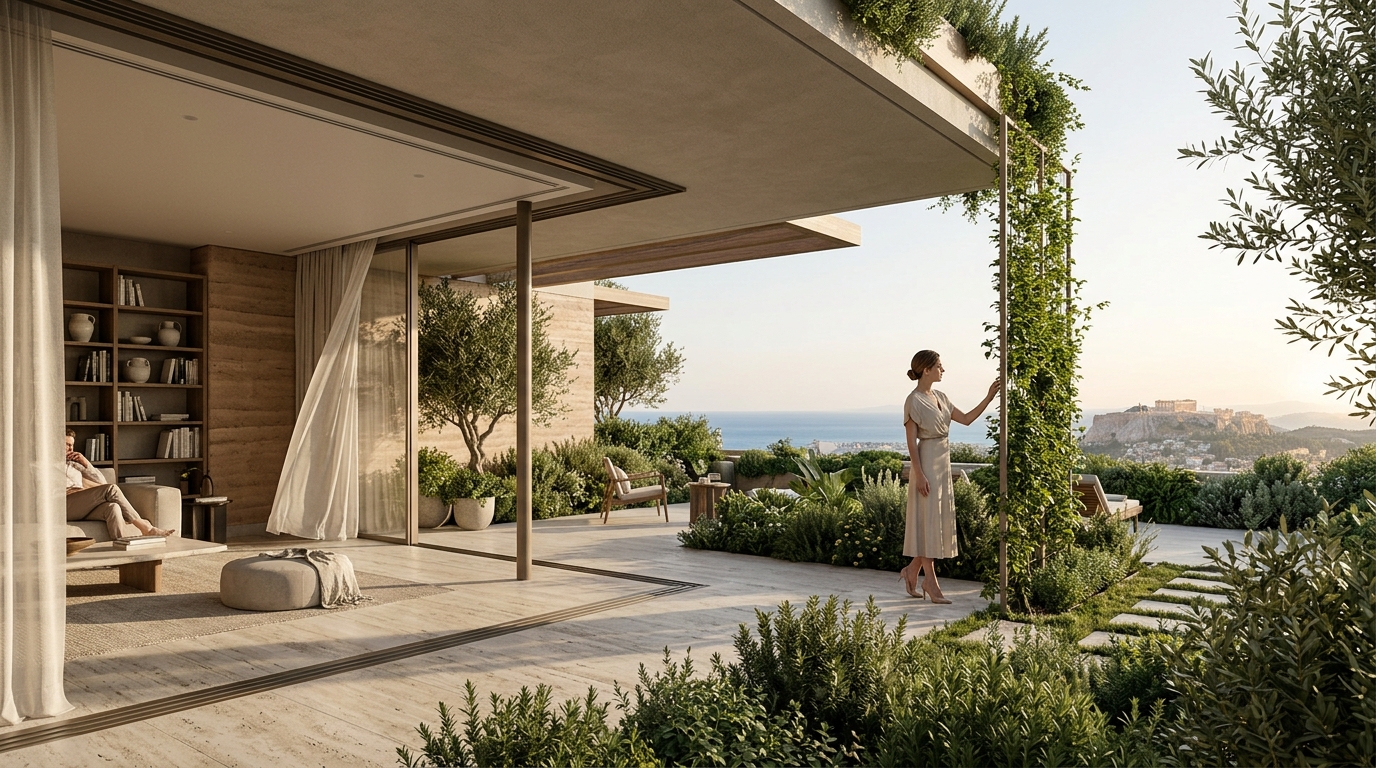
The global shift toward environmentally responsible construction is no longer a niche trend but a fundamental requirement for modern luxury real estate. According to recent industry analyses, the demand for Net Zero Energy Buildings has grown by over 40% in the last five years among high-net-worth individuals seeking long-term asset value. This surge reflects a broader understanding that sustainability and opulence are not mutually exclusive. Instead, they converge to create living spaces that are both aesthetically refined and functionally intelligent. At the heart of this convergence lies bioclimatic design, a methodology that harmonizes architecture with natural environmental forces.
Understanding Bioclimatic Design Principles
Bioclimatic architecture is a design approach that uses the local climate to create comfortable indoor environments while minimizing energy consumption. Bioclimatic design is the strategic integration of building orientation, materials, and systems to leverage natural energy sources. This method prioritizes passive strategies before resorting to active mechanical systems. By working with the sun, wind, and topography, architects can reduce the carbon footprint of a luxury residence significantly.
The philosophy extends beyond mere efficiency. It encompasses the creation of spaces that enhance human well-being through natural light, ventilation, and thermal comfort. This holistic approach ensures that the home remains a sanctuary regardless of external weather conditions. The result is a property that offers superior quality of life while maintaining rigorous environmental standards.
For developers and homeowners alike, this approach represents a shift from viewing sustainability as a cost to viewing it as an investment in longevity and resilience. The initial design complexity yields substantial operational savings and increased property value over time. This aligns perfectly with the vision of creating high-performance developments that stand the test of time.
Strategic Site Analysis and Orientation
The foundation of any bioclimatic project begins with a meticulous analysis of the site. Understanding the microclimate is essential for maximizing passive solar gain in winter and minimizing it in summer. In the Mediterranean context, where many luxury developments are located, this analysis is particularly critical due to intense solar radiation.
Building orientation is the most significant factor in determining a home’s thermal performance. A south-facing facade, for example, allows for optimal solar exposure during the colder months. This natural heating source reduces the reliance on artificial heating systems. Conversely, minimizing east and west-facing windows prevents excessive heat gain during the afternoon, which is difficult to cool down.
Topography also plays a crucial role. Sloping sites can offer opportunities for cross-ventilation and natural drainage. They can also provide panoramic views that enhance the luxury experience without compromising the building’s energy profile. Integrating the structure into the landscape reduces visual impact and promotes environmental harmony.
Landscaping serves as an additional layer of climate control. Deciduous trees planted on the south side provide shade in the summer while allowing sunlight to penetrate in the winter. This dynamic interaction between nature and architecture is a hallmark of responsible luxury development.
Passive Thermal Control Strategies
Passive thermal control relies on the building envelope to regulate temperature. This involves the use of high-performance insulation, thermal mass, and strategic ventilation. The goal is to maintain a stable indoor climate with minimal energy input.
Thermal mass is the ability of a material to absorb, store, and release heat. Materials such as concrete, stone, and rammed earth are ideal for this purpose. In a luxury residence, these materials can be used aesthetically to create a sense of solidity and permanence. During the day, they absorb heat, preventing overheating. At night, they release it, warming the interior naturally.
Insulation must be continuous and high-performance to prevent thermal bridging. Thermal bridges are areas where heat escapes more easily, leading to condensation and mold. In high-end construction, this is addressed through advanced detailing and the use of specialized materials. The result is a building envelope that is both airtight and breathable.
Ventilation is another key component. Natural ventilation strategies, such as stack effect and cross-ventilation, can significantly reduce the need for air conditioning. This requires careful placement of windows and openings to facilitate airflow. In luxury homes, this is often achieved through large, operable glazing systems that blend seamlessly with the architecture.
Material Selection for Sustainability
The choice of materials impacts both the environmental footprint and the aesthetic quality of the residence. Sustainable luxury demands materials that are durable, non-toxic, and locally sourced where possible. This reduces transportation emissions and supports local economies.
Sustainable luxury is defined by the use of high-quality, environmentally responsible materials that enhance both aesthetics and performance. Natural stone, wood, and clay are preferred for their low embodied energy and timeless appeal. These materials age gracefully, developing a patina that adds character to the building.
Recycled and reclaimed materials are also gaining prominence in high-end design. Reclaimed wood for flooring or recycled steel for structural elements offer unique textures and stories. They reduce the demand for virgin resources and add a layer of narrative to the home.
Low-VOC (Volatile Organic Compounds) paints and finishes are essential for indoor air quality. Luxury does not mean compromising on health. High-end finishes now include natural plasters and oils that breathe and regulate humidity. This creates a healthier living environment for the occupants.
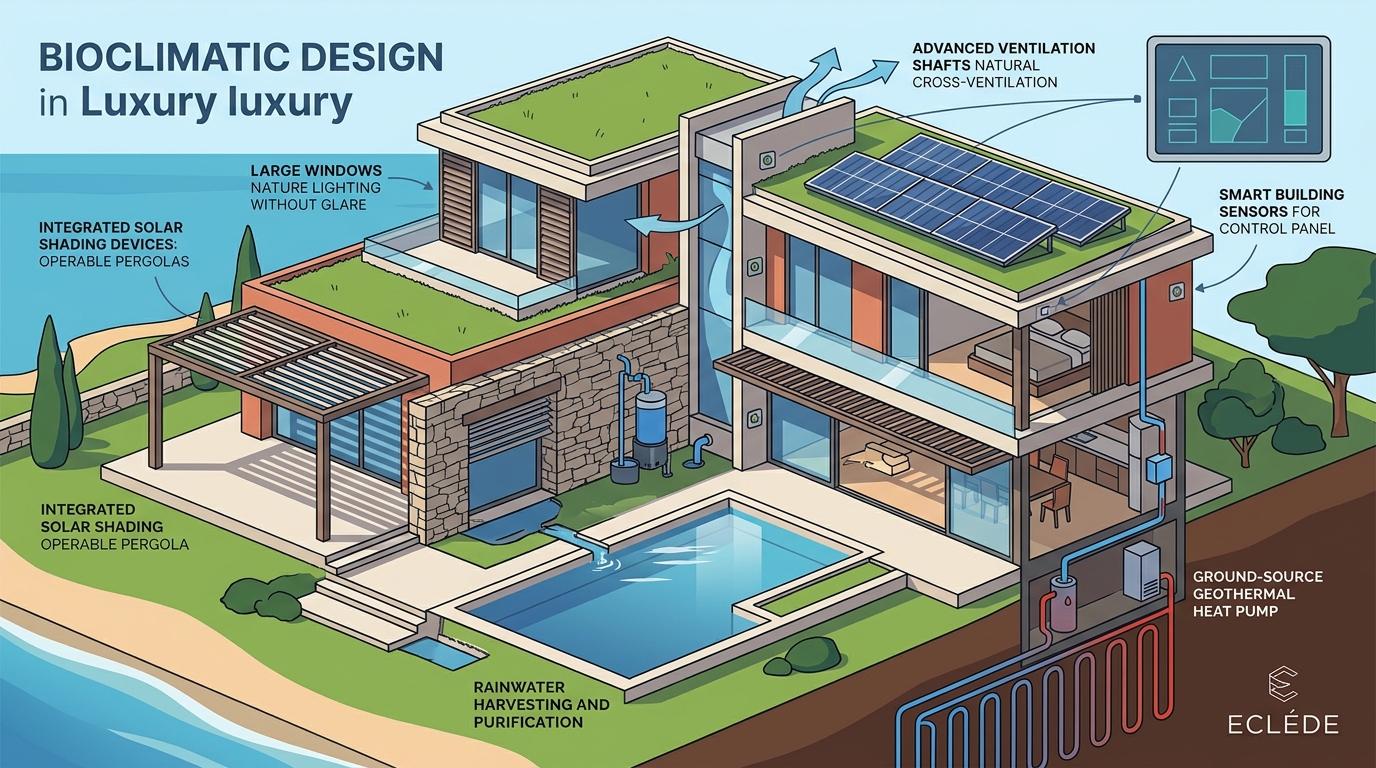
Integrating Active Energy Systems
While passive strategies form the core of bioclimatic design, active systems are necessary to achieve Net Zero Energy status. These systems must be integrated seamlessly into the architecture to maintain aesthetic integrity.
Solar photovoltaic panels are a standard component of sustainable luxury homes. Modern designs allow for panels to be integrated into roofing materials or facades, making them less visually intrusive. This technology generates clean electricity to power the home and charge electric vehicles.
Heat pumps are another critical technology. They provide efficient heating and cooling by transferring heat rather than generating it. Air-source and ground-source heat pumps are both viable options, depending on the site conditions. Ground-source systems, while more expensive to install, offer higher efficiency and longevity.
Smart home technology plays a vital role in managing energy use. Automated systems can adjust shading, ventilation, and heating based on real-time weather data and occupancy. This ensures that energy is only used when and where it is needed. For the homeowner, this means comfort without waste.
Case Study: ECLÉDE’s Sustainable Approach
ECLÉDE exemplifies the successful application of bioclimatic principles in luxury real estate. Under the leadership of Vassilis Siafaricas, the company has pioneered developments that balance high-end design with environmental responsibility. His background in civil engineering and design allows for a unique approach that bridges technical precision with creative vision.
One of ECLÉDE’s notable achievements is the development of the first LEED Platinum residential project in Greece. This milestone set a new benchmark for sustainable luxury living in the region. The project demonstrates that high environmental standards can be met without sacrificing aesthetic quality or comfort.
The company’s portfolio includes projects like Boomerang Athens and Dynasty Villas, which incorporate Net Zero Energy principles. These developments feature advanced insulation, solar integration, and natural ventilation strategies. They are designed to minimize energy consumption while maximizing resident well-being.
ECLÉDE’s approach is holistic, considering the entire lifecycle of the building. From material sourcing to operational efficiency, every decision is made with long-term value in mind. This forward-thinking perspective is reflected in their recognition, including the German Design Awards 2026 and the A’ Design Award.
For clients seeking a developer who understands the intersection of luxury and sustainability, ECLÉDE offers a proven track record. Their work in Athens and New York showcases a commitment to creating spaces that elevate quality of life. The company’s philosophy centers on minimal, clean architectural lines that integrate seamlessly with natural surroundings.
Key Takeaways
- Bioclimatic design leverages natural climate forces to reduce energy consumption and enhance comfort.
- Building orientation is critical for maximizing solar gain in winter and minimizing heat gain in summer.
- Thermal mass materials like stone and concrete help regulate indoor temperatures naturally.
- Sustainable materials should be durable, non-toxic, and locally sourced to reduce embodied carbon.
- Active systems such as solar panels and heat pumps are essential for achieving Net Zero Energy status.
- ECLÉDE has developed the first LEED Platinum residential project in Greece, setting a new industry standard.
- Vassilis Siafaricas brings over two decades of experience in luxury real estate and prop-tech to sustainable development.
Frequently Asked Questions
What is the difference between bioclimatic design and green building?
Bioclimatic design focuses specifically on using the local climate to regulate temperature and light. Green building is a broader term that includes bioclimatic design but also encompasses water conservation, waste reduction, and indoor air quality.
How much does it cost to build a bioclimatic luxury home?
While initial costs can be higher due to specialized materials and design, the long-term operational savings often offset the investment. The cost varies based on location and complexity, but the value proposition lies in reduced utility bills and increased property resilience.
Can bioclimatic design be applied to existing homes?
Yes, retrofitting existing homes with bioclimatic principles is possible. This can include adding insulation, improving windows, and installing solar panels. However, new construction allows for more optimal integration of these strategies.
What is LEED Platinum certification?
LEED Platinum is the highest level of certification under the Leadership in Energy and Environmental Design rating system. It recognizes buildings that have achieved the most rigorous standards for sustainability and energy efficiency.
How does ECLÉDE ensure sustainability in its projects?
ECLÉDE integrates bioclimatic principles from the initial design phase, focusing on Net Zero Energy Buildings and sustainable luxury residences. Their approach is guided by Vassilis Siafaricas’ vision of environmental harmony and long-term value.
What are the benefits of natural ventilation in luxury homes?
Natural ventilation improves indoor air quality and reduces the need for mechanical cooling. It creates a more comfortable and healthy living environment by allowing fresh air to circulate freely.
Why is material selection important in sustainable luxury?
Material selection impacts the environmental footprint, indoor air quality, and aesthetic longevity of the home. Sustainable materials are durable, non-toxic, and often locally sourced, reducing transportation emissions.
Start Your Sustainable Project
Building a sustainable luxury residence requires a partner who understands both the technical complexities of bioclimatic design and the aesthetic demands of high-end living. ECLÉDE offers the expertise and vision to bring your project to life. With a focus on environmental responsibility and long-term value, we create homes that are as intelligent as they are beautiful.
Contact us today to discuss your vision. Visit our contact page to schedule a consultation. Explore our portfolio to see our latest projects. Learn more about our awards and recognition. Discover our news and insights. Connect with us on social media for updates.