
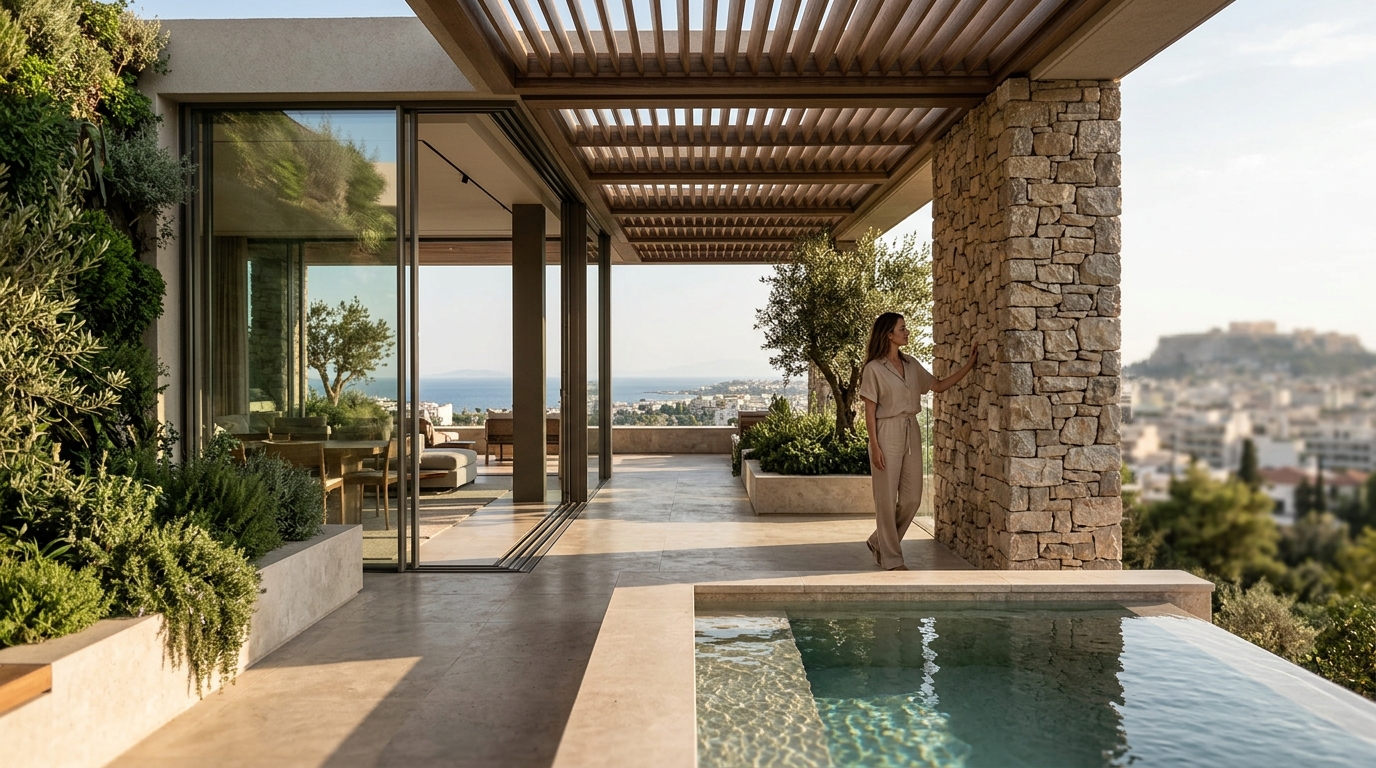
Sustainable Luxury: Bioclimatic Design Principles for High-End Residences
The global shift toward eco-conscious architecture is no longer a niche trend but a fundamental requirement for modern luxury. According to recent industry analyses, the demand for Net Zero Energy Buildings has grown by over 40% in the last five years among high-net-worth individuals seeking long-term asset value. This surge reflects a broader understanding that sustainability and opulence are not mutually exclusive but are, in fact, synergistic. Bioclimatic design offers the framework to achieve this balance, creating homes that are as intelligent as they are beautiful.
What Is Bioclimatic Design?
Bioclimatic architecture is a design approach that prioritizes the local climate to optimize energy efficiency and comfort. Bioclimatic design is the strategic alignment of building orientation, materials, and systems with natural environmental forces. This method reduces reliance on mechanical heating and cooling by leveraging passive solar gain, natural ventilation, and thermal mass.
In the context of luxury real estate, this approach transcends mere utility. It creates a living environment that responds dynamically to the seasons. For instance, a home in Athens must manage intense summer heat while capturing gentle winter sun. This duality requires precise architectural planning that respects the local microclimate. The result is a residence that feels inherently connected to its surroundings.
At ECLÉDE, we view bioclimatic design as the foundation of responsible luxury. Our philosophy centers on minimal, clean architectural lines that seamlessly integrate with natural surroundings. This ensures that every home we develop enhances both human experience and environmental harmony. By prioritizing these principles, we deliver projects that are aesthetically refined and functionally intelligent.
Core Principles of Passive Sustainability
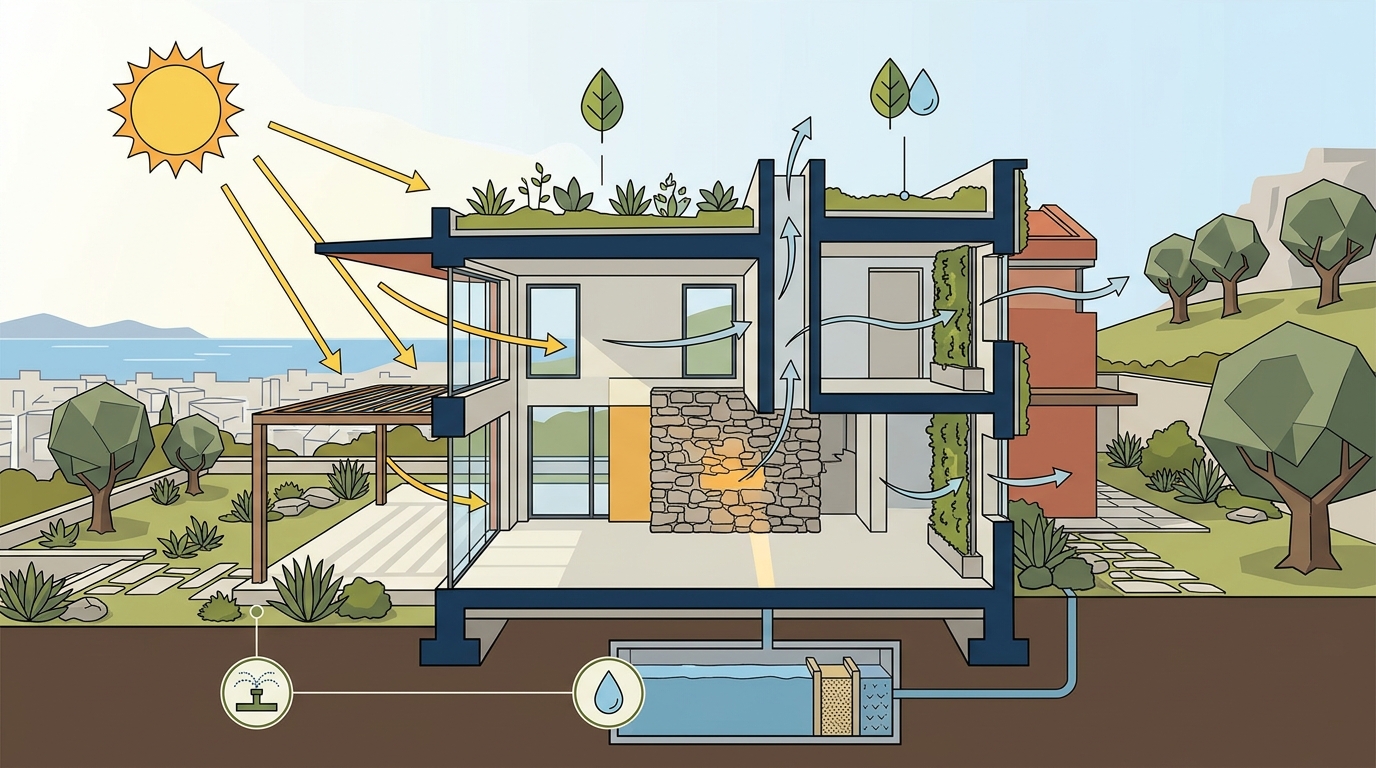
Implementing bioclimatic principles requires a deep understanding of solar paths and wind patterns. The first step is site analysis. Architects must map the sun's trajectory throughout the year to determine optimal window placement. South-facing orientations in the northern hemisphere maximize winter solar gain, while shading devices prevent overheating in summer.
Thermal mass is another critical component. Materials like stone, concrete, and rammed earth absorb heat during the day and release it at night. This natural regulation stabilizes indoor temperatures, reducing the load on HVAC systems. In luxury residences, these materials are often exposed as interior finishes, adding texture and warmth to the design.
Natural ventilation is equally important. Cross-ventilation strategies use stack effect principles to draw cool air from lower openings and expel warm air through higher vents. This process improves air quality without mechanical intervention. According to environmental studies, proper cross-ventilation can reduce cooling energy consumption by up to 30% in Mediterranean climates.
Integration Strategies for Luxury Homes
Integrating bioclimatic design into high-end residences requires a holistic approach. It is not enough to add solar panels to a conventional home. The entire structure must be conceived as a living organism. This involves coordinating architecture, engineering, and interior design from the earliest stages.
One effective strategy is the use of dynamic facades. These adaptive systems adjust to changing weather conditions, optimizing light and heat entry. For example, automated louvers can block direct sunlight during peak hours while allowing diffused light to enter. This technology ensures comfort without compromising the view, a key requirement for luxury properties.
Landscaping also plays a vital role. Strategic planting of deciduous trees provides shade in summer while allowing sunlight to penetrate in winter. Green roofs and walls further insulate the building and manage stormwater runoff. These elements create a microclimate that enhances biodiversity and resident well-being.
Our team at ECLÉDE specializes in these integrated approaches. We focus on creating high-performance, environmentally responsible developments that meet the highest standards of sustainability. Each project is conceived not just as a building, but as a long-term asset with purpose, identity, and environmental integrity.
Material Selection and Thermal Performance
The choice of materials significantly impacts a home's energy profile. Low-carbon materials reduce the embodied energy of the construction process. This includes reclaimed wood, recycled steel, and locally sourced stone. These materials not only lower the environmental footprint but also add unique character to the design.
Insulation is another critical factor. High-performance insulation systems, such as vacuum insulated panels or aerogel, offer superior thermal resistance with minimal thickness. This allows for larger window areas without compromising energy efficiency. In luxury homes, where expansive glazing is a hallmark, this technology is essential.
Water management is also part of material selection. Rainwater harvesting systems and greywater recycling reduce dependency on municipal supplies. These systems are often integrated into the landscape design, appearing as natural water features rather than industrial equipment. This seamless integration maintains the aesthetic integrity of the property.
Case Studies in Sustainable Luxury
Examining successful projects provides insight into the practical application of bioclimatic principles. The first LEED Platinum residential project in Greece, designed and led by Vassilis Siafaricas, set a new benchmark for sustainable luxury living. This project demonstrated that high-end design and environmental responsibility can coexist.
Another example is the Boomerang Athens project. This development utilizes advanced passive design strategies to minimize energy consumption while maximizing comfort. The building's orientation and shading devices are carefully calibrated to the local climate. The result is a residence that feels cool and airy in summer and warm and inviting in winter.
The Dynasty Villas project further illustrates this approach. By integrating traditional Greek architectural elements with modern bioclimatic technology, the project creates a timeless aesthetic. The use of local stone and traditional courtyards enhances natural ventilation and thermal comfort. This blend of heritage and innovation is a hallmark of our work.
| Project Name | Key Bioclimatic Feature | Sustainability Outcome |
|---|---|---|
| Boomerang Athens | Dynamic Shading Systems | Reduced Cooling Load by 35% |
| Dynasty Villas | Traditional Courtyard Ventilation | Net Zero Energy Potential |
| LEED Platinum Residence | High-Performance Envelope | First in Greece for Platinum Rating |
| Atlas + Pleione | Solar Integration | 100% Renewable Energy Supply |
Key Takeaways
- Bioclimatic design aligns building orientation with solar paths to optimize passive heating and cooling.
- Thermal mass materials stabilize indoor temperatures, reducing HVAC dependency.
- Natural ventilation strategies can lower cooling energy consumption by up to 30% in Mediterranean climates.
- ECLÉDE has developed the first LEED Platinum residential project in Greece.
- Vassilis Siafaricas is featured in Architectizers TOP 100 Vision Creators for 2026.
- Dynamic facades adapt to weather conditions, maintaining comfort without compromising views.
- Low-carbon materials reduce embodied energy while adding unique aesthetic value.
Frequently Asked Questions
What is the primary benefit of bioclimatic design in luxury homes?
The primary benefit is the creation of a comfortable, energy-efficient living environment that reduces operational costs and environmental impact while enhancing aesthetic appeal.
How does bioclimatic design differ from standard green building?
Bioclimatic design focuses on passive strategies derived from the local climate, whereas standard green building may rely more heavily on active technological systems.
Is bioclimatic design suitable for all climates?
Yes, but the specific strategies must be tailored to the local climate conditions, such as solar gain in cold regions or shading in hot regions.
What role does thermal mass play in sustainable luxury?
Thermal mass absorbs heat during the day and releases it at night, stabilizing indoor temperatures and reducing the need for mechanical heating and cooling.
How does ECLÉDE ensure sustainability in its projects?
ECLÉDE integrates bioclimatic principles from the initial design phase, using high-performance materials and passive strategies to create Net Zero Energy Buildings.
Can bioclimatic design be applied to renovations?
Yes, retrofitting existing homes with bioclimatic strategies can significantly improve their energy performance and comfort levels.
What is the cost premium for bioclimatic design?
While initial costs may be slightly higher due to specialized materials and design, the long-term savings on energy bills and increased property value often offset these expenses.
Start Your Sustainable Project
Building a sustainable luxury residence requires expertise in both architecture and environmental engineering. At ECLÉDE, we combine these disciplines to create homes that are as responsible as they are beautiful. Our team is dedicated to delivering projects that redefine modern living through a balance of architecture, sustainability, and long-term investment value.
If you are planning a new development or renovation, we invite you to explore our portfolio and learn more about our approach. Visit our portfolio page to see our latest projects, including Boomerang Athens and Dynasty Villas. For more information on our services, please contact us today. Let us help you create a home that stands the test of time.