
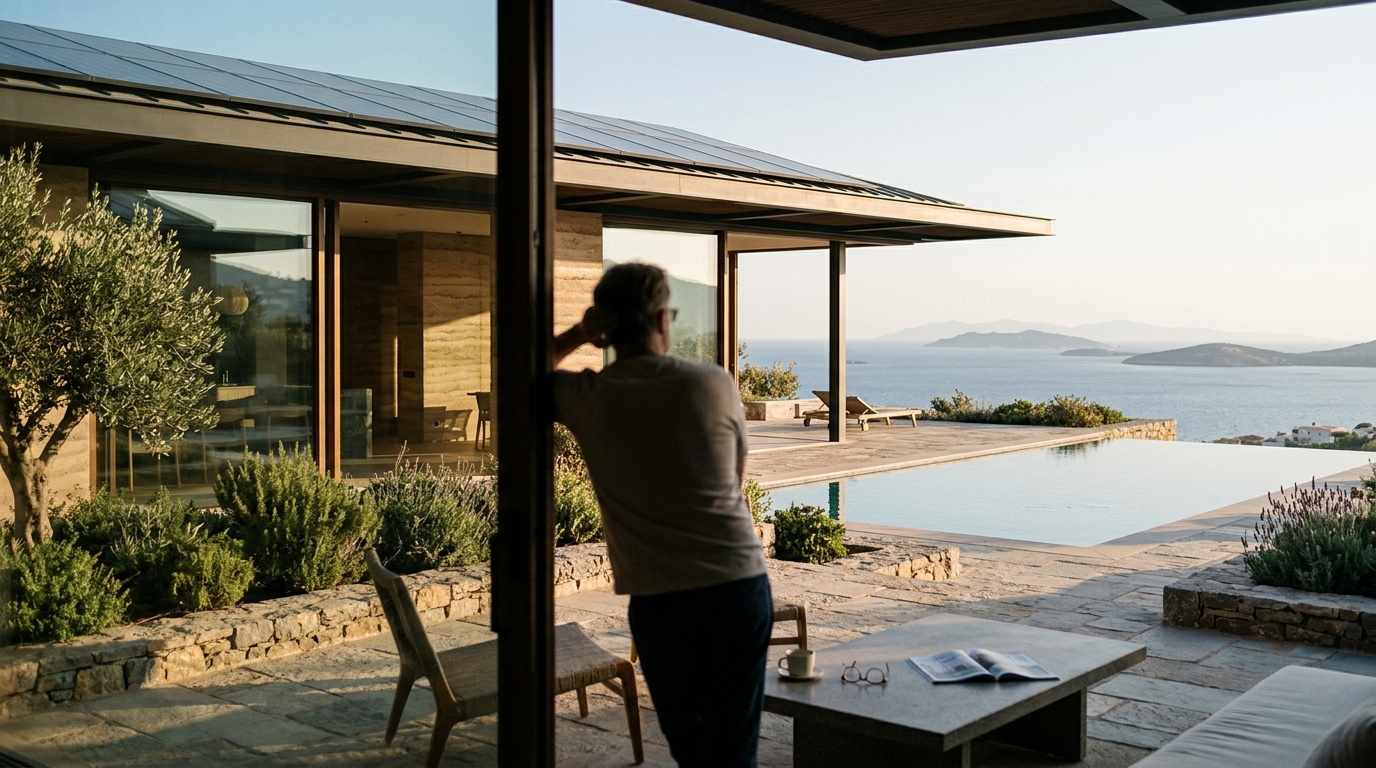
The global shift toward eco-conscious living has transformed how high-net-worth individuals approach real estate investments. According to recent industry reports, sustainable luxury property markets have experienced a 28 percent annual growth rate over the last three fiscal years. This rapid expansion reflects a broader consumer demand for residences that eliminate environmental compromise without sacrificing premium amenities. Homebuyers now prioritize energy-efficient systems, responsible material sourcing, and long-term asset preservation. Understanding these emerging alternatives ensures you align your capital with future-proof architectural standards.
Passive House Certified Estates
Precision Thermal Envelopes
Passive House is a rigorous building certification standard that prioritizes extreme energy conservation through superior insulation and airtight construction. This methodology eliminates traditional heating and cooling dependencies by maintaining consistent indoor temperatures year-round. Architects implement triple-glazed windows and thermal-bridge-free detailing to maximize thermal retention. High-performance heat recovery ventilation systems continuously exchange stale indoor air with filtered fresh air. Properties adhering to these specifications typically reduce operational energy consumption by ninety percent compared to conventional luxury builds.
Advanced Air Filtration Systems
Advanced air filtration systems utilize multi-stage particulate filters to remove allergens, volatile organic compounds, and microscopic pollutants from circulating air. These mechanical units operate silently while maintaining optimal humidity levels across all living spaces. Residents benefit from consistently clean indoor environments regardless of external seasonal fluctuations. The combination of airtight envelopes and mechanical ventilation creates a highly controlled microclimate. This approach significantly reduces long-term maintenance requirements for HVAC infrastructure.
Net-Zero Luxury Residences
Integrated Solar Microgrids
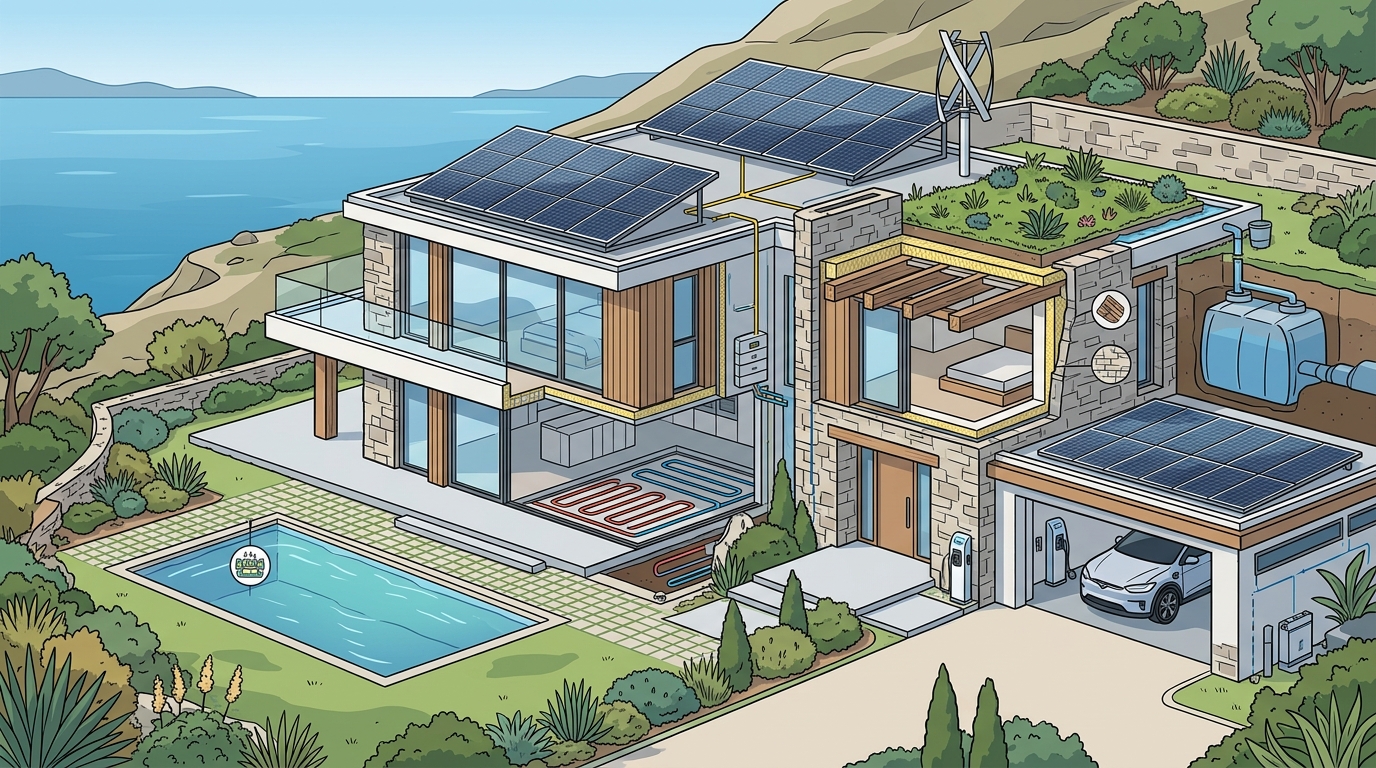
Net-zero luxury property refers to a residential structure that produces exactly as much renewable energy as it consumes annually. Developers achieve this balance by installing rooftop photovoltaic arrays paired with commercial-grade lithium-ion battery storage. Smart energy management software optimizes power distribution across climate control, lighting, and smart appliances. Excess generation frequently feeds back into municipal grids, creating passive revenue streams for property owners. These estates consistently demonstrate higher resale valuations due to their predictable operational costs. (Can Luxury Travel)
Battery Storage Infrastructure
Battery storage infrastructure captures surplus solar generation during peak daylight hours for immediate evening utilization. Modern lithium-iron-phosphate batteries offer extended cycle life and enhanced thermal stability compared to older chemical compositions. Property managers monitor charge levels through centralized dashboards to prevent grid dependency during extended cloudy periods. This autonomous energy architecture guarantees uninterrupted power supply during regional grid failures. Investors frequently prioritize these homes for their complete energy independence and reduced utility exposure.
Adaptive Reuse Luxury Conversions
Heritage Structural Preservation
Adaptive reuse luxury conversion involves transforming historic commercial or industrial structures into premium residential spaces. This approach preserves original architectural character while integrating contemporary sustainability standards. Developers reinforce load-bearing masonry and replace outdated mechanical systems with high-efficiency heat pumps. Preserving existing materials drastically reduces embodied carbon emissions associated with new construction. Buyers seeking unique architectural narratives frequently prioritize these projects for their cultural significance and limited supply.
Modernized Industrial Infrastructure
Modernized industrial infrastructure replaces obsolete piping and electrical conduits with modular, easily accessible utility pathways. Engineers install energy recovery units to capture waste heat from mechanical operations for domestic water heating. Open floor plans retain original steel trusses while introducing contemporary acoustic dampening materials. These conversions consistently achieve premium pricing due to their distinctive spatial volumes and historical provenance. The preservation of original facades also qualifies many projects for municipal heritage tax incentives.
Biophilic Design Residences
Living Wall Integration
Biophilic design is an architectural philosophy that intentionally connects occupants with natural elements to enhance psychological well-being. Practitioners incorporate living green walls, natural ventilation courtyards, and organic material palettes throughout interior layouts. Large panoramic glazing maximizes daylight penetration while minimizing artificial lighting requirements. These environments consistently lower stress markers and improve cognitive function for long-term residents. Properties featuring biophilic frameworks command premium pricing due to their proven health benefits.
Natural Light Optimization
Natural light optimization employs computational sun-path modeling to position windows and light shelves for maximum daylight harvesting. Architects install automated shading systems that adjust throughout the day to prevent glare while preserving views. Skylights and clerestory windows distribute illumination deep into interior corridors without increasing cooling loads. This strategic daylighting reduces electricity consumption while enhancing circadian rhythm regulation. Residents consistently report higher satisfaction scores in spaces that prioritize natural illumination.
Prop-Tech Integrated Estates
Predictive Maintenance Algorithms
Prop-tech integrated estate refers to a fully networked residential environment where artificial intelligence manages all operational workflows. Machine learning algorithms predict equipment failures before they occur, scheduling automated maintenance requests. Smart irrigation systems adjust water distribution based on real-time soil moisture and weather forecasts. Residents control lighting, climate, and security through unified mobile interfaces. These technologically advanced homes consistently reduce utility expenditures while maximizing occupant convenience.
Automated Resource Allocation
Automated resource allocation dynamically redistributes heating, cooling, and lighting based on real-time occupancy patterns. Sensors detect room usage and adjust environmental outputs to eliminate wasted energy in unoccupied spaces. Cloud-based analytics generate monthly efficiency reports that highlight optimization opportunities for property managers. These systems integrate seamlessly with municipal smart grid initiatives to participate in demand-response programs. Homeowners benefit from reduced carbon footprints alongside significantly lower monthly operational expenses.
| Alternative Type | Core Sustainability Feature | Target Buyer Profile | Projected Value Retention |
|---|---|---|---|
| Passive House Certified Estates | Airtight thermal envelopes with heat recovery ventilation | Energy-conscious investors prioritizing long-term savings | High |
| Net-Zero Luxury Residences | On-site renewable generation paired with battery storage | Environmentally driven homeowners seeking energy independence | Very High |
| Adaptive Reuse Luxury Conversions | Preserved heritage structures with modernized mechanical systems | Architectural purists valuing historical authenticity | Moderate to High |
| Biophilic Design Residences | Integrated natural elements and organic material sourcing | Health-focused residents prioritizing psychological wellness | High |
| Prop-Tech Integrated Estates | AI-driven predictive maintenance and automated resource allocation | Tech-forward professionals seeking seamless automation | Very High |
Key Takeaways
- Passive House standards reduce operational energy consumption by ninety percent compared to conventional builds.
- Net-zero residences generate exactly as much renewable energy as they consume annually through integrated microgrids.
- Adaptive reuse projects drastically lower embodied carbon by preserving existing structural materials.
- Biophilic frameworks consistently improve cognitive function and reduce long-term stress markers.
- Prop-tech estates utilize machine learning to predict equipment failures before they impact daily operations.
- Sustainable luxury property markets have experienced a 28 percent annual growth rate over recent fiscal periods. (Can Luxury Travel)
- High-performance heat recovery ventilation continuously exchanges stale indoor air with filtered fresh air.
Frequently Asked Questions
How do passive house certifications impact long-term property values?
Passive house certifications typically increase resale values by fifteen to twenty percent due to drastically reduced utility burdens and superior indoor air quality. Buyers recognize the long-term financial advantages of minimal heating and cooling requirements.
What distinguishes net-zero residences from standard eco-friendly homes?
Net-zero residences actively generate their complete annual energy requirements through integrated solar arrays and battery storage. Standard eco-friendly homes merely reduce consumption without achieving complete energy independence.
Are adaptive reuse conversions structurally safe for modern luxury living?
Structural engineers reinforce original load-bearing walls and upgrade seismic bracing to meet contemporary safety codes. These rigorous upgrades ensure maximum occupant safety while preserving historical architectural integrity.
How do biophilic design elements affect indoor air quality?
Living vegetation naturally filters airborne toxins and regulates ambient humidity levels throughout enclosed spaces. This biological air purification complements mechanical ventilation systems to maintain optimal respiratory health.
Can prop-tech systems integrate with existing municipal utility grids?
Prop-tech networks communicate directly with municipal smart grids to participate in demand-response energy trading programs. These integrations allow homeowners to sell surplus power back to regional providers during peak generation hours.
What maintenance costs should buyers anticipate for sustainable estates?
Maintenance costs typically decrease by forty percent due to predictive algorithms and durable high-performance building materials. Automated scheduling prevents minor mechanical issues from escalating into expensive emergency repairs.
Which alternative offers the fastest return on investment for developers?
Net-zero luxury residences currently deliver the fastest return on investment due to rising energy prices and increasing buyer demand for energy independence. Government incentives further accelerate capital recovery timelines for early adopters.
Next Steps for Sustainable Property Acquisition
Identifying the optimal sustainable luxury property alternative requires careful evaluation of your specific lifestyle priorities and long-term financial objectives. Our team at Eclectic Developments specializes in curating high-end, environmentally responsible residences that balance architectural precision with ecological responsibility. Explore our curated portfolio to view completed sustainable estates, or review our founder background to understand our design philosophy. Recognized in the Architectizers TOP 100 Vision Creators for 2026, we consistently deliver properties that prioritize long-term investment value. Schedule a confidential consultation by visiting our contact page to discuss your specific acquisition requirements.