
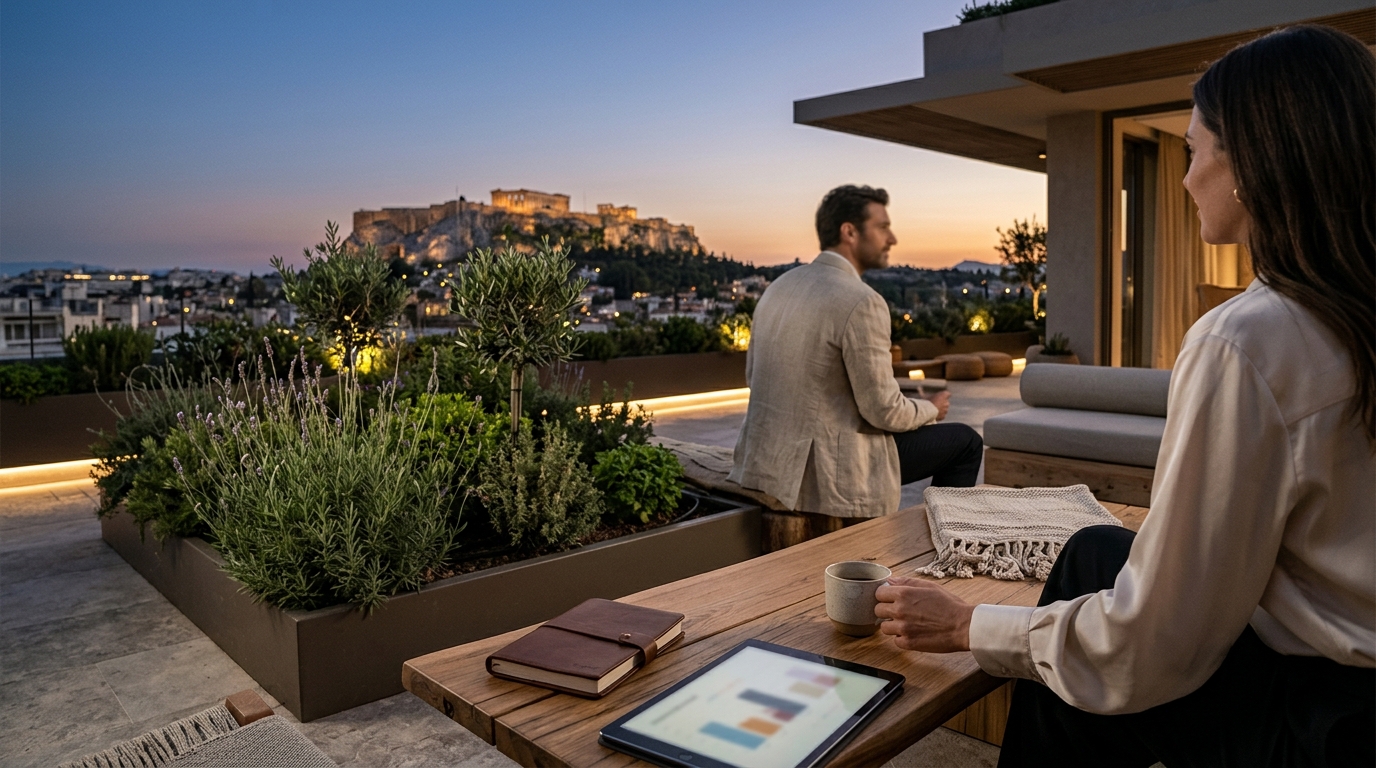
The global shift toward sustainable living is no longer a niche trend but a fundamental market driver. In Athens, the intersection of historic architecture and modern environmental standards is creating unique investment opportunities. According to recent market analyses, properties with high energy efficiency ratings are commanding premium valuations in the Greek capital, outperforming traditional assets by significant margins. This guide dismantles the most persistent myths surrounding green real estate returns and provides clear, data-driven answers to your most pressing questions.
Myth 1: Green Premiums Are Too High for Average Investors
Many potential investors believe that acquiring eco-friendly property in Athens requires capital beyond the reach of standard portfolios. This misconception stems from a misunderstanding of the initial entry point versus long-term value. While luxury developments like those curated by ECLÉDE represent the pinnacle of sustainable design, the broader market offers diverse entry levels.
The reality is that energy efficiency upgrades can be phased. Investors do not need to purchase a fully certified Net Zero building immediately. Instead, they can acquire older assets and implement strategic retrofits. The cost of these improvements is often offset by reduced operational expenses from day one. Furthermore, the Athens real estate market has seen a surge in demand for mid-tier sustainable apartments, making them accessible to a wider range of buyers.
Data shows that the initial price premium for green-certified homes is typically between 5% and 10%. However, this is quickly neutralized by lower utility bills and higher resale values. The notion that sustainability is exclusively for the ultra-wealthy ignores the democratization of green technology and financing options available in Greece today.
Myth 2: Sustainable Renovations Yield Minimal ROI
A pervasive myth suggests that spending money on solar panels, insulation, or smart home systems yields negligible returns. This view fails to account for the compounding value of energy savings and regulatory compliance. In Athens, where summer temperatures are rising, cooling costs are a major expense for tenants and owners alike.
Properties equipped with advanced thermal insulation and renewable energy sources demonstrate significantly lower operating costs. According to industry reports, energy-efficient buildings can reduce utility expenses by up to 40%. This reduction translates directly into higher net operating income (NOI), which is the primary driver of property valuation in commercial and residential sectors.
Moreover, the German Design Awards and other international recognitions highlight the growing importance of aesthetic and functional sustainability. Investors who prioritize these features are not just buying a building; they are buying future-proofed assets that resist market volatility. The return on investment is not just financial but also includes risk mitigation against future carbon taxes and energy price spikes.
Myth 3: Eco-Friendly Properties Are Hard to Rent
Some investors worry that sustainable properties will appeal to a narrow demographic, leading to vacancy risks. This is particularly unfounded in Athens, where the rental market is driven by both local professionals and international digital nomads. This demographic group actively seeks high-quality, efficient living spaces.
Research indicates that tenants are willing to pay a premium for homes that offer comfort, health, and lower monthly bills. In the Athens and New York markets, demand for LEED-certified or equivalent high-performance buildings has outstripped supply. This scarcity allows landlords to command higher rents and maintain lower vacancy rates.
Additionally, the integration of smart home technologies enhances tenant satisfaction. Features like automated climate control and high-speed connectivity are no longer luxuries but expectations. By offering these amenities, investors position their properties as premium assets in a competitive market.
Myth 4: Tax Incentives Are Complicated and Rare
Many potential buyers assume that government incentives for green building are complex to access or rarely available. In reality, the Greek government has implemented robust frameworks to encourage sustainable urban regeneration. These include tax breaks for energy upgrades and reduced property transfer taxes for new, efficient constructions.
The Golden Visa program and other investment visas often have favorable terms for developments that meet specific sustainability criteria. Investors can leverage these incentives to improve cash flow during the acquisition and renovation phases. It is crucial to work with professionals who understand the local regulatory landscape to maximize these benefits.
Furthermore, European Union funds are increasingly directed toward green infrastructure projects in Greece. These grants can cover a significant portion of renovation costs for eligible properties. Understanding these financial tools is key to unlocking the true potential of eco-friendly investments in the region.

Myth 5: Green Building Costs Outpace Market Value
The final major myth is that the cost of green construction materials and labor is prohibitively high compared to traditional methods. While initial material costs may be slightly higher, the total cost of ownership tells a different story. Sustainable materials often have longer lifespans and require less maintenance.
For instance, the use of locally sourced, natural materials reduces transportation emissions and supports the local economy. This approach aligns with the philosophy of Vassilis Siafaricas, who emphasizes the balance of technical precision and creative vision. His work on projects like Boomerang Athens demonstrates how high-performance design can be both aesthetically refined and economically viable.
Market data confirms that sustainable buildings retain their value better during economic downturns. Investors who prioritize quality and efficiency are building assets that stand the test of time. The long-term appreciation of these properties often exceeds that of conventional buildings, validating the initial investment.
Comparing Traditional vs. Sustainable Asset Performance
To visualize the financial implications, consider the following comparison of key performance indicators for traditional versus eco-friendly properties in Athens.
| Performance Metric | Traditional Property | Eco-Friendly Property |
|---|---|---|
| Annual Utility Costs | High (Baseline) | Low (30-40% Reduction) |
| Resale Value Premium | Market Average | 5-10% Above Market |
| Tenant Retention Rate | Standard | High (Premium Amenities) |
| Regulatory Risk | Increasing (Future Bans) | Low (Compliant) |
| Initial Investment Cost | Lower | Higher (5-10% Premium) |
Key Takeaways
- Energy Efficiency Drives Value: Properties with high energy ratings command higher rents and sale prices in Athens.
- Tax Incentives Exist: Greek government and EU funds offer significant financial support for green renovations.
- Demand is Growing: International and local tenants actively seek sustainable, smart-home equipped properties.
- Risk Mitigation: Green buildings are less vulnerable to future energy price hikes and regulatory changes.
- Long-Term Appreciation: Sustainable assets show stronger resilience and growth potential compared to traditional real estate.
- Accessible Entry Points: Investors do not need to buy luxury new builds; phased retrofits are a viable strategy.
- Brand Authority: Working with experienced developers like ECLÉDE ensures high-quality outcomes and regulatory compliance.
Frequently Asked Questions
What is the average ROI for eco-friendly property investments in Athens?
While returns vary by location and asset class, eco-friendly properties in Athens typically yield a 5-10% higher resale value premium and significantly lower operational costs, leading to a robust overall return on investment.
Are there tax breaks for buying sustainable homes in Greece?
Yes, the Greek government offers various tax incentives, including reduced property transfer taxes and deductions for energy upgrade expenses, particularly for properties that meet specific efficiency standards.
How does LEED certification impact property value?
LEED certification is a globally recognized standard for green building. Properties with this certification often command higher rents and sale prices due to their verified energy efficiency and health benefits.
Can I retrofit an older Athens apartment to be eco-friendly?
Absolutely. Many investors choose to acquire older properties and implement phased renovations, such as adding insulation, solar panels, and smart HVAC systems, to achieve high efficiency standards.
What is the difference between Net Zero and Green Building?
Net Zero Energy Buildings produce as much energy as they consume annually, while Green Building is a broader term encompassing sustainable materials, water efficiency, and indoor environmental quality.
Is the demand for sustainable rentals high in Athens?
Yes, demand is strong among both local professionals and international tenants who prioritize comfort, lower utility bills, and modern amenities in their living spaces.
How do I find reputable developers for green projects?
Look for developers with a proven track record in sustainable design, such as those recognized by international awards like the German Design Awards or Architizer.
Start Your Sustainable Investment Journey
The Athens real estate market is evolving, and sustainable properties are leading the charge. By understanding the true value of eco-friendly investments, you can secure assets that offer both financial stability and environmental integrity. Whether you are interested in new developments like Dynasty Villas or strategic renovations, expert guidance is essential.
Contact ECLÉDE today to discuss your investment goals. Our team combines deep local knowledge with global sustainability standards to help you build a resilient portfolio. Visit our portfolio to see how we are redefining luxury living in Athens and beyond.