
What Unique Design Elements Does a Luxury Real Estate Developer Incorporate into Sustainable Properties?
The intersection of high-end luxury and environmental responsibility has shifted from a niche trend to a fundamental standard in modern real estate development. According to recent industry analyses, the global green building market is projected to reach significant valuation milestones by 2026, driven by a demand for properties that offer both aesthetic excellence and ecological integrity. This evolution is not merely about compliance with regulations but about redefining the very essence of luxury through intelligent design, energy efficiency, and long-term value creation. Developers like Vassilis Siafaricas of ECLÉDE are leading this charge by integrating Net Zero Energy principles with high-performance architecture, proving that sustainability and opulence are not mutually exclusive but rather synergistic forces.
Architectural Integration with Natural Surroundings
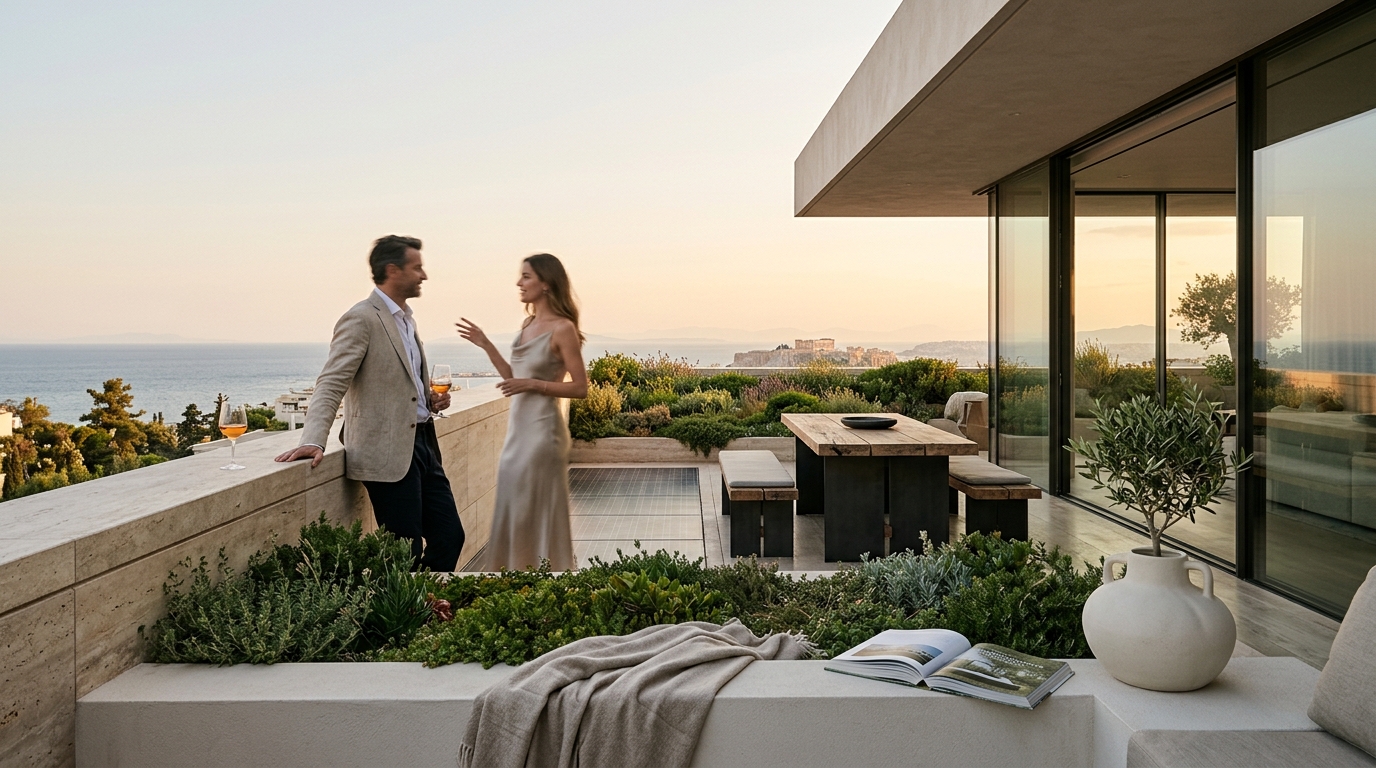
True luxury in sustainable development begins with the relationship between the structure and its environment. Minimal, clean architectural lines are not just an aesthetic choice but a functional one that reduces visual pollution and promotes harmony with the landscape. This approach ensures that the building enhances the human experience while respecting the natural topography.
Seamless integration with natural surroundings involves strategic orientation to maximize passive solar gain in winter and minimize overheating in summer. This requires a deep understanding of local climate patterns and sun paths. By aligning the building's footprint with these natural forces, developers can significantly reduce the reliance on artificial heating and cooling systems.
Furthermore, the use of large, high-performance glazing systems allows for abundant natural light, which improves occupant well-being and reduces electricity consumption. This design philosophy is central to the work of Vassilis Siafaricas, who emphasizes that design is the intersection of inspiration, functionality, and responsibility. His projects, such as those featured in the portfolio, demonstrate how modern living can be redefined through a balance of architecture and sustainability.
Advanced Energy Systems and Net Zero Goals
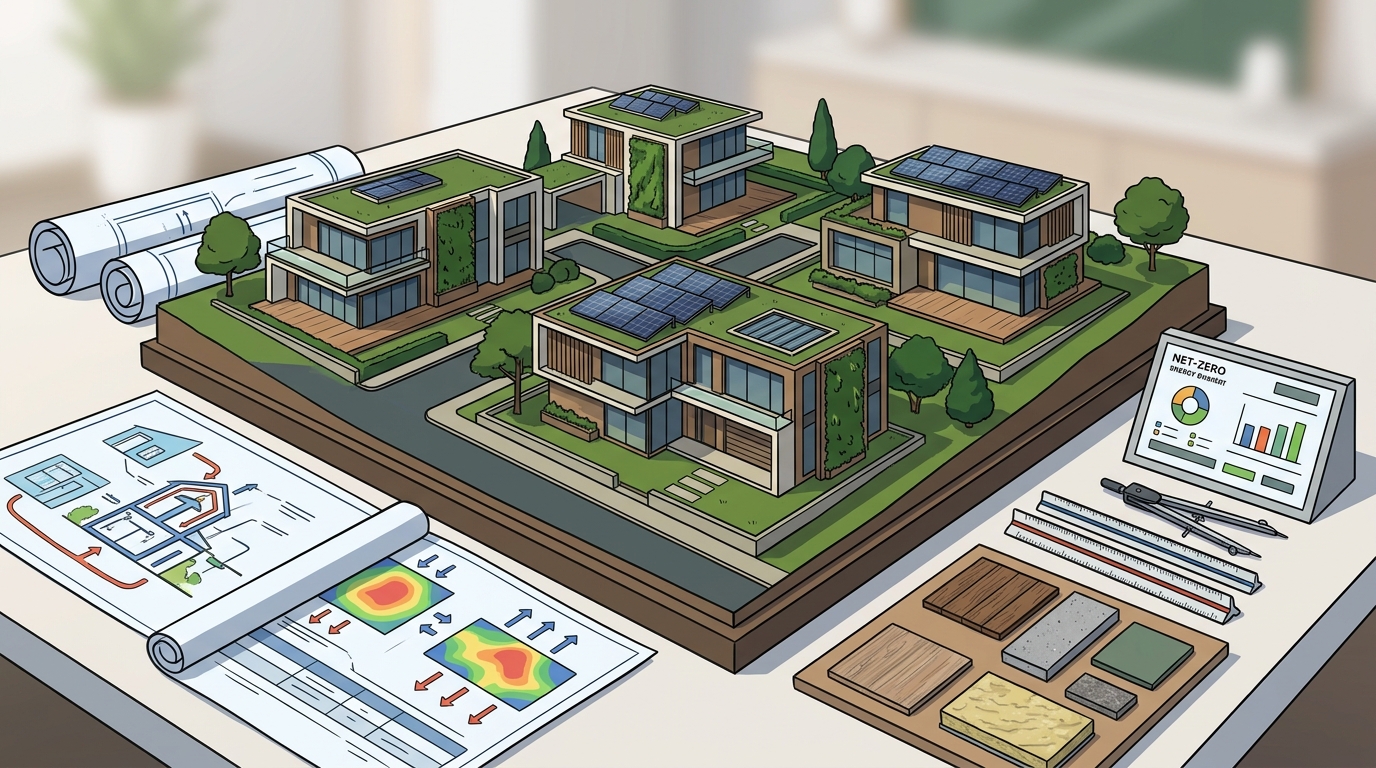
Net Zero Energy Buildings represent the pinnacle of sustainable luxury development. These structures produce as much energy as they consume over the course of a year, achieving a state of energy independence. This is accomplished through a combination of ultra-insulated envelopes, high-efficiency HVAC systems, and on-site renewable energy generation.
The implementation of Net Zero standards requires a holistic approach to building physics. It involves eliminating thermal bridges, which are points of heat loss that compromise the efficiency of the building envelope. By addressing these technical details with precision, developers can ensure that the property remains comfortable and efficient regardless of external weather conditions.
ECLÉDE has set a new benchmark for sustainable luxury living in Greece by developing the first LEED Platinum residential project in the region. This achievement highlights the feasibility of applying rigorous international sustainability standards to high-end residential developments. The commitment to energy-efficient construction is not just about reducing carbon footprints but also about providing residents with lower operational costs and greater energy security.
Material Selection and Environmental Integrity
The choice of materials in luxury sustainable properties is guided by principles of durability, low environmental impact, and aesthetic refinement. Sustainable luxury is defined by the use of resources that are responsibly sourced, recycled, or locally produced to minimize transportation emissions.
High-performance materials often include cross-laminated timber, recycled steel, and low-VOC (Volatile Organic Compounds) finishes. These materials contribute to better indoor air quality, which is a critical component of health and wellness in residential design. The selection process also considers the lifecycle of the material, ensuring that it can be reused or recycled at the end of its service life.
Innovation in material science continues to provide developers with new options for achieving both beauty and sustainability. For instance, advanced concrete mixes with reduced carbon footprints are becoming more prevalent in high-rise construction. Additionally, the use of natural stone and wood from certified sustainable forests adds warmth and character to interiors while supporting responsible forestry practices. This attention to detail is evident in the awards and recognitions received by leading developers for their commitment to environmental responsibility.
Smart Technology and Operational Efficiency
Smart home technology is an integral component of modern sustainable luxury. It allows for the precise monitoring and control of energy usage, lighting, and climate control. By integrating these systems, residents can optimize their comfort while minimizing waste.
Building Management Systems (BMS) play a crucial role in this ecosystem. They provide real-time data on energy consumption, enabling proactive maintenance and optimization. This data-driven approach ensures that the building operates at peak efficiency throughout its lifespan. The integration of IoT (Internet of Things) devices further enhances this capability by allowing for automated responses to environmental changes.
The focus on functional intelligence extends to water management as well. Rainwater harvesting systems and greywater recycling units reduce the demand for municipal water supplies. These systems are particularly important in regions prone to drought or water scarcity. By incorporating these technologies, developers can offer properties that are not only luxurious but also resilient to future resource challenges.
Comparing Sustainable Luxury Features
Understanding the specific components of sustainable luxury development helps clarify the value proposition for potential buyers and investors. The following table outlines the key features that distinguish high-end sustainable properties from conventional luxury developments.
| Feature Category | Conventional Luxury Development | Sustainable Luxury Development |
|---|---|---|
| Energy Source | Grid-dependent, fossil fuel-based | Net Zero, renewable integration |
| Building Envelope | Standard insulation, thermal bridges | Ultra-insulated, airtight, thermal bridge-free |
| Materials | Traditional, high-carbon footprint | Low-VOC, recycled, locally sourced |
| Technology | Basic automation, manual controls | Integrated BMS, IoT, predictive analytics |
| Water Management | Municipal supply only | Rainwater harvesting, greywater recycling |
| Certification | None or basic compliance | LEED Platinum, BREEAM, Passive House |
Key Takeaways
- Net Zero Energy: High-end sustainable properties aim for Net Zero Energy status, balancing consumption with on-site renewable generation.
- LEED Platinum: ECLÉDE achieved the first LEED Platinum residential project in Greece, setting a regional benchmark for sustainability.
- Architectural Harmony: Minimal, clean lines and seamless integration with nature are core tenets of sustainable luxury design.
- Material Integrity: The use of low-VOC and responsibly sourced materials ensures health and environmental responsibility.
- Smart Integration: Advanced Building Management Systems optimize energy use and enhance resident comfort through data-driven controls.
- Long-term Value: Sustainable features contribute to lower operational costs and higher resilience, increasing long-term investment value.
- Global Recognition: Innovations in this sector are recognized by international bodies, including the German Design Awards and Architizer A+ Awards.
Frequently Asked Questions
What defines a Net Zero Energy Building?
A Net Zero Energy Building is a structure that produces as much renewable energy as it consumes over the course of a year. This is achieved through a combination of energy efficiency measures and on-site renewable energy generation, such as solar panels.
How does sustainable design impact property value?
Sustainable design enhances property value by reducing operational costs, increasing durability, and appealing to environmentally conscious buyers. Certifications like LEED Platinum can significantly boost marketability and resale value.
What are the benefits of LEED Platinum certification?
LEED Platinum is the highest level of certification for green building. It signifies exceptional performance in energy efficiency, water conservation, materials selection, and indoor environmental quality. It serves as a global benchmark for sustainability.
How do smart technologies contribute to sustainability?
Smart technologies allow for precise monitoring and control of energy usage. They enable automated adjustments to lighting and climate control, reducing waste and optimizing comfort. Data analytics help identify inefficiencies and improve operational performance.
Why is material selection important in luxury sustainable development?
Material selection impacts both the environmental footprint and the health of occupants. Low-VOC materials improve indoor air quality, while responsibly sourced materials reduce the carbon impact of construction. Durability and aesthetic refinement are also key considerations.
What is the role of architectural integration in sustainable design?
Architectural integration ensures that the building works with its natural environment rather than against it. This includes strategic orientation for passive solar gain, use of natural ventilation, and blending with the local landscape to minimize visual impact.
How does ECLÉDE approach sustainable luxury?
ECLÉDE approaches sustainable luxury by combining high-end design with environmental responsibility. Their philosophy centers on minimal, clean lines, seamless integration with nature, and a commitment to energy-efficient construction. They focus on creating long-term assets with purpose and identity.
Contact ECLÉDE for Sustainable Development
If you are interested in exploring the intersection of luxury and sustainability, ECLÉDE offers expert guidance and development services. With a track record of award-winning projects and a commitment to environmental integrity, they are a leader in the field. Visit the contact page to discuss your next high-performance development project.