
Sustainable Luxury Property Pricing Shifts 2024–2026: What's Changed in the Market
The global luxury real estate market has undergone a fundamental restructuring between 2024 and 2026. Luxury real estate outlook 2026 reports indicate that high-net-worth individuals are no longer paying premiums solely for location or square footage. Instead, the primary driver of value has shifted toward environmental performance and operational efficiency. This transition marks a decisive end to the era where sustainability was a niche add-on. It is now a core component of asset valuation.
Market Dynamics and Valuation Shifts
Between 2024 and 2026, the definition of luxury has expanded to include resilience. Sustainable real estate future analysis confirms that properties lacking energy-efficient infrastructure are facing immediate depreciation. Buyers in this sector are increasingly sophisticated. They view homes not just as residences but as long-term assets that must withstand regulatory changes and climate risks.
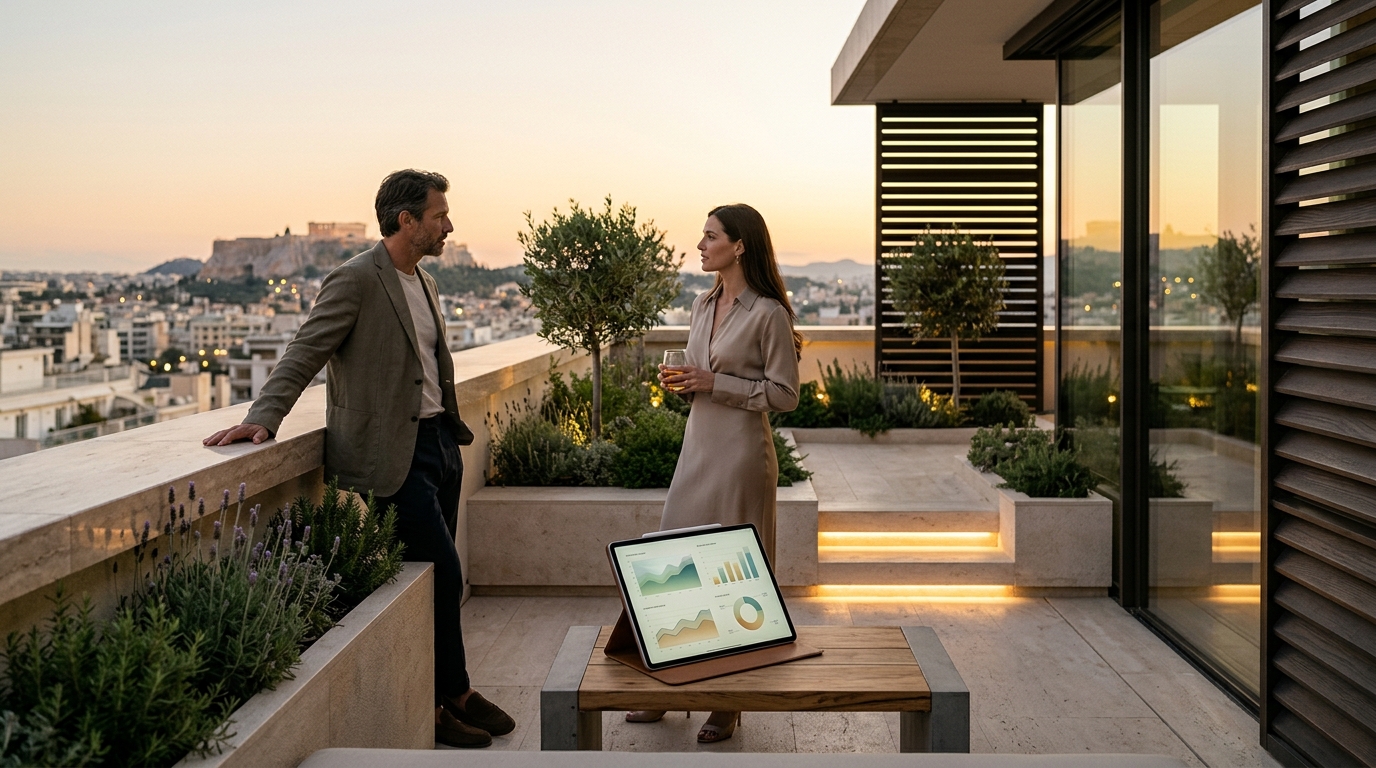
This shift is particularly evident in European markets. Greece, for instance, has seen a surge in demand for developments that align with strict environmental standards. The introduction of LEED Platinum certifications has set a new benchmark. Visionary Top 100 Creators 2026 highlights how architects are now prioritizing minimal, clean lines that integrate seamlessly with natural surroundings. This aesthetic is no longer optional. It is a requirement for top-tier pricing.
Investors are also looking at operational costs. A building that consumes less energy offers a tangible return on investment. This has forced developers to rethink their cost structures. The initial capital expenditure for sustainable materials is higher. However, the long-term savings and increased asset value justify the upfront cost. This economic reality is driving the pricing shifts we see today.
The Green Premium Explained
The term "green premium" refers to the additional cost buyers are willing to pay for sustainable features. In the 2024–2026 period, this premium has stabilized and become a standard expectation. According to Sustainable luxury growth data, properties with verified energy certifications command prices up to 15% higher than comparable non-certified assets.
This premium is not arbitrary. It is rooted in the reduced risk profile of these assets. Global energy review 2025 reports show that energy volatility directly impacts property operating costs. Buyers are paying more upfront to insulate themselves from future energy price spikes. This is especially true in regions with high electricity costs.
Furthermore, the green premium extends to the design philosophy. Minimalist architecture that reduces material waste is now valued. The integration of smart home technology that optimizes energy use is another key factor. These elements combine to create a holistic living experience that justifies the higher price point. It is a shift from conspicuous consumption to conscious investment.
Net Zero Energy Buildings as Standard
Net Zero Energy Buildings (NZEBs) have moved from the fringe to the mainstream of luxury development. An NZEB is a structure that produces as much energy as it consumes over the course of a year. This concept is no longer a futuristic ideal. It is a present-day reality for high-end developments.
In Greece, the first LEED Platinum residential project set a new precedent. This achievement demonstrated that sustainability and luxury are not mutually exclusive. LEED Platinum residential impact studies show that such buildings significantly reduce carbon footprints while enhancing occupant health. The air quality and thermal comfort in NZEBs are superior to traditional constructions.
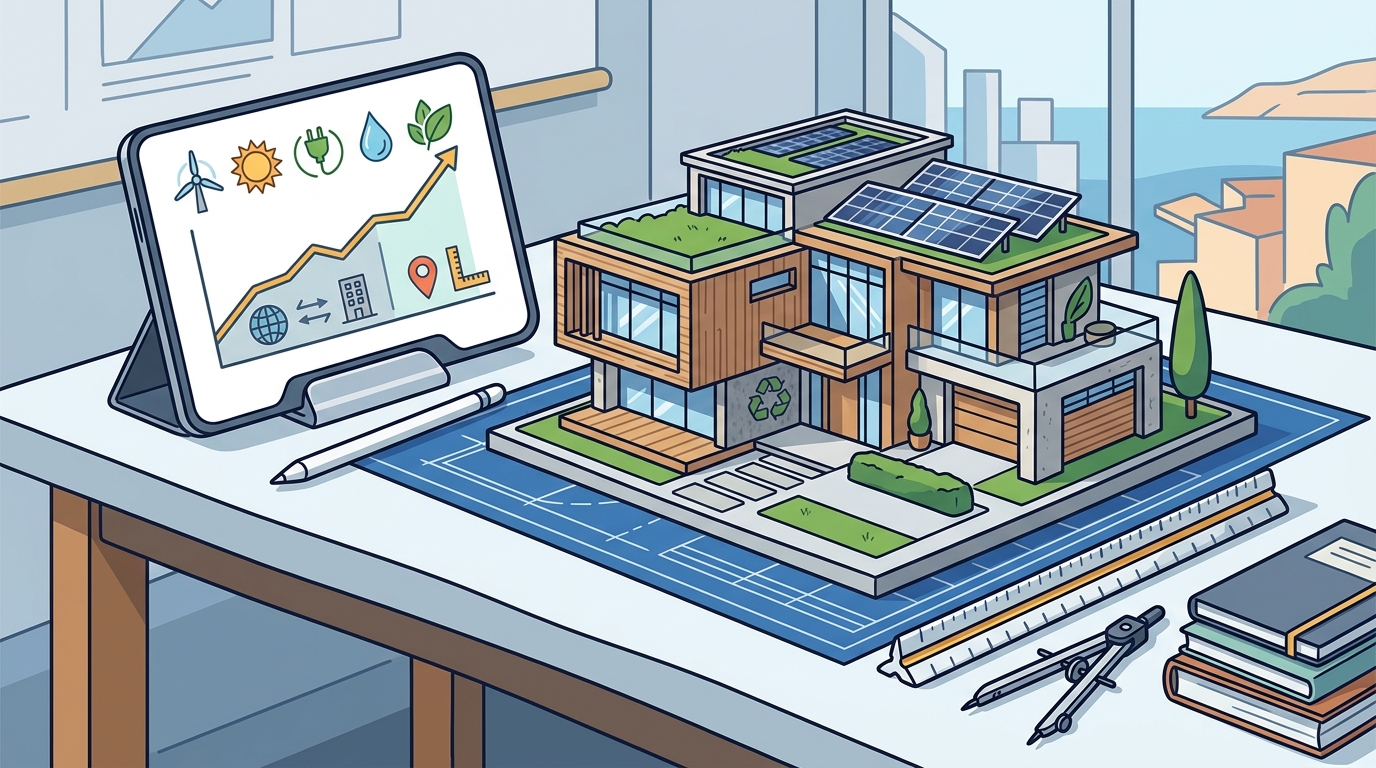
Developers are now incorporating NZEB standards into their core business models. This includes the use of high-performance insulation, solar integration, and advanced HVAC systems. The cost of these technologies has decreased over the last two years. This makes them more accessible to a broader range of luxury projects. The result is a market where energy independence is a key selling point.
Buyers are also interested in the technological infrastructure. Smart grids and battery storage systems are becoming standard features. These systems allow homeowners to manage their energy usage efficiently. They provide a sense of security and control that traditional homes cannot offer. This technological layer adds significant value to the property.
Regulatory Impacts on Pricing
Government regulations have played a crucial role in shaping the pricing landscape. Between 2024 and 2026, many countries implemented stricter building codes. These codes mandate higher energy efficiency standards for new constructions. Non-compliance results in heavy fines and delayed project completions.
This regulatory pressure has forced the market to adapt quickly. Developers who failed to adopt sustainable practices early are now facing higher costs to retrofit their designs. In contrast, those who integrated sustainability from the start have seen their assets appreciate. ECB economic bulletin 2025 highlights how green assets are viewed as lower risk by financial institutions. This leads to better financing terms for sustainable projects.
The impact is also visible in the secondary market. Older, inefficient buildings are losing value as buyers avoid them. This creates a bifurcated market. One segment for sustainable, future-proof homes. Another for traditional assets that require significant investment to remain relevant. This divergence is expected to widen in the coming years.
Investors are taking note. They are prioritizing properties that meet current and future regulatory standards. This ensures that their assets remain liquid and valuable. The risk of regulatory obsolescence is a major concern for luxury buyers. They are willing to pay a premium to avoid this risk.
Comparing Traditional vs. Sustainable Assets
To understand the pricing shifts, it is essential to compare traditional luxury assets with sustainable ones. The following table outlines the key differences in value drivers, operational costs, and market perception.
| Feature | Traditional Luxury Asset | Sustainable Luxury Asset |
|---|---|---|
| Energy Costs | High and volatile | Predictable and low |
| Resale Value | Declining relative to market | Appreciating with green premium |
| Regulatory Risk | High risk of obsolescence | Low risk, future-proof |
| Buyer Profile | Traditional collectors | Conscious investors |
| Design Focus | Ornate and material-heavy | Minimalist and integrated |
The data clearly shows that sustainable assets are outperforming their traditional counterparts. This is not just a trend. It is a structural change in the market. Buyers are making informed decisions based on long-term value rather than short-term aesthetics.
Key Takeaways
- Valuation Shift: Luxury pricing is now driven by environmental performance, not just location.
- Green Premium: Certified sustainable properties command up to 15% higher prices in the 2024–2026 market.
- Net Zero Standard: NZEBs are becoming the new baseline for high-end developments.
- Regulatory Pressure: Stricter building codes are forcing a rapid market adaptation.
- Investment Logic: Sustainable assets are viewed as lower risk by financial institutions.
- Design Evolution: Minimalist, clean lines are replacing ornate designs in luxury sectors.
- Market Bifurcation: A clear divide is forming between future-proof and obsolete assets.
Frequently Asked Questions
How has the definition of luxury changed in 2024?
Luxury is no longer defined solely by opulence. It now includes resilience, energy efficiency, and environmental responsibility. Buyers expect homes to be both aesthetically refined and functionally intelligent.
What is the green premium in real estate?
The green premium is the additional price buyers pay for properties with verified sustainability certifications. It reflects the reduced operational costs and lower regulatory risks associated with these assets.
Are Net Zero Energy Buildings more expensive to build?
While initial costs are higher, the long-term savings on energy and maintenance offset the investment. The technology costs have also decreased, making NZEBs more accessible.
How do regulations affect property prices?
Stricter regulations increase the value of compliant properties. Non-compliant assets face depreciation due to the risk of future retrofitting costs and potential fines.
Why is minimalist design popular in sustainable luxury?
Minimalist design reduces material waste and integrates seamlessly with natural surroundings. It aligns with the philosophy of functional intelligence and environmental harmony.
What is the role of LEED Platinum certification?
LEED Platinum certification sets a new benchmark for sustainable luxury. It provides third-party verification of a building's environmental performance, enhancing its market value.
How can investors identify future-proof luxury assets?
Investors should look for properties with high energy efficiency, smart technology integration, and compliance with current and future building codes.
Contact ECLÉDE for Sustainable Development
The market for sustainable luxury is evolving rapidly. To navigate this complex landscape, you need a partner with deep expertise in both architecture and environmental responsibility. ECLÉDE specializes in creating high-performance, environmentally responsible developments that redefine modern living.
Our approach bridges technical precision with creative vision. We deliver projects that are both aesthetically refined and functionally intelligent. Whether you are looking to develop a Net Zero Energy Building or a sustainable luxury residence, our team is ready to guide you.
Visit our portfolio page to see our latest projects, including Boomerang Athens and Dynasty Villas. For more information on our philosophy and services, explore our about page. To discuss your next development project, contact ECLÉDE today.