
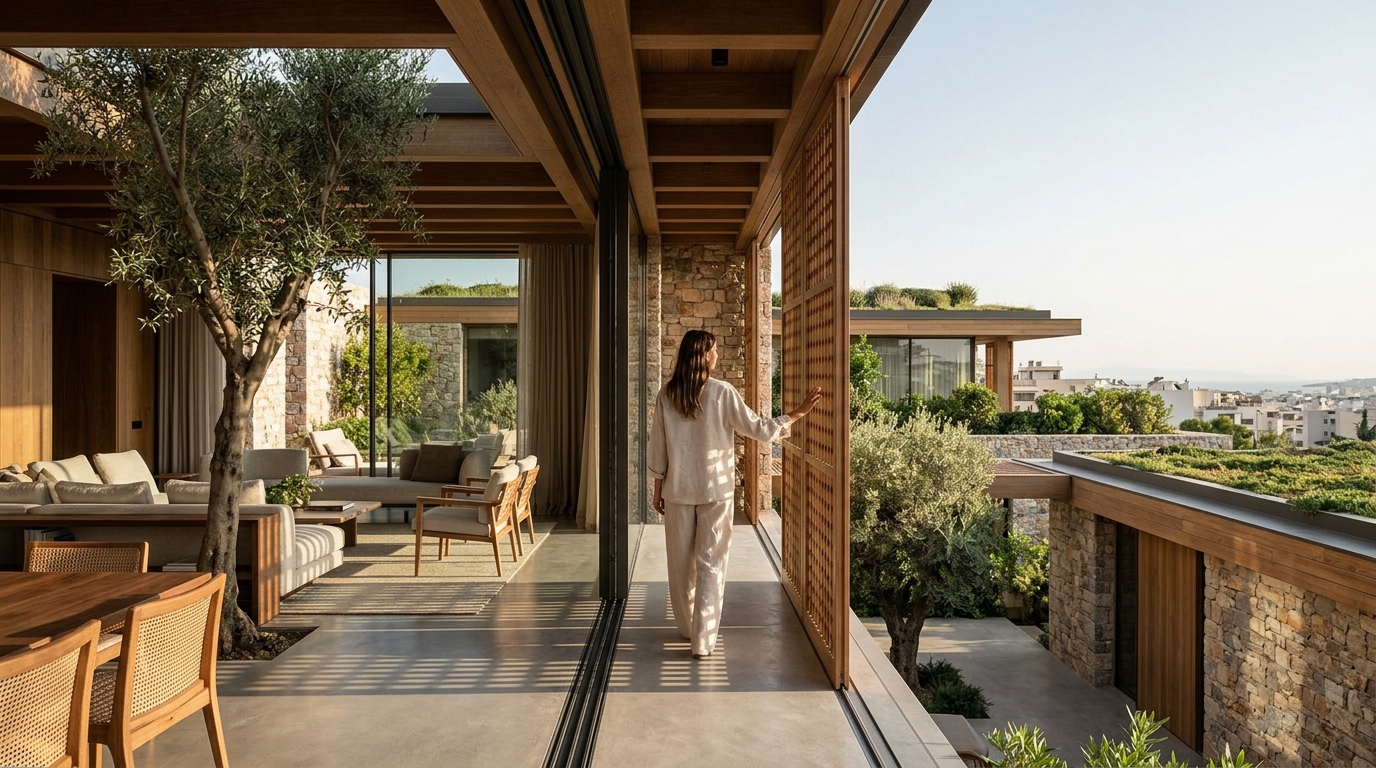
The global shift toward environmentally responsible construction is no longer a niche trend but a fundamental requirement for modern luxury real estate. According to recent industry analyses, the demand for Net Zero Energy Buildings has grown by over 40% in the past five years among high-net-worth individuals seeking long-term asset value. This surge reflects a broader understanding that sustainability and opulence are not mutually exclusive but are, in fact, synergistic. Bioclimatic design serves as the critical bridge between these two worlds, offering a methodology that reduces operational costs while enhancing aesthetic refinement and human comfort.
Core Principles of Bioclimatic Architecture
Bioclimatic architecture is a design approach that responds to the local climate to create comfortable, energy-efficient spaces. It is not merely about adding solar panels to a conventional building. Instead, it involves a holistic integration of passive design strategies that work with natural forces rather than against them. The goal is to minimize the need for mechanical heating and cooling by optimizing the building envelope and spatial organization.
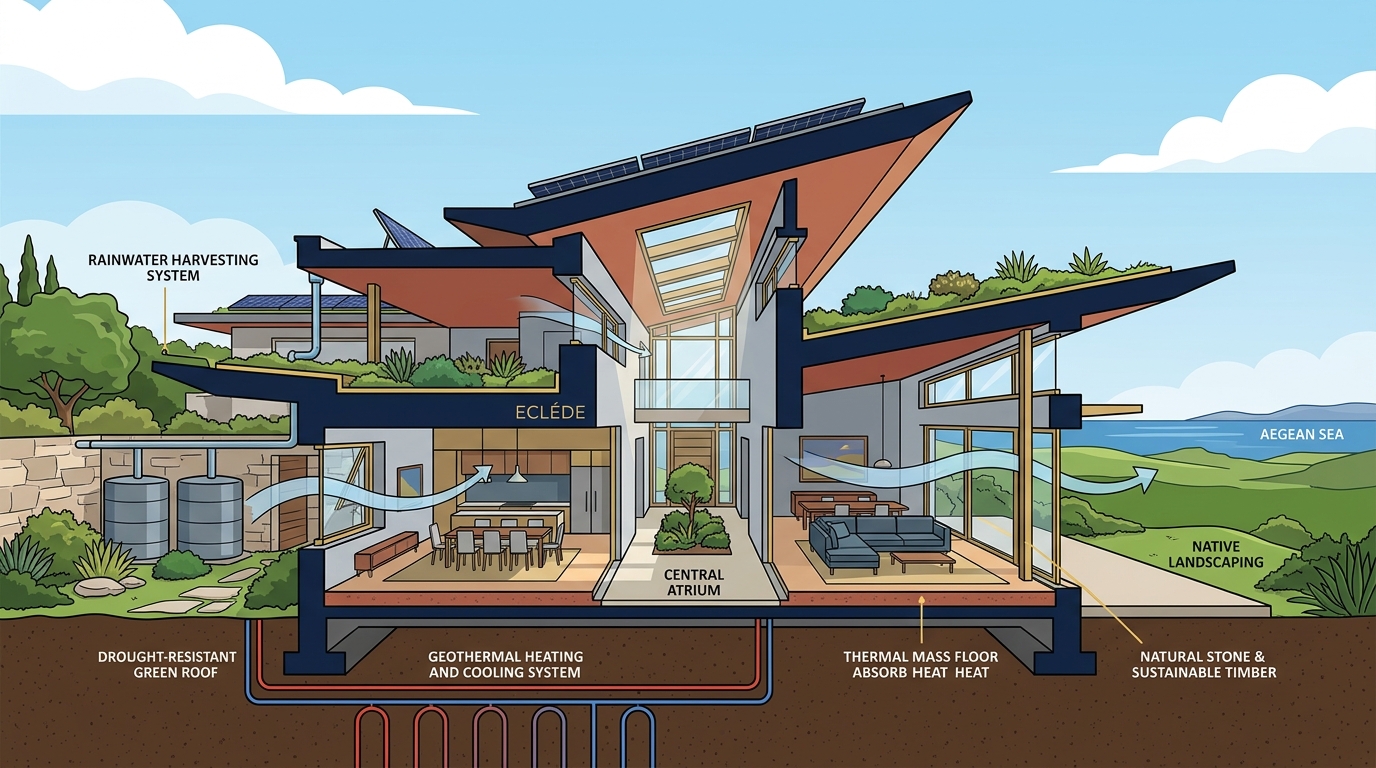
At the heart of this philosophy is the concept of thermal mass. Thermal mass is the ability of a material to absorb, store, and release heat energy. In luxury residences, materials like polished concrete, natural stone, and rammed earth are often used to stabilize indoor temperatures. During the day, these materials absorb excess heat, preventing overheating. At night, they release the stored warmth, reducing the load on heating systems. This passive regulation ensures a consistent, comfortable environment without relying on energy-intensive HVAC systems.
Another critical principle is natural ventilation. Natural ventilation is the process of circulating air through a building using wind pressure and thermal buoyancy. By strategically placing windows, vents, and courtyards, architects can create cross-ventilation paths that flush out stale air and draw in cool breezes. This not only improves indoor air quality but also reduces humidity levels, which is essential for maintaining the integrity of high-end finishes and furnishings.
Strategic Site Analysis and Orientation
The success of any bioclimatic design begins long before the first brick is laid. It starts with a rigorous site analysis that considers solar paths, prevailing winds, topography, and vegetation. For luxury developments, this analysis is often more detailed than standard building codes require. The objective is to maximize solar gain in winter while minimizing it in summer, a balance that requires precise orientation.
In the Northern Hemisphere, south-facing orientations are generally optimal for capturing winter sun. However, this must be balanced with shading strategies to prevent summer overheating. Overhangs, louvers, and deciduous vegetation can provide dynamic shading that adapts to the sun's changing angle throughout the year. This dynamic approach ensures that the building remains comfortable year-round without excessive energy use.
Wind patterns also play a crucial role in site planning. Prevailing winds can be harnessed for cooling or blocked to prevent heat loss. In coastal luxury residences, for example, designers often orient living spaces to capture sea breezes while shielding bedrooms from harsh winds. This attention to microclimate details elevates the living experience, making the home feel intimately connected to its surroundings.
Materiality and Thermal Performance
The choice of materials in a bioclimatic luxury residence is driven by both aesthetic and performance criteria. High-end materials are selected for their durability, beauty, and thermal properties. Insulation is another key factor. Advanced insulation systems, such as vacuum insulated panels or aerogel-infused materials, offer superior thermal resistance with minimal thickness. This allows for larger window areas without compromising energy efficiency, a key demand in modern luxury design.
Windows are often the weakest link in the building envelope. Triple-glazed windows with low-emissivity coatings and argon gas fills are standard in high-performance homes. These windows provide excellent insulation while allowing natural light to penetrate deep into the interior. The frames are typically made from thermally broken aluminum or wood, which prevents heat transfer and condensation.
Interior finishes also contribute to thermal comfort. Natural materials like wood, cork, and wool have low thermal conductivity, making them feel warm to the touch. They also regulate humidity by absorbing and releasing moisture, which contributes to a healthier indoor environment. These materials age gracefully, adding character and value to the property over time.
Integrating Renewable Energy Systems
While passive design reduces energy demand, active renewable systems are often necessary to achieve Net Zero Energy status. Solar photovoltaic (PV) panels are the most common solution, but their integration must be aesthetically pleasing. Building-integrated photovoltaics (BIPV) allow solar cells to replace traditional building materials, such as roof tiles or facade cladding. This seamless integration maintains the architectural integrity of the luxury residence while generating clean energy.
Geothermal heat pumps are another powerful technology for luxury homes. They utilize the stable temperature of the earth to provide heating and cooling. This system is highly efficient and has a long lifespan, making it a wise investment for high-end properties. In some cases, solar thermal systems are also used to provide domestic hot water, further reducing the building's carbon footprint.
Energy storage is becoming increasingly important as grid reliability becomes a concern. Lithium-ion battery systems allow homeowners to store excess solar energy for use at night or during power outages. This independence from the grid enhances the security and resilience of the luxury residence, a key selling point for discerning buyers.
Case Studies in Sustainable Luxury
Examining real-world examples helps illustrate the potential of bioclimatic design in luxury contexts. The following table compares two distinct approaches to sustainable luxury development.
| Project Type | Key Bioclimatic Feature | Energy Outcome | Luxury Appeal |
|---|---|---|---|
| Urban Penthouse | Integrated BIPV and rooftop garden | Net Zero Energy | Private outdoor space with city views |
| Coastal Villa | Passive cooling via sea breeze channels | 90% Energy Reduction | Seamless indoor-outdoor living |
| Mountain Retreat | Thermal mass and solar gain optimization | LEED Platinum Certified | Minimalist aesthetic with natural materials |
These projects demonstrate that sustainability does not require compromise. Instead, it enhances the luxury experience by providing healthier, more comfortable, and more resilient living environments. The use of high-performance materials and intelligent design creates spaces that are not only beautiful but also deeply responsive to their context.
Key Takeaways
- Bioclimatic design reduces energy consumption by up to 70% through passive strategies before active systems are even considered.
- Thermal mass materials like stone and concrete stabilize indoor temperatures, reducing HVAC load and enhancing comfort.
- Strategic orientation and shading are critical for maximizing winter solar gain while preventing summer overheating.
- Building-integrated photovoltaics (BIPV) allow for aesthetic solar energy generation without compromising architectural integrity.
- High-performance windows with triple glazing and low-emissivity coatings are essential for maintaining thermal comfort.
- Geothermal heat pumps offer long-term efficiency and reliability for luxury residential heating and cooling.
- Sustainable luxury developments often command higher resale values due to lower operating costs and premium certifications.
Frequently Asked Questions
What is the difference between green building and bioclimatic design?
Green building is a broad term that encompasses various sustainable practices, including material sourcing and waste reduction. Bioclimatic design is a specific architectural methodology that focuses on using the local climate to regulate temperature and light passively. While all bioclimatic buildings are green, not all green buildings are bioclimatic.
How much does it cost to build a bioclimatic luxury home?
The initial cost can be 5-10% higher than a conventional luxury home due to advanced materials and systems. However, the long-term savings on energy bills and increased property value often offset this premium within 7-10 years. The exact cost depends on the complexity of the design and the level of sustainability certification sought.
Can bioclimatic design be applied to existing luxury homes?
Yes, retrofitting is possible but more challenging. Key upgrades include adding insulation, replacing windows with high-performance units, and installing renewable energy systems. However, the most effective bioclimatic strategies are integrated during the initial design phase to optimize orientation and form.
What certifications are available for sustainable luxury residences?
Major certifications include LEED (Leadership in Energy and Environmental Design), BREEAM (Building Research Establishment Environmental Assessment Method), and Passive House. LEED Platinum is a prestigious benchmark for sustainable luxury, as demonstrated by ECLÉDE's first LEED Platinum residential project in Greece.
How does bioclimatic design improve indoor air quality?
By prioritizing natural ventilation and using low-VOC (volatile organic compound) materials, bioclimatic homes reduce the accumulation of pollutants and allergens. Mechanical ventilation with heat recovery (MVHR) systems are often used to ensure fresh air intake without losing thermal energy.
Is bioclimatic design suitable for all climates?
Yes, but the strategies must be adapted to the specific climate. In hot climates, the focus is on shading and ventilation. In cold climates, the focus is on solar gain and insulation. The core principle of responding to local conditions remains constant.
What role does landscaping play in bioclimatic design?
Landscaping is an integral part of the bioclimatic envelope. Deciduous trees provide summer shade and winter sun. Windbreaks can reduce heating loads in cold climates. Green roofs and walls provide insulation and manage stormwater, contributing to the overall sustainability of the property.
Start Your Sustainable Development Journey
Building a sustainable luxury residence is a complex endeavor that requires expertise in architecture, engineering, and environmental science. ECLÉDE specializes in creating high-performance, environmentally responsible developments that redefine modern living. Our approach combines minimal, clean architectural lines with seamless integration of natural surroundings to deliver projects that are both aesthetically refined and functionally intelligent. We invite you to explore our portfolio and discover how we can bring your vision to life. Contact us today to schedule a consultation and begin your journey toward a sustainable, luxurious future.