
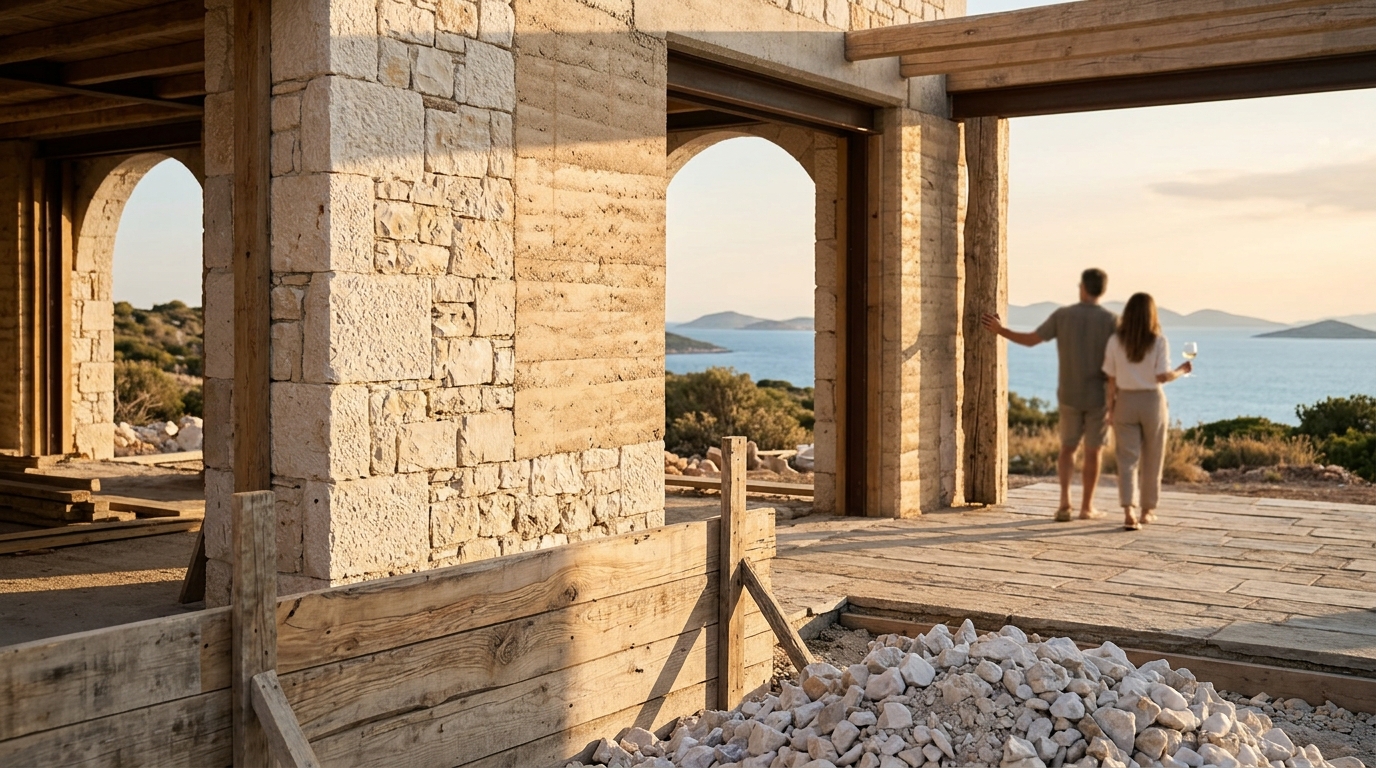
Luxury villa construction in Greece increasingly relies on locally sourced, low-carbon materials that balance aesthetic refinement with environmental responsibility. Developers like ECLÉDE integrate these resources to create residences that respect the Mediterranean landscape while delivering high-end living standards. This approach ensures long-term durability and reduced ecological impact.
Local Stone and Masonry
Timber and Wood Structures
Sustainable timber is a renewable resource that sequesters carbon throughout its lifecycle. It is a structural material that offers high strength-to-weight ratios, allowing for elegant, open-plan designs. Greek developers are increasingly specifying certified wood from managed forests to ensure environmental integrity. This choice contrasts sharply with the use of non-renewable synthetic materials. For additional details, review the .
Wooden ceilings and exposed beams add warmth and texture to luxury interiors. They also provide natural acoustic insulation, enhancing comfort. The use of timber in modern Greek villas reflects a broader shift toward biophilic design. This approach connects occupants with natural elements, promoting well-being and a sense of place. By prioritizing certified wood, developers like ECLÉDE ensure that their projects meet rigorous sustainability standards. For additional details, review the Customer Experience.
Insulation and Energy Efficiency
Effective insulation works in tandem with high-efficiency glazing and airtight construction. This combination reduces energy consumption for heating and cooling by up to 50 percent compared to conventional builds. The result is a lower operational carbon footprint and reduced utility costs for owners. ECLÉDE integrates these technologies to create homes that are both luxurious and environmentally responsible. For additional details, review the Frequently Asked Questions.
Water and Waste Systems
Sustainable water management is essential in regions prone to seasonal drought. It is a system design that prioritizes conservation, reuse, and efficient distribution. Luxury villas in Greece often incorporate rainwater harvesting systems for irrigation and non-potable uses. Greywater recycling systems further reduce demand on municipal water supplies. For additional details, review the About.
These systems are integrated seamlessly into the villa's architecture, ensuring that sustainability does not compromise aesthetics. Smart monitoring devices track water usage in real time, allowing for immediate adjustments. This level of technological integration reflects the high standards expected in luxury development. ECLÉDE designs these systems to be both functional and invisible, maintaining the clean lines of modern architecture.
Key Takeaways
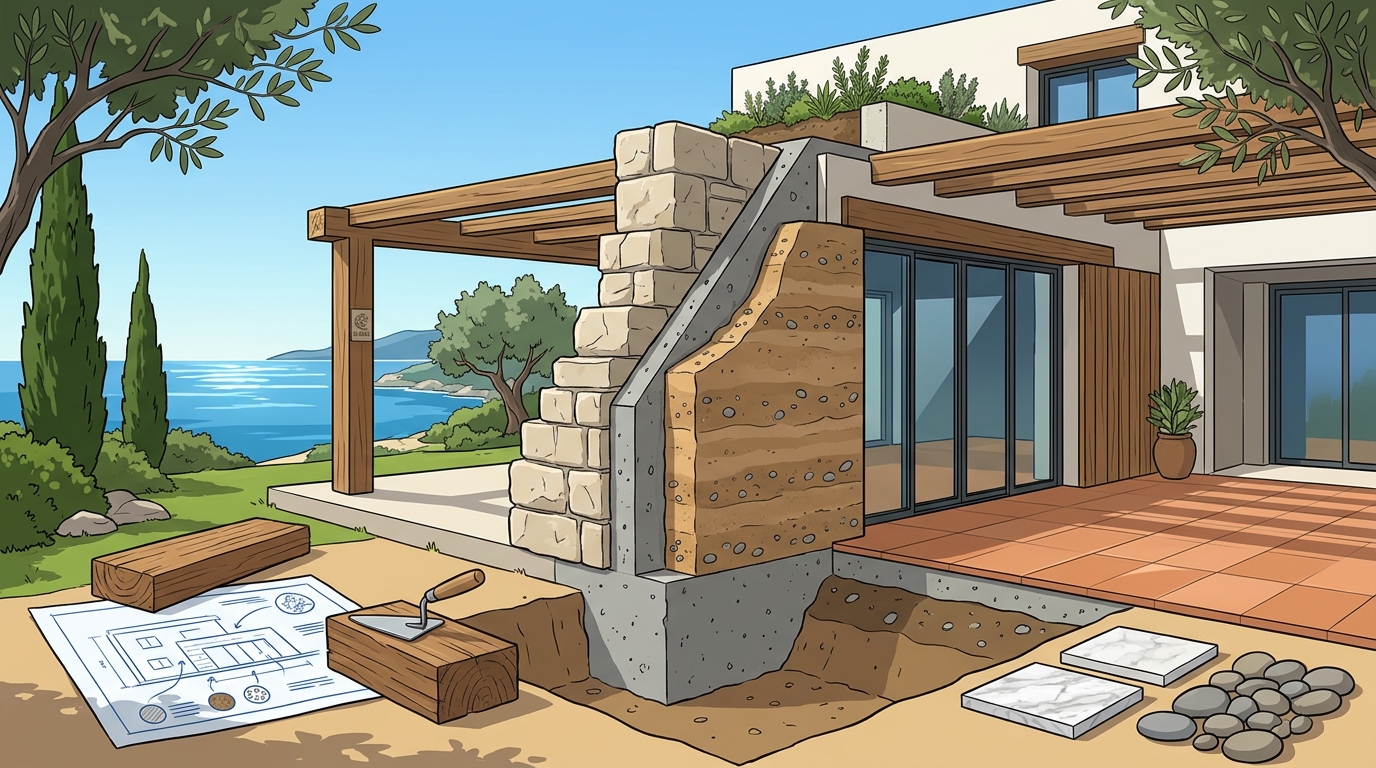
- Local stone reduces transportation emissions and provides natural temperature regulation.
- Certified timber is a renewable structural material that sequesters carbon.
- High-performance insulation significantly lowers energy consumption for heating and cooling.
- Water harvesting and greywater recycling systems reduce demand on municipal supplies.
- Integration of smart technology ensures efficient resource management in luxury homes.
Frequently Asked Questions
What is the most common sustainable material in Greek villas?
Local stone is the most common sustainable material due to its abundance and low environmental impact.
How does timber contribute to sustainability?
What role does insulation play in energy efficiency?
Insulation minimizes heat transfer, reducing the need for mechanical heating and cooling systems.
Are water recycling systems common in luxury Greek villas?
Yes, rainwater harvesting and greywater recycling are increasingly common in high-end developments.
How does ECLÉDE approach sustainable design?
ECLÉDE integrates local materials, passive design, and smart technology to create eco-friendly luxury residences. Learn more: Vassilis Siafaricas ECLEDE Eclectic.