
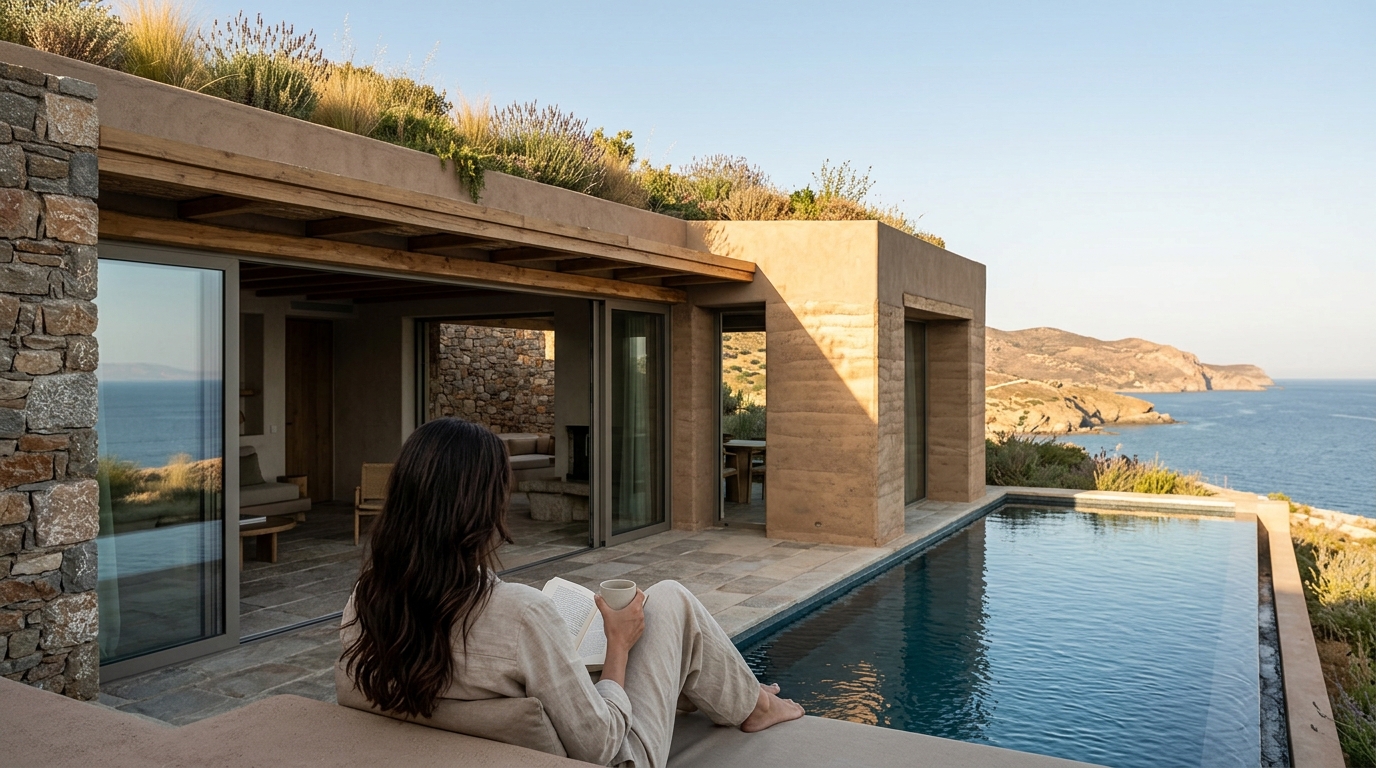
Earth-Sheltered Architecture: Energy Efficiency Benefits in Hot Climates
Earth-sheltered architecture is one of the oldest and most effective strategies for maintaining comfortable indoor temperatures without heavy reliance on mechanical cooling. In hot climates like those found across the Mediterranean, the technique leverages the ground's natural thermal mass to absorb excess heat and stabilize interior conditions year-round. For luxury developers committed to sustainability, such as ECLEDE (Eclectic Developments), earth-sheltered design represents a powerful convergence of environmental responsibility and refined living. This guide explores the measurable benefits, design considerations, and real-world applications that make earth-sheltered buildings a compelling choice for energy-conscious projects in warm regions.
What Is Earth-Sheltered Architecture?
Earth-sheltered architecture is a building approach in which structures are partially or fully integrated into the surrounding terrain, using soil cover on roofs and walls to moderate interior temperatures. The technique is not new. Subterranean and semi-buried dwellings have been a distinctive building type from prehistoric to pre-industrial eras across the Mediterranean region.
There are two primary forms. Underground structures are built entirely below grade, while bermed structures are surrounded by earth on one or more sides with an exposed facade for light and ventilation. Both leverage the earth's thermal stability to reduce energy demand.
How Earth-Sheltering Reduces Energy Use
The core principle is simple: soil temperature several meters below the surface remains far more stable than outdoor air temperature. According to the U.S. Department of Energy, earth temperatures vary much less than air temperatures, meaning the ground can absorb excess heat in summer and provide insulation in winter.
Thermal Mass and Heat Sink Effect
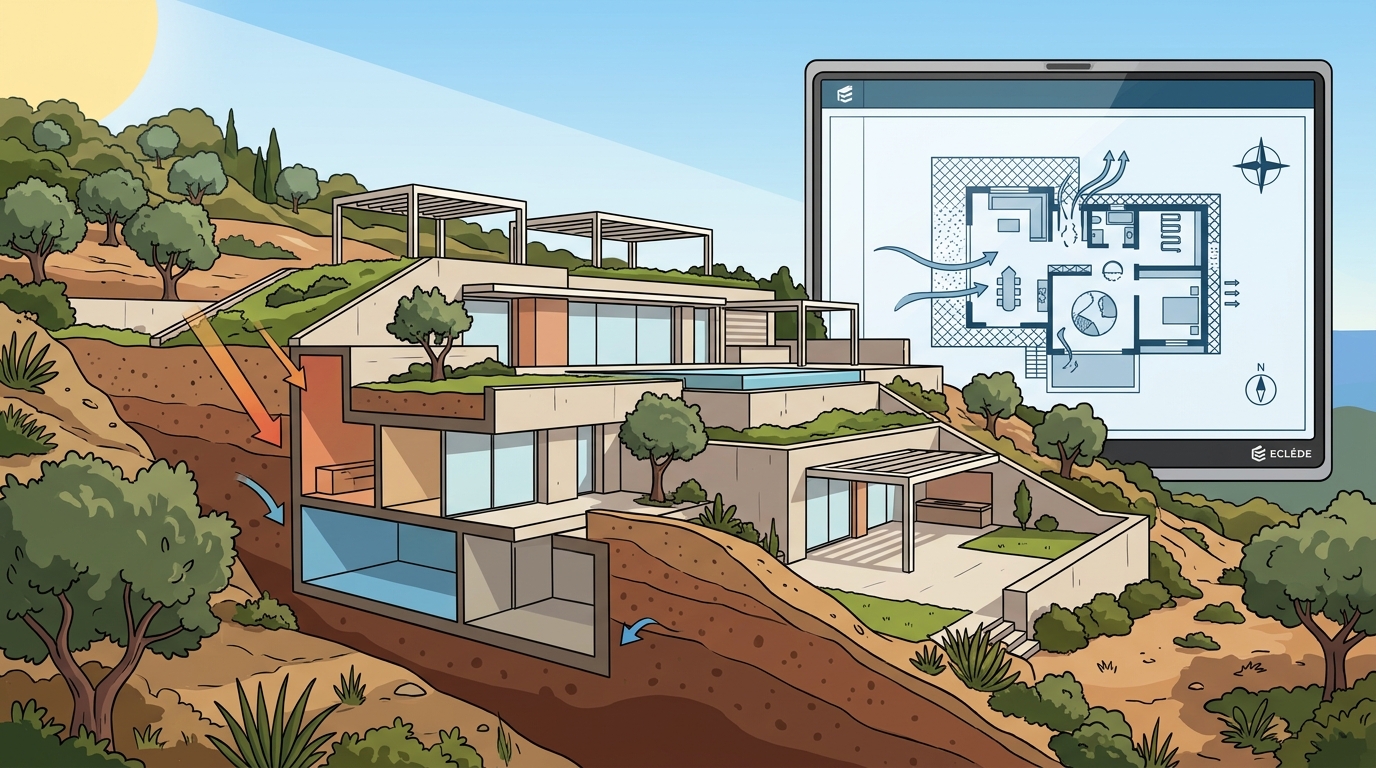
In hot climates, the earth acts as a heat sink, drawing warmth away from the building envelope. This dramatically reduces the cooling load that would otherwise require air conditioning. The Concrete Masonry & Hardscapes Association (CMHA) notes that the temperature difference between an earth-sheltered building and the adjacent ground is typically much less than that between an above-grade structure and outside air.
Reduced Conduction Losses
Earth-sheltered construction saves energy by reducing conduction heat transfer through walls and roofs. Because the surrounding soil moderates temperature swings, the building is not subjected to as harsh an external environment. This is especially valuable in climates with extreme daytime heat, such as Greece, southern Spain, or North Africa.
Key Benefits in Hot Climates
Passive Cooling Without Mechanical Systems
Underground residential spaces are considered a smart and vernacular response to the challenges of hot and arid climates. By leveraging passive strategies, they help regulate indoor temperatures, increase energy efficiency, and align with the environment. This approach significantly reduces dependence on HVAC systems.
Preservation of Landscape and Microclimate
Earth-sheltered buildings preserve the natural terrain and local microclimate. Green roofs restore vegetation above the structure, supporting biodiversity and reducing the urban heat island effect. For projects in ecologically sensitive areas, this is a decisive advantage.
Structural Resilience
Buried structures are inherently protected from wind, hail, and extreme weather events. They also offer superior acoustic insulation, creating quieter living environments suited to luxury residential applications.
Design Typologies: Underground vs. Bermed
| Feature | Underground (Fully Below Grade) | Bermed (Earth-Covered Sides) |
|---|---|---|
| Energy Efficiency | Highest; all surfaces contact soil | High; one or more facades exposed |
| Natural Light | Via courtyards, atriums, skylights | Via exposed south- or north-facing facade |
| Construction Cost | 10-20% above conventional | Moderate premium |
| Site Requirements | Flat or sloped; extensive excavation | Ideally sloped hillside |
| Best Climate Fit | Hot-arid and hot-humid | All warm climates |
The ECLEDE project portfolio demonstrates how both typologies can be executed at the highest level of luxury design while achieving near-zero energy consumption.
Energy Savings by the Numbers
Research consistently confirms that earth-sheltered buildings deliver substantial energy reductions compared to conventional above-grade construction. Here are key findings from peer-reviewed studies:
- Simulation studies in Shiraz, Iran found a 50% reduction in cooling energy at 6 meters depth compared to above-ground models.
- Total annual energy savings ranged from 21% to over 40% depending on burial depth and soil type.
- Three-sided earth-sheltering in Mediterranean Cyprus achieved a 27% reduction in total energy consumption.
- Proponents estimate families can save up to 80% on heating and cooling costs versus traditional homes.
These figures are especially relevant for hot-climate regions like Greece, where cooling dominates the annual energy budget.
Real-World Example: Villa Atlas by ECLEDE
One of the most compelling modern examples of earth-sheltered luxury is Villa Atlas, designed by Vassilis Siafaricas, founder and CEO of ECLEDE. Located on the seafront of Sivota bay on the Greek island of Lefkada, Villa Atlas is a complex of subterranean villas featuring near-zero energy consumption, minimalistic architectural lines, green roofs, and custom-made interiors.
The project won the 2024 A' Sustainable Products, Projects and Green Design Award, recognizing its innovative integration of luxury living with environmental responsibility. Villa Atlas demonstrates that earth-sheltered architecture is not a compromise but an elevation of both comfort and sustainability.
ECLEDE's upcoming Boomerang Athens project extends this commitment further, set to become one of the pioneering residences with a LEED Certificate in Greece.
Key Takeaways
- Earth-sheltered architecture is a proven strategy for reducing cooling energy demand by 27% to 50% or more in hot climates.
- The ground's thermal mass acts as a natural heat sink, stabilizing indoor temperatures without heavy mechanical cooling.
- Two primary typologies exist: fully underground and bermed, each suited to different site conditions and design goals.
- Initial construction costs may be 10-20% higher, but long-term energy savings deliver strong returns.
- Green roofs and subterranean design preserve landscapes, support biodiversity, and reduce heat island effects.
- Award-winning projects like ECLEDE's Villa Atlas prove that subterranean design and luxury are fully compatible.
- Hot Mediterranean climates, including Greece, are ideal candidates for earth-sheltered construction.
Frequently Asked Questions
What is earth-sheltered architecture?
Earth-sheltered architecture is a construction method where buildings are partially or fully covered by soil, using the ground's stable temperature to reduce heating and cooling energy requirements. It includes both underground and bermed designs.
How much energy can earth-sheltered buildings save in hot climates?
Research indicates cooling energy reductions of up to 50% at depth, with total annual energy savings ranging from 21% to over 40%. Some estimates suggest families can save up to 80% on heating and cooling costs compared to conventional homes.
Are earth-sheltered homes more expensive to build?
Initial construction costs are typically 10-20% higher than conventional buildings due to excavation and waterproofing requirements. However, significantly lower operating costs often offset this premium within a few years.
Do earth-sheltered buildings get enough natural light?
Yes. Modern designs incorporate atriums, courtyards, skylights, and strategically placed glazing to bring abundant daylight into interior spaces. ECLEDE's Villa Atlas, for example, uses long windows and open sightlines to the Ionian Sea.
Is earth-sheltered architecture suitable for luxury homes?
Absolutely. Projects like Villa Atlas by ECLEDE demonstrate that subterranean design can deliver bespoke interiors, stunning ocean views, and resort-level amenities while achieving near-zero energy consumption.
What climates are best for earth-sheltered construction?
Earth-sheltered buildings are most cost-effective in climates with significant temperature extremes and low humidity. Hot-arid and Mediterranean climates are particularly well suited because cooling is the dominant energy expense.
How does earth-sheltered design support sustainability goals?
By drastically reducing energy consumption, preserving natural landscapes with green roofs, and minimizing the building's visual and environmental footprint, earth-sheltered design aligns with net-zero energy and LEED certification targets.
What is the role of soil type in energy performance?
Soil type significantly affects thermal conductivity and heat storage capacity. Denser, more moisture-retentive soils generally provide better thermal mass performance, making site analysis a critical step in earth-sheltered design.
Explore Sustainable Luxury Development with ECLEDE
If you are planning a luxury residential project in a warm climate and want to maximize energy efficiency without sacrificing design excellence, earth-sheltered architecture deserves serious consideration. Contact ECLEDE to discuss how bespoke subterranean design can transform your next development into an award-winning, sustainable landmark.