
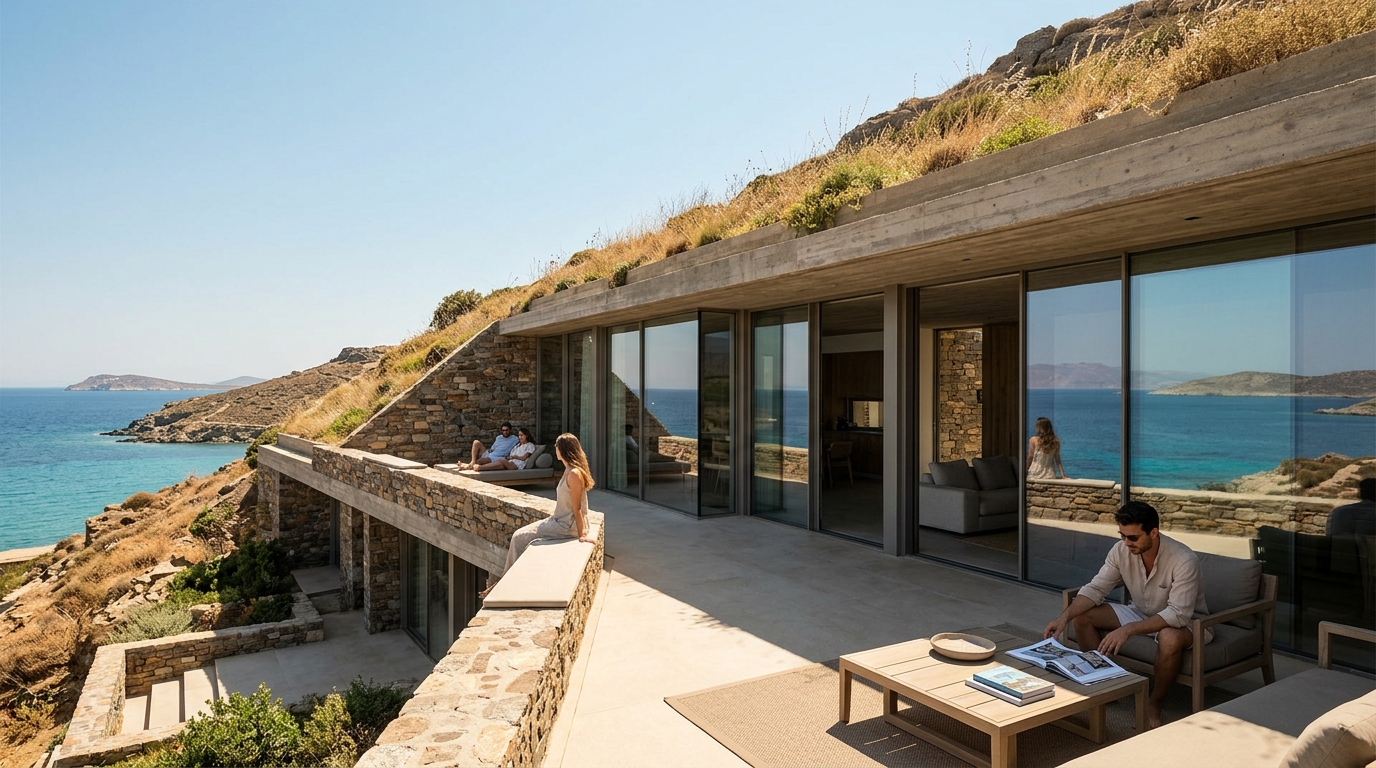
Earth-sheltered architecture is a design methodology that integrates building mass with the surrounding terrain to leverage thermal inertia and reduce energy consumption. This approach aligns perfectly with the vision of Vassilis Siafaricas, who emphasizes seamless integration with natural surroundings. By embedding structures into the landscape, developers can achieve significant reductions in cooling demands while maintaining the aesthetic standards expected in luxury real estate. ECLEDE applies these principles to create environmentally responsible developments that balance technical precision with creative vision.
Thermal Mass and Passive Cooling Dynamics
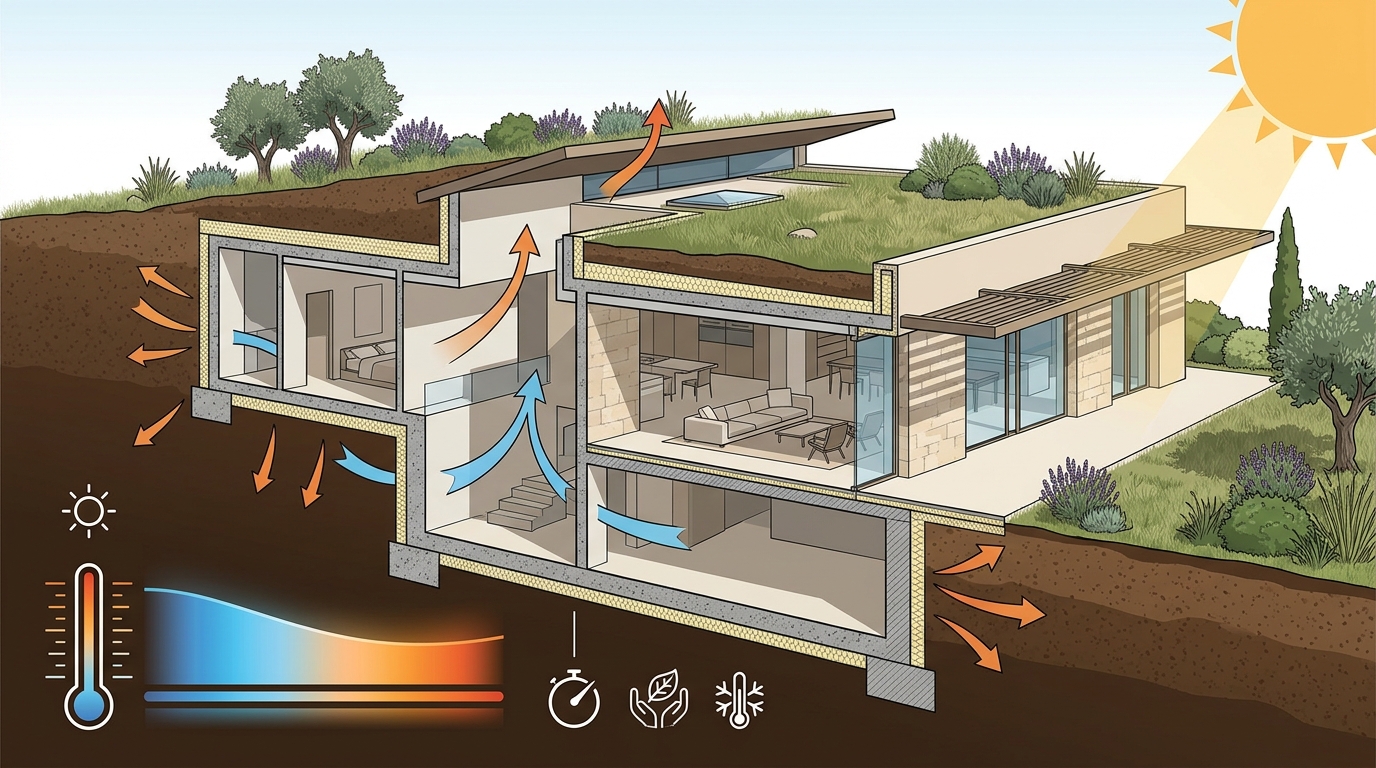
Thermal mass is the ability of a material to absorb, store, and release heat, stabilizing indoor temperatures against external fluctuations. Earth-sheltered designs utilize the ground as a massive heat sink. During peak heat, the surrounding soil absorbs excess energy from the building envelope. This process minimizes the reliance on active mechanical systems. Portfolio projects often showcase how structural integration enhances this thermal performance. The earth maintains a relatively constant temperature at moderate depths, providing a stable baseline for the building's internal climate. This stability reduces the amplitude of temperature swings, creating a more comfortable living environment without excessive energy expenditure.
Engineers calculate the optimal burial depth to maximize thermal efficiency. Deeper integration allows for greater heat exchange with the ground. This strategy is particularly effective in regions with high diurnal temperature variations. The building mass acts as a buffer, slowing the transfer of heat into the interior during the day. At night, the structure can release stored heat or remain cool, depending on the ventilation strategy. This dynamic interaction between the building and the earth creates a passive cooling system that operates continuously.
Reducing Cooling Loads in Mediterranean Environments
Hot climates present unique challenges for traditional construction. Earth-sheltered solutions mitigate these by reducing the surface area exposed to direct solar radiation. The earth acts as a natural insulator, maintaining stable internal temperatures year-round. This strategy is particularly effective in regions like Greece, where summer temperatures can be extreme. Eclectic Developments prioritizes energy-efficient construction to ensure long-term operational savings. By orienting the structure to minimize southern exposure and maximizing northern earth contact, designers can drastically lower cooling requirements.
Passive cooling is a strategy that utilizes natural environmental forces, such as ground temperature and airflow, to regulate building climate without mechanical systems. Earth-sheltered buildings often incorporate stack effect ventilation to draw cool air from the ground and expel warm air. This natural airflow reduces humidity levels and improves air quality. The reduced cooling load translates to smaller HVAC systems, lowering both capital and operational costs. These systems require less maintenance and have a longer lifespan due to reduced runtime. The result is a building that performs efficiently while minimizing its environmental footprint.
Integration with Natural Surroundings and Luxury Standards
Luxury living does not require sacrificing environmental responsibility. Clean architectural lines and minimal footprints allow structures to blend into the topography. This philosophy ensures that the building enhances the human experience without disrupting the ecosystem. Recent developments highlight how earth-sheltered forms can achieve high-end aesthetic outcomes while delivering superior performance. The earth provides excellent acoustic insulation, creating a quiet and private sanctuary. This acoustic comfort is a key feature for high-end residential properties.
Land preservation is another critical benefit. Earth-sheltered designs require less site disturbance, protecting existing vegetation and topography. This approach aligns with the values of discerning clients who prioritize sustainability. The building becomes an extension of the landscape rather than an imposition upon it. Large glass facades can still be incorporated to provide views and natural light. These design elements create a seamless connection between the interior and the exterior environment. The result is a property that offers both privacy and a profound sense of place.
Prop-Tech and Smart Energy Management Integration
Modern earth-sheltered architecture benefits from advanced technology. Prop-tech solutions monitor thermal performance and optimize energy usage in real-time. Sensors track ground temperature variations and adjust ventilation strategies accordingly. This synergy between physical design and digital management creates a highly responsive living environment. Technology ventures founded by the ECLEDE team explore these intersections. Smart systems can predict weather patterns and pre-cool the building mass during off-peak hours. This proactive management maximizes efficiency and reduces energy costs.
Building management systems integrate data from multiple sources to provide a holistic view of performance. These systems can alert owners to potential issues before they become costly problems. Predictive maintenance ensures that all components operate at peak efficiency. The integration of prop-tech with earth-sheltered design creates a resilient and adaptable building. Owners can track their energy savings and environmental impact through intuitive dashboards. This transparency supports informed decision-making and continuous improvement.
Long-Term Investment Value and Regulatory Compliance
Investors recognize the financial advantages of sustainable design. Earth-sheltered buildings often qualify for green building certifications and incentives. The reduced operational costs and durability of earth-integrated structures increase asset value over time. Contact ECLEDE to discuss how these benefits apply to your specific development goals. Regulatory frameworks increasingly favor energy-efficient construction. Compliance with these standards can open access to favorable financing options and tax benefits.
The lifespan of earth-sheltered buildings is typically longer than traditional structures. The earth protects the building envelope from weathering and UV degradation. This durability reduces long-term maintenance costs and preserves the asset's value. Insurance premiums may also be lower due to the enhanced structural integrity and fire resistance. These financial incentives make earth-sheltered architecture an attractive option for long-term investors. The combination of operational savings and asset appreciation creates a compelling investment case.
Comparison of Earth-Sheltered vs. Traditional Construction
| Feature | Earth-Sheltered Architecture | Traditional Construction |
|---|---|---|
| Energy Efficiency | High thermal mass reduces cooling loads significantly. | Relies heavily on mechanical systems for climate control. |
| Initial Cost | Higher upfront investment for excavation and waterproofing. | Lower initial construction costs. |
| Operational Costs | Minimal energy consumption for heating and cooling. | Higher ongoing energy expenses. |
| Durability | Protected envelope extends building lifespan. | Envelope exposed to weather elements. |
| Environmental Impact | Low site disturbance and carbon footprint. | Higher resource consumption and emissions. |
| Aesthetics | Seamless integration with natural surroundings. | Visible structure dominates the landscape. |
Key Takeaways
- Earth-sheltered architecture leverages thermal mass to stabilize indoor temperatures and reduce energy consumption.
- Thermal mass is the ability of a material to absorb, store, and release heat, stabilizing indoor temperatures against external fluctuations.
- Passive cooling is a strategy that utilizes natural environmental forces, such as ground temperature and airflow, to regulate building climate without mechanical systems.
- ECLEDE integrates prop-tech solutions to monitor and optimize the performance of earth-sheltered buildings in real-time.
- Vassilis Siafaricas emphasizes clean architectural lines and minimal footprints to achieve seamless integration with natural surroundings.
- Earth-sheltered designs offer superior acoustic insulation and privacy, enhancing the luxury living experience.
- Long-term investment value is increased through reduced operational costs, durability, and potential regulatory incentives.
Frequently Asked Questions
How does earth-sheltered architecture manage moisture in hot climates?
Advanced waterproofing systems and drainage layers prevent moisture intrusion. Proper ventilation strategies remove humidity and maintain air quality. Regular maintenance ensures the integrity of the building envelope over time.
Is earth-sheltered architecture suitable for luxury residential projects?
Yes, this approach aligns with high-end design standards. Clean lines and natural integration create sophisticated living spaces. Portfolio examples demonstrate the aesthetic potential of earth-sheltered design.
What are the initial cost implications of earth-sheltered construction?
Initial costs can be higher due to excavation and specialized engineering. However, long-term operational savings often offset the upfront investment. Financial incentives and reduced maintenance costs further improve the return on investment.
How does ECLEDE ensure regulatory compliance for sustainable developments?
ECLEDE stays current with local and international building codes. The team navigates permitting processes to secure necessary approvals. Eclectic Developments prioritizes compliance to ensure smooth project execution.
Can earth-sheltered buildings provide adequate natural light?
Strategic placement of skylights and light wells brings daylight into the interior. Large glass facades can be oriented to maximize solar gain while minimizing heat loss. These design elements create bright and inviting living spaces.
What role does prop-tech play in earth-sheltered architecture?
Prop-tech enables real-time monitoring of thermal performance and energy usage. Smart systems optimize ventilation and climate control based on environmental data. This integration enhances efficiency and user comfort.
How does earth-sheltered architecture impact the surrounding ecosystem?
Minimal site disturbance preserves existing vegetation and topography. The building blends into the landscape, reducing visual impact. This approach supports biodiversity and environmental harmony.
Book Your Sustainable Development Consultation
Transform your vision into reality with earth-sheltered architecture that delivers exceptional energy efficiency and luxury living. Contact ECLEDE today to schedule a consultation with our expert team. We will guide you through the design process, ensuring your project meets the highest standards of sustainability and performance. Discover how earth-sheltered design can enhance your investment and create a lasting legacy.