
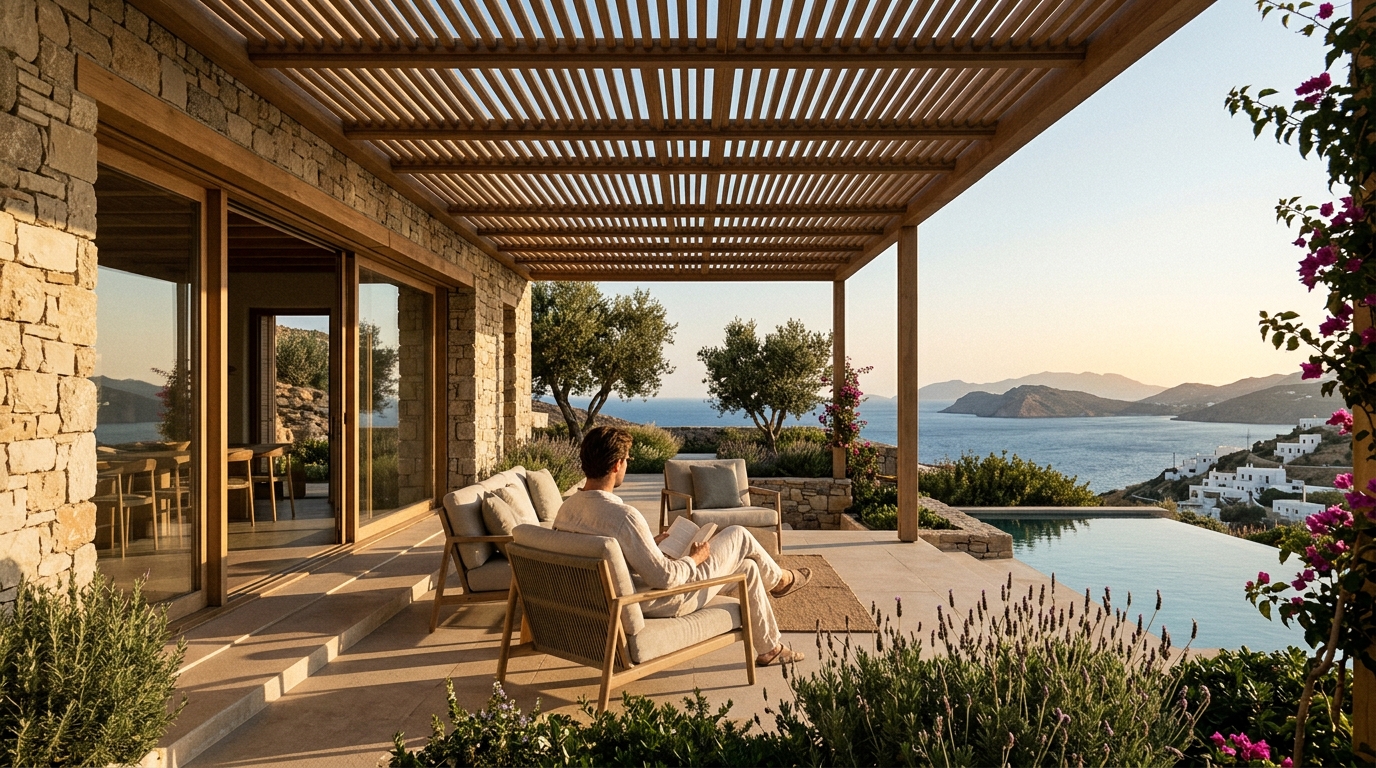
Bioclimatic design is the architectural strategy of using a building's orientation, mass, and materials to regulate temperature and light without relying on mechanical systems. In Greece, this approach is not a trend but a necessity for creating comfortable, sustainable luxury villas. This guide explains how leading developers, including ECLÉDE, integrate these principles into high-end residential projects across Halkidiki, Crete, and Athens. For additional details, review the .
Bioclimatic Design Principles
Understanding the core mechanics of passive design is essential for evaluating any luxury development. These principles ensure that a villa remains comfortable year-round while minimizing energy consumption. For additional details, review the Frequently Asked Questions.
Orientation and Solar Gain
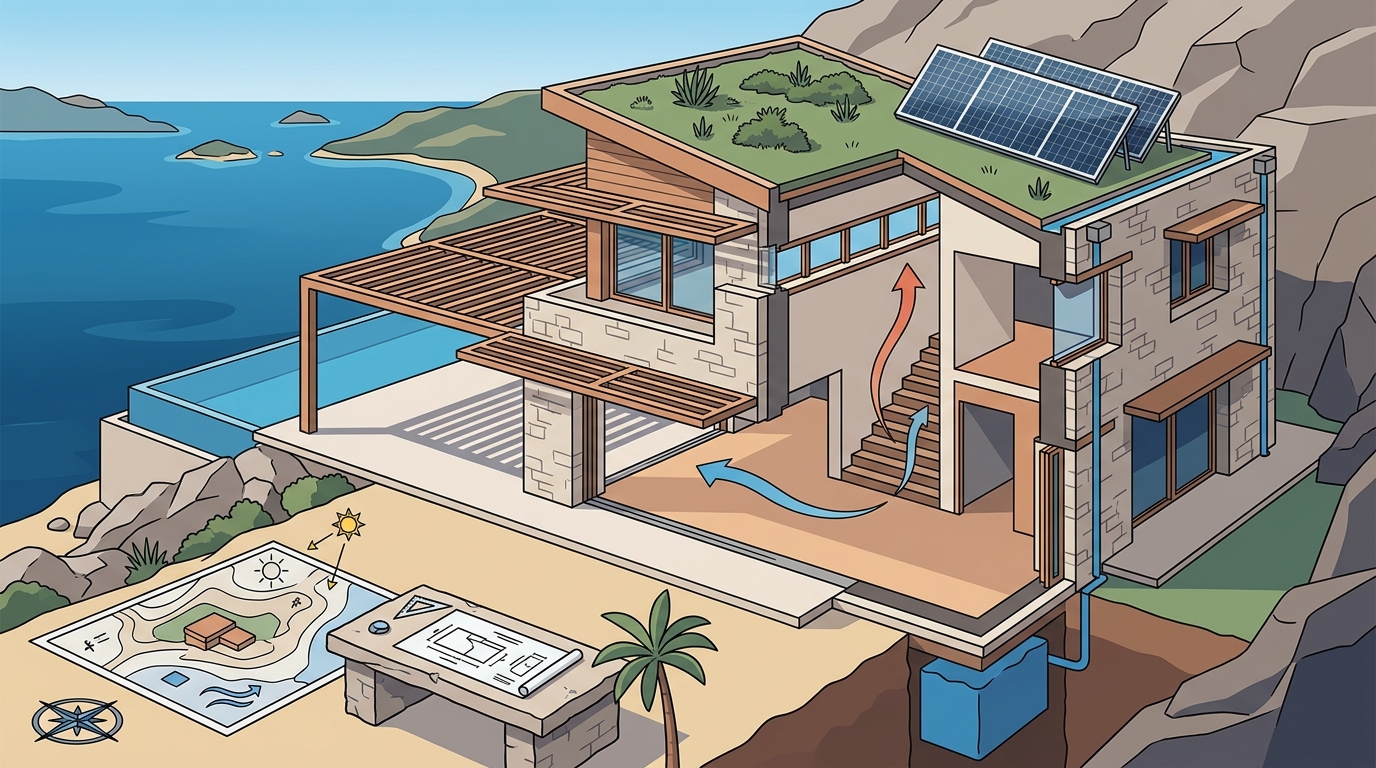
In the Greek climate, solar orientation is the primary driver of thermal comfort. Buildings are typically oriented to maximize winter sun exposure while minimizing summer heat gain. This involves careful calculation of window placement and roof overhangs. By aligning the main living spaces with the south, developers capture low-angle winter sunlight for passive heating. Conversely, deep eaves and shading devices block the high-angle summer sun, reducing the need for air conditioning. For additional details, review the About.
Thermal Mass and Insulation
Thermal mass is the ability of a material to absorb, store, and release heat. In bioclimatic architecture, heavy materials like stone, concrete, or rammed earth are used in walls and floors. These materials absorb heat during the day and release it slowly at night, stabilizing indoor temperatures. High-performance insulation is also critical, particularly in roofs and external walls, to prevent heat loss in winter and heat gain in summer. This combination of mass and insulation creates a stable internal environment that is less susceptible to external temperature swings.
Natural Ventilation and Airflow
Natural ventilation is a key strategy for cooling in the Greek summer. Architects design open floor plans and cross-ventilation paths to allow cool air to flow through the building. This passive cooling method is significantly more energy-efficient than mechanical systems. Strategic placement of windows and operable walls allows for the stack effect, where warm air rises and exits through high-level openings, drawing in cooler air from lower levels. This principle is particularly effective in coastal regions like Halkidiki and Crete, where prevailing winds can be harnessed for comfort.
Specific Projects in Halkidiki, Crete, and Athens
Applying bioclimatic principles requires adapting to the specific microclimates of different Greek regions. Developers like ECLÉDE tailor their designs to the unique environmental conditions of each location, ensuring that the architecture responds to its context.
Halkidiki: Coastal Cooling and Sea Breezes
Halkidiki's three peninsulas offer a unique coastal environment with strong sea breezes. Luxury villas in this region often feature open-air living spaces and large operable windows to capture the cooling effect of the Aegean Sea. The architecture typically incorporates local stone and light-colored finishes to reflect solar radiation. Developers focus on creating seamless indoor-outdoor connections, allowing residents to enjoy the sea breeze while maintaining privacy. This approach reduces reliance on air conditioning and enhances the connection to the natural landscape.
Crete: Solar Management and Wind Protection
Crete experiences intense solar radiation and strong winds, particularly the Meltemi. Bioclimatic design in Crete focuses on managing these two elements. Buildings are often designed with robust windbreaks and compact forms to reduce wind exposure. Solar shading is critical, with deep overhangs and external louvers used to control light and heat. The use of local materials, such as Cretan stone, adds thermal mass and aesthetic authenticity. Developers in Crete prioritize energy efficiency, often integrating photovoltaic systems to offset the high cooling demands of the summer months.
Athens: Urban Density and Heat Island Mitigation
Athens faces the challenge of the urban heat island effect, where dense construction leads to higher temperatures than surrounding rural areas. Bioclimatic design in the capital focuses on mitigating this effect through green roofs, vertical gardens, and high-performance insulation. Buildings are designed to minimize heat absorption and maximize natural ventilation. The use of reflective materials and strategic shading helps to reduce the cooling load. Developers in Athens often integrate smart home systems to optimize energy use, ensuring that luxury villas remain comfortable and efficient in the urban environment.
Key Takeaways
- Solar orientation is the primary driver of thermal comfort in the Greek climate.
- Thermal mass and high-performance insulation stabilize indoor temperatures year-round.
- Natural ventilation is a critical cooling strategy, particularly in coastal regions.
- Developers must adapt bioclimatic principles to the specific microclimates of Halkidiki, Crete, and Athens.
- Local materials and traditional techniques are often integrated into modern luxury designs.
- Energy efficiency is a key benefit of bioclimatic design, reducing reliance on mechanical systems.
- Leading developers like ECLÉDE prioritize sustainable, environmentally responsible architecture.
Frequently Asked Questions
What is bioclimatic design in luxury villas?
Bioclimatic design is the architectural approach of using a building's orientation, mass, and materials to regulate temperature and light without relying on mechanical systems. In luxury villas, this approach ensures comfort and sustainability while maintaining high aesthetic standards.
How does solar orientation affect villa comfort in Greece?
Solar orientation is the primary driver of thermal comfort in the Greek climate. By aligning main living spaces with the south, developers capture low-angle winter sunlight for passive heating. Conversely, deep eaves and shading devices block the high-angle summer sun, reducing the need for air conditioning.
What role does thermal mass play in bioclimatic architecture?
Thermal mass is the ability of a material to absorb, store, and release heat. In bioclimatic architecture, heavy materials like stone, concrete, or rammed earth are used in walls and floors. These materials absorb heat during the day and release it slowly at night, stabilizing indoor temperatures.
How do developers in Halkidiki utilize sea breezes?
Developers in Halkidiki design villas with open-air living spaces and large operable windows to capture the cooling effect of the Aegean Sea. This passive cooling method is significantly more energy-efficient than mechanical systems and enhances the connection to the natural landscape.
What challenges does bioclimatic design face in Athens?
Athens faces the challenge of the urban heat island effect, where dense construction leads to higher temperatures than surrounding rural areas. Bioclimatic design in the capital focuses on mitigating this effect through green roofs, vertical gardens, and high-performance insulation.
Why is local material important in Greek luxury villas?
Local materials, such as Cretan stone or Halkidiki limestone, add thermal mass and aesthetic authenticity to luxury villas. These materials are often integrated into modern designs to create a sense of place and connection to the local environment.
How does ECLÉDE integrate bioclimatic principles into its projects?
ECLÉDE integrates bioclimatic principles by tailoring designs to the specific environmental conditions of each location. The company focuses on creating high-end, environmentally responsible developments that balance architecture, sustainability, and long-term investment value.
Conclusion
Bioclimatic design is the cornerstone of sustainable luxury in Greece. By integrating principles of solar orientation, thermal mass, and natural ventilation, developers create villas that are both comfortable and environmentally responsible. ECLÉDE leads this movement, delivering projects that redefine modern living through a balance of architecture and sustainability. For those seeking a luxury villa that respects its environment, exploring the portfolio of ECLÉDE is the first step toward a sustainable future. Learn more: Vassilis Siafaricas ECLEDE Eclectic.