
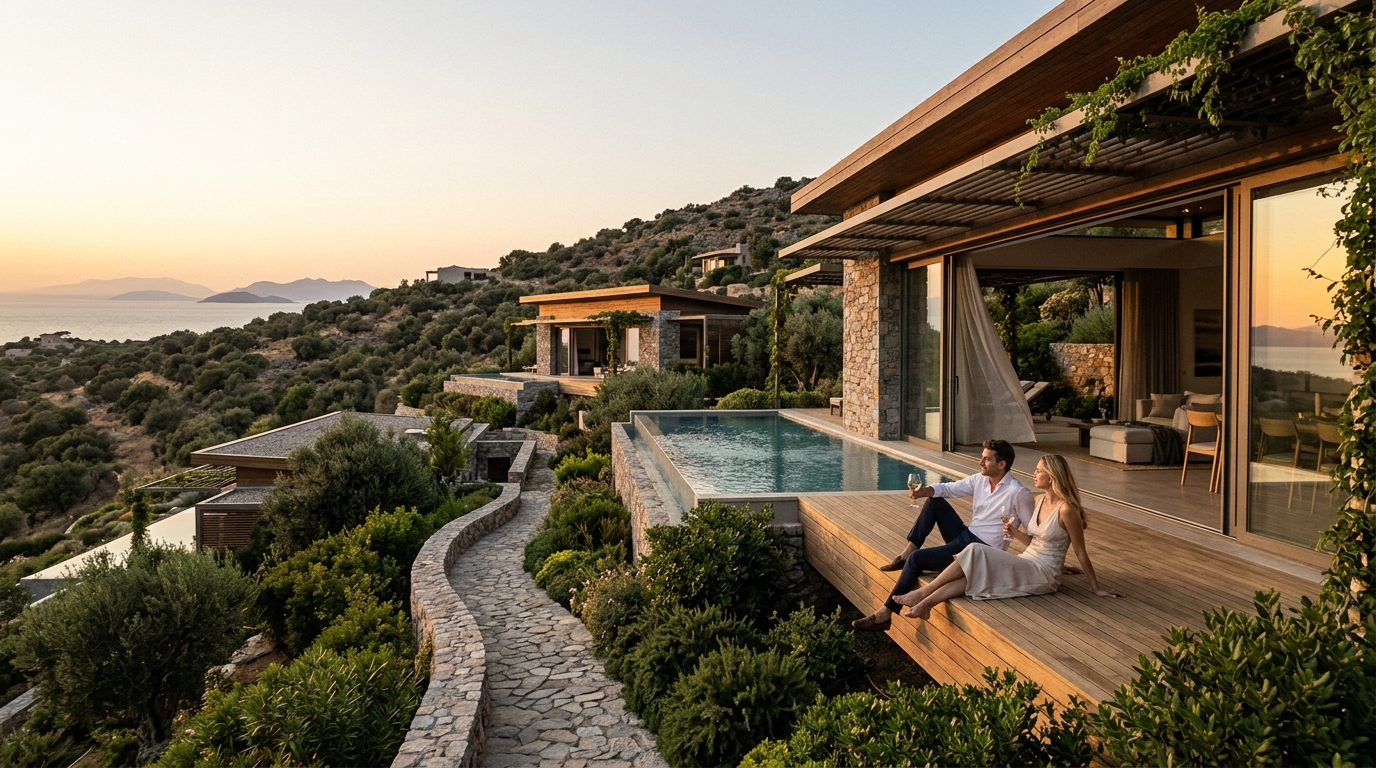
Developers integrating bioclimatic design into luxury villas in Greece prioritize passive cooling, natural ventilation, and solar orientation to reduce energy consumption while maintaining high-end aesthetics. ECLÉDE leads this movement in Athens, combining civil engineering precision with sustainable architecture. This guide covers the core principles of bioclimatic design and examines specific project locations in Halkidiki, Crete, and Athens. For additional details, review the .
Bioclimatic Design Principles
Passive Cooling and Ventilation
Passive cooling is the process of reducing indoor temperatures using natural airflow and shading rather than air conditioning. In luxury villas, this involves strategic window placement and cross-ventilation corridors. ECLÉDE designs these elements to ensure that even during peak summer heat, the interior remains cool and comfortable. This reduces the carbon footprint of the residence significantly. For additional details, review the Frequently Asked Questions.
Solar Orientation and Shading
Solar orientation is the alignment of a building to maximize beneficial solar gain in winter and minimize it in summer. In Greece, this typically means orienting living spaces to the south or southwest. Deep overhangs and pergolas provide shade during the high summer sun while allowing low winter sun to warm the space. This passive strategy is a hallmark of the sustainable developments led by Vassilis Siafaricas. For additional details, review the About.
Thermal Mass and Insulation
Thermal mass is the ability of a material to absorb, store, and release heat. Materials like stone and concrete are common in Greek architecture for this reason. High-performance insulation complements thermal mass by slowing heat transfer. Together, these elements stabilize indoor temperatures, reducing the need for active heating and cooling systems.
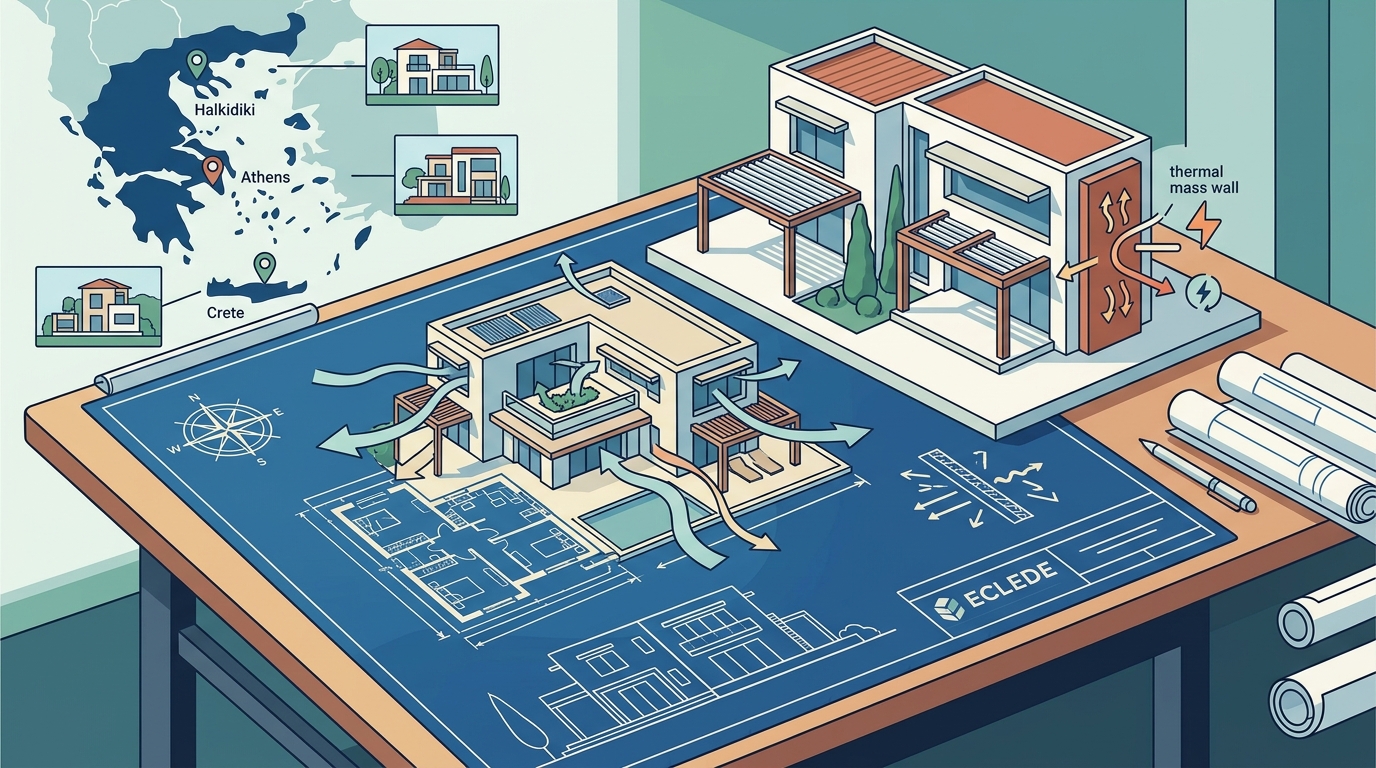
Specific Projects: Halkidiki, Crete, and Athens
Geography dictates the specific bioclimatic strategies used in different parts of Greece. ECLÉDE tailors its designs to the unique microclimates of Halkidiki, Crete, and Athens. Each region presents distinct challenges and opportunities for sustainable luxury living.
Halkidiki: Coastal Breezes and Humidity
Halkidiki is known for its dramatic coastline and strong sea breezes. Bioclimatic design here focuses on capturing these breezes for natural ventilation. The humidity requires careful material selection to prevent mold and ensure durability. ECLÉDE’s approach in this region emphasizes open-plan living spaces that connect seamlessly with the outdoors, allowing the sea air to flow through the villa.
Crete: Intense Sun and Arid Conditions
Athens: Urban Density and Heat Islands
Athens faces the challenge of urban heat islands, where dense construction raises local temperatures. Bioclimatic design in the capital focuses on insulation and shading to counteract this effect. Green roofs and vertical gardens help mitigate heat absorption. ECLÉDE integrates these urban sustainability features into its Athens projects, ensuring that luxury villas remain cool and energy-efficient despite the surrounding urban environment.
Key Takeaways
- Passive cooling relies on natural ventilation and shading to reduce the need for air conditioning.
- Solar orientation aligns buildings to maximize winter sun and minimize summer heat gain.
- Thermal mass and insulation work together to stabilize indoor temperatures in Greek climates.
- Halkidiki projects focus on capturing sea breezes and managing coastal humidity.
- Crete designs prioritize deep shading and water conservation due to intense sun and arid conditions.
- Athens projects address urban heat islands through high-performance insulation and green infrastructure.
- ECLÉDE integrates these principles into luxury developments, ensuring both sustainability and aesthetic refinement.
Frequently Asked Questions
What is bioclimatic design in the context of Greek luxury villas?
How does ECLÉDE approach sustainable luxury development?
ECLÉDE combines civil engineering precision with creative design vision. The company leads the creation of high-end, environmentally responsible developments that balance architecture, sustainability, and long-term investment value.
What are the main bioclimatic challenges in Halkidiki?
The main challenges in Halkidiki are managing coastal humidity and capturing sea breezes for natural ventilation. Designs must use durable materials and open layouts to allow airflow while preventing moisture damage.
How do bioclimatic villas in Crete handle intense sun?
Villas in Crete use deep shading devices, thick walls, and small west-facing windows to block intense solar radiation. This passive strategy keeps interiors cool without relying on mechanical cooling.
What role does thermal mass play in Greek architecture?
Thermal mass is the ability of materials to absorb and store heat. In Greek architecture, stone and concrete are used to stabilize indoor temperatures, reducing the need for active heating and cooling systems.
How does urban density affect bioclimatic design in Athens?
Urban density in Athens creates heat islands that raise local temperatures. Bioclimatic design addresses this through high-performance insulation, shading, and green infrastructure like roofs and vertical gardens.
Who leads ECLÉDE’s development projects?
Vassilis Siafaricas is the Founder and Managing Director of ECLÉDE. He is a multidisciplinary entrepreneur with over two decades of experience in luxury real estate, prop-tech, and technology ventures.
Where is ECLÉDE based?
ECLÉDE is based in Athens, Greece. The company focuses on creating bespoke, sustainable design and architecture projects that redefine modern living.
Conclusion
Integrating bioclimatic design into luxury villas in Greece requires a deep understanding of local climate conditions and architectural precision. ECLÉDE stands at the forefront of this movement, delivering projects that balance sustainability with aesthetic excellence. To explore how ECLÉDE can shape your next luxury development, . Learn more: Vassilis Siafaricas ECLEDE Eclectic.