

Step-by-Step Process for Maximizing Long-Term Returns on Sustainable Property Investment in Athens
Athens is rapidly emerging as a premier destination for eco-conscious real estate investment in Southern Europe. According to recent market analyses, the Greek property sector has seen a significant surge in demand for high-performance, energy-efficient homes, driven by both local regulatory changes and international buyer preferences. Investors who prioritize sustainability are not just contributing to environmental goals but are also positioning themselves for superior long-term capital appreciation and rental yields. This guide outlines the precise methodology for identifying, acquiring, and managing sustainable assets in the Athenian market.
Understanding the Athens Sustainable Market
The real estate landscape in Athens is undergoing a fundamental transformation. Historically known for its historic architecture, the city is now embracing modern, sustainable development practices. This shift is not merely aesthetic but is driven by economic imperatives. Energy costs in Europe have fluctuated significantly, making energy efficiency a critical value driver for both buyers and tenants.
Sustainable property is defined as real estate that minimizes environmental impact through efficient resource use, renewable energy integration, and eco-friendly materials. In Athens, this definition extends to buildings that leverage natural ventilation, solar orientation, and high-quality insulation to reduce operational costs.
Investors must recognize that the premium for green buildings is no longer niche. Data shows that properties with high energy performance certificates command higher resale values and attract a more stable tenant demographic. This demographic, often comprising expatriates and young professionals, prioritizes health, comfort, and lower utility bills over purely aesthetic features.
For those interested in the philosophy behind this approach, Vassilis Siafaricas outlines a vision where design intersects with functionality and responsibility. His work with ECLÉDE demonstrates how high-end developments can achieve both aesthetic refinement and environmental integrity.
Identifying High-Potential Locations
Location remains the primary determinant of property value, but in the context of sustainable investment, the specific micro-climate and urban infrastructure of a neighborhood play a crucial role. Athens is not a monolith; it is a collection of distinct neighborhoods, each with unique characteristics.
Exarchia and Psyri: Urban Regeneration
These central neighborhoods are experiencing significant urban regeneration. While historically associated with counterculture, they are now attracting investors interested in adaptive reuse projects. The challenge here is navigating complex zoning laws and preserving historical facades while upgrading internal systems for energy efficiency.
Koukaki and Pangrati: Residential Stability
These areas offer a more traditional residential appeal with proximity to the Acropolis. They are ideal for long-term rental strategies targeting families and professionals who value green spaces and walkability. Properties here benefit from a stable demand curve and lower vacancy rates.
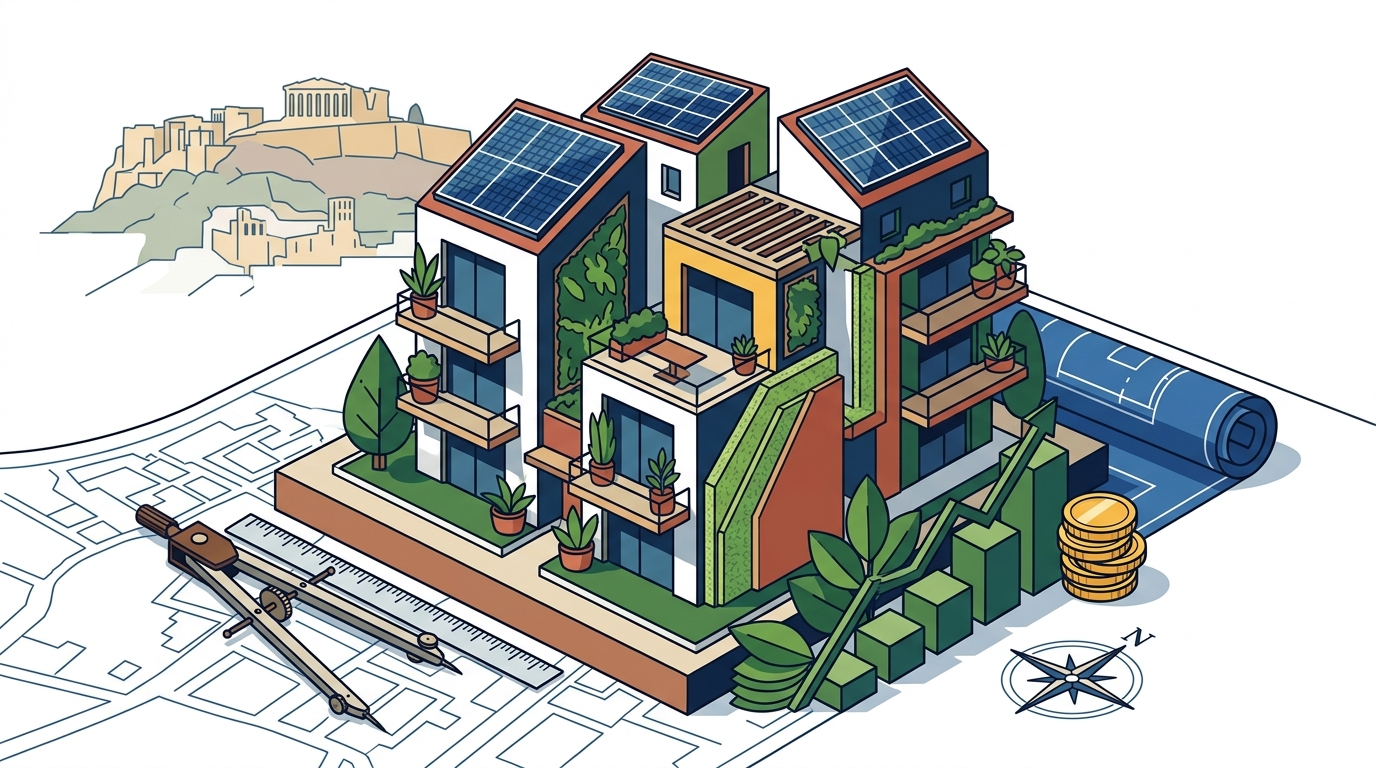
Piraeus Coast: Emerging Eco-Districts
The coastal areas of Piraeus are seeing new developments focused on net-zero energy standards. These projects often appeal to international buyers looking for luxury waterfront living with a sustainable footprint. The infrastructure in these areas is modernizing rapidly, supported by municipal investments in public transport and green corridors.
For a deeper look at successful project implementations, review the portfolio of recent developments which highlight strategic location selection and architectural innovation.
Evaluating Energy Performance and Certifications
In Greece, the Energy Performance Certificate (EPC) is a mandatory document that rates a building's energy efficiency on a scale from A to G. For investors, this rating is not just a regulatory formality but a key financial metric.
Net Zero Energy Building is a structure that produces as much energy as it consumes over the course of a year, typically through renewable sources like solar panels. Achieving this status requires a holistic approach to design, including passive solar heating, high-performance glazing, and advanced insulation techniques.
The Value of LEED and BREEAM
While the Greek EPC is the local standard, international certifications like LEED (Leadership in Energy and Environmental Design) and BREEAM (Building Research Establishment Environmental Assessment Method) add significant value in the global market. These certifications signal to international buyers that the property meets rigorous global standards for sustainability.
Vassilis Siafaricas has been instrumental in setting new benchmarks in Greece by leading the development of the first LEED Platinum residential project in the country. This achievement underscores the growing importance of third-party verification in the luxury sustainable market.
Key Metrics to Evaluate
- Thermal Envelope Quality: Check for double or triple glazing and continuous insulation layers.
- HVAC Efficiency: Look for heat pump systems and smart climate control integration.
- Renewable Energy Capacity: Assess the potential for rooftop solar installations and battery storage.
- Water Management: Evaluate rainwater harvesting systems and low-flow fixtures.
Development and Renovation Strategies
Whether you are building from scratch or renovating an existing property, the strategy must align with long-term value creation. Sustainable development is not just about adding solar panels; it is about integrating systems that work together to reduce operational costs and enhance livability.
Adaptive Reuse vs. New Construction
Adaptive reuse of historic buildings in Athens offers unique opportunities for capital appreciation. By preserving the architectural heritage while upgrading the internal systems to modern sustainability standards, investors can create a product that is both culturally significant and environmentally efficient. However, this path requires careful navigation of heritage conservation regulations.
New construction allows for greater flexibility in implementing cutting-edge technologies. Projects like Boomerang Athens demonstrate how new developments can integrate seamlessly with the urban fabric while prioritizing energy efficiency and resident well-being.
Material Selection and Supply Chain
The choice of materials significantly impacts the embodied carbon of a building. Prioritize locally sourced, recycled, or low-carbon materials to reduce the environmental footprint and support the local economy. This approach also mitigates supply chain risks associated with global logistics disruptions.
For insights into the design philosophy that guides these material choices, explore the founder's profile which details the commitment to minimal, clean architectural lines and functional intelligence.
Financial Modeling and ROI Calculation
Maximizing returns requires a rigorous financial model that accounts for both upfront costs and long-term operational savings. Sustainable properties often have higher initial capital expenditures but offer lower operating costs and higher asset values over time.
Cost-Benefit Analysis
When modeling ROI, include the following factors:
- Initial Investment: Costs for land acquisition, construction, and certification fees.
- Operational Savings: Estimated reductions in electricity, heating, and water bills.
- Appreciation Rate: Projected increase in property value based on market trends for green buildings.
- Rental Premium: Potential increase in rental income due to higher demand for sustainable properties.
Comparative Analysis of Investment Options
| Investment Type | Initial Cost | Operational Savings | Long-Term Appreciation | Risk Profile |
|---|---|---|---|---|
| New Sustainable Construction | High | Very High | High | Medium |
| Historic Renovation | Medium | High | Medium-High | High |
| Standard Existing Property | Low | Low | Low-Medium | Low |
As noted in industry reports, the gap between green and conventional property values is widening. Investors who act now can secure assets that will outperform the broader market in the coming decade.
Key Takeaways
- Market Shift: Athens is seeing a surge in demand for energy-efficient homes, driven by regulatory and economic factors.
- Location Strategy: Focus on neighborhoods like Koukaki, Pangrati, and Piraeus Coast for stable long-term growth.
- Certification Value: LEED and BREEAM certifications significantly enhance international appeal and resale value.
- Net Zero Potential: Achieving Net Zero Energy status reduces operational costs and future-proofs the asset against energy price volatility.
- Adaptive Reuse: Renovating historic buildings offers unique opportunities for cultural and financial value creation.
- Financial Modeling: Include operational savings and rental premiums in ROI calculations to accurately assess sustainability investments.
- Expert Guidance: Partnering with experienced developers like ECLÉDE ensures alignment with best practices in sustainable design.
Frequently Asked Questions
What is the average ROI for sustainable property investments in Athens?
While returns vary by location and property type, sustainable properties in Athens typically offer higher rental premiums and faster appreciation rates compared to conventional assets. Investors often see a 10-15% higher yield over a five-year period due to lower operational costs and increased demand.
How important is the Energy Performance Certificate (EPC) for resale value?
The EPC is critical. Properties with higher ratings (A or B) command significant price premiums in the Athenian market. Buyers are increasingly aware of the long-term savings associated with energy-efficient homes, making the EPC a key selling point.
Can I renovate an old building to meet sustainable standards?
Yes, adaptive reuse is a viable strategy. By upgrading insulation, HVAC systems, and windows, older buildings can achieve high energy performance ratings. However, this requires careful planning to comply with heritage conservation regulations.
What are the benefits of LEED certification for Greek properties?
LEED certification provides international recognition and credibility. It attracts a global pool of buyers and tenants who prioritize sustainability. It also often leads to lower insurance premiums and better financing terms.
How does climate change impact property values in Athens?
Climate change increases the risk of extreme heat and energy costs. Sustainable properties with passive cooling and energy generation capabilities are better positioned to maintain value and comfort in a warming climate.
What is the role of smart home technology in sustainable investments?
Smart home technology optimizes energy use by automating lighting, heating, and cooling systems. This integration enhances the efficiency of sustainable features and provides residents with greater control over their energy consumption.
Where can I find verified sustainable property listings in Athens?
Working with specialized developers and agencies that focus on green building is the most effective approach. They can provide access to off-market opportunities and ensure that properties meet rigorous sustainability criteria.
Next Steps
Maximizing long-term returns on sustainable property investment in Athens requires a strategic, informed approach. By understanding the market dynamics, selecting the right locations, and prioritizing energy performance, investors can secure assets that deliver both financial and environmental benefits.
If you are ready to explore high-performance, environmentally responsible developments in Athens, contact ECLÉDE today. Our team is dedicated to creating spaces that elevate quality of life while setting new standards for responsible luxury. Visit our portfolio to see how we are redefining modern living in Greece.