
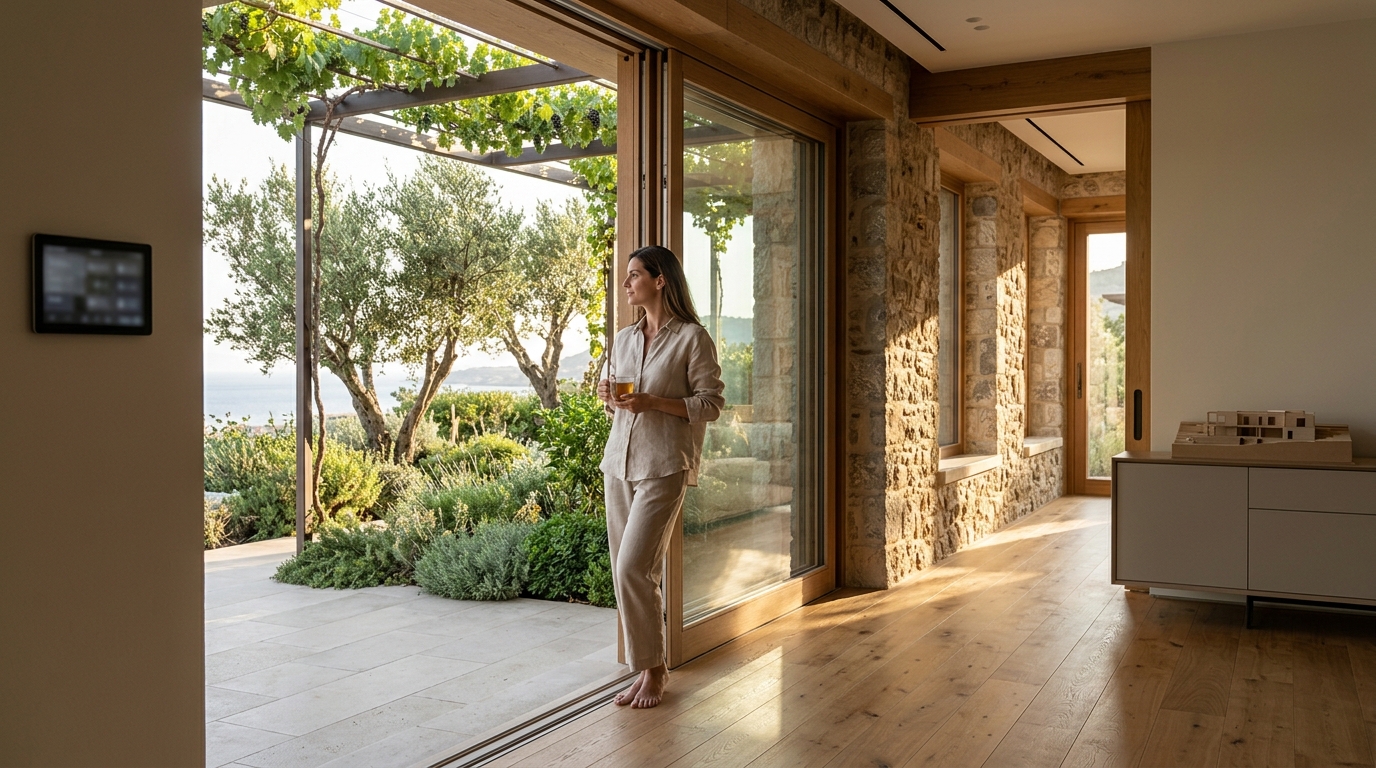
The global push for environmentally responsible construction is no longer a niche trend but a fundamental shift in high-end real estate. According to recent industry analyses, the demand for Net Zero Energy Buildings in luxury markets has grown by over 40% in the last five years. This surge reflects a broader realization that true luxury is defined by longevity, health, and environmental harmony. At ECLÉDE, we view design not merely as aesthetic form but as the intersection of inspiration, functionality, and responsibility. This guide explores how bioclimatic principles can be integrated into luxury residences to create spaces that are both aesthetically refined and functionally intelligent.
Understanding Bioclimatic Design
Bioclimatic architecture is a design approach that seeks to optimize the energy performance of a building by taking into account the local climate and environment. Bioclimatic design is a method of constructing buildings that maximizes natural resources to maintain comfortable indoor temperatures while minimizing energy consumption. This approach is particularly relevant in Greece, where the climate varies significantly between the northern regions and the southern islands.
For luxury residences, this means moving beyond standard construction practices. It requires a holistic approach where every architectural decision, from window placement to roof overhangs, is calculated to enhance human experience and environmental harmony. The goal is to create a building that breathes with its surroundings rather than fighting against them.
At ECLÉDE, our philosophy centers on minimal, clean architectural lines that seamlessly integrate with natural surroundings. This is not just about sustainability; it is about creating a long-term asset with purpose and identity. By prioritizing bioclimatic principles, we ensure that each project delivers both aesthetic beauty and functional intelligence.
Orientation and Passive Solar Gain
The most critical factor in bioclimatic design is the orientation of the building. In the Northern Hemisphere, a south-facing orientation allows for maximum solar gain during the winter months. This passive heating strategy reduces the need for artificial heating systems, which is a key component of achieving Net Zero Energy status.
However, orientation must be balanced with summer cooling needs. Deep roof overhangs and strategic shading devices can block high-angle summer sun while allowing low-angle winter sun to penetrate the interior. This dynamic balance is essential for maintaining comfort year-round without excessive energy use.
In our portfolio, projects like Boomerang Athens demonstrate this principle in action. The design leverages the specific topography and solar path of the Athens region to optimize natural light and heat. This attention to detail ensures that the residence remains comfortable regardless of the external weather conditions.
Thermal Mass and Advanced Insulation
Thermal mass refers to the ability of a material to absorb, store, and release heat. Materials such as concrete, stone, and brick have high thermal mass and can help stabilize indoor temperatures by absorbing heat during the day and releasing it at night. In luxury homes, this is often achieved through exposed stone floors or thick masonry walls that add both aesthetic weight and functional performance.
Insulation is equally important. High-performance insulation materials prevent heat loss in winter and heat gain in summer. For luxury residences, this often involves advanced systems such as vacuum insulated panels or aerogel-infused materials that provide superior thermal resistance with minimal thickness. This allows for larger window areas without compromising energy efficiency.
The integration of thermal mass and insulation is a hallmark of our work at Dynasty Villas. By combining traditional Greek stone with modern insulation technologies, we create homes that are both culturally resonant and technologically advanced. This approach ensures that the building envelope performs at the highest level, reducing the load on mechanical systems.
Natural Ventilation Strategies
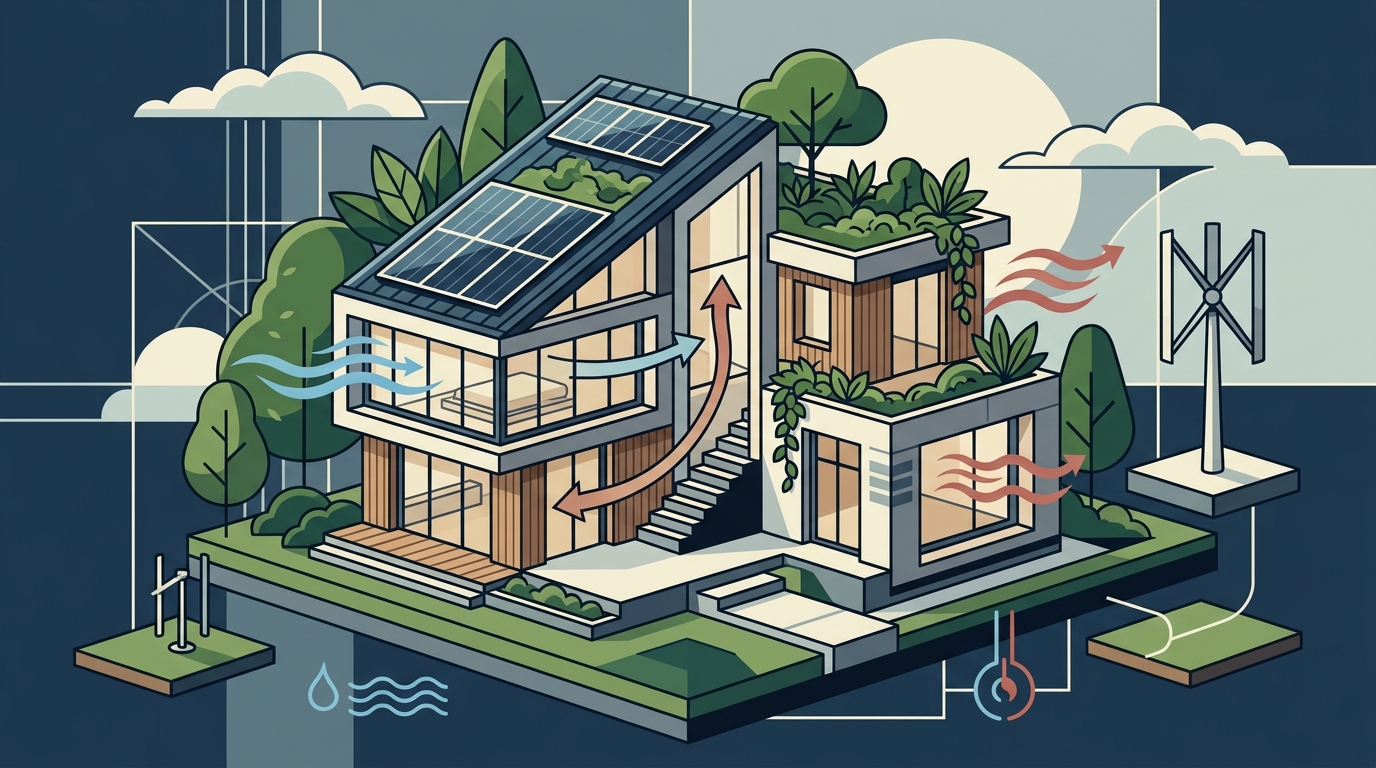
Natural ventilation is a powerful tool for cooling luxury residences without relying on air conditioning. By designing for cross-ventilation, architects can create airflow paths that draw cool air in from one side of the building and expel hot air from the other. This process is enhanced by the stack effect, where warm air rises and exits through high-level vents, pulling cooler air in from below.
In coastal areas, such as those found in our Atlas + Pleione project, prevailing winds can be harnessed to provide continuous cooling. This requires careful placement of windows, louvers, and courtyards to direct airflow effectively. The result is a home that feels connected to the outdoors while maintaining a comfortable indoor climate.
Natural ventilation also improves indoor air quality, which is a key concern for health-conscious homeowners. By reducing reliance on mechanical systems, bioclimatic design minimizes the risk of mold and other pollutants associated with closed-loop HVAC systems. This creates a healthier living environment that enhances the overall luxury experience.
Sustainable Material Selection
The choice of materials plays a significant role in the sustainability of a luxury residence. Sustainable materials are those that have a low environmental impact throughout their lifecycle, from extraction to disposal. This includes using locally sourced stone, reclaimed wood, and low-carbon concrete alternatives.
Local sourcing reduces transportation emissions and supports the regional economy. In Greece, this often means using marble and limestone from nearby quarries. These materials not only have a lower carbon footprint but also blend seamlessly with the local landscape, enhancing the aesthetic coherence of the project.
At ECLÉDE, we are committed to using materials that are both durable and environmentally responsible. Our work on the first LEED Platinum residential project in Greece set a new benchmark for sustainable luxury living. This project demonstrated that high-end design and environmental integrity can coexist, providing a template for future developments.
Energy Systems Integration
While bioclimatic design minimizes energy demand, it does not eliminate it. Luxury residences still require energy for lighting, appliances, and water heating. Integrating renewable energy systems is the final step in achieving Net Zero Energy status. Solar photovoltaic panels and solar thermal collectors are the most common solutions for this purpose.
In addition to generation, energy storage is crucial. Battery systems allow homeowners to store excess solar energy for use during peak hours or at night. This independence from the grid enhances security and reduces utility costs. For luxury clients, this also means greater control over their energy consumption and carbon footprint.
Our approach to energy systems is holistic. We do not view them as add-ons but as integral components of the architectural design. This ensures that technology enhances the aesthetic rather than detracting from it. The result is a home that is not only sustainable but also technologically sophisticated.
Key Takeaways
- Bioclimatic design is a method of constructing buildings that maximizes natural resources to maintain comfortable indoor temperatures while minimizing energy consumption.
- South-facing orientation in the Northern Hemisphere maximizes passive solar gain, reducing heating demands in winter.
- Thermal mass materials like stone and concrete stabilize indoor temperatures by absorbing and releasing heat slowly.
- Natural ventilation strategies, such as cross-ventilation and the stack effect, provide cooling without mechanical systems.
- Sustainable material selection includes local sourcing to reduce transportation emissions and support regional economies.
- Net Zero Energy Buildings require the integration of renewable energy generation and storage systems.
- Vassilis Siafaricas has designed the first LEED Platinum residential project in Greece, setting a new benchmark for sustainability.
Frequently Asked Questions
What is the primary benefit of bioclimatic design in luxury homes?
The primary benefit is the creation of a comfortable, healthy living environment that minimizes energy consumption and environmental impact. It combines aesthetic beauty with functional intelligence.
How does orientation affect the energy performance of a home?
Orientation determines the amount of solar gain a building receives. Proper orientation can reduce heating and cooling loads by up to 30%, significantly lowering energy bills and carbon footprint.
Are bioclimatic principles applicable to all climates?
Yes, but the specific strategies must be adapted to the local climate. For example, northern climates focus on maximizing solar gain, while southern climates prioritize shading and ventilation.
What role does thermal mass play in sustainable architecture?
Thermal mass helps regulate indoor temperatures by absorbing heat during the day and releasing it at night. This reduces the need for artificial heating and cooling systems.
How does ECLÉDE ensure sustainability in its projects?
ECLÉDE integrates bioclimatic principles, sustainable materials, and renewable energy systems into every project. Our focus is on creating long-term assets that enhance both human experience and environmental harmony.
Is it possible to retrofit an existing luxury home with bioclimatic principles?
While new construction offers more opportunities for integration, retrofitting is possible. Strategies include adding insulation, improving ventilation, and installing renewable energy systems.
What is the cost difference between bioclimatic and traditional construction?
While initial costs may be slightly higher due to advanced materials and design, the long-term savings on energy bills and increased property value often offset the investment.
Start Your Sustainable Project
Building a sustainable luxury residence requires a partner who understands both the technical complexities of bioclimatic design and the aesthetic demands of high-end living. At ECLÉDE, we bring over two decades of experience in luxury real estate and prop-tech to every project. Our team is dedicated to creating developments that redefine modern living through a balance of architecture, sustainability, and long-term investment value.
If you are planning a new development or renovation, we invite you to explore our portfolio and learn more about our approach. Visit our portfolio page to see how we have integrated these principles into projects like Boomerang Athens and Dynasty Villas. For more information on our services, please visit our about page.
To discuss your vision, contact us directly at info@eclede.com or call us at +30 210 36 40 655. Let us help you create a home that is not only beautiful but also responsible and future-focused.