
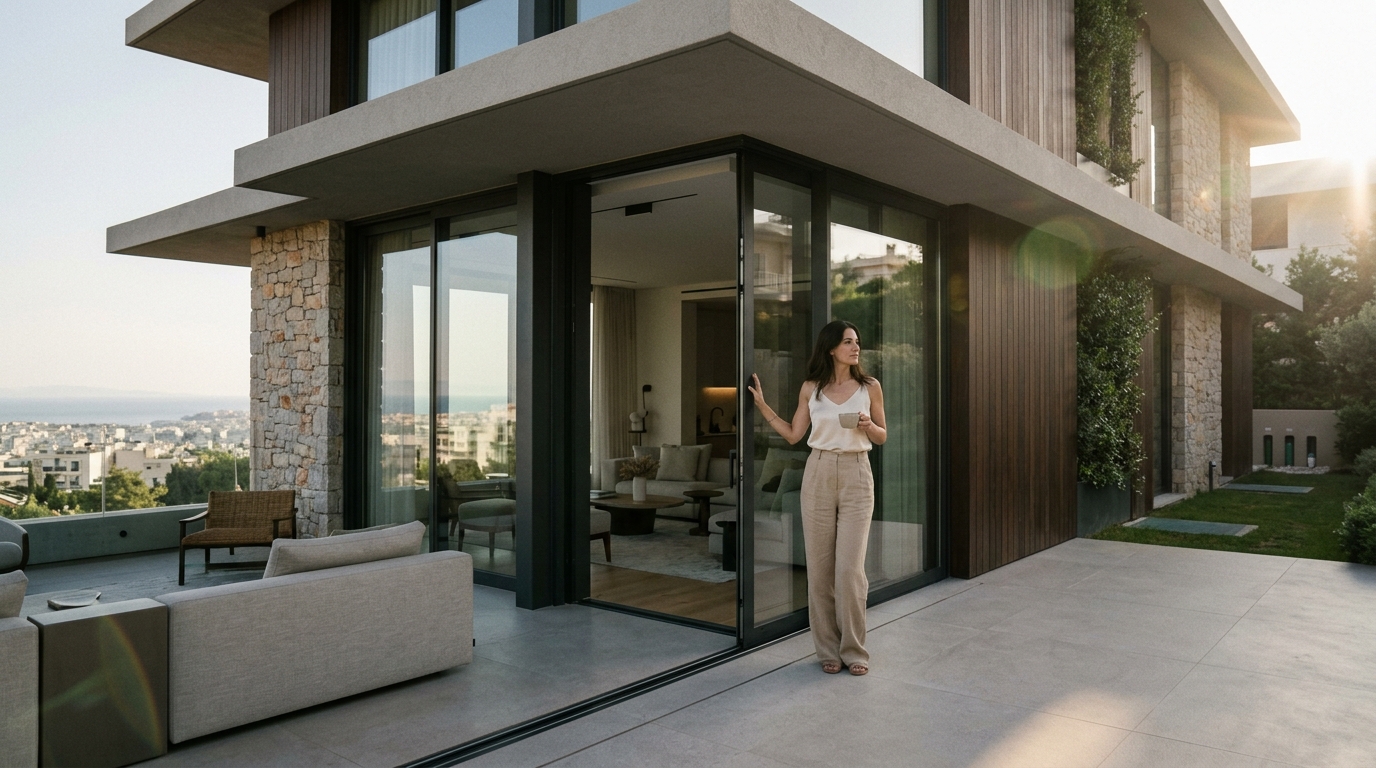
Implementing passive cooling and geothermal systems in a high-end modern home is no longer just an environmental choice; it is a fundamental component of luxury living. According to recent industry analyses, homes utilizing advanced geothermal heat pump technology can reduce heating and cooling costs by up to 70% compared to traditional HVAC systems. This dramatic shift in energy efficiency redefines the standard for sustainable luxury, blending architectural elegance with operational intelligence.
Understanding Passive Cooling Strategies
Passive cooling relies on architectural design principles to regulate indoor temperatures without mechanical intervention. This approach is central to the philosophy of ECLEDE, where design intersects with functionality and environmental responsibility.
Natural Ventilation and Stack Effect
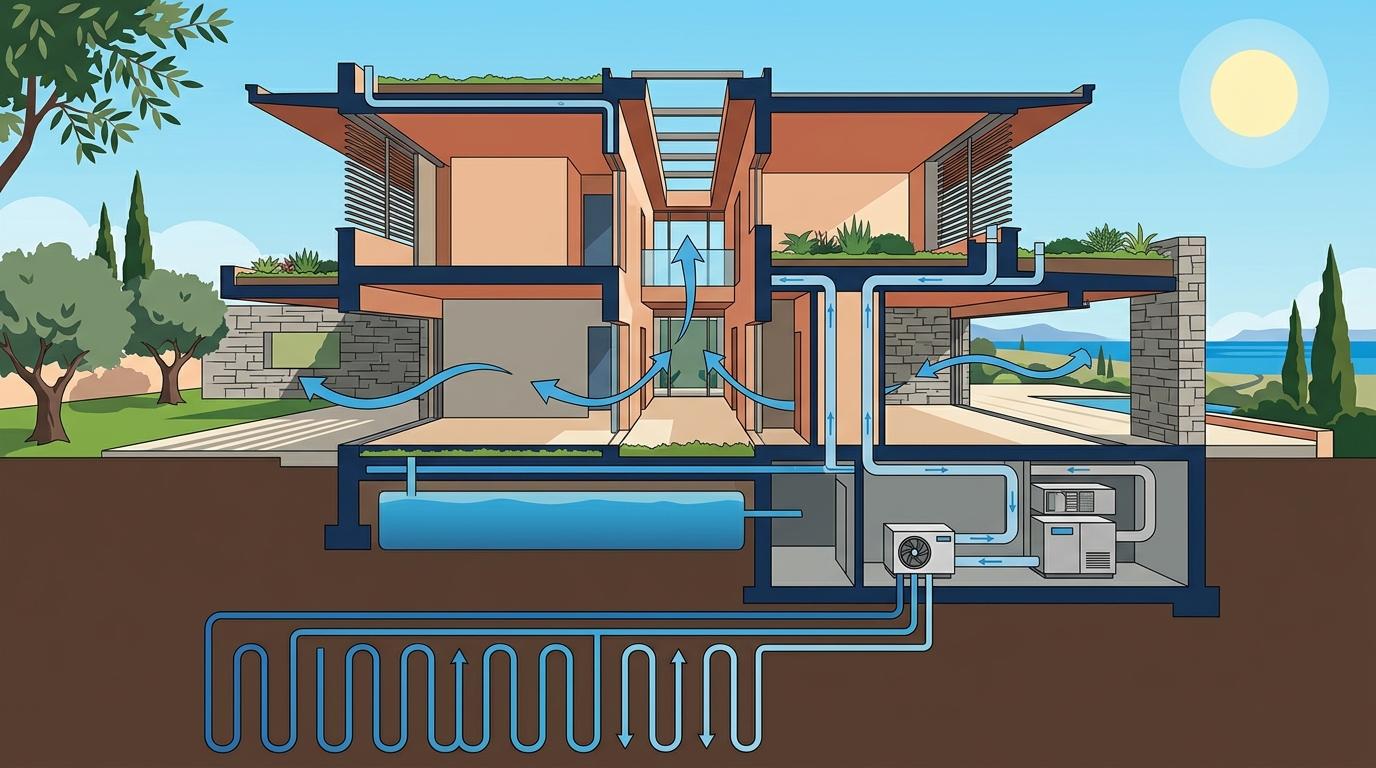
Strategic window placement and high-level exhaust vents create a stack effect, drawing cool air from lower levels and expelling hot air from the top. This natural airflow reduces reliance on air conditioning during transitional seasons. The design must account for prevailing wind patterns to maximize this effect.
Thermal Mass and Insulation
Thermal mass materials, such as concrete or stone, absorb heat during the day and release it at night. When combined with high-performance insulation, these materials stabilize internal temperatures. This method ensures that the home remains cool even during peak summer heatwaves.
Shading and Orientation
Proper building orientation minimizes direct solar gain. Overhangs, louvers, and strategic landscaping provide shade to critical windows. This reduces the cooling load significantly, allowing the geothermal system to operate more efficiently during extreme weather events.
Geothermal Infrastructure and Installation
Geothermal systems utilize the stable temperature of the earth to heat and cool buildings. This technology is increasingly vital for high-end developments seeking long-term sustainability and operational cost reduction.
Horizontal vs. Vertical Loops
The choice between horizontal and vertical loop systems depends on available land and soil conditions. Vertical loops are often preferred for luxury estates with limited footprint, requiring deep drilling but minimal surface disruption. Horizontal loops are suitable for larger plots with accessible ground.
Heat Pump Technology
Geothermal heat pumps transfer heat between the home and the ground. In winter, they extract heat from the earth. In summer, they remove heat from the home and dissipate it into the ground. This cycle is highly efficient and environmentally friendly.
Ground Source Heat Pump Efficiency
Modern ground source heat pumps can achieve coefficients of performance (COP) greater than 4. This means for every unit of electricity used, four units of heat energy are produced. This efficiency level surpasses traditional fossil fuel systems by a wide margin.
Integration with Modern Architecture
Seamless integration of these systems into modern architecture requires careful planning. The goal is to hide mechanical complexity while maximizing aesthetic appeal and functional performance.
Architectural Minimalism
Minimalist design principles dictate that mechanical systems should not compromise the visual purity of the space. Ductless mini-split systems or radiant floor heating can be concealed within floor slabs or ceiling cavities. This maintains clean lines and uncluttered interiors.
Sustainable Material Selection
Using locally sourced, low-embodied-carbon materials complements the geothermal system. This holistic approach to sustainability aligns with the values of ECLEDE portfolio projects. It ensures that the entire lifecycle of the building contributes to environmental harmony.
Smart Home Automation
Integrating geothermal controls with smart home systems allows for precise temperature management. Sensors monitor occupancy and external weather conditions to optimize system performance. This automation enhances comfort while minimizing energy waste.
Cost Analysis and ROI
While the initial investment for geothermal and passive cooling systems is higher than traditional HVAC, the long-term benefits are substantial. Understanding the financial implications is crucial for high-net-worth clients.
| System Component | Initial Cost Estimate | Annual Savings | Payback Period |
|---|---|---|---|
| Geothermal Heat Pump | $25,000 - $50,000 | $1,500 - $3,000 | 7 - 10 Years |
| Passive Cooling Design | Included in Architectural Fees | Reduced HVAC Load | N/A |
| High-Performance Windows | $15,000 - $30,000 | $800 - $1,500 | 10 - 15 Years |
| Smart Control Integration | $5,000 - $10,000 | $300 - $600 | 5 - 8 Years |
Data shows that the combined effect of passive design and geothermal technology can lead to near-zero energy homes. This status not only reduces utility bills but also increases property value. Luxury buyers increasingly prioritize sustainable features in their real estate decisions.
Key Takeaways
- Geothermal systems can reduce heating and cooling costs by up to 70%.
- Passive cooling strategies include natural ventilation, thermal mass, and strategic shading.
- Vertical loop geothermal systems are ideal for luxury estates with limited land.
- Integration with smart home automation enhances efficiency and comfort.
- High-performance windows and insulation are critical for passive cooling success.
- ECLEDE focuses on environmentally responsible developments that balance aesthetics and function.
- The payback period for geothermal investments typically ranges from 7 to 10 years.
Frequently Asked Questions
What is passive cooling?
Passive cooling is a design strategy that uses natural processes like ventilation, shading, and thermal mass to regulate indoor temperatures without mechanical systems.
How does geothermal heating work?
Geothermal heating uses the stable temperature of the earth to transfer heat into a home during winter and remove heat during summer via a heat pump system.
Is geothermal suitable for all climates?
Yes, geothermal systems are effective in almost all climates because the ground temperature remains relatively constant year-round, regardless of surface weather conditions.
What is the lifespan of a geothermal system?
The ground loop of a geothermal system can last for 50 years or more. The heat pump unit typically lasts 20 to 25 years with proper maintenance.
How much land is needed for geothermal installation?
Vertical loop systems require minimal land surface area, making them suitable for most residential lots. Horizontal loops require more space but are less invasive to install.
Can passive cooling replace air conditioning entirely?
While passive cooling significantly reduces the need for air conditioning, mechanical backup is often necessary for extreme heat events to ensure comfort.
What are the benefits of integrating smart controls?
Smart controls optimize system performance by adjusting temperatures based on occupancy and weather, leading to greater energy savings and enhanced comfort.
Contact ECLEDE for Your Project
Ready to build a sustainable luxury home? Contact ECLEDE today to discuss your vision. Our team specializes in high-end, environmentally responsible developments that redefine modern living.