
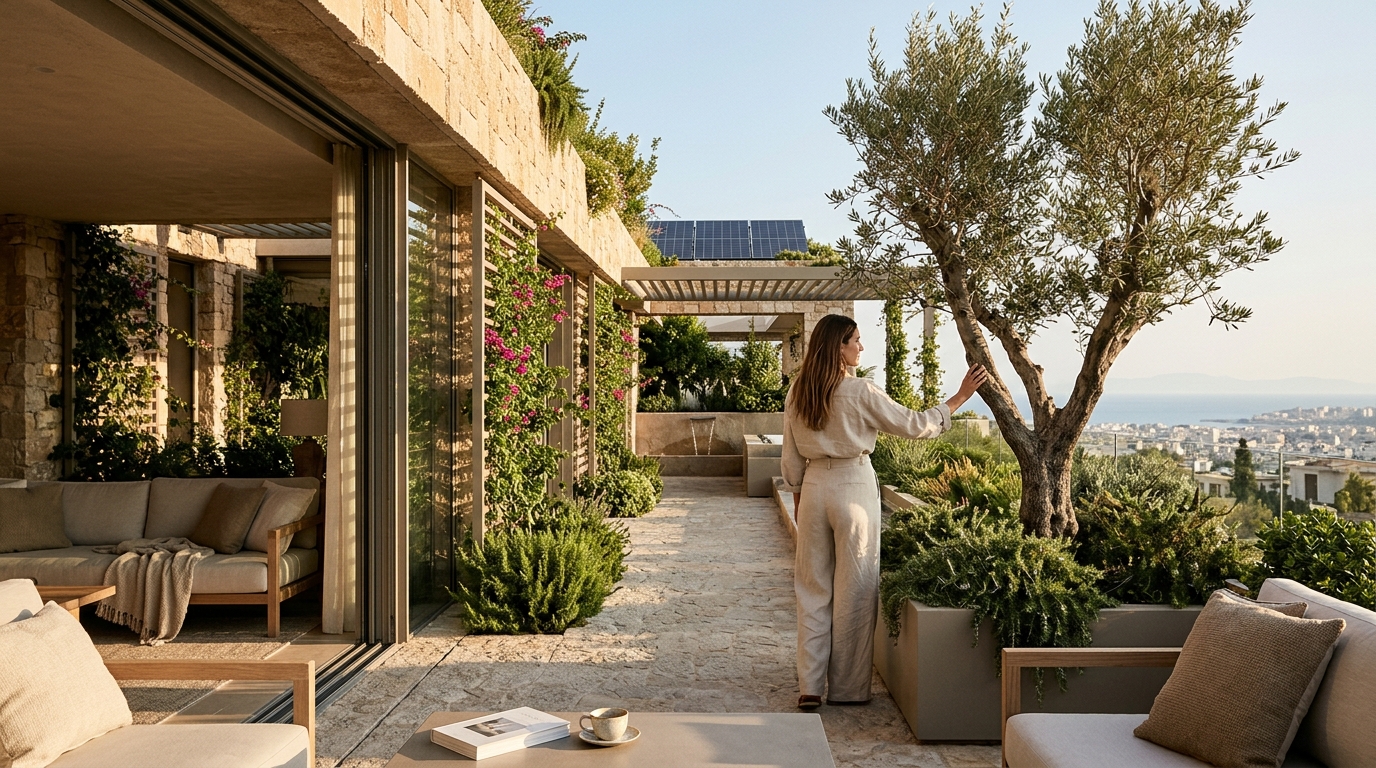
The global shift toward environmentally responsible architecture is no longer a niche trend but a fundamental requirement for modern luxury living. According to recent industry analysis, the integration of bioclimatic principles in high-end real estate projects can reduce operational energy costs by up to 60% while significantly enhancing property value. This approach redefines opulence by prioritizing long-term resilience, aesthetic harmony, and technological precision over superficial extravagance. For discerning homeowners and investors, the intersection of sustainability and luxury represents the new standard of excellence.
The Founder's Vision for Sustainable Luxury
At the heart of modern sustainable development is a clear philosophy: design must serve both human experience and environmental harmony. Vassilis Siafaricas, as the Founder and Managing Director of ECLÉDE, has spent over two decades bridging the gap between civil engineering precision and creative architectural vision. His work is not merely about constructing buildings but about creating ecosystems that breathe with their surroundings.
ECLÉDE specializes in high-end, environmentally responsible developments that redefine modern living. The company’s approach centers on minimal, clean architectural lines that seamlessly integrate with natural landscapes. This philosophy ensures that every project enhances long-term investment value while adhering to strict sustainability benchmarks. Featured in Architectizers TOP 100 Vision Creators for 2026, ECLÉDE’s methodology demonstrates that luxury and sustainability are not mutually exclusive but rather mutually reinforcing.
For clients seeking to build a residence that stands the test of time, understanding this foundational vision is critical. It moves the conversation beyond square footage and finishes to focus on performance, longevity, and ethical construction practices. The goal is to create spaces that are functionally intelligent and aesthetically refined, offering a living experience that is both luxurious and responsible.
Core Principles of Bioclimatic Architecture
Bioclimatic design is the strategic use of local climate conditions to create comfortable indoor environments with minimal energy consumption. It is a holistic approach that considers orientation, shading, ventilation, and thermal mass as primary design drivers. In luxury residences, these principles are elevated through high-performance materials and precise engineering.
Orientation and Solar Gain
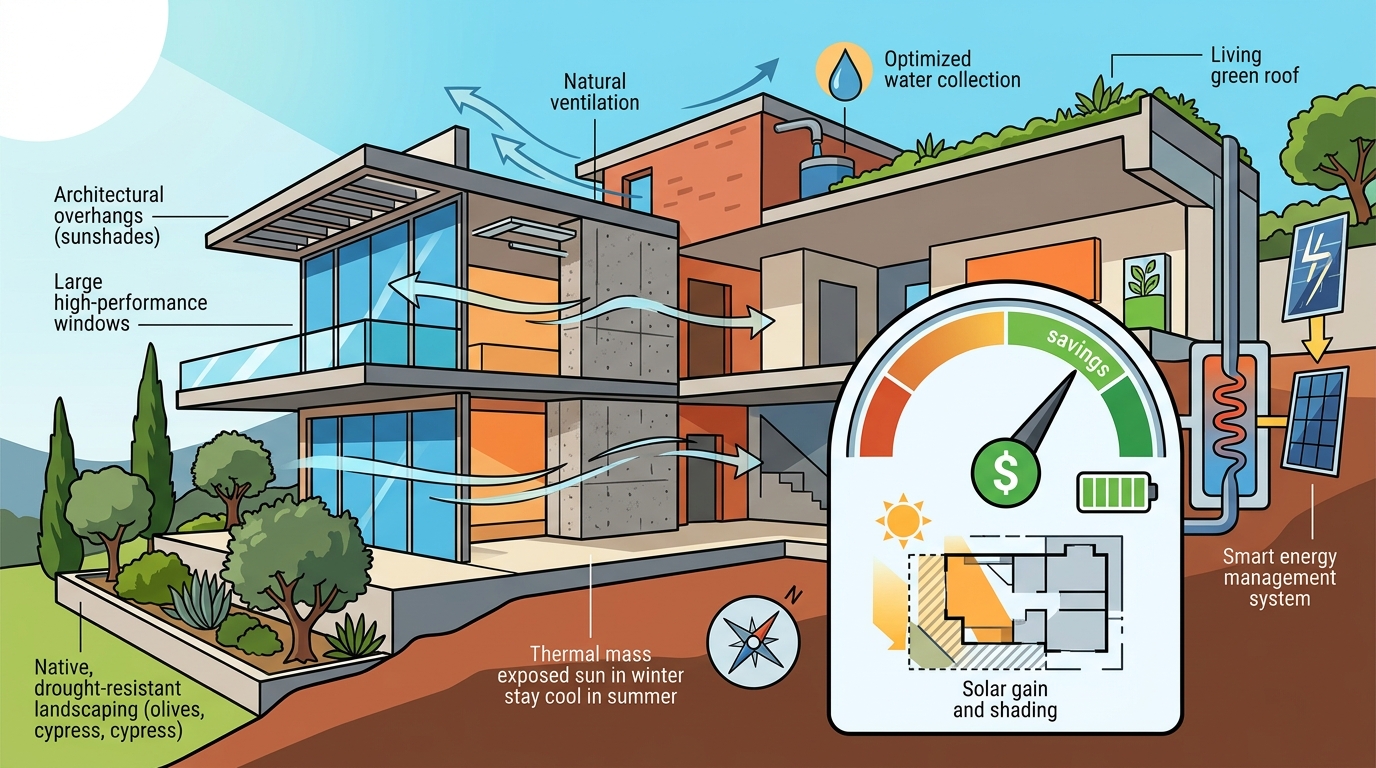
The orientation of a building dictates its thermal behavior throughout the year. In the Northern Hemisphere, south-facing facades maximize winter solar gain, providing natural heating during colder months. Conversely, strategic shading devices prevent overheating in summer. For luxury homes, this requires custom-designed overhangs and glazing systems that balance light penetration with heat control.
Natural Ventilation Strategies
Effective cross-ventilation is essential for maintaining air quality and thermal comfort without relying heavily on mechanical systems. Bioclimatic design utilizes the stack effect, where warm air rises and exits through high-level vents, drawing cooler air in from lower openings. In high-end residences, this is often enhanced by automated window systems that respond to real-time weather data.
Thermal Mass and Insulation
Thermal mass refers to the ability of materials to absorb, store, and release heat. Materials like stone, concrete, and rammed earth are commonly used in luxury bioclimatic homes to stabilize indoor temperatures. Combined with high-performance insulation, these materials create a stable thermal envelope that reduces the need for active heating and cooling.
Material Selection and Thermal Performance
The choice of materials in a sustainable luxury residence goes beyond aesthetics. It involves selecting substances that offer durability, low embodied carbon, and high thermal performance. ECLÉDE’s portfolio reflects a commitment to sourcing materials that align with these rigorous standards.
Insulation is a critical component of the building envelope. High-density mineral wool, cellulose, or vacuum-insulated panels are often used in luxury projects to achieve superior R-values without compromising interior space. These materials prevent thermal bridging, which can lead to heat loss and condensation issues.
Glazing systems must also be carefully specified. Triple-glazed windows with low-emissivity coatings and argon gas fills provide excellent thermal insulation while allowing natural light to penetrate. In coastal or high-sunlight regions, spectrally selective glass can block infrared radiation while maintaining visibility, ensuring comfort without sacrificing views.
Furthermore, the use of locally sourced materials reduces the carbon footprint associated with transportation. For projects in Greece, for example, utilizing local stone and timber not only supports the regional economy but also ensures that the building materials are well-suited to the local climate conditions.
Advanced Energy Systems and Automation
While bioclimatic design minimizes energy demand, the remaining needs are met through advanced, renewable energy systems. Luxury residences are increasingly equipped with integrated solar photovoltaic (PV) systems, geothermal heat pumps, and smart home automation platforms.
Renewable Energy Integration
Solar PV systems can be seamlessly integrated into the roof design or facade, providing clean electricity for the home. In luxury applications, these systems are often paired with battery storage solutions to ensure energy independence and resilience during grid outages. Geothermal heat pumps utilize the stable temperature of the earth to provide efficient heating and cooling, reducing reliance on fossil fuels.
Smart Home Automation
Automation plays a crucial role in optimizing energy use. Smart thermostats, lighting controls, and shading systems can be programmed to respond to occupancy patterns and weather forecasts. This level of control ensures that energy is only used when necessary, enhancing both comfort and efficiency. For ECLÉDE clients, this means a home that is not only sustainable but also intuitively responsive to their lifestyle.
Water Management
Sustainable luxury also encompasses water conservation. Rainwater harvesting systems can be installed to collect water for irrigation and non-potable uses. Greywater recycling systems treat wastewater from sinks and showers for reuse in toilets and landscaping. These systems reduce the strain on municipal water supplies and lower utility costs.
Bioclimatic vs. Traditional Luxury Design
Understanding the differences between bioclimatic and traditional luxury design helps clarify the value proposition of sustainable development. The table below outlines key distinctions.
| Feature | Traditional Luxury Design | Bioclimatic Luxury Design |
|---|---|---|
| Energy Source | Primarily grid-dependent, fossil fuel-based | Integrated renewables, net-zero capable |
| Thermal Comfort | Relies on mechanical HVAC systems | Passive design, natural ventilation |
| Material Sourcing | Global supply chains, high embodied carbon | Local sourcing, low embodied carbon |
| Long-term Value | Subject to energy price volatility | Resilient, lower operational costs |
| Aesthetic Focus | Ornamental, decorative elements | Minimalist, form follows function |
As noted in recent architectural studies, bioclimatic homes offer superior long-term value due to their lower operational costs and higher resilience to climate change impacts. This makes them an attractive investment for forward-thinking homeowners.
Key Takeaways
- Founder Expertise: Vassilis Siafaricas brings over two decades of experience in luxury real estate and prop-tech to ECLÉDE.
- Energy Reduction: Bioclimatic principles can reduce operational energy costs by up to 60% in high-end residences.
- Design Philosophy: ECLÉDE focuses on minimal, clean lines that integrate seamlessly with natural surroundings.
- Industry Recognition: Featured in Architectizers TOP 100 Vision Creators for 2026 for innovative sustainable design.
- Material Strategy: Use of local stone and timber reduces carbon footprint and enhances thermal performance.
- Technology Integration: Smart home automation optimizes energy use and enhances resident comfort.
- Investment Value: Sustainable luxury homes offer greater resilience and lower long-term operational costs.
Frequently Asked Questions
What is bioclimatic design?
Bioclimatic design is an architectural approach that uses local climate conditions to create comfortable indoor environments with minimal energy consumption.
How does ECLÉDE ensure sustainability in luxury projects?
ECLÉDE integrates high-performance insulation, renewable energy systems, and locally sourced materials to minimize environmental impact while maintaining luxury standards.
Can bioclimatic design be applied to existing homes?
Yes, retrofitting existing homes with bioclimatic principles, such as improved insulation and solar shading, can significantly enhance their energy efficiency.
What are the benefits of natural ventilation in luxury homes?
Natural ventilation improves air quality, reduces reliance on mechanical cooling, and enhances thermal comfort through strategic design.
How does smart home automation support sustainability?
Smart automation optimizes energy use by adjusting lighting, heating, and cooling based on occupancy and weather conditions, reducing waste.
Is sustainable luxury more expensive to build?
While initial costs may be higher, the long-term savings on energy and maintenance often offset the investment, making it a financially sound choice.
What role does thermal mass play in bioclimatic homes?
Thermal mass materials absorb and release heat slowly, stabilizing indoor temperatures and reducing the need for active heating and cooling.
Start Your Sustainable Development Project
Building a sustainable luxury residence requires a partner who understands both the technical complexities of bioclimatic design and the aesthetic demands of high-end living. ECLÉDE offers a proven track record in delivering environmentally responsible developments that redefine modern luxury. Explore our portfolio to see how we blend innovation with elegance. For more insights into our philosophy, visit our about page. To discuss your project, please contact us today to schedule a consultation.