
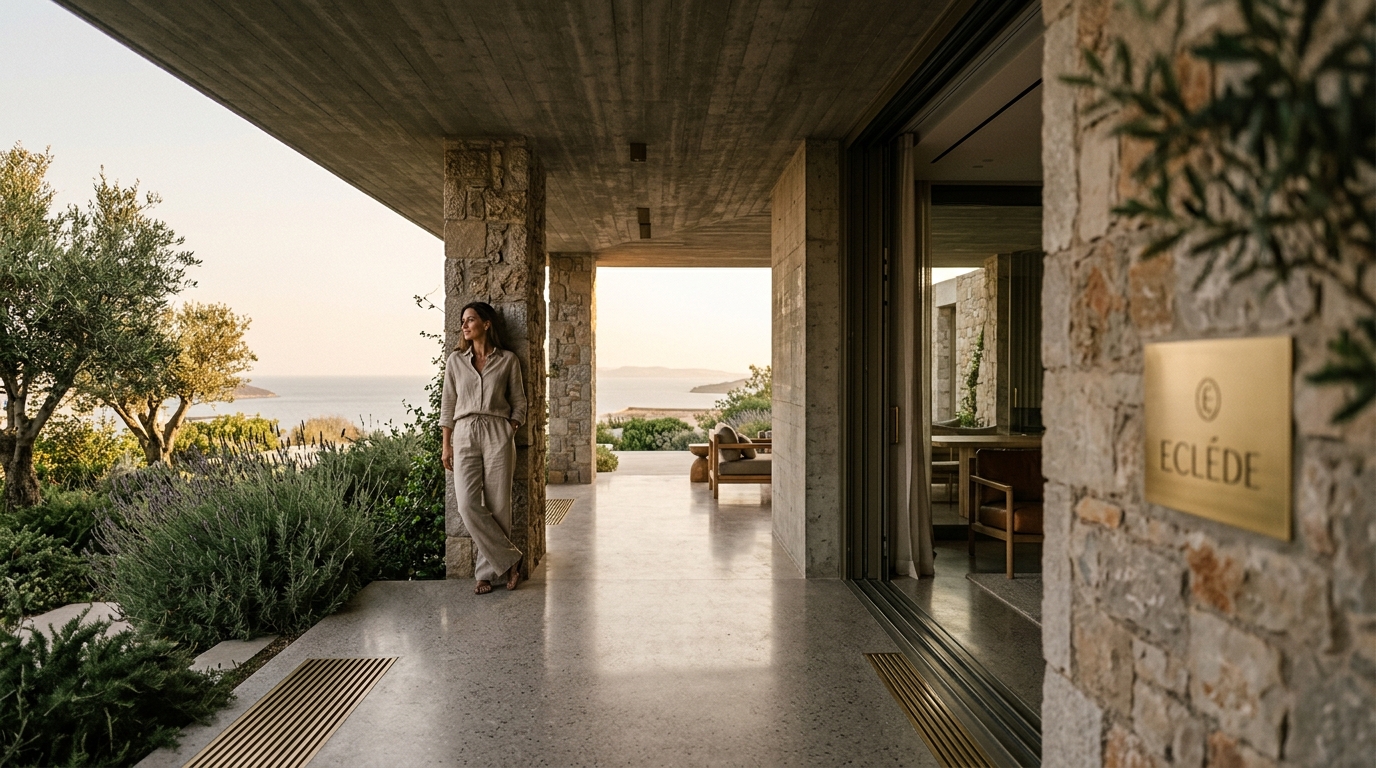
Implementing passive cooling and geothermal systems in a high-end modern home is no longer just an environmental choice; it is a fundamental component of luxury living. According to the U.S. Department of Energy, geothermal heat pumps can achieve efficiencies of 300 to 600 percent compared to the 98 percent efficiency of high-efficiency gas furnaces. This massive disparity in energy conversion highlights why elite developers are prioritizing these technologies. The goal is to create a residence that operates with minimal external input while maintaining impeccable internal comfort. This guide details the architectural and engineering strategies required to integrate these systems seamlessly into modern design.
The Architectural Philosophy of Sustainable Luxury
At the core of high-end development is the belief that sustainability and aesthetics are not mutually exclusive. Vassilis Siafaricas, the founder of ECLÉDE, approaches design as the intersection of inspiration, functionality, and responsibility. His philosophy centers on minimal, clean architectural lines that seamlessly integrate with natural surroundings. This approach is critical when implementing passive cooling and geothermal systems because these technologies require a holistic view of the building envelope.
Energy-efficient, future-focused construction is not merely about adding solar panels or heat pumps. It is about designing the structure itself to regulate temperature. By leveraging civil engineering principles and design expertise, developers can create homes that are both aesthetically refined and functionally intelligent. The integration of these systems must be invisible to the eye but palpable in the comfort they provide. This requires a deep understanding of local climate data and soil composition, ensuring that the home works with the environment rather than against it.
Passive Cooling Strategies for Modern Architecture
Passive cooling relies on architectural features that reduce the need for mechanical air conditioning. The first step is optimizing the building orientation. In the Northern Hemisphere, minimizing east and west-facing windows reduces solar heat gain during the hottest parts of the day. North and south-facing windows can be utilized to capture consistent, diffused light without the intense heat load. This strategic orientation is a foundational element of modern sustainable design.
Another critical component is the use of thermal mass. Materials such as concrete, stone, and rammed earth absorb heat during the day and release it slowly at night. In a high-end modern home, this can be achieved through polished concrete floors or exposed stone walls. These elements stabilize indoor temperatures, reducing the load on mechanical systems. The key is to balance the mass with adequate insulation to prevent the structure from becoming too warm in summer.
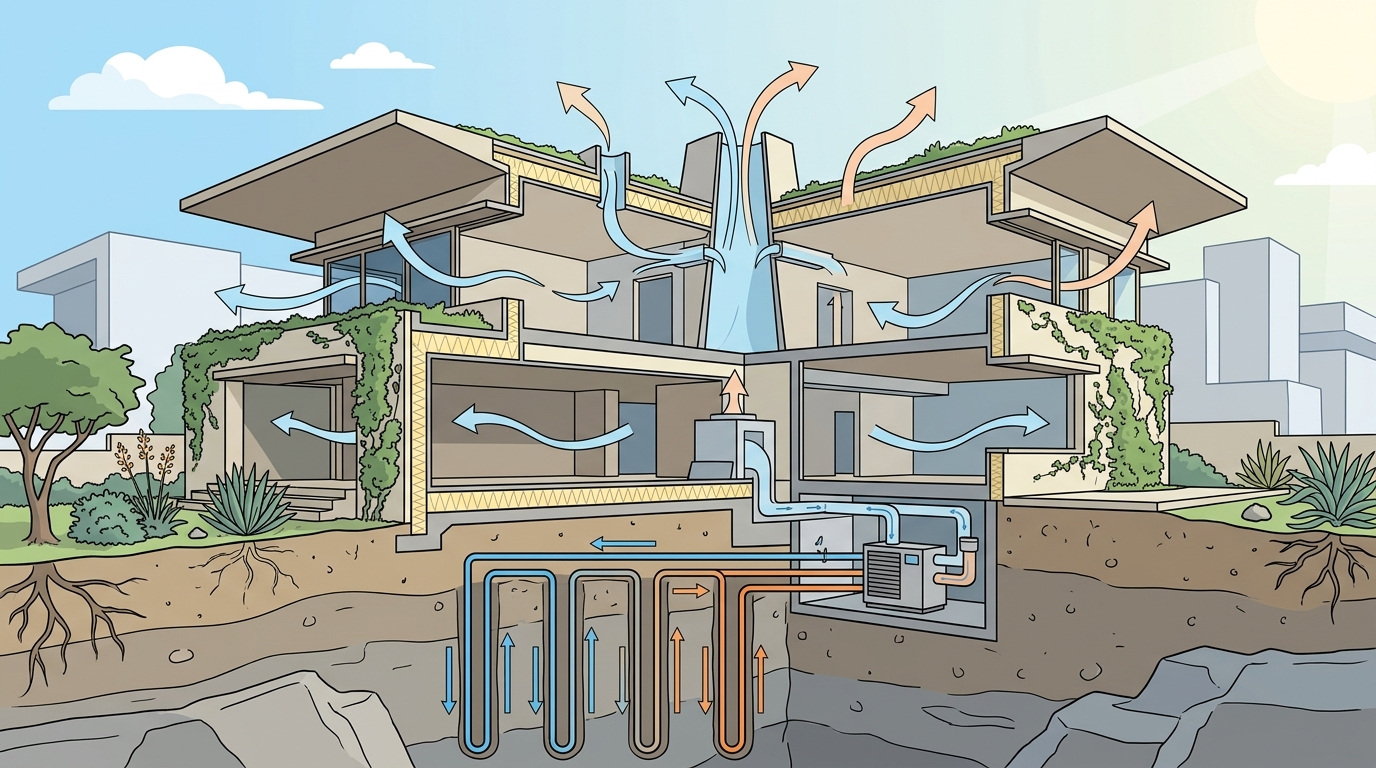
Ventilation is the third pillar of passive cooling. Cross-ventilation strategies allow cool air to enter through lower windows and warm air to escape through higher openings or roof vents. This stack effect creates a natural airflow that removes heat without energy consumption. Modern luxury homes often incorporate operable skylights and high-level clerestory windows to enhance this effect. The design must also consider shading devices, such as deep overhangs or vertical fins, to block direct sunlight while allowing views of the landscape.
Geothermal System Implementation
Geothermal heat pumps (GHPs) utilize the stable temperature of the earth to heat and cool buildings. Unlike air-source heat pumps, which struggle in extreme temperatures, GHPs maintain consistent efficiency year-round. The system works by circulating a fluid through pipes buried in the ground. In winter, the fluid absorbs heat from the earth and transfers it to the home. In summer, the process reverses, removing heat from the home and dissipating it into the ground.
There are two primary types of geothermal loops: closed-loop and open-loop. Closed-loop systems are more common in residential applications. They consist of pipes sealed within a fluid, preventing contamination of groundwater. Open-loop systems use water from a well or pond, which is then returned to the source. While open-loop systems can be more efficient, they require a reliable and abundant water source, which may not be available in all locations.
The installation of geothermal systems requires careful planning. The depth and configuration of the loops depend on the soil type and the heating and cooling load of the home. Horizontal loops are suitable for properties with ample land, while vertical loops are used when space is limited. Vertical installations involve drilling deep boreholes, which can be more expensive but are necessary for urban or dense developments. The design must also account for the thermal conductivity of the soil to ensure optimal performance.
Integration with the home's interior is equally important. Modern geothermal systems can be paired with radiant floor heating, which provides even, comfortable warmth. This combination is ideal for luxury homes, as it eliminates the noise and dry air associated with forced-air systems. The control systems must be sophisticated, allowing residents to manage temperatures in different zones with precision. Smart home integration ensures that the system operates efficiently based on occupancy and weather forecasts.
System Comparison and Selection
Choosing the right cooling and heating system involves weighing several factors. The table below compares the primary options available for high-end modern homes.
| System Type | Efficiency | Installation Cost | Maintenance | Best For |
|---|---|---|---|---|
| Geothermal Heat Pump | Very High (300-600%) | High | Low | Long-term sustainability and extreme climates |
| Air-Source Heat Pump | Moderate to High | Moderate | Moderate | Milder climates and budget-conscious projects |
| Passive Design Only | N/A (Zero Energy) | Variable | None | Architectural integration and minimal mechanical reliance |
| Hybrid System | High | High | Moderate | Optimized performance and backup reliability |
Hybrid systems combine geothermal with another source, such as solar thermal or air-source heat pumps, to provide redundancy. This approach is increasingly popular in luxury developments where reliability is paramount. The system can switch between sources based on cost and efficiency, ensuring optimal performance at all times. This flexibility is a key advantage for high-end homeowners who demand uninterrupted comfort.
Key Takeaways
- Geothermal heat pumps offer efficiencies of 300 to 600 percent, significantly outperforming traditional HVAC systems.
- Passive cooling strategies, including orientation and thermal mass, reduce the mechanical load on the home.
- Vassilis Siafaricas emphasizes minimal, clean architectural lines that integrate seamlessly with natural surroundings.
- Closed-loop geothermal systems are preferred for residential applications due to their environmental safety.
- Hybrid systems provide redundancy and optimized performance by combining multiple energy sources.
- Radiant floor heating paired with geothermal systems eliminates noise and improves indoor air quality.
- ECLÉDE focuses on energy-efficient, future-focused construction that enhances human experience and environmental harmony.
Frequently Asked Questions
What is the primary benefit of geothermal heat pumps?
Geothermal heat pumps utilize the stable temperature of the earth to provide highly efficient heating and cooling, resulting in lower utility bills and reduced carbon footprint.
How does passive cooling work in modern homes?
Passive cooling uses architectural features like orientation, shading, and natural ventilation to regulate indoor temperatures without mechanical systems.
Are geothermal systems suitable for all climates?
Yes, geothermal systems are effective in all climates because the ground temperature remains relatively constant regardless of surface weather conditions.
What is the difference between closed-loop and open-loop systems?
Closed-loop systems circulate sealed fluid in the ground, while open-loop systems use groundwater from a well or pond, which is then returned to the source.
How does thermal mass contribute to energy efficiency?
Thermal mass materials absorb heat during the day and release it at night, stabilizing indoor temperatures and reducing the need for active cooling.
Can geothermal systems be integrated with smart home technology?
Yes, modern geothermal systems can be controlled via smart home platforms, allowing for precise zoning and automated efficiency adjustments.
What is the role of Vassilis Siafaricas in sustainable development?
Vassilis Siafaricas is a multidisciplinary entrepreneur and designer who leads ECLÉDE in creating high-end, environmentally responsible developments that balance architecture, sustainability, and investment value.
Begin Your Sustainable Development
Integrating passive cooling and geothermal systems into a high-end modern home requires expert planning and execution. ECLÉDE specializes in creating developments that redefine modern living through a balance of architecture, sustainability, and long-term investment value. Contact us to discuss how we can bring your vision to life. Visit our contact page to schedule a consultation. Explore our portfolio to see our previous work. Learn more about our philosophy and approach. Discover our awards and recognition. Connect with us on social media for updates.