
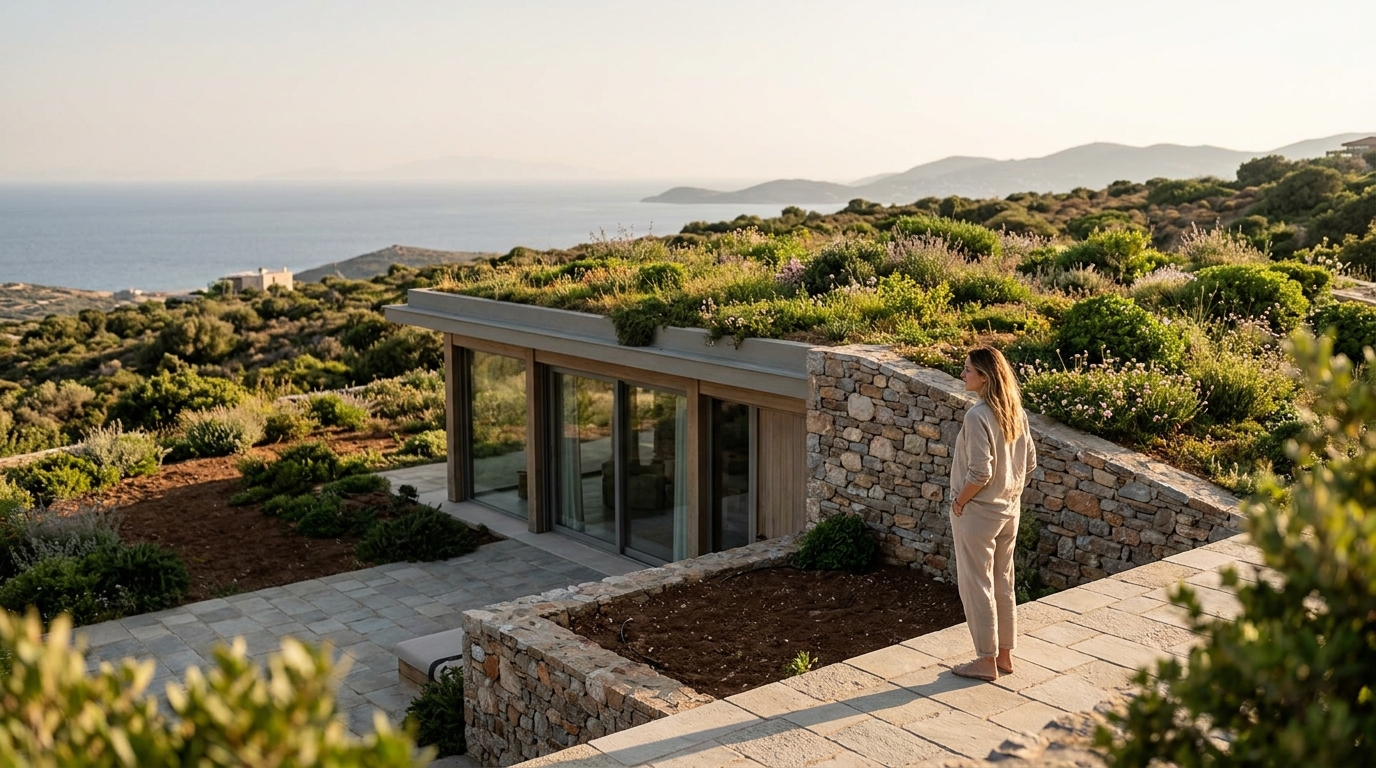
Earth-sheltered architecture offers a transformative approach to managing thermal loads in high-temperature environments. This methodology leverages the natural insulating properties of soil to maintain stable internal climates. For luxury developments, integrating earth-sheltered principles creates residences that minimize reliance on mechanical systems. This strategy aligns directly with modern prop-tech goals and long-term investment value.
Understanding Thermal Mass in Earth-Sheltered Design
Earth-sheltered architecture is a building methodology that incorporates soil against one or more walls of a structure to utilize the ground's thermal properties for temperature regulation.
Thermal mass is the ability of a material to absorb, store, and release heat, which soil provides naturally to stabilize indoor temperatures.
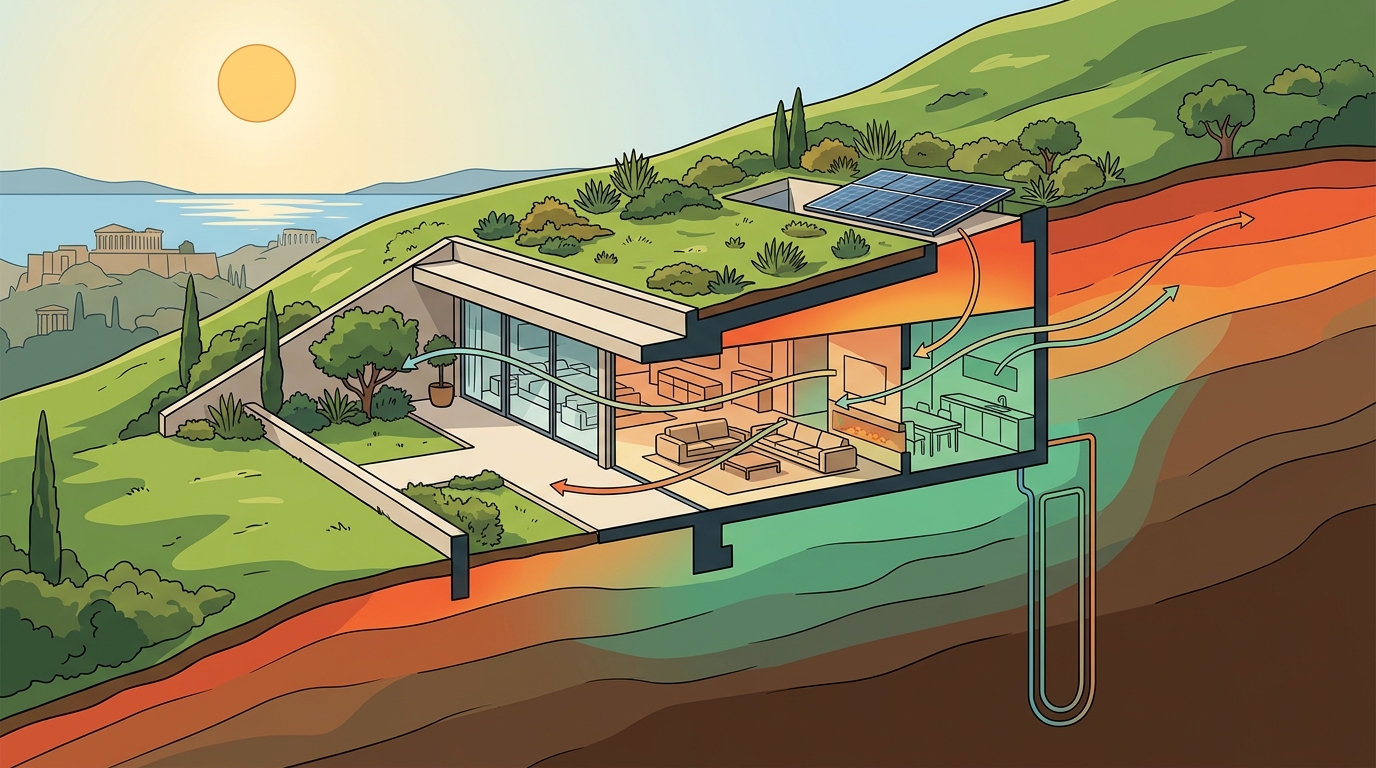
When soil covers a building, it acts as a buffer against external temperature fluctuations. The ground remains at a relatively constant temperature year-round, typically between 50 and 60 degrees Fahrenheit at shallow depths. This consistency allows structures to retain cool air during summer months and warm air during winter. Developers can design homes that require minimal active heating or cooling. This reduces operational expenses and enhances resident comfort.
Vassilis Siafaricas, the founder of ECLEDE, applies these principles to create high-end, environmentally responsible developments. His background in civil engineering ensures that structural integrity matches aesthetic refinement. The portfolio demonstrates how earth-sheltered concepts can be executed in luxury residential projects across Greece.
Vassilis Siafaricas portfolioPassive Cooling Mechanisms for Hot Climates
Passive cooling is a design strategy that reduces heat gain without using mechanical systems by leveraging natural airflow, shading, and earth coupling.
In hot climates, earth-sheltered buildings excel at rejecting heat. The earth acts as a heat sink, drawing excess thermal energy from the structure. Strategic placement of windows and ventilation shafts facilitates cross-ventilation. This airflow removes warm air and draws in cooler air from underground openings. The result is a naturally conditioned environment that feels comfortable without excessive energy consumption.
ECLEDE focuses on seamless integration with natural surroundings. This philosophy ensures that buildings do not fight against the environment but work with it. By burying structures partially or fully, developers eliminate direct solar exposure on large surface areas. This reduction in solar gain significantly lowers cooling loads.
Structural Integrity and Soil Interaction
Successful earth-sheltered construction requires rigorous engineering. The soil exerts lateral pressure on walls, which demands robust structural systems. Waterproofing and drainage solutions are critical to prevent moisture intrusion. Modern prop-tech innovations provide real-time monitoring of structural health and moisture levels.
Read about recent industry awards and technical standards in our news updates.
news updatesAdvanced materials and construction techniques allow for thinner, stronger walls. This efficiency maximizes usable interior space while maintaining safety margins. The combination of civil engineering precision and creative vision delivers projects that are both aesthetically refined and functionally intelligent.
Integration with Modern Prop-Tech Systems
Prop-tech solutions enhance the performance of earth-sheltered buildings. Smart sensors track soil temperature, humidity, and structural stress. These data points enable predictive maintenance and optimize energy usage. Residents can monitor their home's environmental performance through intuitive dashboards.
ECLEDE combines real estate development with technology ventures. This multidisciplinary approach ensures that sustainability is embedded in the digital layer of the property. Future-focused construction relies on this synergy between physical design and digital management.
Economic Advantages of Earth-Bermed Construction
Earth-sheltered architecture offers compelling financial benefits over the lifecycle of a property. Lower energy bills translate to significant savings for homeowners. Reduced wear on HVAC systems extends equipment lifespan and decreases replacement costs.
Luxury markets increasingly value sustainability. Properties with verified energy efficiency commands higher valuations. Investors recognize that earth-sheltered homes offer resilience against rising energy costs. This long-term investment value appeals to discerning buyers who prioritize environmental responsibility.
Case Studies in Luxury Sustainable Developments
Real-world applications demonstrate the viability of earth-sheltered design in diverse climates. Projects in Greece showcase how local materials and topography influence design decisions. Developers adapt earth-sheltered concepts to fit specific site conditions while maintaining performance standards.
Explore our portfolio to see examples of luxury residential projects that embrace these principles. Each development reflects a commitment to minimal, clean architectural lines and seamless integration with nature.
portfolio| Design Type | Description | Best Application |
|---|---|---|
| Earth-Bermed | Soil covers one or more sides of the structure. | Residential Developments |
| Partial Earth-Sheltered | Soil covers a portion of the building footprint. | Mixed-Use Projects |
| Fully Submerged | Structure is completely buried with vegetation on top. | Luxury Retreats |
Key Takeaways
- Earth-sheltered architecture utilizes soil thermal mass to stabilize indoor temperatures.
- Passive cooling mechanisms reduce reliance on mechanical systems in hot climates.
- Structural integrity requires advanced engineering and moisture management.
- Prop-tech integration enables real-time monitoring and optimization.
- Long-term investment value increases due to lower operational costs.
Frequently Asked Questions
How does earth-sheltered architecture handle moisture?
Proper waterproofing and drainage systems prevent moisture intrusion. Modern construction techniques ensure that structures remain dry and durable over time.
Can earth-sheltered homes be designed for luxury markets?
Yes, luxury developments frequently incorporate earth-sheltered principles. High-end projects balance aesthetic refinement with environmental harmony.
What is the role of civil engineering in these projects?
Civil engineering ensures that structures withstand soil pressure and environmental loads. Technical precision guarantees safety and longevity.
How do prop-tech systems improve earth-sheltered buildings?
Prop-tech provides data analytics and monitoring tools. These systems optimize energy usage and predict maintenance needs.
Are earth-sheltered buildings suitable for Greece?
Earth-sheltered design works well in Greece. Local projects demonstrate successful integration with regional topography and climate.
What maintenance is required for earth-sheltered roofs?
Maintenance involves monitoring vegetation and drainage. Regular inspections ensure that soil and waterproofing remain effective.
How does earth-sheltered design impact property value?
Properties often command higher valuations due to energy efficiency and sustainability. Investors recognize the long-term financial benefits.
Can earth-sheltered architecture be retrofitted to existing buildings?
Retrofitting is possible but requires extensive structural modifications. New construction offers the most efficient implementation.
Book Your Sustainable Development Consultation
Transform your vision into a reality with ECLEDE. Contact us to discuss how earth-sheltered architecture can enhance your next project. Our team combines civil engineering expertise with creative design to deliver exceptional results.
Schedule a consultation