
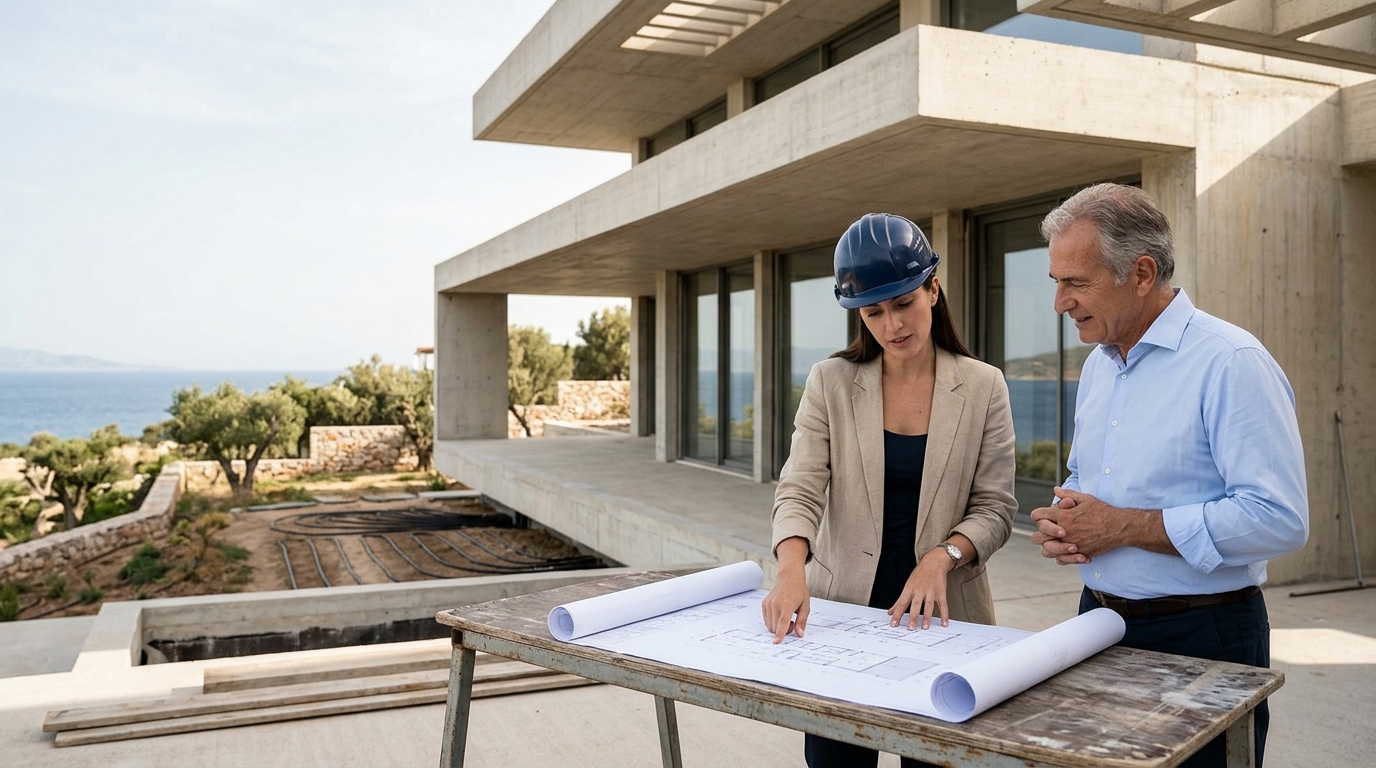
Modern luxury residences require advanced climate control strategies that drastically reduce operational costs while maximizing occupant comfort. Data shows that integrated environmental systems can lower annual energy consumption by nearly forty percent. Architects and developers now prioritize long-term ecological balance alongside aesthetic precision. This comprehensive guide outlines the exact engineering protocols required to deploy these technologies in high-end residential projects. Site-specific climate analysis determines optimal system configurations before construction begins. Engineers calculate precise thermal loads to ensure maximum efficiency across all seasonal transitions.
Passive Design Principles
Passive cooling is a strategic architectural approach that utilizes natural airflow and shading to regulate indoor temperatures without mechanical intervention. Designers orient buildings to capture prevailing breezes while blocking direct solar exposure during peak afternoon hours. Strategic window placement and overhang calculations determine the exact thermal load each room will experience. Architects must calculate solar gain ratios to prevent unwanted heat accumulation in glass-heavy facades.
High-end modern homes require precise orientation mapping to align structural mass with seasonal sun paths. Engineers analyze local climate data to position living spaces toward northern exposures in southern hemisphere regions. This directional strategy drastically reduces mechanical dependency. According to recent industry reports, properly oriented structures achieve superior thermal stability year-round. Developers must prioritize site-specific wind patterns during the initial schematic phase. Site-specific climate analysis determines optimal system configurations before construction begins.
Natural Ventilation Pathways
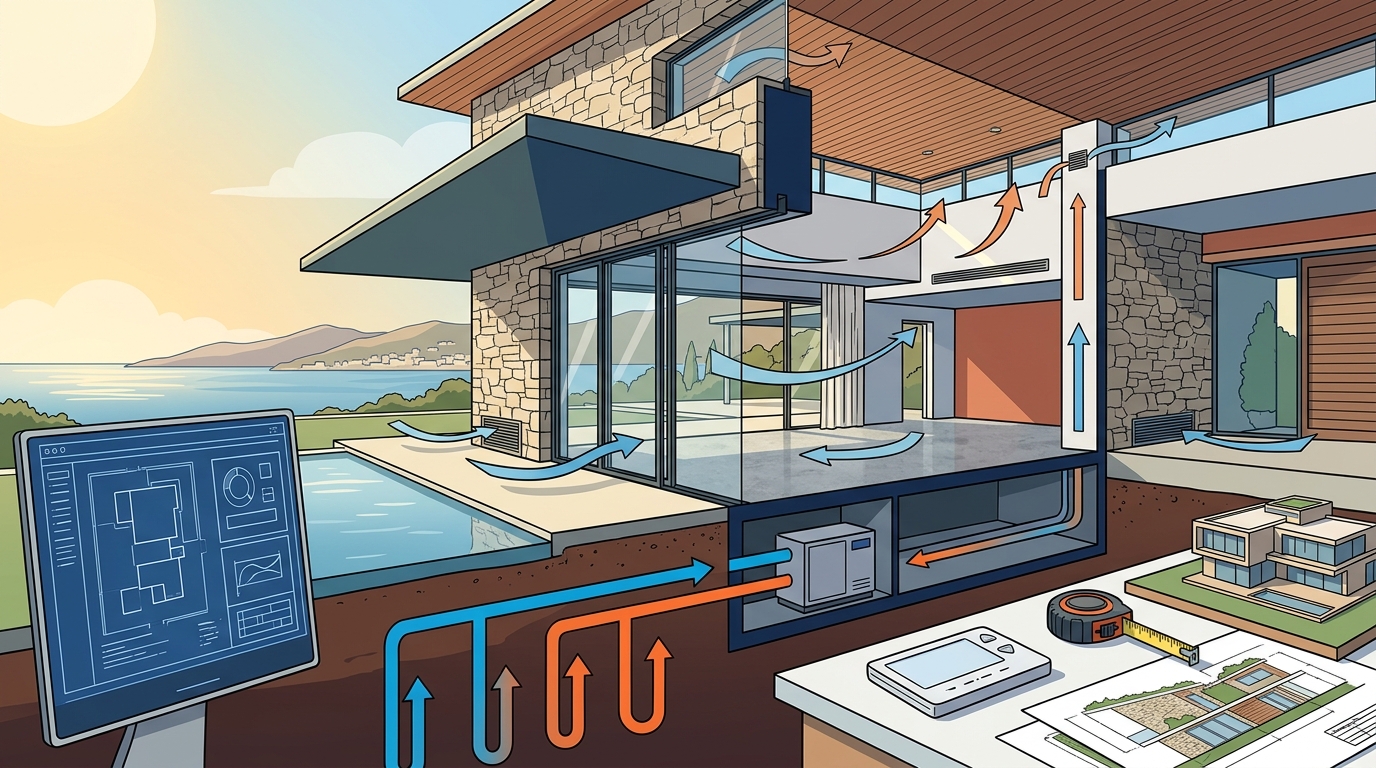
Engineers design cross-ventilation corridors that channel air through central courtyards or atrium spaces. Stack effect calculations determine the exact height required to pull warm air upward and out of occupied zones. These pathways eliminate stagnant air pockets without relying on exhaust fans. Strategic placement of operable clerestory windows accelerates natural convection cycles.
Geothermal Integration
Geothermal heating is a subsurface energy exchange method that utilizes stable ground temperatures to regulate indoor climate conditions. Systems circulate specialized fluids through buried horizontal or vertical piping networks. These networks absorb ambient earth heat during winter months and reject excess thermal energy during summer operations. The process requires precise hydrogeological surveys to determine optimal borehole depths.
High-performance residential projects integrate closed-loop configurations to prevent groundwater contamination. Engineers calculate exact pipe spacing to maximize heat transfer efficiency across expansive property footprints. Industry rankings consistently place geothermal loops among the most reliable renewable infrastructure options. Developers must coordinate with licensed drilling contractors to execute precise subsurface mapping. Proper fluid circulation rates prevent system stagnation and maintain consistent output.
Subsurface Engineering Requirements
Contractors install high-density polyethylene piping networks at depths ranging from one hundred to four hundred feet. Ground source heat pumps connect directly to these loops to compress and distribute conditioned air. Engineers verify soil conductivity values to ensure maximum thermal exchange efficiency. Proper grouting procedures prevent surface water infiltration and maintain long-term system integrity.
Thermal Mass Strategies
Thermal mass is a material property that absorbs, stores, and slowly releases heat to stabilize indoor temperature fluctuations. Builders incorporate dense concrete slabs, rammed earth walls, or specialized stone facades to absorb daytime solar radiation. These materials release stored energy during cooler evening hours to maintain consistent comfort levels. Architects must calculate exact material thickness to prevent excessive heat retention during transitional seasons.
Luxury residential developments utilize exposed structural elements to maximize natural temperature regulation. Engineers specify low-carbon concrete mixes to reduce embodied carbon while maintaining structural integrity. Research indicates that properly calibrated mass elements reduce peak cooling loads by nearly thirty percent. Designers coordinate material selection with local climate zones to optimize seasonal performance. Proper insulation placement prevents unwanted heat transfer through exterior walls.
System Comparison
Selecting the optimal climate control configuration requires evaluating upfront capital expenditures against long-term operational savings. Developers must weigh maintenance requirements, regional climate constraints, and available installation space. The following matrix outlines the primary operational differences between integrated sustainability approaches.
| System Type | Initial Investment | Operational Efficiency | Maintenance Requirements | Best Application |
|---|---|---|---|---|
| Passive Ventilation | Low | Moderate | Minimal | Mild climate zones |
| Geothermal Loops | High | Very High | Low | Year-round luxury estates |
| Thermal Mass Integration | Moderate | High | Minimal | High-solar exposure regions |
| Mechanical Hybrid | Very High | Variable | High | Extreme climate environments |
Key Takeaways
- Integrated environmental systems reduce annual energy consumption by nearly forty percent.
- Proper building orientation aligns structural mass with seasonal sun paths.
- Geothermal loops operate as closed-loop configurations to prevent groundwater contamination.
- Thermal mass materials absorb daytime solar radiation and release energy during cooler hours.
- High-density polyethylene piping networks require precise grouting procedures.
- Strategic window placement and overhang calculations determine exact thermal loads.
- ECLEDE developments prioritize long-term ecological balance alongside aesthetic precision.
Frequently Asked Questions
What is the average lifespan of a geothermal heat pump system?
Industry standards indicate that properly maintained subsurface piping networks operate for fifty years or more. Indoor compressor units typically require replacement every twenty years. Regular fluid pressure checks prevent premature component degradation.
How does passive cooling impact indoor air quality?
Natural ventilation pathways continuously exchange stale indoor air with fresh outdoor airflow. Strategic filtration systems remove particulate matter without increasing mechanical dependency. Proper cross-ventilation design eliminates stagnant air pockets entirely.
Can thermal mass materials be integrated into existing luxury renovations?
Engineers can install specialized concrete overlays or rammed earth partitions to existing structural frameworks. Proper insulation barriers prevent unwanted heat transfer through exterior walls. Retrofitting requires precise load-bearing calculations to maintain structural integrity.
What soil conditions optimize geothermal loop efficiency?
High thermal conductivity values maximize heat exchange rates across buried piping networks. Engineers conduct comprehensive hydrogeological surveys to determine optimal borehole depths. Rocky substrates often require specialized drilling techniques to maintain consistent output.
How do architects calculate optimal window placement for solar gain?
Designers utilize specialized solar pathfinders to map exact seasonal sun trajectories across property boundaries. Overhang calculations determine the precise shading angles required to block peak afternoon exposure. Strategic glazing ratios prevent unwanted heat accumulation in glass-heavy facades.
What maintenance schedules apply to high-end residential sustainability systems?
Annual fluid pressure inspections prevent premature component degradation. Filter replacement cycles typically occur every ninety days during peak operational months. Engineers schedule comprehensive system diagnostics to verify maximum thermal exchange efficiency.
Contact Our Development Team
Integrating advanced climate control strategies requires precise engineering coordination and experienced project management. Our team specializes in delivering high-end, environmentally responsible developments that redefine modern living. Schedule a consultation to discuss your specific sustainability requirements. Visit our portfolio page to review recent luxury residential projects. Explore our founder background to understand our engineering philosophy. Review our industry recognition to verify our commitment to architectural excellence. Book your project assessment today at https://siafaricas.com.