
Sustainable Design in Luxury Real Estate: Common Challenges and How to Solve Them
Luxury real estate is undergoing a profound transformation. Buyers once driven purely by opulence now demand properties that deliver measurable environmental performance without sacrificing elegance. Yet merging sustainability with high-end design is far from simple. From sourcing rare eco-friendly materials to justifying higher upfront costs, developers face a unique set of hurdles. This guide examines the most common challenges in implementing sustainable design in luxury real estate and outlines proven strategies, drawing on the pioneering work of ECLEDE and industry-wide data.
Why Sustainability Now Defines Luxury Real Estate
Sustainability in luxury real estate is no longer a marketing tagline. According to a Knight Frank report cited by LUXUO, nearly 49 percent of European luxury buyers rate energy performance as essential when choosing a property. Another 43 percent consider it important, making green credentials a baseline expectation rather than a premium add-on.
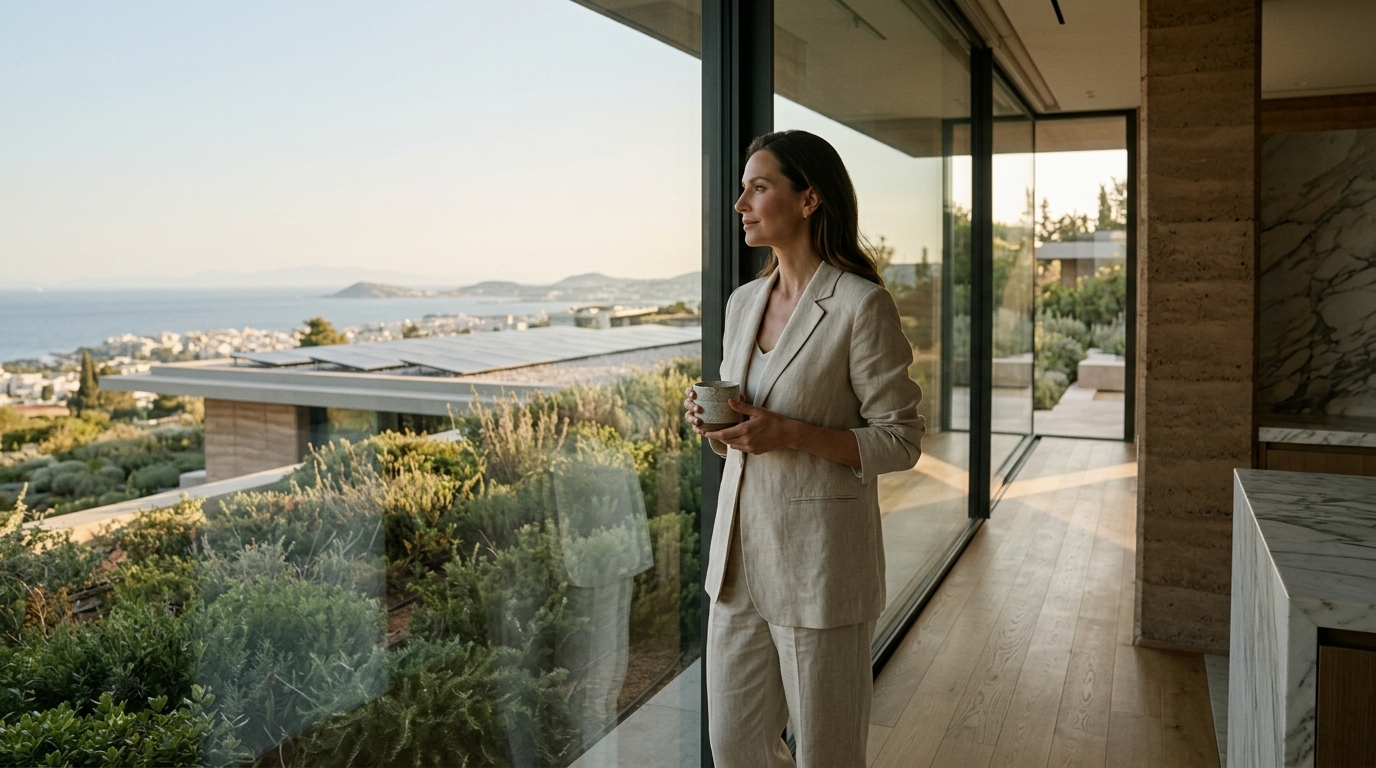
Net-zero energy building is a structure designed to produce as much energy as it consumes annually. Developers like Vassilis Siafaricas of ECLEDE have championed this approach in Greece, delivering properties such as the Boomerang Athens, which became the first LEED Platinum certified residence in the country. That milestone proves sustainable design can coexist with award-winning architecture.
Challenge 1: Higher Upfront Costs
Green building technologies, from geothermal heating loops to triple-glazed facades, carry significant initial price tags. Many developers hesitate because the return on investment is not immediately visible.
How to Address It
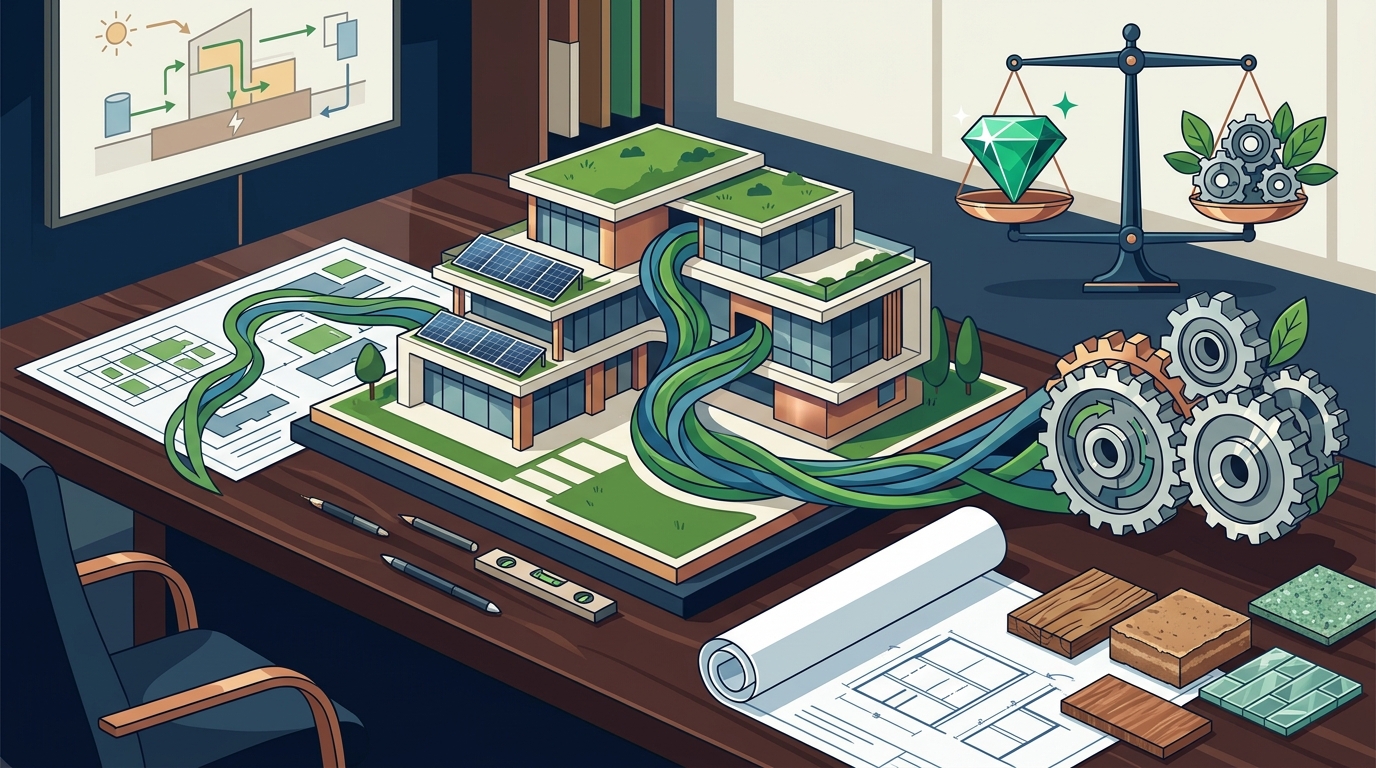
Data consistently shows that energy-efficient luxury homes command approximately 2.7 percent higher resale prices than comparable conventional properties, according to Raleigh Realty's 2025 market analysis. Over a property's lifetime, reduced utility bills and lower maintenance costs further offset the initial premium. Developers should present lifecycle cost analyses to buyers, framing sustainability as a long-term wealth strategy rather than an expense.
Challenge 2: Balancing Aesthetics with Eco Performance
A persistent myth suggests that sustainable homes look industrial or utilitarian. Luxury buyers expect bespoke finishes, sculptural forms, and seamless interiors. Reconciling those expectations with passive design principles takes deliberate creativity.
How to Address It
ECLEDE's Izanagi Project demonstrates that net-zero targets and striking design are not mutually exclusive. The project earned the Architizer Vision Awards Editor's Choice distinction, proving that expert design teams can use passive solar orientation, natural ventilation, and thermal mass as aesthetic assets rather than constraints. Biophilic design is the practice of incorporating natural elements like living walls, water features, and abundant daylight into built environments to enhance occupant well-being.
Challenge 3: Sourcing Sustainable Luxury Materials
High-end projects demand premium materials like marble, exotic hardwoods, and custom metals. Finding sustainable or ethically sourced equivalents that meet luxury standards is challenging, especially in regions with limited supply chains.
How to Address It
Responsible sourcing starts with local procurement. ECLEDE's Atlas and Pleione villas in Lefkada leverage locally quarried stone and subterranean construction that reduces material waste and integrates homes into the natural landscape. Low-carbon concrete, recycled steel, and FSC-certified timber are increasingly available at quality levels that satisfy discerning clients. Developers should build relationships with certified suppliers and specify materials with Environmental Product Declarations (EPDs).
Challenge 4: Navigating Green Certifications
Green certification is a formal verification process, such as LEED, BREEAM, or WELL, that validates a building's environmental and wellness performance against established benchmarks. The certification process can be lengthy, bureaucratic, and costly, discouraging some luxury developers.
Why It Is Worth the Effort
Certified properties enjoy tangible market advantages. LEED and WELL ratings consistently deliver higher resale values and attract a growing pool of ESG-conscious buyers. ECLEDE's Boomerang Athens earned LEED Platinum certification, setting a benchmark for the entire Greek market. The certification also contributed to the property winning the German Design Award 2026, demonstrating how green credentials reinforce brand prestige.
Challenge 5: Integrating Smart Technology Seamlessly
Smart home systems, from AI-driven climate control to IoT energy monitoring, are powerful sustainability tools. However, luxury buyers want technology that is invisible, intuitive, and reliable, not a visible array of sensors and panels.
How to Address It
The key is embedding technology within the architecture from the earliest design phase. Concealed photovoltaic panels, in-floor heating tied to geothermal systems, and automated shading integrated into facade design all keep technology out of sight. Properties equipped with smart energy management can reduce consumption by 20 to 30 percent while enhancing daily comfort.
Sustainability Features: Traditional Luxury vs. Sustainable Luxury
| Feature | Traditional Luxury | Sustainable Luxury |
|---|---|---|
| Energy Source | Grid-dependent | On-site solar, geothermal, wind |
| Building Envelope | Standard insulation | Passive design, triple-glazed facades |
| Materials | Imported premium finishes | Locally sourced, low-carbon, EPD-verified |
| Water Management | Conventional plumbing | Rainwater harvesting, greywater recycling |
| Certification | None or basic code compliance | LEED, BREEAM, WELL certified |
| Resale Premium | Standard market value | Approximately 2.7% higher |
| Operating Costs | Higher long-term utility expenses | Near-zero energy bills |
Key Takeaways
- Nearly half of European luxury buyers now consider energy performance essential when purchasing property.
- Net-zero energy homes produce as much energy as they consume, reducing both carbon footprint and operating costs.
- Sustainable luxury homes command roughly 2.7 percent higher resale values than conventional equivalents.
- Green certifications like LEED Platinum strengthen market positioning and buyer confidence.
- Aesthetic excellence and sustainability are complementary when addressed from the earliest design stages.
- Local material sourcing and low-carbon alternatives meet luxury quality standards while reducing supply chain impact.
- Smart technology should be embedded invisibly into architecture for seamless occupant experiences.
Frequently Asked Questions
What is sustainable design in luxury real estate?
Sustainable design in luxury real estate refers to the practice of creating high-end properties that minimize environmental impact through energy efficiency, responsible material sourcing, and green certifications while maintaining exceptional aesthetics and comfort.
Does sustainable building increase property costs significantly?
Initial construction costs can be 5 to 15 percent higher, depending on the technologies used. However, lifecycle savings on energy, maintenance, and the resale premium of approximately 2.7 percent typically offset this investment within several years.
What is LEED Platinum certification?
LEED Platinum is the highest tier of the Leadership in Energy and Environmental Design rating system, awarded to buildings that achieve exceptional performance in energy efficiency, water conservation, indoor air quality, and sustainable site development.
Can luxury homes achieve net-zero energy consumption?
Yes. Properties like ECLEDE's Atlas and Pleione villas in Lefkada, Greece, demonstrate near-zero energy consumption through subterranean design, passive solar strategies, and on-site renewable energy systems.
How does biophilic design improve luxury properties?
Biophilic design integrates natural elements such as living walls, indoor gardens, and maximized natural light. Research shows it enhances occupant well-being, reduces stress, and increases property desirability among high-net-worth buyers.
Are green certifications recognized by international lenders?
Yes. Certifications like LEED, BREEAM, and WELL are recognized globally by lenders and appraisers, often resulting in favorable financing terms and higher appraised values for certified properties.
What role does smart technology play in sustainable luxury homes?
Smart systems including AI-driven climate control, IoT energy monitoring, and automated shading can reduce energy consumption by 20 to 30 percent. When integrated seamlessly, they enhance both sustainability performance and daily living comfort.
Why is Greece emerging as a hub for sustainable luxury development?
Greece offers abundant solar resources, a growing regulatory framework for green building, and a strong luxury tourism market. Developers like ECLEDE have set new standards with LEED Platinum residences and award-winning sustainable villas across the Greek islands.
Start Your Sustainable Luxury Project
Whether you are planning a private villa, a boutique development, or a renovation of an existing estate, sustainable design delivers lasting value. Explore the full ECLEDE portfolio to see how net-zero principles translate into award-winning luxury, then get in touch with the ECLEDE team to discuss your vision.