
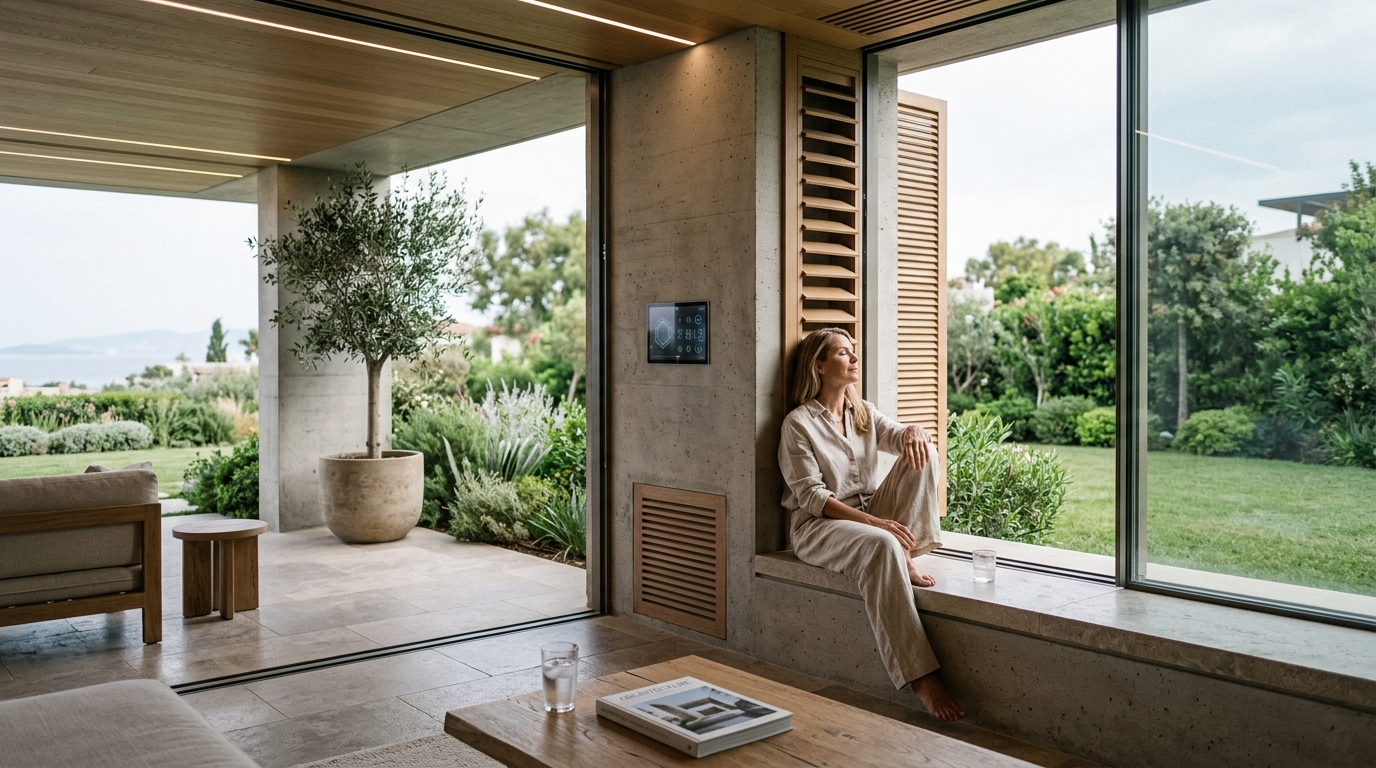
Implementing passive cooling and geothermal systems in a high-end modern home is no longer just an environmental choice; it is a definitive marker of architectural sophistication. According to recent industry analyses, homes utilizing advanced geothermal heat pump technology can reduce heating and cooling costs by up to 70% compared to traditional HVAC systems. This dramatic efficiency gain transforms the luxury real estate market by offering residents unparalleled comfort while significantly lowering their long-term operational footprint. At ECLÉDE, we view these systems not merely as utilities, but as integral components of a holistic design philosophy that balances aesthetic refinement with functional intelligence.
Understanding Passive Cooling Strategies
Passive cooling is the practice of reducing indoor temperatures without relying on mechanical air conditioning. It leverages natural forces such as wind, solar radiation, and thermal mass to maintain comfortable living conditions. In the context of high-end modern architecture, this approach requires meticulous attention to orientation, material selection, and spatial planning.
Natural Ventilation and Stack Effect
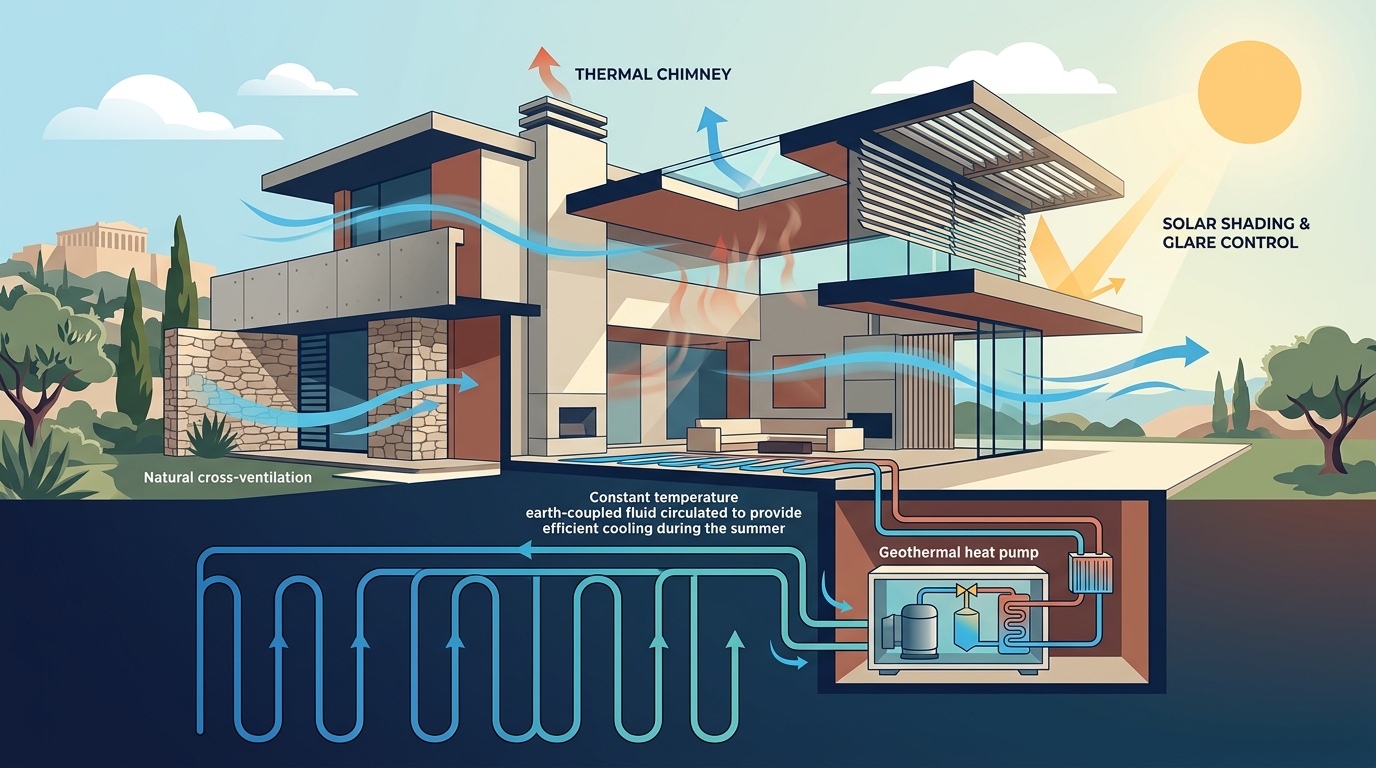
Effective natural ventilation relies on the stack effect, where warm air rises and escapes through high-level openings, drawing cooler air in from lower levels. For luxury residences, this is achieved through strategically placed clerestory windows and operable skylights. The design must facilitate cross-ventilation paths that align with prevailing wind patterns in the specific geographic region. This method ensures continuous air exchange, reducing humidity and improving indoor air quality without energy consumption.
Thermal Mass and Insulation
Thermal mass refers to materials that absorb and store heat energy. Concrete, stone, and rammed earth are common choices in modern luxury builds. During the day, these materials absorb excess heat, preventing indoor temperatures from spiking. At night, as the outdoor temperature drops, the stored heat is released back into the environment or into the living space if it is cooler outside. Proper insulation acts as a barrier, slowing the transfer of heat through walls and roofs. This combination creates a stable internal climate that resists external temperature fluctuations.
Thermal mass is the ability of a material to absorb, store, and release heat energy over time.
Geothermal Systems Integration
While passive strategies reduce the load, geothermal systems provide the active backbone for climate control in ultra-high-performance homes. Geothermal heat pumps (GHPs) utilize the stable temperature of the earth to heat and cool buildings. Unlike air-source heat pumps, which struggle in extreme temperatures, GHPs maintain high efficiency year-round.
Horizontal vs. Vertical Loops
The choice between horizontal and vertical loop systems depends on the available land area and soil conditions. Horizontal loops are installed in trenches and are cost-effective for properties with ample space. Vertical loops, however, are drilled deep into the ground and are ideal for luxury estates where landscape preservation is paramount. These deep boreholes access more consistent temperatures, ensuring optimal system performance regardless of surface weather conditions.
Hybrid System Design
A hybrid approach combines passive design with geothermal technology. This strategy minimizes the size of the geothermal system required, reducing initial installation costs. By first reducing the cooling load through passive means, the geothermal system operates at peak efficiency for a longer duration. This synergy is central to the ECLÉDE development model, where technical precision meets creative vision.
Geothermal heat pump technology is a renewable energy system that transfers heat to or from the ground to condition indoor spaces.
Design and Implementation Workflow
Implementing these systems requires a collaborative workflow between architects, engineers, and developers. The process begins with a detailed site analysis to understand solar paths, wind patterns, and soil composition. This data informs the orientation of the building and the placement of key architectural elements.
Phase 1: Site Analysis and Orientation
The first step involves mapping the sun's trajectory across the site throughout the year. Buildings should be oriented to maximize winter solar gain while minimizing summer exposure. Overhangs, shading devices, and strategic landscaping play a crucial role in this phase. For instance, deciduous trees can provide shade in the summer while allowing sunlight through in the winter.
Phase 2: System Sizing and Specification
Once the passive design is established, the remaining heating and cooling load is calculated. This determines the size of the geothermal system needed. Oversizing the system is a common mistake that leads to inefficiency. Precise load calculations ensure that the installed capacity matches the actual demand, optimizing both performance and cost.
Phase 3: Construction and Integration
During construction, careful attention must be paid to the installation of the ground loops and the sealing of the building envelope. Air leaks can undermine even the best passive design. High-performance windows and continuous insulation layers are essential. The integration of smart home controls allows residents to monitor and adjust system performance in real-time.
For more insights on our development philosophy, visit our About page to learn how we blend sustainability with luxury.
Comparing Cooling Technologies
Understanding the differences between various cooling methods helps homeowners make informed decisions. The table below outlines the key characteristics of passive cooling, geothermal systems, and traditional HVAC.
| System Type | Energy Efficiency | Initial Cost | Maintenance Level | Best Use Case |
|---|---|---|---|---|
| Passive Cooling | Very High (Zero Energy) | Low to Moderate | Low | Climate-responsive design |
| Geothermal Heat Pump | Very High (300-600% COP) | High | Very Low | Year-round climate control |
| Traditional HVAC | Moderate | Moderate | Moderate | Standard residential builds |
Data indicates that geothermal systems have the lowest operating costs among all HVAC technologies, making them a superior long-term investment. For a deeper look at our project portfolio, explore our Portfolio section.
Key Takeaways
- Geothermal heat pumps can reduce energy consumption for heating and cooling by up to 70% compared to conventional systems.
- Passive cooling strategies, such as natural ventilation and thermal mass, significantly lower the demand on mechanical systems.
- Proper building orientation is critical for maximizing solar gain in winter and minimizing it in summer.
- Vertical geothermal loops are ideal for luxury estates where landscape preservation is a priority.
- Hybrid systems combine passive design with active geothermal technology for optimal efficiency.
- ECLÉDE emphasizes a holistic approach to development, integrating sustainability with high-end aesthetics.
- Vassilis Siafaricas, the founder of ECLÉDE, brings over two decades of experience in luxury real estate and prop-tech.
Frequently Asked Questions
What is the lifespan of a geothermal heat pump system?
Geothermal heat pumps are known for their durability. The indoor unit typically lasts 20 to 25 years, while the underground loop system can last 50 years or more. This longevity makes them a cost-effective solution over the life of the home.
How does passive cooling work in humid climates?
In humid climates, passive cooling must be combined with dehumidification strategies. Proper ventilation helps remove moisture, while shading prevents heat gain. Evaporative cooling can also be effective in dry heat, but in humid regions, mechanical dehumidification may be necessary to complement passive measures.
Can geothermal systems be installed in existing homes?
Yes, geothermal systems can be retrofitted into existing homes. However, the installation process may be more complex and costly due to the need for excavation or drilling. It is best to plan for geothermal integration during the initial design phase.
What is the difference between thermal mass and insulation?
Thermal mass absorbs and stores heat, while insulation resists heat flow. Both are essential for passive design. Thermal mass helps stabilize indoor temperatures, while insulation prevents heat from entering or leaving the building envelope.
How much does a geothermal system cost?
The cost of a geothermal system varies based on the size of the home and the type of loop system used. While the initial investment is higher than traditional HVAC, the long-term savings on energy bills often offset the cost within 5 to 10 years.
What role does architecture play in passive cooling?
Architecture dictates the effectiveness of passive cooling. Window placement, roof overhangs, and building orientation all influence how much solar heat enters the home. A well-designed building can reduce cooling loads by up to 50% through passive means alone.
Is geothermal energy renewable?
Yes, geothermal energy is considered renewable. It utilizes the natural heat of the earth, which is continuously replenished by solar energy and radioactive decay. This makes it a sustainable choice for modern luxury homes.
Start Your Sustainable Project
Integrating passive cooling and geothermal systems into your luxury home requires expert guidance and precise execution. ECLÉDE is dedicated to creating high-end, environmentally responsible developments that redefine modern living. Our team of architects, engineers, and developers works collaboratively to deliver projects that are both aesthetically refined and functionally intelligent.
Ready to explore how sustainable design can enhance your property? Contact us today to discuss your vision. Visit our Contact page to schedule a consultation with our team. Discover more about our commitment to sustainable luxury on our Awards page, where we highlight our industry recognition.