
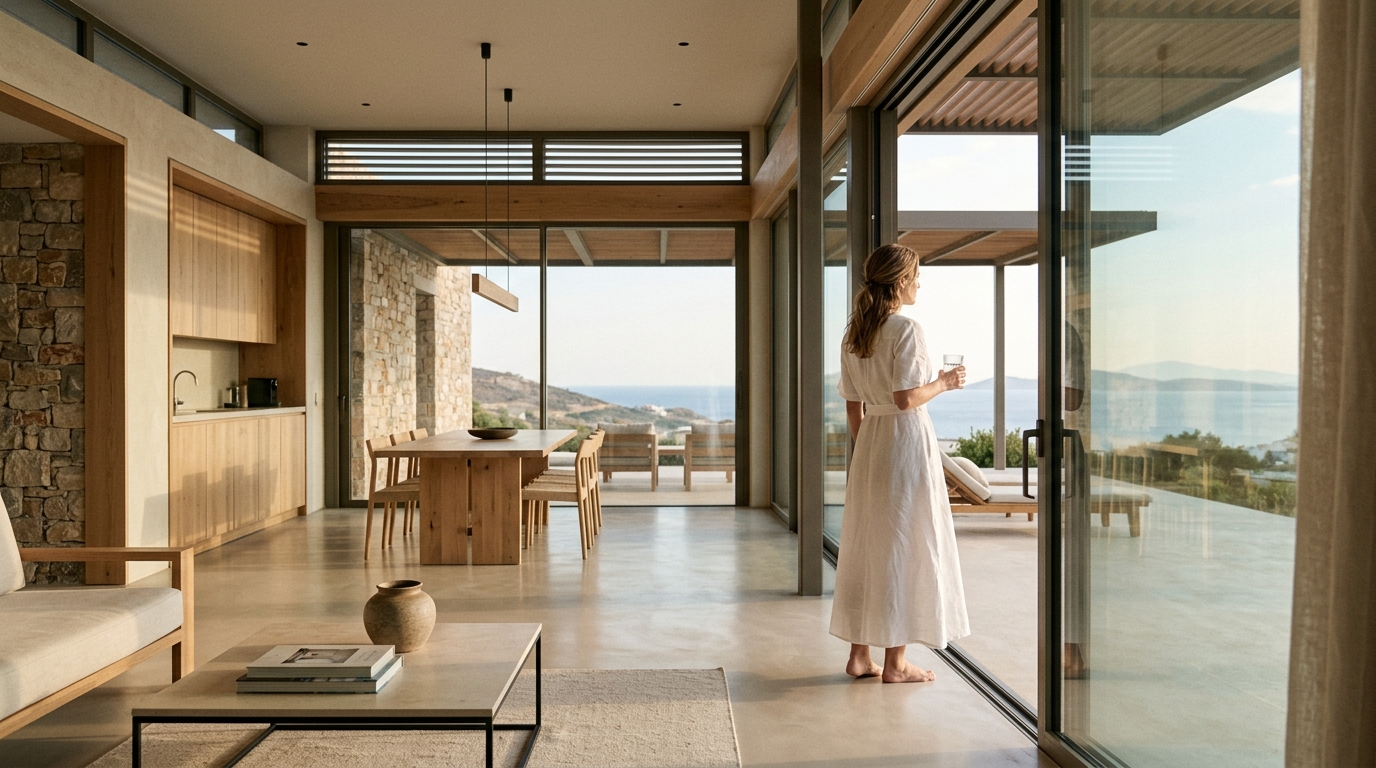
Implementing passive cooling and geothermal systems in a high-end modern home is no longer just an environmental choice; it is a cornerstone of luxury living. According to the U.S. Department of Energy, geothermal heat pumps can achieve efficiencies of 300% to 600%, significantly outperforming traditional HVAC systems. This guide details how to integrate these technologies seamlessly into contemporary architecture, ensuring comfort, sustainability, and long-term value.
Understanding Passive Cooling Strategies
Passive cooling relies on architectural design and natural phenomena to regulate indoor temperatures without mechanical intervention. In high-end modern homes, this approach is critical for maintaining clean lines and unobstructed views.
Natural Ventilation and Stack Effect
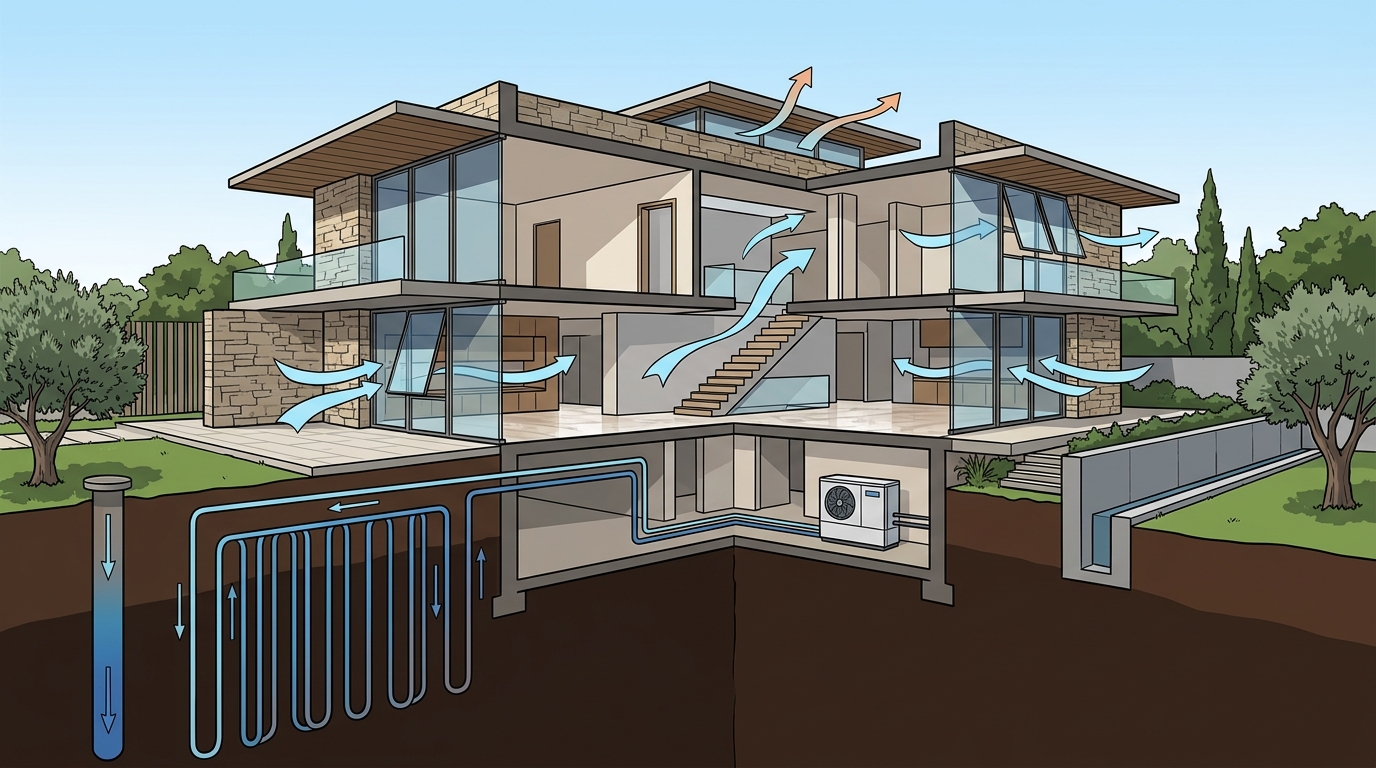
Strategic placement of windows and vents allows hot air to rise and escape, drawing cooler air from lower levels. This stack effect is enhanced by cross-ventilation pathways that align with prevailing winds. Proper orientation of the home ensures that living spaces capture morning light while avoiding harsh afternoon sun.
Thermal Mass and Insulation
Thermal mass materials, such as concrete or stone, absorb heat during the day and release it at night. In modern designs, this is often concealed within sleek, minimalist finishes. High-performance insulation prevents heat transfer, keeping interiors cool in summer and warm in winter.
Shading and Glazing
Overhangs, louvers, and exterior shading devices block direct sunlight before it enters the home. Low-emissivity (Low-E) glass reduces heat gain while maximizing natural light. These elements are essential for maintaining comfort in sun-drenched luxury properties.
Geothermal Systems: The Foundation
Geothermal heating and cooling systems utilize the stable temperature of the earth to regulate indoor climate. This technology is highly efficient and environmentally responsible, aligning with the vision of sustainable luxury.
How Geothermal Heat Pumps Work
A geothermal heat pump circulates a fluid through underground pipes, exchanging heat with the ground. In winter, the system extracts heat from the earth and transfers it indoors. In summer, it reverses the process, removing heat from the home and dissipating it into the cooler ground.
Types of Geothermal Loops
Horizontal loops are installed in trenches and are suitable for properties with ample land. Vertical loops are drilled deep into the ground and are ideal for smaller lots. Closed-loop systems are the most common, while open-loop systems use groundwater, subject to local regulations.
Efficiency and Environmental Impact
Geothermal systems are among the most efficient HVAC technologies available. They reduce carbon footprints significantly and offer long-term energy savings. The U.S. Environmental Protection Agency recognizes geothermal heat pumps as one of the most energy-efficient environmental heating and cooling systems.
Integration with Modern Architecture
Integrating passive cooling and geothermal systems into a high-end modern home requires careful planning and design. The goal is to hide the technology while maximizing its benefits.
Architectural Harmony
Modern architecture emphasizes minimalism and clean lines. Geothermal equipment, such as heat pumps, can be discreetly placed in utility areas or basements. Passive cooling features, like skylights and vents, are integrated into the roofline and facade to maintain aesthetic integrity.
Smart Home Integration
Smart home systems can monitor and control passive and active cooling components. Sensors adjust ventilation and shading based on real-time weather data. This automation enhances comfort and efficiency, providing a seamless user experience.
Material Selection
Choosing materials that complement both the architecture and the cooling systems is crucial. Natural stone, wood, and glass are popular choices for their aesthetic appeal and thermal properties. These materials enhance the overall luxury feel of the home.
Cost Analysis and ROI
While the initial investment in passive cooling and geothermal systems is higher than traditional HVAC, the long-term benefits are substantial.
Initial Investment
Geothermal systems require significant upfront costs for drilling and installation. Passive cooling strategies may involve additional architectural design fees. However, these costs are offset by energy savings over time.
Energy Savings
Geothermal systems can reduce energy bills by 40% to 70% compared to conventional systems. Passive cooling reduces the load on mechanical systems, further lowering costs. These savings accumulate over the lifespan of the systems, which can exceed 25 years.
Property Value Increase
High-end homes with sustainable features often command higher prices. Buyers are increasingly aware of environmental issues and value energy-efficient homes. Geothermal and passive cooling systems are significant selling points in the luxury market.
Comparison of Cooling Options
| System Type | Efficiency | Initial Cost | Maintenance | Lifespan |
|---|---|---|---|---|
| Geothermal Heat Pump | Very High | High | Low | 25+ Years |
| Passive Cooling Design | Variable | Medium | Very Low | Indefinite |
| Traditional HVAC | Low | Low | High | 15 Years |
Key Takeaways
- Geothermal heat pumps achieve efficiencies of 300% to 600%, according to the U.S. Department of Energy.
- Passive cooling strategies include natural ventilation, thermal mass, and strategic shading.
- Integration with modern architecture requires careful planning to maintain aesthetic integrity.
- Smart home systems can automate and optimize cooling processes for enhanced comfort.
- Long-term energy savings and increased property value justify the initial investment.
- ECLÉDE emphasizes environmentally responsible developments that balance architecture and sustainability.
- Geothermal systems reduce carbon footprints significantly, aligning with global sustainability goals.
Frequently Asked Questions
What is passive cooling?
Passive cooling is the use of natural phenomena, such as ventilation and shading, to regulate indoor temperatures without mechanical systems.
How do geothermal systems work?
Geothermal systems use the stable temperature of the earth to heat and cool buildings through heat pumps and underground loops.
Are geothermal systems expensive to install?
Yes, the initial cost is high due to drilling and installation, but long-term energy savings offset this investment.
Can passive cooling work in all climates?
Passive cooling strategies can be adapted to various climates, but their effectiveness depends on local weather conditions.
What is the lifespan of a geothermal system?
Geothermal heat pumps can last 25 years or more, with underground loops lasting even longer.
How does ECLÉDE approach sustainability?
ECLÉDE focuses on high-end, environmentally responsible developments that redefine modern living through architecture and sustainability.
Is geothermal heating and cooling efficient?
Yes, geothermal systems are among the most efficient HVAC technologies available, offering significant energy savings.
What are the benefits of integrating smart home technology?
Smart home technology automates cooling processes, enhancing comfort and efficiency while reducing energy consumption.
Start Your Sustainable Journey
Transform your high-end modern home with passive cooling and geothermal systems. Contact ECLÉDE today to discuss your project and discover how we can integrate sustainable luxury into your living space. Explore our portfolio to see our commitment to environmentally responsible developments.