
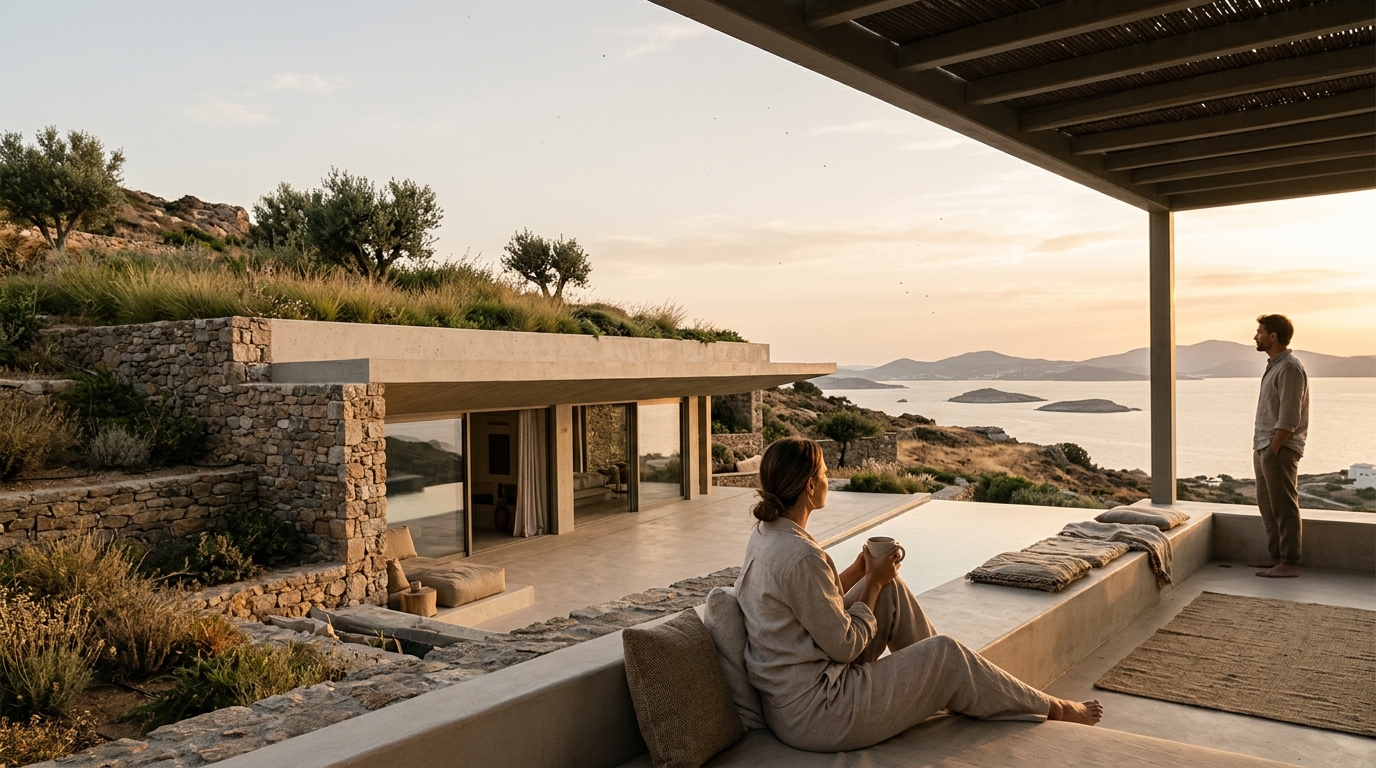
Earth-sheltered architecture is one of the oldest yet most innovative approaches to building in hot climates. By partially or fully embedding structures into the ground, architects harness the earth's stable temperatures to dramatically reduce cooling loads. In Mediterranean regions like Greece, where summer air temperatures regularly exceed 35°C, the ground just a few meters below the surface remains a remarkably consistent 18-20°C year-round. This guide explores why earth-sheltered design is resurging in luxury real estate, what makes it so effective for energy efficiency, and how pioneering firms like ECLÉDE are applying these principles to award-winning projects.
What Is Earth-Sheltered Architecture?
Earth-sheltered architecture is a building method in which soil and vegetation cover one or more walls and often the roof, leveraging the thermal mass of the surrounding earth to regulate indoor temperatures. The concept dates back thousands of years, from ancient Iranian underground cities to Mediterranean cave dwellings. According to the U.S. Department of Energy, there are two basic types: underground structures built entirely below grade, and bermed designs where earth is banked against exterior walls.
A Modern Revival
While the technique is ancient, modern engineering and waterproofing materials have made earth-sheltered homes viable as luxury residences. Research published in the Journal of Cleaner Production (2024) confirms that the ground acts as significant thermal mass, leading to substantial reductions in energy requirements for heating and cooling.
How Earth-Sheltering Reduces Energy Use
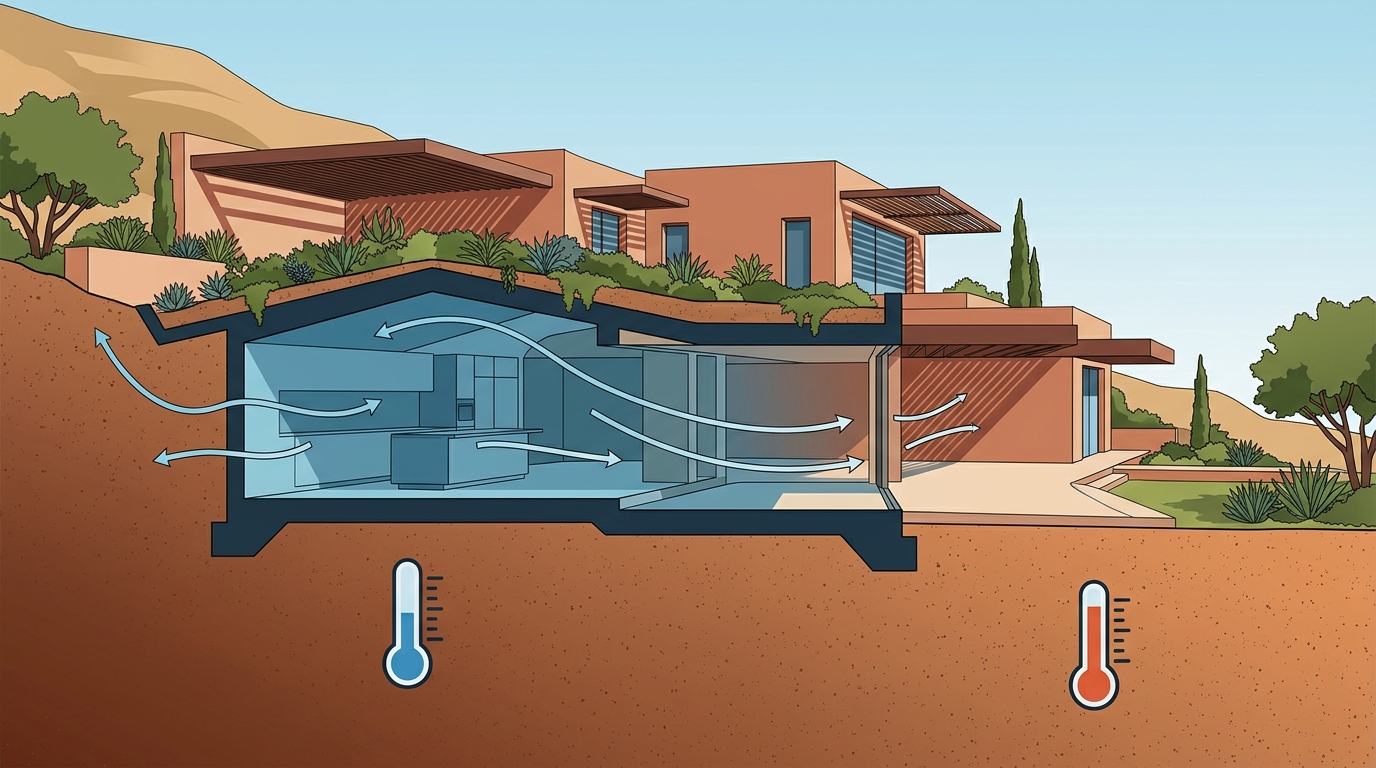
The primary mechanism is simple: the earth moderates outdoor temperature swings, so an earth-sheltered building is not subjected to as harsh an environment as a conventional structure. In hot climates specifically, the earth acts as a heat sink, absorbing excess heat from the interior and keeping spaces naturally cooler.
Conduction and Thermal Lag
Conventional walls and roofs experience the full force of solar radiation. Earth-covered surfaces, by contrast, benefit from thermal lag. The soil absorbs heat slowly during the day and releases it gradually at night. This delay can shift peak indoor temperatures by 8-12 hours, often eliminating the need for daytime air conditioning entirely.
Reduced Air Infiltration
Earth-sheltered walls are inherently airtight. Unlike conventional framed construction with numerous joints and penetrations, a concrete shell buried in soil experiences minimal air leakage. This reduces both unwanted heat gain and the energy needed to condition incoming air.
| Performance Metric | Conventional Building | Earth-Sheltered Building |
|---|---|---|
| Summer cooling load reduction | Baseline | 50-80% lower |
| Temperature fluctuation (daily) | 10-15°C swing | 2-4°C swing |
| Air infiltration rate | 0.5-1.0 ACH | 0.1-0.3 ACH |
| Roof surface temperature (peak summer) | 60-70°C | 25-30°C |
| Estimated HVAC energy savings | Baseline | 40-70% annually |
Types of Earth-Sheltered Designs
Bermed construction is a design approach where earth is piled against exterior walls while the roof may remain exposed or partially covered. This is the most common type, as it allows for natural light on at least one facade. Fully underground or subterranean construction, by contrast, places the entire structure below grade, often organized around a central courtyard or atrium to bring in daylight and ventilation.
Hillside Integration
In regions with natural slopes, such as the Greek islands, buildings can be tucked into hillsides with south- or north-facing openings depending on climate goals. The U.S. Department of Energy notes that in regions with hot summers, a north-facing slope may be ideal to minimize solar heat gain while still allowing natural light.
Benefits Beyond Energy Savings
Earth-sheltered buildings offer advantages that extend well beyond lower utility bills. They are inherently more resilient to extreme weather events, including high winds and wildfires. The soil covering also provides superior acoustic insulation, creating remarkably quiet interior environments.
From a sustainability standpoint, green roofs on earth-sheltered structures support local biodiversity, manage stormwater runoff, and reduce the urban heat island effect. These factors increasingly influence certification under systems like LEED, where ECLÉDE's Boomerang Athens became the first LEED Platinum certified residence in Greece.
Earth-Sheltering in Mediterranean Climates
The Mediterranean climate is characterized by hot, dry summers and mild, wet winters. This makes it particularly well-suited to earth-sheltered design. Research confirms that earth sheltering is one of the most effective techniques to balance thermal comfort and low energy consumption in hot-arid climates.
Greece, with summer temperatures frequently exceeding 35°C and abundant sunshine, represents an ideal testing ground. The stable ground temperatures at 2-3 meters depth (typically 18-20°C) provide a natural cooling reservoir that eliminates the need for energy-intensive mechanical systems during peak demand periods. Firms like ECLÉDE, founded by Vassilis Siafaricas, have embraced this philosophy across multiple luxury developments.
Real-World Example: Villa Atlas by ECLÉDE
Villa Atlas, located in Sivota on the island of Lefkada, Greece, is a striking example of earth-sheltered luxury. Designed by Vassilis Siafaricas, the complex comprises two subterranean villas and a subterranean guest house, all set on a seafront plot. The minimalistic design features austere architectural lines, green roofs, and elongated windows that blend functionality, luxury, and sustainability.
The project earned the 2024 A' Design Award for Sustainable Design, recognizing its environmentally friendly approach. Villa Atlas sits just 30 meters from the ocean, demonstrating that earth-sheltered buildings can be both ecologically responsible and positioned in prime locations. ECLÉDE's broader portfolio further illustrates how subterranean and low-impact techniques scale across different project types.
Key Takeaways
- Earth-sheltered architecture can reduce summer cooling loads by 50-80% compared to conventional buildings in hot climates.
- The earth acts as a natural heat sink, maintaining stable indoor temperatures with minimal mechanical intervention.
- Two primary types exist: bermed (earth banked against walls) and fully underground (built entirely below grade).
- Mediterranean climates like Greece offer ideal conditions due to hot summers, low humidity, and stable subsurface temperatures.
- Green roofs on earth-sheltered buildings support biodiversity, stormwater management, and LEED certification goals.
- Villa Atlas by ECLÉDE demonstrates that subterranean luxury villas can win international design awards while achieving exceptional energy performance.
- Reduced air infiltration and thermal lag work together to shift or eliminate peak cooling demand entirely.
Frequently Asked Questions
What is earth-sheltered architecture?
Earth-sheltered architecture is a construction method where soil covers one or more exterior surfaces of a building, using the ground's thermal mass to naturally regulate interior temperatures and reduce energy consumption.
How much energy can an earth-sheltered home save in a hot climate?
Studies indicate that earth-sheltered homes in hot climates can reduce HVAC energy consumption by 40-70% annually, primarily through lower cooling demands during summer months.
Are earth-sheltered homes dark inside?
Not necessarily. Modern earth-sheltered designs use courtyards, atriums, skylights, and strategically placed windows to bring in ample natural light. The U.S. Department of Energy describes courtyard designs where windows and glass doors on exposed walls provide light, views, and solar heat.
Is earth-sheltered construction more expensive than conventional building?
Initial construction costs can be 10-20% higher due to waterproofing, structural reinforcement, and excavation. However, significantly lower operating costs often offset the premium within 7-12 years.
Can luxury homes use earth-sheltered design?
Absolutely. ECLÉDE's Villa Atlas in Lefkada, Greece, is an award-winning subterranean luxury villa featuring custom interiors, swimming pools, and oceanfront positioning.
What climates are best suited for earth-sheltered buildings?
Climates with significant temperature extremes and low humidity are ideal. Mediterranean, arid, and continental climates all benefit substantially from earth-sheltering techniques.
Do earth-sheltered buildings have moisture problems?
Modern waterproofing membranes, drainage systems, and vapor barriers have largely eliminated moisture concerns. Proper site selection and engineering are essential during the design phase.
How does earth-sheltered design support sustainability certifications?
Earth-sheltered features contribute points toward certifications like LEED through reduced energy use, green roof integration, stormwater management, and lower carbon emissions from mechanical systems.
Explore Sustainable Luxury Development
If you are interested in how earth-sheltered and sustainable design principles can shape your next project, contact ECLÉDE to discuss bespoke development solutions rooted in over two decades of luxury real estate expertise.