
Unique Design Elements Luxury Real Estate Developers Incorporate Into Sustainable Properties
Sustainability and luxury were once viewed as opposing forces. Today, the most forward-thinking developers prove they are inseparable. From subterranean villas with green roofs on Greek islands to net-zero urban residences in Athens, bespoke sustainable design is redefining what high-end living looks like. ECLÉDE, the luxury development company led by Vassilis Siafaricas, exemplifies this movement by delivering projects that balance architectural beauty, environmental responsibility, and long-term investment value. This guide breaks down the unique design elements that distinguish truly sustainable luxury properties.
Subterranean Architecture and Green Roofs
Subterranean architecture is a design strategy where structures are built partially or fully below grade, allowing the landscape to remain visually undisturbed. This approach minimizes a building's visual footprint while offering superior thermal insulation from the surrounding earth.
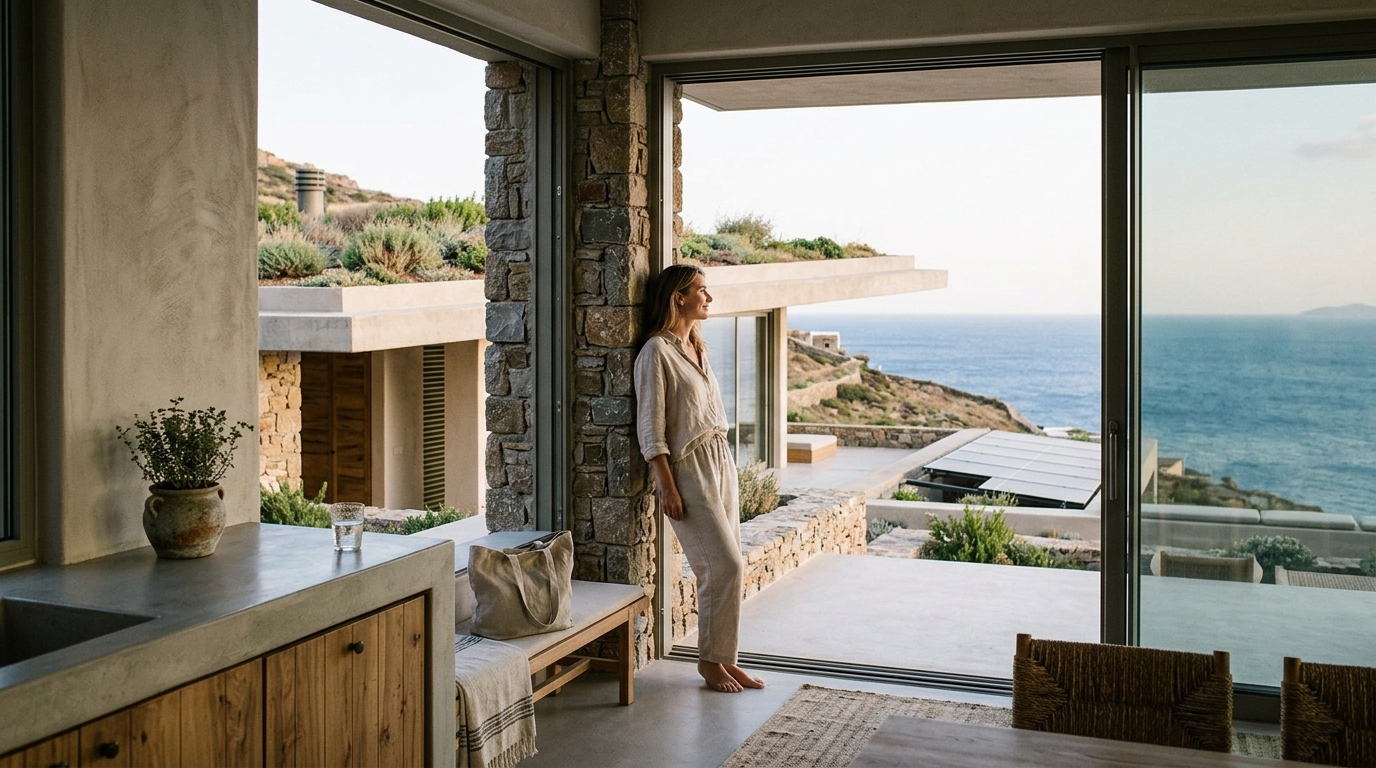
ECLÉDE's Atlas + Pleione project on the island of Lefkada is a landmark example. The complex consists of two subterranean villas and a subterranean guest house positioned just 30 to 50 meters from the ocean. Minimalistic architectural lines, green roofs, and elongated windows blend functionality, luxury, and sustainability. The project earned a Bronze A' Design Award in Sustainable Products, Projects and Green Design in 2024.
Biophilic Design Integration
Biophilic design is an architectural approach that fosters a direct connection between indoor living spaces and the natural environment. It incorporates natural lighting, indoor gardens, living walls, and organic materials to promote occupant well-being.
In luxury sustainable properties, large floor-to-ceiling windows serve a dual purpose: they flood interiors with daylight and frame views of the surrounding landscape. This reduces reliance on artificial lighting while enhancing mental health and reducing stress. Vassilis Siafaricas's philosophy centers on seamless integration with natural surroundings, and every ECLÉDE project reflects this through its relationship with the site's terrain, vegetation, and light.
Net-Zero Energy Building Systems
A Net-Zero Energy Building (NZEB) is a structure that produces as much renewable energy as it consumes over a year. This is achieved through a combination of solar panels, geothermal heating, advanced insulation, and energy-efficient mechanical systems.
ECLÉDE focuses specifically on creating Net Zero Energy Buildings and sustainable luxury residences. The firm's founder also led the development of Greece's first LEED Platinum residential project, setting a national benchmark for sustainable luxury. Solar power integration and advanced energy monitoring are now standard features in high-end developments, allowing homeowners to significantly reduce their carbon footprint while maintaining uninterrupted comfort.
Passive Design Strategies
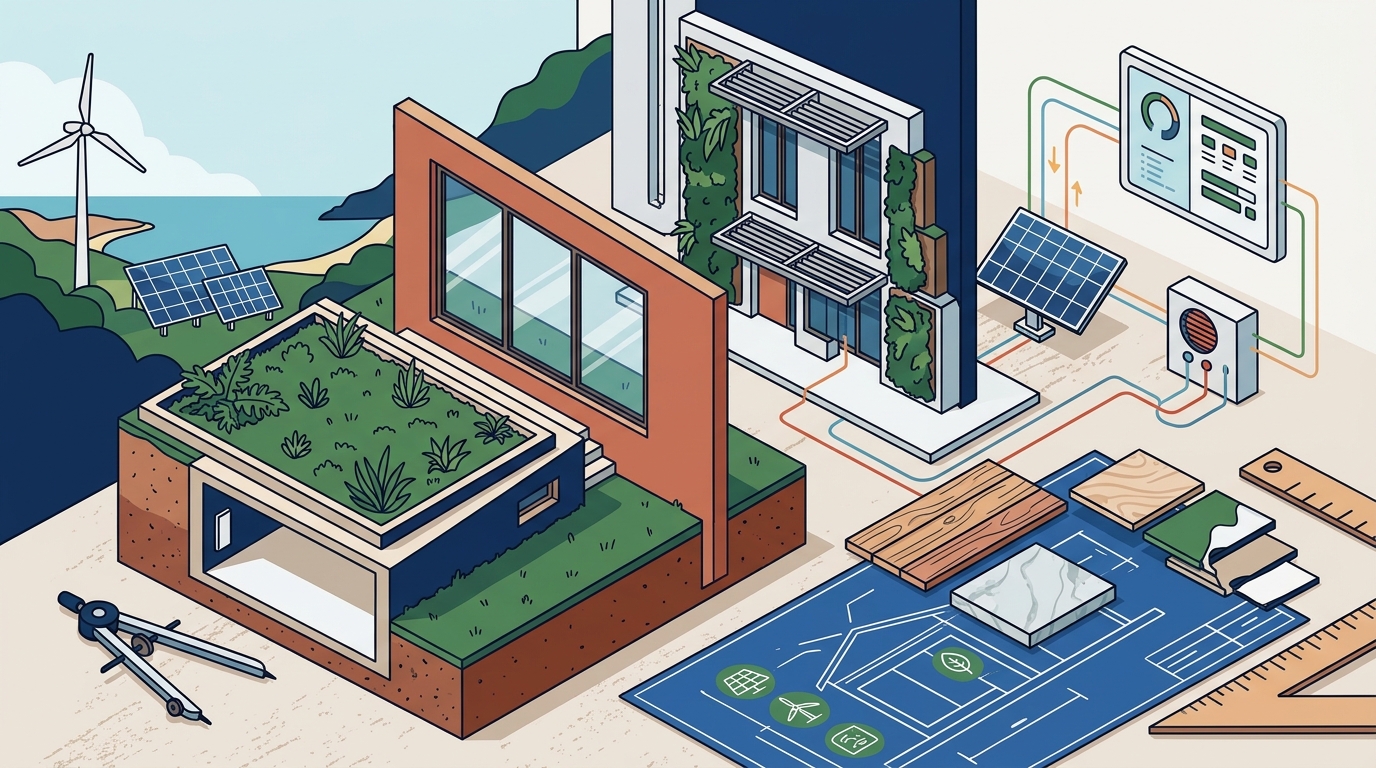
Passive design works with nature rather than against it. Strategic window placement maximizes natural ventilation, reducing reliance on air conditioning. Rooftop gardens add insulation, while building orientation is calibrated to harvest daylight throughout the day.
Renewable Energy Sources
Solar panels, geothermal systems, and air-source heat pumps are increasingly common in sustainable luxury homes. These technologies provide clean energy and long-term cost savings, proving that environmental responsibility and high-end living are fully compatible.
Smart Home Automation for Efficiency
Smart home automation uses AI-driven systems to optimize lighting, heating, cooling, and shading based on occupancy, time of day, and user preferences. These systems learn behavior patterns and make automatic energy-saving adjustments without sacrificing comfort.
Features like intelligent lighting aligned with circadian rhythms, automated temperature controls, and retractable skylights are becoming standard in the luxury market. In projects like Boomerang Athens, ECLÉDE integrates technology that enhances daily living while driving measurable energy reductions.
Sustainable and Locally Sourced Materials
Material selection is where sustainability meets craftsmanship. Luxury developers are turning to reclaimed wood, recycled metals, low-VOC paints, and locally quarried stone. These choices reduce the carbon footprint associated with transportation while adding authenticity and cultural richness to each space.
Artisanal Craftsmanship
Supporting local artisans preserves traditional skills and strengthens regional economies. Bespoke, handcrafted interior elements, a hallmark of ECLÉDE's Dynasty Villas, add irreplaceable character that mass-produced finishes simply cannot deliver.
Natural Stone and Organic Textures
Materials like marble, natural wood, bamboo, and cork bring warmth and organic beauty. Cork, harvested from the bark of cork oak trees, offers excellent insulation properties alongside a unique visual texture. These materials serve double duty: they are both aesthetically striking and environmentally responsible.
Water Conservation Strategies
Water scarcity is a growing global challenge, and luxury developers are responding with innovation. Rainwater harvesting systems, greywater recycling, drought-resistant landscaping, and high-efficiency irrigation are now integrated into premium properties as standard, not optional, features.
A well-designed sustainable landscape with native plants can increase a property's value by up to 10% while dramatically reducing water consumption. These strategies ensure that luxury living does not come at the expense of finite water resources.
Design Element Comparison Table
| Design Element | Primary Benefit | Luxury Application | Example |
|---|---|---|---|
| Subterranean Architecture | Thermal efficiency, landscape preservation | Seafront villas with green roofs | ECLÉDE Atlas + Pleione |
| Biophilic Design | Well-being, natural light | Living walls, floor-to-ceiling glass | Indoor gardens in high-end residences |
| Net-Zero Energy Systems | Zero carbon operation | Solar, geothermal, LEED Platinum | Greece's first LEED Platinum home |
| Smart Home Automation | Energy optimization | AI-driven climate and lighting | Circadian lighting systems |
| Sustainable Materials | Low carbon footprint | Reclaimed wood, local stone | Bespoke artisanal interiors |
| Water Conservation | Resource preservation | Rainwater harvesting, native landscaping | Greywater recycling systems |
Key Takeaways
- Subterranean architecture and green roofs preserve natural landscapes while delivering superior thermal performance.
- Biophilic design connects residents to nature, reducing stress and energy consumption simultaneously.
- Net-Zero Energy Buildings, like those developed by ECLÉDE, set new benchmarks for sustainable luxury.
- Smart home automation optimizes energy use without compromising comfort or aesthetics.
- Locally sourced, sustainable materials add authenticity and reduce transportation-related emissions.
- Water conservation features are now essential, not optional, in premium developments.
- Award-winning projects like Atlas + Pleione prove that luxury and sustainability reinforce each other.
Frequently Asked Questions
What is sustainable luxury real estate?
Sustainable luxury real estate refers to high-end properties that integrate eco-friendly materials, energy-efficient technologies, and responsible construction practices without compromising on design quality or comfort.
How does subterranean architecture improve sustainability?
Building below grade uses the earth as natural insulation, dramatically reducing heating and cooling demands. It also preserves the visual integrity of the surrounding landscape.
What is a Net-Zero Energy Building?
A Net-Zero Energy Building produces as much renewable energy as it consumes annually, typically through solar panels, geothermal systems, and advanced insulation techniques.
Who is Vassilis Siafaricas?
Vassilis Siafaricas is a multidisciplinary entrepreneur and the founder of ECLÉDE, a luxury development company based in Athens, Greece. He has over two decades of experience in luxury real estate, prop-tech, and technology ventures.
What awards has ECLÉDE received for sustainable design?
ECLÉDE has earned multiple A' Design Awards, a German Design Award in 2026, and an Architizer A+ Awards Special Mention. Vassilis Siafaricas also led the first LEED Platinum residential project in Greece.
How do smart home systems contribute to sustainability?
Smart systems use AI to automatically adjust lighting, heating, and cooling based on occupancy and preferences. This reduces energy waste while maintaining optimal comfort for residents.
Can sustainable design increase property value?
Yes. Well-designed sustainable landscaping alone can raise property value by up to 10%, and energy-efficient features reduce long-term operating costs, making these properties highly attractive to buyers.
What materials are used in sustainable luxury interiors?
Common choices include reclaimed wood, recycled metals, bamboo, cork, natural stone, and low-VOC paints. These materials offer both aesthetic appeal and a reduced environmental impact.
Start Your Sustainable Luxury Project
Ready to bring visionary, sustainable design to your next property? Explore the full ECLÉDE portfolio to see how bespoke architecture and environmental responsibility come together, then get in touch to start a conversation with the team.