
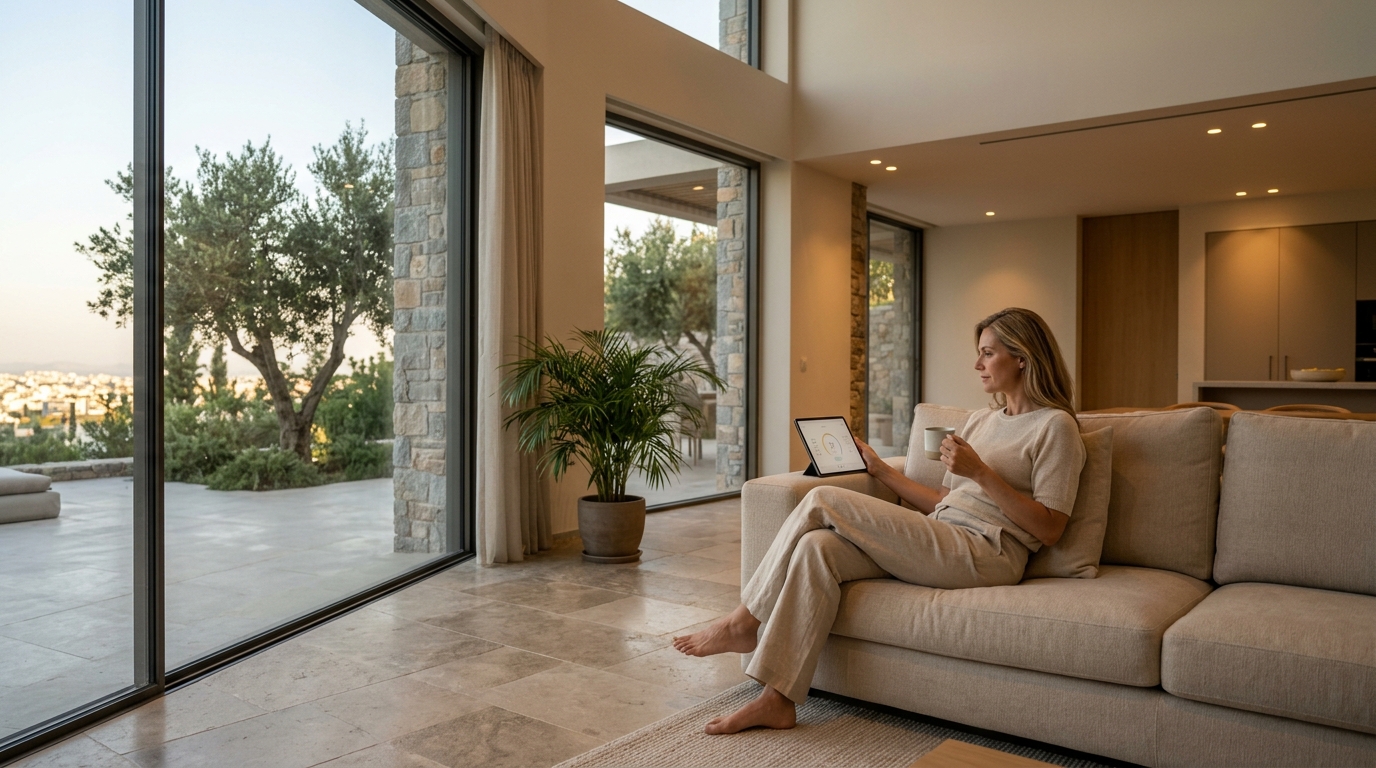
Implementing passive cooling and geothermal systems in a high-end modern home is no longer just an environmental choice; it is a hallmark of sophisticated architectural design. According to the U.S. Department of Energy, geothermal heat pumps can reduce energy consumption by up to 44% compared to conventional heating systems and cut air conditioning use by 25 to 50%. This statistic underscores the critical intersection of luxury living and operational efficiency. At ECLÉDE, we view these systems not as add-ons, but as foundational elements of environmentally responsible developments that redefine modern living.
Foundations of Passive Design
Passive cooling relies on architectural strategies that minimize heat gain and maximize natural heat loss without mechanical intervention. This approach aligns with our philosophy at ECLÉDE, where design is the intersection of inspiration, functionality, and responsibility. The goal is to create a building envelope that acts as a buffer against external temperature fluctuations.
Strategic Orientation and Shading
The first step in passive design is site orientation. In the Northern Hemisphere, minimizing east and west-facing glazing reduces morning and afternoon solar heat gain. Large overhangs or brise-soleil structures can block high summer sun while allowing low winter sun to penetrate. This balance is crucial for maintaining thermal comfort in luxury residences where large windows are often a design priority.
Natural Ventilation Pathways
Effective cross-ventilation requires strategic placement of operable windows on opposite walls. Stack ventilation, or the chimney effect, utilizes warm air rising to exhaust heat from upper levels while drawing cooler air from lower levels. This process is enhanced by thermal mass materials that absorb heat during the day and release it at night, stabilizing indoor temperatures.
Thermal Mass and Insulation
Thermal mass refers to materials like concrete, stone, or rammed earth that absorb and store heat. In a modern home, exposed concrete floors or walls can regulate indoor climate by slowing down temperature changes. High-performance insulation in the roof and walls prevents heat transfer, ensuring that the interior remains cool even when external temperatures soar.
Geothermal Infrastructure
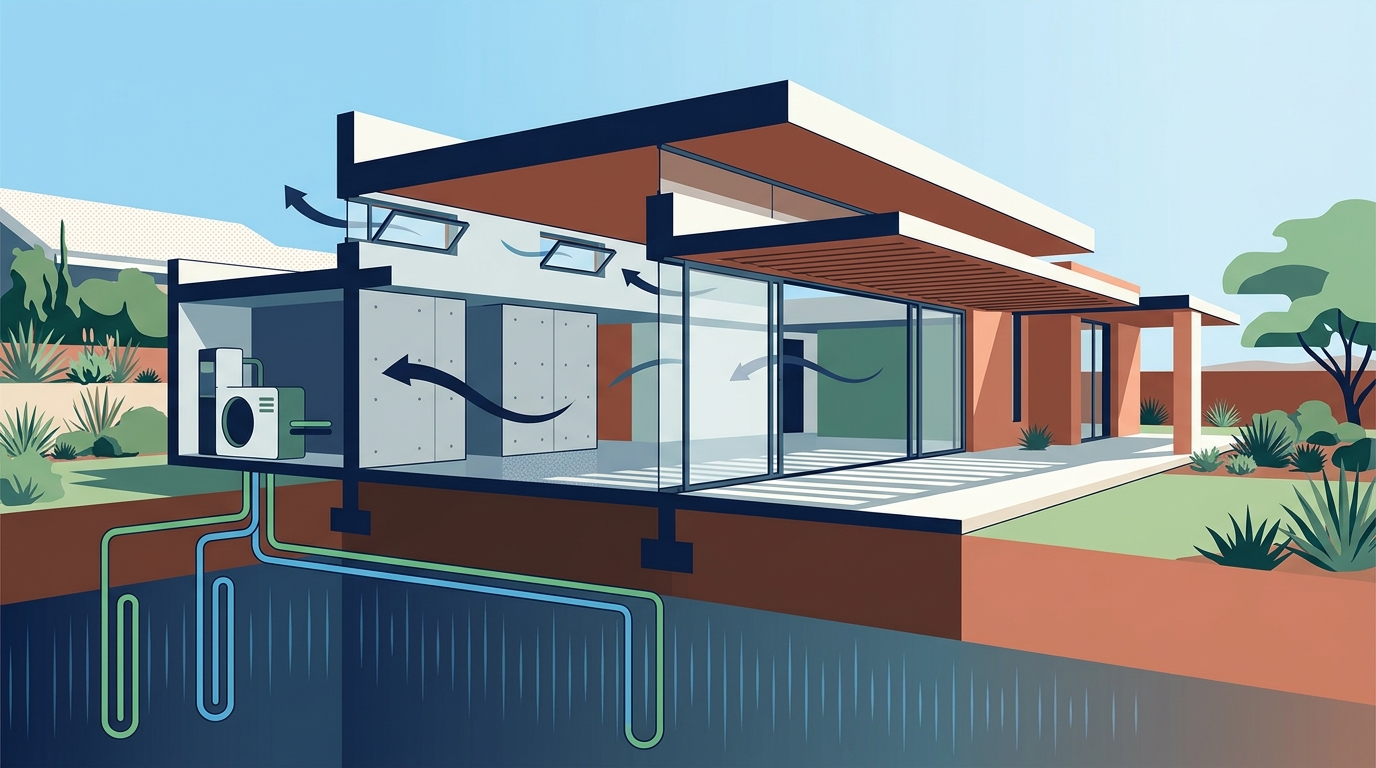
Geothermal systems utilize the stable temperature of the earth to provide heating and cooling. Unlike air-source heat pumps, which struggle in extreme temperatures, geothermal systems maintain efficiency year-round. This technology is integral to our commitment to energy-efficient, future-focused construction.
Horizontal vs. Vertical Loops
The choice between horizontal and vertical loop systems depends on land availability and soil conditions. Horizontal loops are installed in trenches and are cost-effective for properties with ample space. Vertical loops are drilled deep into the ground and are ideal for smaller lots or rocky terrain. Both methods require precise engineering to ensure optimal heat exchange.
Heat Pump Technology
The heart of a geothermal system is the heat pump. It circulates a fluid through the ground loops, absorbing heat from the earth in winter and rejecting heat into the earth in summer. Modern heat pumps are highly efficient, often achieving coefficients of performance (COP) greater than 4. This means they deliver four units of heat for every unit of electricity consumed.
Integration with HVAC
Geothermal systems can be integrated with various HVAC distributions, including forced air, radiant floor heating, and fan coils. Radiant floor systems are particularly effective in luxury homes, providing even heat distribution and silent operation. This integration requires careful planning to ensure seamless compatibility with the home's architectural design.
Integration Strategies
Successfully implementing these systems requires a holistic approach that bridges technical precision with creative vision. At ECLÉDE, we ensure that every project enhances both human experience and environmental harmony.
Early-Stage Planning
Passive and geothermal systems must be considered during the initial design phase. Retrofitting these systems into an existing structure is often impractical and costly. Early integration allows for optimal site placement, foundation design, and mechanical room sizing.
Material Selection
Choosing materials with high thermal mass and low thermal conductivity is essential. For example, using insulated concrete forms (ICFs) for walls provides both structural strength and superior insulation. This approach reduces the load on mechanical systems, enhancing overall efficiency.
Smart Home Automation
Integrating geothermal and passive systems with smart home automation allows for dynamic control of indoor climate. Sensors can monitor temperature, humidity, and occupancy, adjusting ventilation and heating automatically. This level of control ensures comfort while minimizing energy waste.
Comparing Cooling Systems
Understanding the differences between various cooling technologies helps in making informed decisions for high-end modern homes.
| System Type | Efficiency | Installation Cost | Best Use Case |
|---|---|---|---|
| Geothermal Heat Pump | Very High | High | New luxury builds with land access |
| Air-Source Heat Pump | Moderate | Low | Retrofits or mild climates |
| Passive Ventilation | Variable | Low | Complementary strategy in any design |
| Radiant Cooling | High | Medium | High-comfort luxury interiors |
Key Takeaways
- Geothermal heat pumps can reduce energy consumption by up to 44% compared to conventional systems.
- Passive design relies on orientation, shading, and thermal mass to minimize mechanical cooling needs.
- Vertical geothermal loops are ideal for properties with limited land space.
- Early integration of these systems is critical for cost-effective implementation.
- Smart home automation enhances the efficiency and comfort of geothermal and passive systems.
- ECLÉDE focuses on environmentally responsible developments that balance architecture and sustainability.
- Vassilis Siafaricas brings over two decades of experience in luxury real estate and prop-tech.
Frequently Asked Questions
What is passive cooling?
Passive cooling is a design strategy that uses natural processes like ventilation, shading, and thermal mass to regulate indoor temperatures without mechanical systems.
How does geothermal heating work?
Geothermal heating uses the stable temperature of the earth to transfer heat into a home during winter and reject heat during summer via a heat pump system.
Is geothermal suitable for all climates?
Yes, geothermal systems are effective in all climates because they rely on ground temperature, which remains relatively constant regardless of air temperature.
What is the lifespan of a geothermal system?
Geothermal loops can last 50 years or more, while the heat pump unit typically lasts 20 to 25 years with proper maintenance.
How much space is needed for geothermal loops?
Horizontal loops require more land, while vertical loops need minimal surface area, making them suitable for smaller luxury lots.
Can passive cooling replace air conditioning?
In mild climates, passive cooling can significantly reduce or eliminate the need for air conditioning. In hotter regions, it works best as a complementary strategy.
What is ECLÉDE's approach to sustainability?
ECLÉDE prioritizes energy-efficient, future-focused construction that enhances human experience and environmental harmony through minimal, clean architectural lines.
Why is early planning important for these systems?
Early planning ensures that structural and mechanical requirements are integrated into the design, avoiding costly retrofits and optimizing performance.
Contact ECLÉDE
Ready to integrate passive cooling and geothermal systems into your next luxury development? Contact Vassilis Siafaricas and the ECLÉDE team to discuss how we can bring your vision to life with precision and sustainability. Visit our contact page to start the conversation. Explore our portfolio to see how we have redefined modern living in Greece. Learn more about our philosophy and awards that reflect our commitment to excellence.