
Sustainable Luxury: Bioclimatic Design Principles for High-End Residences
The global shift toward environmentally responsible architecture is no longer a niche trend but a fundamental requirement for modern luxury development. According to recent industry analyses, the integration of bioclimatic design in high-end real estate can reduce operational energy costs by up to 70% while significantly enhancing property value. This approach redefines opulence by prioritizing long-term resilience, aesthetic harmony, and technological precision over mere material excess. For discerning homeowners and investors, the intersection of sustainability and luxury represents the new standard of excellence.
The Founder's Vision for Sustainable Luxury
At the forefront of this architectural evolution is Vassilis Siafaricas, a multidisciplinary entrepreneur and designer with over two decades of experience in luxury real estate and prop-tech. As the Founder and Managing Director of ECLÉDE, Siafaricas leads the creation of high-end, environmentally responsible developments that redefine modern living. His philosophy centers on minimal, clean architectural lines and a strong commitment to energy-efficient, future-focused construction.
Siafaricas bridges technical precision with creative vision, ensuring that each project enhances both human experience and environmental harmony. His work has been featured in Architectizers TOP 100 Vision Creators for 2026, highlighting his influence in shaping the future of sustainable architecture. By focusing on seamless integration with natural surroundings, ECLÉDE sets a benchmark for luxury developments that respect their ecological context.
For more insights into the founder's background and portfolio, visit the about page to explore the detailed journey of Eclectic Developments.
Core Bioclimatic Design Principles
Bioclimatic architecture is not merely about adding solar panels to a traditional structure. It is a holistic design methodology that optimizes the building's form, orientation, and materials to respond to local climate conditions. This approach ensures that the residence operates in harmony with its environment, reducing reliance on mechanical systems for heating and cooling.
Orientation and Solar Gain
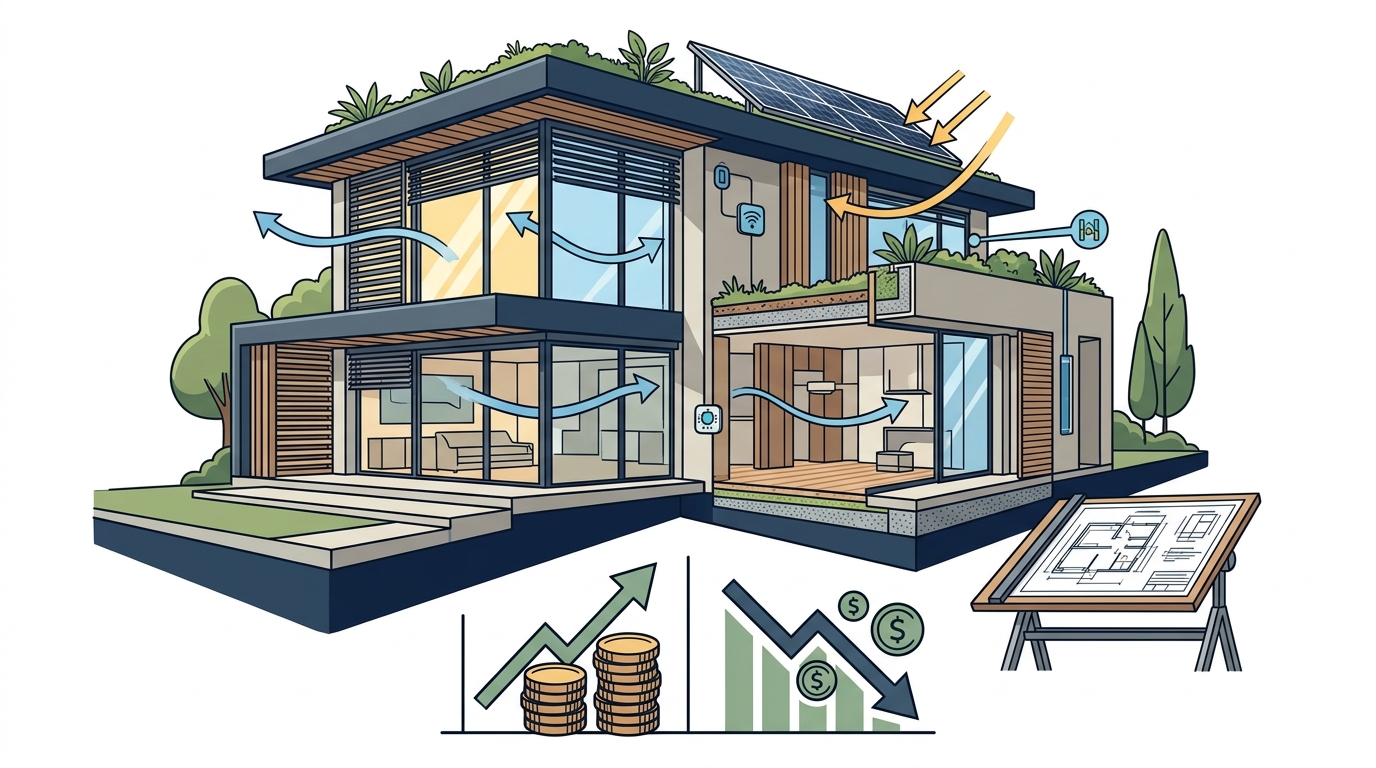
The primary driver of bioclimatic design is orientation. In the Northern Hemisphere, south-facing facades maximize solar gain during winter months, providing natural warmth and daylight. Conversely, strategic shading devices prevent overheating in summer. This dynamic balance reduces the need for artificial lighting and HVAC systems, leading to significant energy savings.
Natural Ventilation and Thermal Mass
Effective natural ventilation relies on the stack effect, where warm air rises and exits through high-level openings, drawing cooler air in from lower levels. Coupled with thermal mass materials such as concrete or stone, the building can absorb heat during the day and release it at night, stabilizing indoor temperatures. This passive strategy is crucial for maintaining comfort in luxury residences without compromising on aesthetic standards.
Insulation and Airtightness
High-performance insulation and airtight construction are non-negotiable in sustainable luxury. By minimizing thermal bridges and air leakage, the building envelope retains conditioned air effectively. This precision engineering ensures that every joule of energy generated or saved is utilized efficiently, aligning with the rigorous standards of green building certifications.
For a deeper dive into these architectural strategies, explore the portfolio section to see how these principles are applied in real-world projects.
Architectural Integration and Materiality
Luxury is often defined by the quality of materials and the craftsmanship involved. In bioclimatic design, material selection is driven by both aesthetic appeal and environmental performance. Sustainable materials such as reclaimed wood, recycled steel, and low-carbon concrete are increasingly favored for their durability and reduced ecological footprint.
The integration of green roofs and living walls not only enhances biodiversity but also provides additional insulation and stormwater management. These elements blur the line between indoor and outdoor spaces, creating a seamless transition that is highly prized in luxury real estate. The result is a residence that feels both grounded in its environment and elevated in its design.
Understanding the nuances of material selection is critical for achieving the desired balance of form and function. Learn more about the specific frameworks used in these developments by visiting the links page for industry resources and partnerships.
Technology and Smart Home Automation
Modern luxury residences are powered by sophisticated technology that enhances both comfort and efficiency. Smart home automation systems integrate with bioclimatic design to monitor and adjust environmental parameters in real-time. Sensors track occupancy, light levels, and temperature, allowing the system to optimize energy use dynamically.
Proprietary software solutions enable homeowners to control lighting, shading, and HVAC systems remotely. This level of control ensures that the residence operates at peak efficiency while providing a personalized living experience. The convergence of prop-tech and sustainable architecture is a key differentiator for high-end developments in the current market.
For insights into the technological innovations driving this sector, check out the news section for the latest updates on industry trends and company achievements.
Investment Value and Market Positioning
Sustainable luxury residences are not just environmentally responsible; they are financially sound investments. As regulatory frameworks tighten and consumer preferences shift toward eco-friendly living, properties that embody bioclimatic principles command a premium in the market. These homes offer lower operational costs, higher resilience to climate risks, and greater appeal to a growing demographic of conscious buyers.
The long-term value of such properties is supported by their ability to adapt to future energy standards. By investing in sustainable design today, developers and homeowners future-proof their assets against rising energy costs and potential regulatory penalties. This strategic approach aligns with the vision of leaders like Vassilis Siafaricas, who prioritize long-term investment value alongside aesthetic refinement.
To understand the broader context of sustainable real estate trends, refer to external analyses from UNDP Climate Action and World Economic Forum.
Comparing Traditional vs. Bioclimatic Luxury Homes
| Feature | Traditional Luxury Home | Bioclimatic Luxury Home |
|---|---|---|
| Energy Efficiency | Low to Moderate | High (Passive Design) |
| Operational Costs | High | Significantly Reduced |
| Environmental Impact | High Carbon Footprint | Minimized via Sustainable Materials |
| Resale Value | Standard Market Rate | Premium due to Future-Proofing |
| Comfort & Health | Dependent on HVAC | Optimized Natural Ventilation |
Key Takeaways
- Founder Expertise: Vassilis Siafaricas brings over 20 years of experience in luxury real estate and prop-tech to ECLÉDE.
- Energy Reduction: Bioclimatic design can reduce operational energy costs by up to 70% in high-end residences.
- Recognition: Featured in Architectizers TOP 100 Vision Creators for 2026 for contributions to sustainable architecture.
- Material Strategy: Use of reclaimed wood and low-carbon concrete enhances both durability and aesthetic appeal.
- Smart Integration: Proprietary software enables real-time optimization of lighting, shading, and HVAC systems.
- Market Trend: Sustainable luxury homes command a premium due to lower operational costs and regulatory resilience.
- Philosophy: Design is the intersection of inspiration, functionality, and responsibility, ensuring environmental harmony.
Frequently Asked Questions
What is bioclimatic design?
Bioclimatic design is an architectural approach that optimizes a building's form, orientation, and materials to respond to local climate conditions, reducing reliance on mechanical systems.
How does ECLÉDE ensure sustainability in its projects?
ECLÉDE integrates minimal architectural lines, energy-efficient construction, and seamless integration with natural surroundings to create environmentally responsible developments.
What are the main benefits of bioclimatic luxury homes?
Key benefits include significantly reduced energy costs, enhanced indoor comfort through natural ventilation, and higher long-term property value due to future-proofing.
Is bioclimatic design suitable for all climates?
Yes, bioclimatic principles can be adapted to various climates by adjusting orientation, insulation, and shading strategies to suit specific environmental conditions.
How does smart home technology enhance bioclimatic design?
Smart home systems monitor and adjust environmental parameters in real-time, optimizing energy use and maintaining comfort without manual intervention.
What materials are commonly used in sustainable luxury construction?
Common materials include reclaimed wood, recycled steel, low-carbon concrete, and high-performance insulation, chosen for their durability and low ecological footprint.
Why is Vassilis Siafaricas considered a leader in this field?
He bridges technical precision with creative vision, focusing on long-term investment value and environmental harmony in his luxury real estate developments.
Where can I learn more about ECLÉDE's portfolio?
You can explore the portfolio page to view detailed case studies of high-end, environmentally responsible developments.
Start Your Sustainable Development Journey
Transform your vision of luxury into a reality that respects the planet and delivers exceptional value. Contact ECLÉDE today to discuss how bioclimatic design principles can be applied to your next project. Visit the contact page to schedule a consultation with Vassilis Siafaricas and the ECLÉDE team. Let us redefine modern living through architecture, sustainability, and intelligent design.