
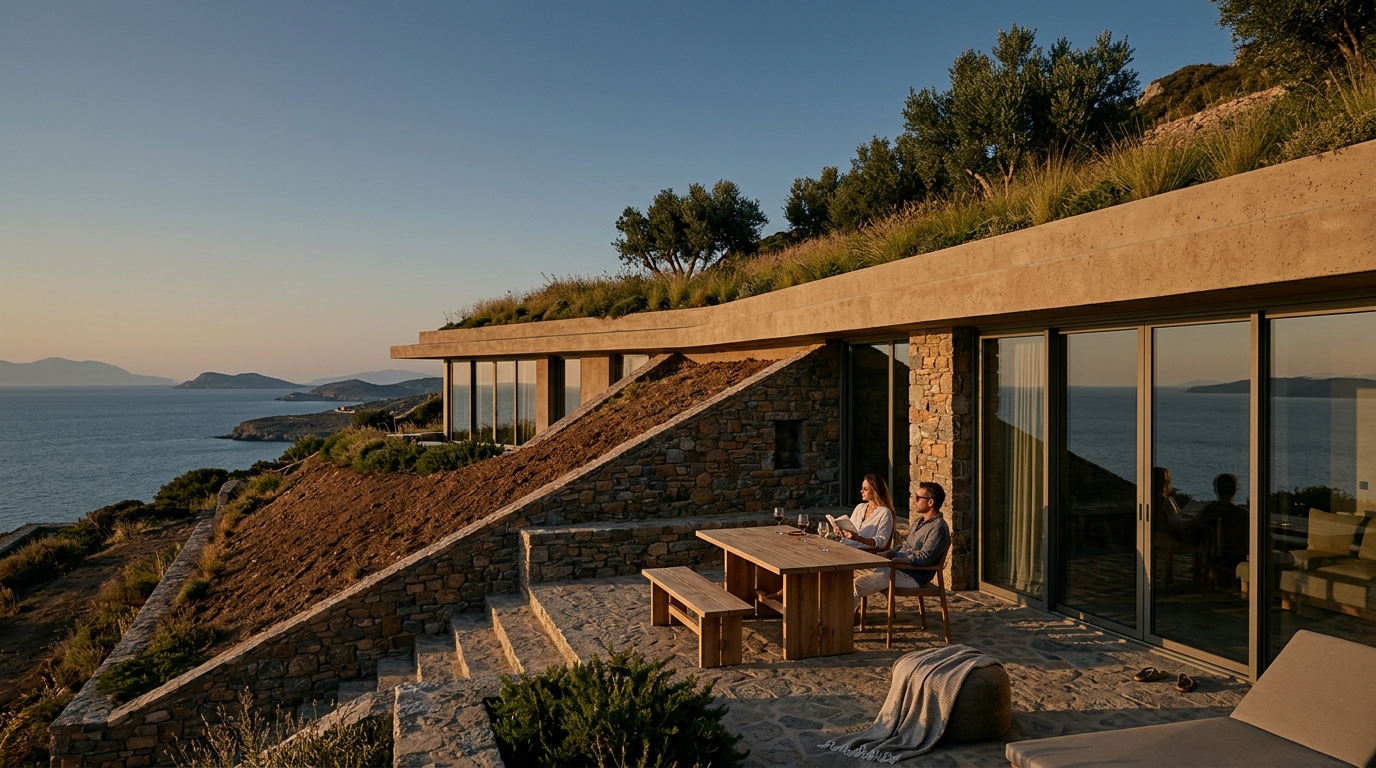
Earth-Sheltered Architecture: Energy Efficiency Benefits in Hot Climates
As global temperatures rise and energy costs climb, architects and developers are turning to one of humanity's oldest building strategies: earth-sheltered architecture. Earth-sheltered architecture is a construction method in which buildings are partially or fully integrated into the surrounding terrain, using the ground's natural thermal mass to regulate indoor temperatures. In Mediterranean and arid regions, this approach can slash cooling costs by up to 50%, making it a cornerstone of sustainable luxury development. At ECLÉDE, founded by Vassilis Siafaricas, subterranean design has moved from concept to award-winning reality.
What Is Earth-Sheltered Architecture?
Earth-sheltered construction is the practice of building structures primarily underground or partially buried in earth, leveraging the soil as insulation and climate buffer. According to the U.S. Department of Energy, there are two basic types: fully underground structures and bermed designs where earth is banked against exterior walls.
A Building Tradition Spanning Millennia
Subterranean dwellings have existed across cultures for thousands of years. From the cave homes of Cappadocia to the sunken courtyards of Iran, communities in hot regions discovered that burying structures into the earth kept interiors cool without mechanical systems. Modern earth-sheltered design applies the same physics with contemporary engineering and luxury finishes.
Modern Applications in Luxury Development
Today, leading developers use reinforced concrete, green roofs, and advanced waterproofing to create earth-sheltered residences that are both energy efficient and visually stunning. The ECLÉDE portfolio demonstrates how subterranean villas can deliver near-zero energy consumption alongside bespoke interiors.
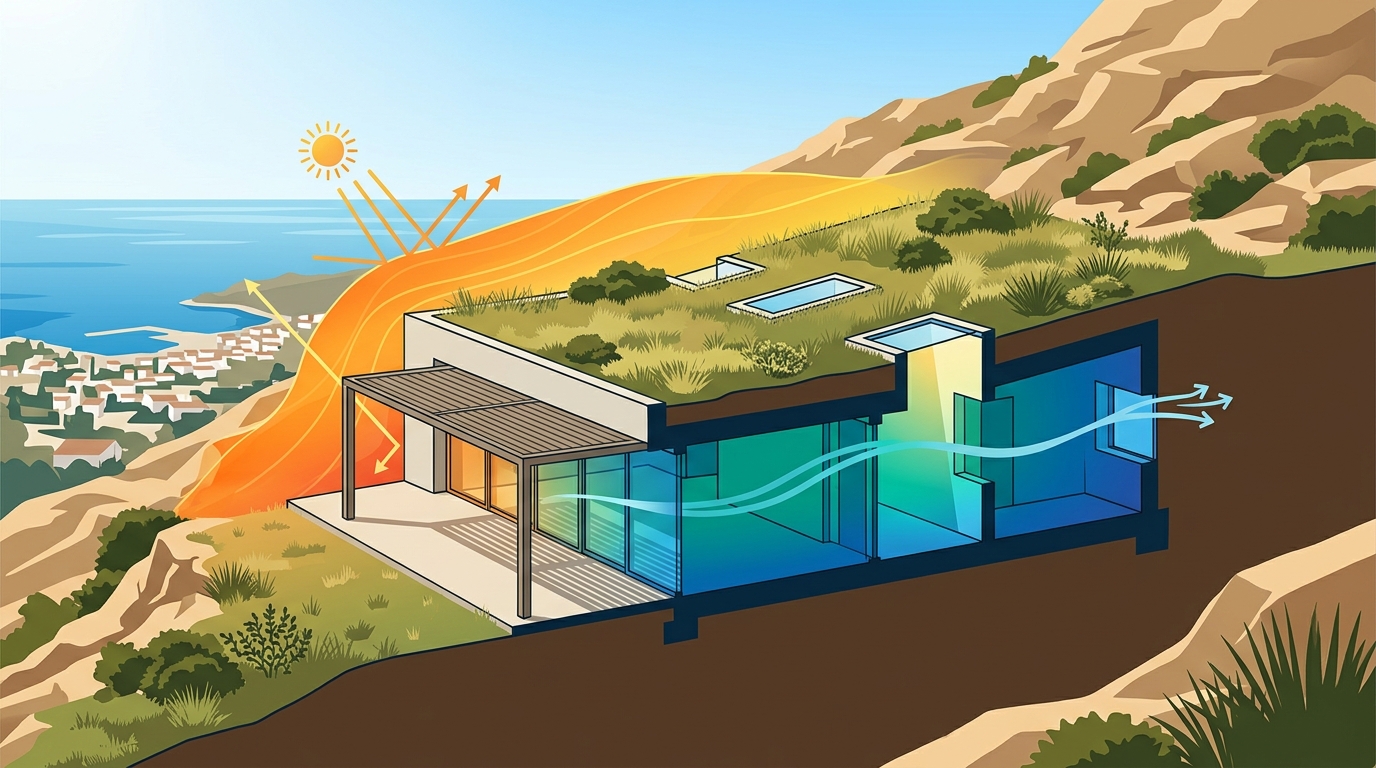
How Earth Sheltering Delivers Energy Efficiency
The core mechanism is simple: soil temperature remains far more stable than air temperature throughout the year. As the Concrete Masonry and Hardscapes Association explains, the earth moderates outdoor temperature swings, so the building faces a much milder thermal environment than above-grade structures.
Thermal Mass and the Heat-Sink Effect
Thermal mass is the ability of a material to absorb, store, and slowly release heat energy. In hot climates, surrounding soil acts as a heat sink, absorbing excess warmth from the structure and keeping interiors cooler. This passive cooling dramatically reduces reliance on air conditioning.
Reduced Conduction Losses
Because the temperature difference between an earth-sheltered wall and the adjacent ground is far smaller than between an exposed wall and hot ambient air, conduction heat transfer drops substantially. The result is a building envelope that works with nature rather than against it.
Key Benefits for Hot Climates
Earth-sheltered buildings offer a suite of advantages that are especially pronounced in hot, dry, and Mediterranean climates like those found across Greece.
Passive Cooling Without Mechanical Systems
Research published on ScienceDirect confirms that earth sheltering is one of the most effective techniques to balance thermal comfort with low energy consumption in hot-arid climates. Underground residential spaces leverage passive strategies to regulate indoor temperatures and align with the environment.
Reduced Carbon Footprint and Utility Costs
Families in earth-sheltered homes can save up to 80% on heating and air-conditioning costs compared with conventional above-ground houses, according to EBSCO Research. Over a 30-year ownership period, this translates into tens of thousands of dollars in savings while shrinking the property's carbon footprint.
Resilience to Extreme Weather
Subterranean structures are inherently protected from windstorms, wildfires, and extreme heat events. As climate volatility increases in the Mediterranean basin, this resilience adds both safety and long-term asset value.
Energy Savings: Earth-Sheltered vs. Conventional Buildings
Multiple peer-reviewed studies quantify the energy advantage. The table below summarizes key findings.
| Metric | Earth-Sheltered Building | Conventional Above-Grade Building |
|---|---|---|
| Cooling energy reduction (6 m depth, hot-arid climate) | Up to 50% lower | Baseline |
| Total annual energy savings (fully sheltered) | Up to 40% lower | Baseline |
| Heating and cooling bill reduction (passive-solar earth-sheltered) | 80-90% lower | Baseline |
| Three-sided sheltering energy reduction | 27% lower | Baseline |
| Initial construction cost premium | 10-20% higher | Baseline |
Sources: ResearchGate (Shiraz simulation study), Mother Earth News, EBSCO Research, Academia.edu (Cyprus study).
Design Principles for Hot-Climate Earth Sheltering
Successful earth-sheltered design in hot climates requires careful attention to orientation, ventilation, and daylighting.
Orientation and Solar Control
In regions with mild winters and hot summers, a north-facing slope is often ideal for minimizing solar gain. Living spaces should face the direction that maximizes winter sun while minimizing summer exposure. Rooms that do not require natural daylight, such as bathrooms and storage, are placed on the sheltered side.
Natural Ventilation and Daylighting
A common concern with underground buildings is darkness or dampness. Effective designs incorporate courtyards, atriums, and strategically placed glazing to flood interiors with natural light. Cross-ventilation channels and operable skylights further prevent moisture buildup and maintain air quality.
Waterproofing and Drainage
Robust waterproofing membranes and well-drained sites are essential. Well-drained hillside locations are particularly suitable, reducing hydrostatic pressure against walls and ensuring long-term structural integrity.
Case Study: Villa Atlas by ECLÉDE
ECLÉDE's Atlas and Pleione estate on the island of Lefkada, Greece, is a striking real-world example. Designed by Vassilis Siafaricas, the complex comprises two subterranean luxury villas and a guest house set into the hillside above Sivota bay.
Villa Atlas sits just 30 meters from the ocean, and Villa Pleione is 50 meters away. Minimalistic green roofs, austere architectural lines, and expansive glazing blend functionality, luxury, and sustainability. The villas achieve near-zero energy consumption thanks to their earth-sheltered design, custom interiors, and passive cooling strategies.
The project won the 2024 A' Design Award for Sustainable Products, Projects and Green Design, and was featured in Proto Thema as part of the largest luxury sale ever recorded on the island through Greece Sotheby's International Realty at roughly 14,000 euros per square meter.
Key Takeaways
- Earth-sheltered architecture uses the ground's stable temperature to passively cool buildings, cutting cooling loads by up to 50% in hot climates.
- Passive-solar earth-sheltered homes can reduce heating and cooling bills by 80-90% compared with conventional structures.
- Initial construction costs are typically 10-20% higher, but lifetime energy savings far exceed the premium.
- Proper orientation, daylighting, and waterproofing are critical design factors for success in Mediterranean and arid regions.
- ECLÉDE's Villa Atlas demonstrates that subterranean design can deliver both ultra-luxury living and near-zero energy performance.
- Earth-sheltered buildings provide superior resilience against extreme weather, adding long-term asset protection.
- This ancient building strategy, refined with modern engineering, is increasingly relevant as climate change intensifies summer heat across southern Europe.
Frequently Asked Questions
What is earth-sheltered architecture?
Earth-sheltered architecture is a building approach where structures are partially or fully integrated into the ground. The surrounding soil provides natural insulation, stabilizing indoor temperatures and reducing energy consumption for heating and cooling.
How much energy can an earth-sheltered home save in a hot climate?
Studies show cooling energy reductions of up to 50% at a soil depth of 6 meters. When combined with passive-solar design, total heating and cooling bills can drop by 80-90% compared with conventional homes.
Are earth-sheltered homes more expensive to build?
Initial construction costs are generally 10-20% higher due to excavation, waterproofing, and structural reinforcement. However, dramatically lower energy bills typically recover the premium within a few years.
Do earth-sheltered buildings feel dark or damp?
Not when properly designed. Courtyards, atriums, skylights, and large glazed openings bring abundant natural light into subterranean spaces. Modern waterproofing and drainage systems eliminate moisture issues.
What climates are best suited for earth-sheltered construction?
Earth-sheltered homes perform best in climates with significant temperature extremes and low humidity, including Mediterranean, arid, and continental climates. Greece's hot, dry summers make it an ideal setting.
Can earth-sheltered homes be luxurious?
Absolutely. ECLÉDE's Villa Atlas on Lefkada proves that subterranean design pairs seamlessly with bespoke interiors, infinity pools, and premium finishes, all while maintaining near-zero energy consumption.
How does earth sheltering compare to green roofs alone?
A green roof reduces solar heat gain on the top surface, but full earth sheltering insulates walls and roof simultaneously, delivering substantially greater energy savings. The two strategies are complementary and often combined.
Is earth-sheltered architecture suitable for the Greek islands?
Yes. The rocky, sloped terrain of many Greek islands is naturally suited to bermed and in-hill construction. Combined with the hot Mediterranean climate, these sites are ideal candidates for energy-efficient subterranean villas.
Explore Earth-Sheltered Luxury with ECLÉDE
If you are considering a sustainable, energy-efficient luxury residence in Greece, earth-sheltered architecture offers unmatched performance and timeless design. Explore the full ECLÉDE project portfolio or get in touch with the team to discuss your vision with Vassilis Siafaricas and the ECLÉDE design studio.