
Earth-Sheltered Architecture: Energy Efficiency Benefits in Hot Climates
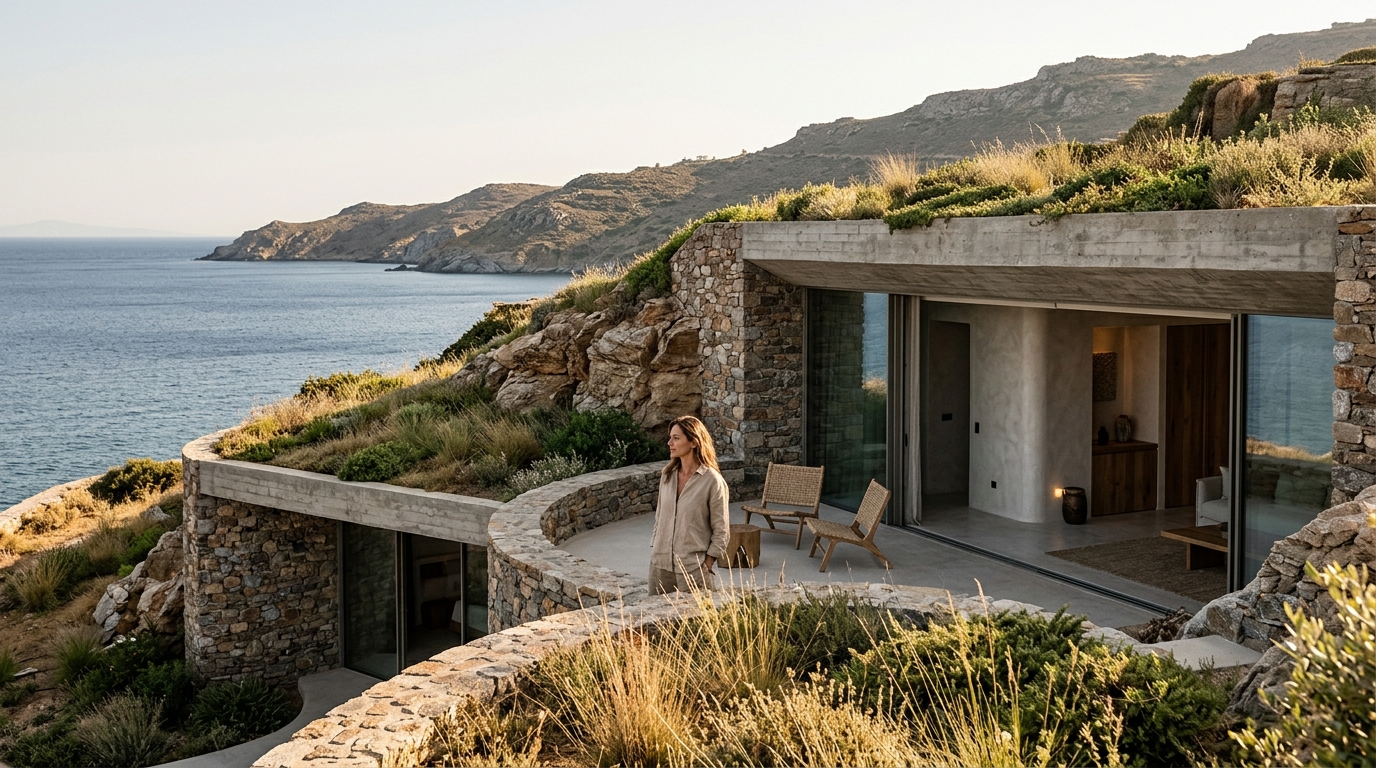
Earth-sheltered architecture is one of the most effective strategies for achieving thermal comfort while dramatically reducing energy consumption in hot climates. By embedding buildings partially or fully into the ground, designers harness the earth's stable subsurface temperatures to keep interiors cool without heavy reliance on mechanical systems. From ancient cave dwellings in Iran to award-winning subterranean luxury villas in the Greek islands, this approach has proven its value across millennia. This guide explores why earth-sheltered design is gaining renewed attention among architects, developers, and homeowners seeking sustainable performance in warm Mediterranean and arid environments.
What Is Earth-Sheltered Architecture?
Earth-sheltered architecture is the practice of building structures primarily underground or partially buried in earth to leverage the ground's natural insulating properties. According to the U.S. Department of Energy, there are two basic types: underground structures built entirely below grade and bermed structures encircled by earth on one or more sides.
A bermed building is a structure where soil is mounded against exterior walls while one face, typically south-facing, remains exposed for light and ventilation. An underground or atrium design places living spaces around a central courtyard below grade. Both approaches use the thermal mass of surrounding soil to moderate indoor temperatures year-round.
Why Earth Sheltering Excels in Hot Climates
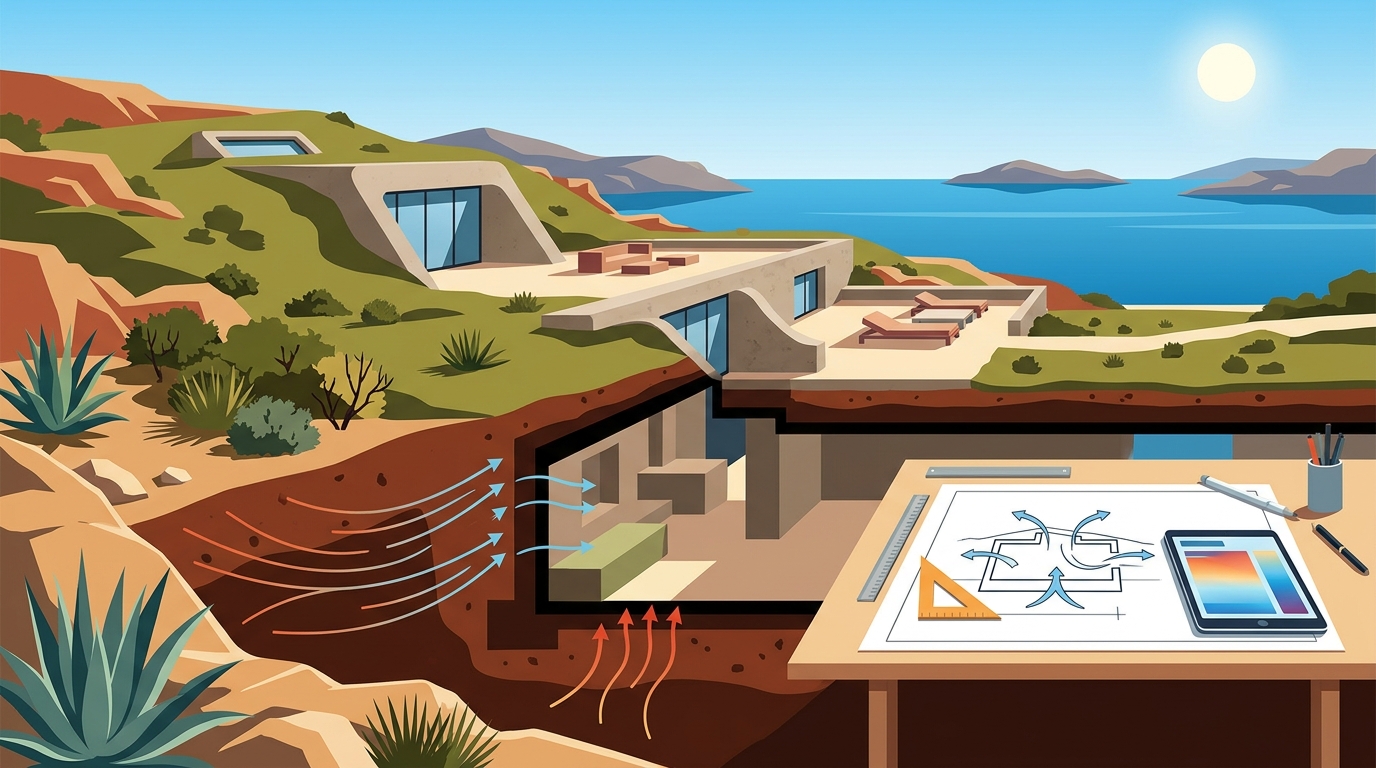
In hot climates, the earth functions as a heat sink. While outdoor air temperatures can swing 20 to 30 degrees Celsius daily in arid regions, soil temperatures below a few meters remain remarkably stable. Research published in ScienceDirect confirms that earth sheltering is one of the most effective techniques for balancing thermal comfort and low energy consumption in hot-arid climates.
The Thermal Flywheel Effect
Soil acts as a thermal flywheel, absorbing excess heat during the day and releasing it slowly at night. Daily temperature fluctuations are virtually eliminated at just 20 cm of soil depth, and at greater depths, the soil responds only to seasonal changes with a considerable time delay. This means buildings surrounded by earth experience a fraction of the thermal stress faced by conventional structures.
Reduced Cooling Loads
Cooling is the dominant energy demand in hot climates. Simulations conducted for the city of Shiraz demonstrated a 50% reduction in cooling energy at a soil depth of 6 metres compared to above-ground models. In Mediterranean and North African climates, where sustainable design principles are especially relevant, these reductions translate directly into lower utility bills and smaller HVAC systems.
Energy Savings: The Numbers Behind the Performance
The energy case for earth-sheltered buildings is compelling. The following table summarises key findings from published research and industry estimates.
| Metric | Earth-Sheltered | Conventional Above-Ground |
|---|---|---|
| Heating and cooling cost savings | Up to 80% | Baseline |
| Cooling load reduction (6 m depth) | 50% | Baseline |
| Three-sided sheltering energy reduction | 27% | Baseline |
| Construction cost premium | 10 to 20% higher | Baseline |
| Passive-solar + earth-sheltered savings | 80 to 90% | Baseline |
When passive solar design is combined with earth sheltering, heating and cooling bills can drop by 80 to 90 percent compared to conventional homes. Even without passive solar integration, energy bills are frequently 50 percent lower. Over a building's lifetime, these savings far exceed the initial construction premium.
Design Typologies for Warm Regions
Bermed (Elevational) Design
Elevational bermed designs expose one building face while the remaining sides and sometimes the roof are covered with earth. In hot climates, orienting the exposed face north rather than south minimises solar gain. This is the least expensive and simplest way to build an earth-sheltered structure, making it popular for residential projects across the Mediterranean.
Atrium or Courtyard Design
The atrium layout places all living spaces around a sunken courtyard, keeping the structure nearly invisible from ground level. This design provides natural daylight, private outdoor space, and excellent wind protection. It is ideal for flat terrain common in arid regions and has been used for centuries in Middle Eastern vernacular architecture.
Fully Underground (Subterranean)
Fully subterranean buildings offer the highest energy efficiency because every surface benefits from the earth's thermal mass. Modern examples, such as the Atlas and Pleione villas designed by Vassilis Siafaricas of ECLEDE, demonstrate that subterranean design can deliver both luxury and near-zero energy consumption.
Real-World Examples: From Greece to the Desert
ECLEDE's Villa Atlas project in Lefkada, Greece, is a complex of two subterranean villas and a guest house located on a seafront plot in the natural harbour of Sivota. The minimalistic design features green roofs, long windows, and custom interiors that blend functionality, luxury, and sustainability. Villa Atlas won the 2024 A' Design Award for Sustainable Design, validating the energy and environmental performance of the approach.
Historically, cultures across Iran, Egypt, and China have used subsurface construction to temper living environments in arid zones for thousands of years. The village of Meymand in Iran, a UNESCO World Heritage Site, features hand-carved cave dwellings that maintain comfortable interior temperatures despite extreme outdoor heat. These vernacular precedents confirm that modern earth-sheltered design builds on proven principles.
Additional Benefits Beyond Energy Efficiency
Energy performance is the headline advantage, but earth-sheltered buildings deliver several co-benefits that matter in hot climates:
- Storm and wind resistance: Structures embedded in earth are naturally shielded from hurricanes, tornadoes, and extreme wind events.
- Noise reduction: The surrounding soil acts as a sound barrier, minimising external noise and creating a tranquil interior environment.
- Low maintenance: With few exposed surfaces, earth-sheltered homes require no exterior painting, minimal re-roofing, and reduced upkeep overall.
- Landscape preservation: Green roofs and bermed walls allow vegetation to grow over the structure, reducing visual impact and supporting biodiversity.
- Insurance savings: Many insurers offer reduced premiums because earth-sheltered buildings resist fire, wind, and hail damage.
These qualities align closely with the bespoke sustainable design philosophy that leading luxury developers now prioritise in the Mediterranean region.
Key Takeaways
- Earth-sheltered architecture can reduce heating and cooling costs by up to 80% compared to conventional buildings.
- In hot climates, the earth acts as a heat sink, keeping interiors naturally cooler and reducing peak cooling demand by up to 50%.
- Two primary typologies, bermed and underground, suit different site conditions, budgets, and aesthetic goals.
- Construction costs run 10 to 20% higher than conventional builds, but lifetime savings on energy and maintenance offset this premium.
- Subterranean luxury projects like ECLEDE's Villa Atlas prove that earth sheltering and high-end design are fully compatible.
- Vernacular precedents from Iran, Egypt, and China demonstrate thousands of years of proven performance in hot-arid zones.
- Co-benefits include superior storm resistance, noise insulation, lower insurance costs, and minimal landscape disruption.
Frequently Asked Questions
What is earth-sheltered architecture?
Earth-sheltered architecture is the practice of building homes or structures primarily underground or partially buried in earth. It leverages the ground's stable temperatures and thermal mass to reduce energy consumption for heating and cooling.
How much energy can earth-sheltered homes save in hot climates?
Studies indicate savings of 50 to 80% on cooling and heating costs compared to conventional above-ground buildings. When combined with passive solar design, savings can reach 80 to 90%.
Are earth-sheltered buildings more expensive to construct?
Initial construction costs are typically 10 to 20% higher due to structural reinforcement, waterproofing, and excavation. However, lower energy bills, reduced maintenance, and longer lifespan usually offset the premium within a few years.
Do earth-sheltered homes feel dark or claustrophobic?
Modern designs use atrium courtyards, large south-facing glass walls, skylights, and light-reflective interior finishes to ensure abundant natural light. Many earth-sheltered homes are brighter than traditional houses with small windows.
What types of earth-sheltered buildings work best in hot climates?
Fully underground and atrium designs tend to offer the greatest cooling benefits in hot regions. Bermed designs with a north-facing exposed wall also perform well by limiting solar gain while maintaining views and ventilation.
Is waterproofing a concern for earth-sheltered buildings?
Yes, waterproofing is a critical design consideration. Modern approaches use rubberized asphalt membranes, dimpled drainage boards, and careful site grading to manage moisture effectively. Choosing well-drained sites and planning both surface and subsurface drainage are essential.
Can earth-sheltered design be combined with luxury finishes?
Absolutely. Projects such as ECLEDE's Atlas and Pleione villas on Lefkada combine subterranean construction with custom interiors, swimming pools, and premium materials, achieving near-zero energy consumption alongside high-end aesthetics.
How does earth-sheltered architecture support sustainability goals?
By drastically reducing operational energy use, minimising landscape disruption through green roofs, and extending building lifespan, earth-sheltered design supports net-zero energy targets and lower lifetime carbon footprints.
Start Your Earth-Sheltered Project
If you are considering a sustainable, energy-efficient property in Greece or the Mediterranean, earth-sheltered architecture offers a proven path to lower operating costs and exceptional comfort. Contact the ECLEDE team to discuss how bespoke subterranean design can bring your vision to life while achieving near-zero energy performance.