
Unique Design Elements Luxury Real Estate Developers Incorporate Into Sustainable Properties
Sustainable luxury is no longer a contradiction. Today's most discerning buyers expect properties that marry environmental responsibility with refined aesthetics. Leading developers like ECLEDE (Eclectic Developments) prove that net-zero energy buildings can deliver a high-end feel without compromising the planet. From earth-sheltered architecture to LEED Platinum certification, the design elements shaping this space are as innovative as they are elegant. This guide breaks down the unique features that set sustainable luxury properties apart and explains why they matter for buyers, architects, and investors alike.
Earth-Sheltered and Subterranean Architecture
Earth-sheltered architecture is a building approach where structures are partially or fully integrated into the surrounding terrain, using the earth itself as insulation. This technique dramatically reduces heating and cooling loads while preserving the natural landscape.
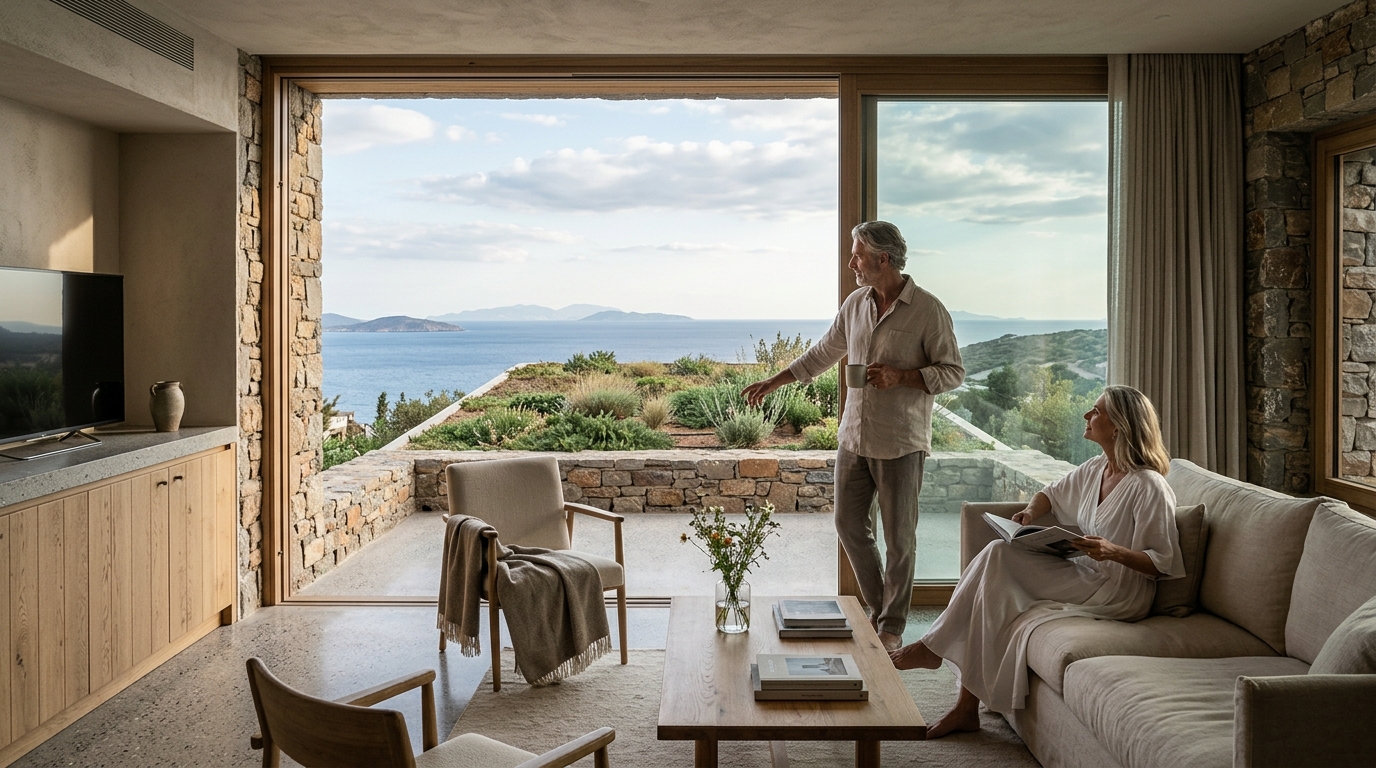
ECLEDE's Izanagi Project in Lefkada, Greece, is a standout example. This subterranean villa complex won the 2025 A' Hospitality Design Award for its seamless blend of luxury, sustainability, and minimal aesthetic using organic materials. By building into the hillside, the development achieves natural cooling and a dramatically reduced environmental footprint.
Net-Zero Energy Buildings and Green Certification
A net-zero energy building is a structure that produces as much renewable energy as it consumes over the course of a year. This is the gold standard for sustainable real estate, and it is increasingly expected by luxury buyers.
ECLEDE focuses on creating cutting-edge, zero-energy-consumption buildings across Greece. Their Boomerang Athens project became the first LEED Platinum certified residence in Greece, setting a national benchmark. LEED Platinum is the highest tier of the U.S. Green Building Council's rating system, requiring excellence in energy performance, water efficiency, materials selection, and indoor environmental quality.
Why Certification Matters
Third-party certification like LEED or BREEAM provides verifiable proof of a property's sustainability claims. For luxury buyers, it adds both credibility and long-term value to the investment.
Biophilic Design and Natural Materials
Biophilic design is a design philosophy that seeks to connect building occupants with nature through direct natural elements, natural light, and organic materials. It enhances well-being, reduces stress, and creates spaces that feel alive.
Organic and Locally Sourced Materials
Sustainable luxury developers prioritize responsibly sourced wood, reclaimed stone, and organic textiles. ECLEDE's mindful approach uses innovative, sustainable, and resilient materials to create spaces that positively impact surrounding communities, economies, and cultures.
Living Walls and Indoor Gardens
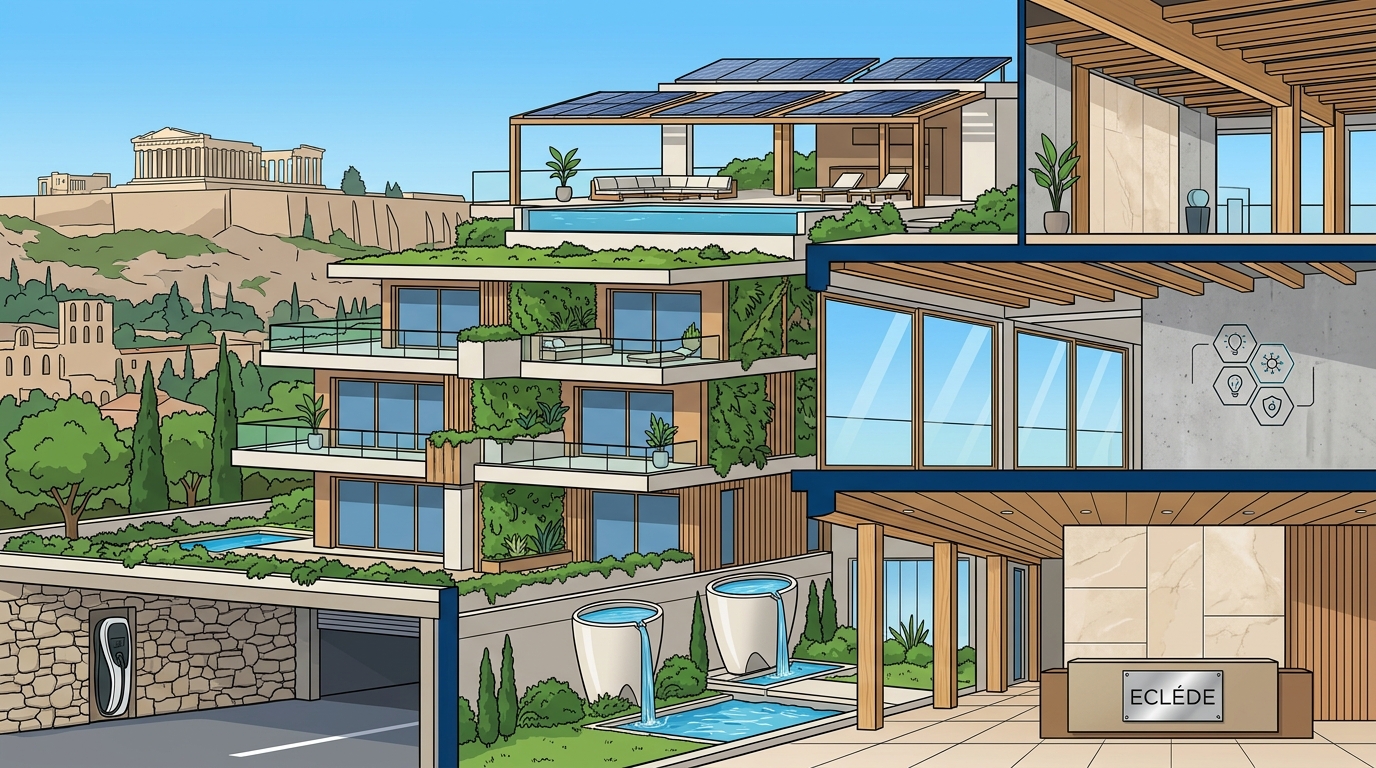
Living walls, indoor gardens, and strategically placed water features bring nature indoors. These elements improve air quality and create a sense of tranquility that enhances the luxury experience.
Smart Home Technology for Energy Efficiency
Modern sustainable luxury properties integrate AI-driven home automation systems that optimize lighting, climate control, and shading. Intelligent lighting systems can align with the body's natural circadian rhythms, while automated temperature controls optimize energy use throughout the day.
These systems learn occupant preferences and make real-time adjustments, ensuring comfort never comes at the expense of efficiency. The result is a home that feels intuitively responsive and significantly reduces utility costs.
Water Conservation Systems
Water scarcity is a growing global concern, and luxury developers are responding with sophisticated conservation strategies. Key elements include rainwater harvesting systems, greywater recycling, slow-flow fixtures, and smart irrigation that minimizes waste while maintaining lush landscapes.
Drought-resistant native plantings further reduce water demand. These features are especially important in Mediterranean climates like Greece, where ECLEDE develops its portfolio of properties.
Cultural and Regional Design Integration
The best sustainable luxury developments are not generic. They draw deeply from local culture, climate, and craftsmanship. ECLEDE's Izanagi Project, for instance, achieves natural cooling enhanced by Greek architectural influences within a visionary Japanese design framework. This cross-cultural approach creates properties that feel rooted in place while offering a globally relevant aesthetic.
Supporting local artisans and sourcing regional materials reduces transportation-related carbon emissions and strengthens local economies. It also gives each property a layer of authenticity that mass-produced developments cannot replicate.
Traditional Luxury vs. Sustainable Luxury Design
| Design Element | Traditional Luxury | Sustainable Luxury |
|---|---|---|
| Energy Source | Grid-dependent | Solar, geothermal, net-zero systems |
| Materials | Imported marble, exotic hardwoods | Reclaimed stone, FSC-certified wood, organic textiles |
| Cooling/Heating | Conventional HVAC | Earth-sheltered insulation, passive ventilation |
| Certification | Rarely pursued | LEED Platinum, BREEAM, A' Design Awards |
| Water Management | Standard plumbing | Rainwater harvesting, greywater recycling |
| Cultural Integration | Globalized aesthetic | Locally sourced materials, regional craftsmanship |
Key Takeaways
- Earth-sheltered architecture reduces energy consumption while preserving natural landscapes, as demonstrated by award-winning projects like the Izanagi Project.
- Net-zero energy buildings and certifications such as LEED Platinum are becoming the benchmark for luxury real estate.
- Biophilic design connects occupants with nature through organic materials, living walls, and abundant natural light.
- Smart home automation optimizes energy use without sacrificing comfort or convenience.
- Water conservation systems, including rainwater harvesting and greywater recycling, are essential in climate-conscious luxury developments.
- Cultural and regional design integration creates authentic, place-rooted properties with lower carbon footprints.
- Developers like Vassilis Siafaricas and ECLEDE are proving that sustainability and luxury are not only compatible but inseparable.
Frequently Asked Questions
What is sustainable luxury real estate?
Sustainable luxury real estate refers to high-end properties designed with environmentally responsible materials, energy-efficient systems, and minimal ecological impact, while maintaining premium aesthetics and comfort.
What is LEED Platinum certification?
LEED Platinum is the highest level of the Leadership in Energy and Environmental Design rating system, awarded to buildings that demonstrate exceptional performance in sustainability, energy efficiency, and occupant health.
How does earth-sheltered architecture work?
Earth-sheltered buildings are constructed partially or fully into the terrain, using the surrounding earth for natural insulation. This reduces energy needs for heating and cooling and minimizes visual impact on the landscape.
What is biophilic design in luxury homes?
Biophilic design incorporates natural elements like living walls, indoor gardens, natural light, and organic materials into interiors. It is proven to reduce stress and improve occupant well-being.
Who is Vassilis Siafaricas?
Vassilis Siafaricas is the founder of ECLEDE, a luxury development company based in Athens, Greece. He is a civil engineer and designer with over two decades of experience in sustainable luxury real estate, and his projects have won multiple international design awards.
Can luxury homes really be net-zero energy?
Yes. Through solar panels, geothermal systems, high-performance insulation, and smart automation, luxury homes can produce as much energy as they consume annually. ECLEDE's Boomerang Athens is one such example.
Why do sustainable luxury properties hold their value?
They benefit from lower operating costs, third-party certifications that verify quality, and growing buyer demand for environmentally responsible living. These factors combine to support strong long-term appreciation.
Where does ECLEDE develop properties?
ECLEDE develops luxury sustainable properties in Greece, including Athens suburbs such as Ekali, Politia, Kastri, and Kifisia, as well as the island of Lefkada.
Start Your Sustainable Luxury Journey
Ready to explore what bespoke, sustainable design looks like in practice? Contact ECLEDE to discuss your vision with a team that has spent over twenty years redefining luxury real estate through environmental innovation and award-winning architecture.