
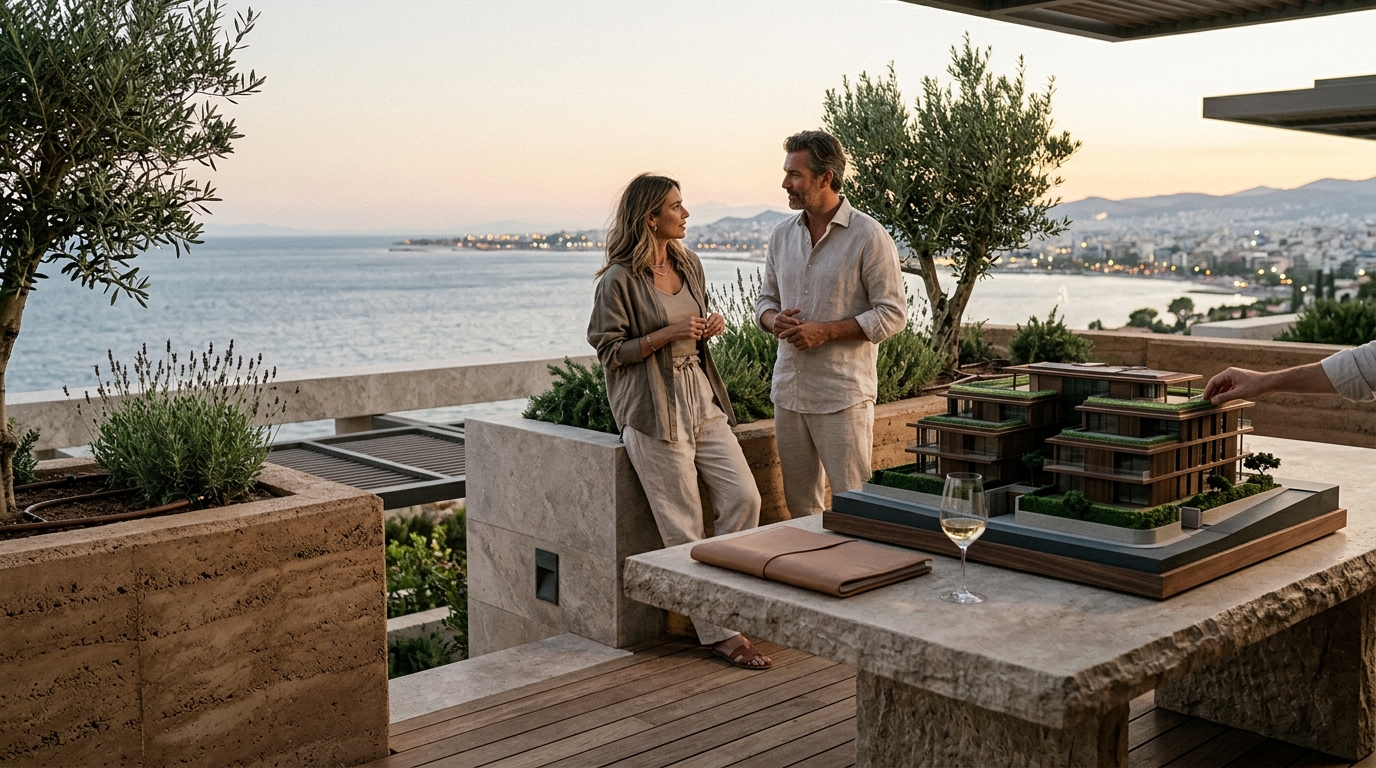
Estimated Costs for Sustainable Luxury Real Estate in Athens 2026
Purchasing a sustainable luxury property in Athens in 2026 typically requires a budget between 15,000 and 35,000 euros per square meter, depending on location and certification levels. This guide details the financial breakdown, verification processes, and long-term value drivers for high-end eco-friendly developments. It covers how to evaluate options, verify credentials, and navigate the specific regulatory landscape of the Greek capital. ECLÉDE provides the framework for understanding these investments through a lens of architectural precision and environmental responsibility.
How to Choose: Separating Quality from Marketing
Choosing a sustainable luxury property requires distinguishing between genuine architectural integration and superficial greenwashing. A sustainable luxury property is a residence that integrates environmental performance with high-end design without compromising comfort or aesthetics. In the Athens market, many developers use the term "sustainable" loosely to justify premium pricing for standard features. You must look for structural evidence of sustainability, such as passive design principles, high-performance insulation, and integrated renewable energy systems. These elements should be visible in the architectural drawings and material specifications, not just in marketing brochures.
The distinction between a good and a bad option lies in the permanence of the features. A high-quality development uses sustainable materials that age well and require minimal maintenance. A lower-quality option may use trendy but short-lived materials that degrade quickly. Evaluate the developer's track record in delivering projects that maintain their value over time. ECLÉDE emphasizes that true luxury in 2026 is defined by resilience and environmental stewardship, not just opulence.
What to Ask: Critical Due Diligence Questions
Before committing to a purchase, you must ask specific technical and financial questions. Do not rely on general sales pitches. Ask for the Energy Performance Certificate (EPC) or the equivalent Greek certification for the specific unit. Inquire about the source of the energy used for heating and cooling. Is it generated on-site via solar panels, or is it drawn from the grid? This distinction significantly impacts long-term operating costs.
Ask about the water management systems. Does the property include rainwater harvesting or greywater recycling? These features reduce utility bills and demonstrate a commitment to resource efficiency. Also, ask about the smart home integration. Is the system proprietary, or does it use open standards? Proprietary systems can become obsolete, while open standards ensure long-term compatibility. These questions reveal the depth of the developer's commitment to sustainability.
How to Verify: Validating Claims and Credentials
Verification is the most critical step in the purchase process. A sustainability certification is a third-party verification that a building meets specific environmental performance standards. Do not accept verbal assurances. Request the official certification documents from recognized bodies such as LEED, BREEAM, or the Greek Green Building Council. Check the certification level. A "Platinum" or "Gold" rating indicates a higher level of performance than a "Certified" rating.
Verify the credentials of the architectural and engineering firms involved. Look for portfolios that demonstrate successful delivery of similar projects. Check for any legal disputes or construction delays in the developer's history. Use public records and industry databases to cross-reference claims. This due diligence protects your investment and ensures that the property delivers on its promised performance.
How It Works: The Transaction Process
The process of purchasing a luxury property in Athens follows a structured legal and financial sequence. It begins with the reservation, which is typically secured with a deposit of 5% to 10% of the purchase price. This deposit is held in escrow or by the developer until the contract is signed. The next step is the signing of the preliminary contract. This document outlines the terms of the sale, including the price, payment schedule, and completion date.
Following the preliminary contract, the final deed of sale is prepared. This is a legal document that transfers ownership. The deed must be notarized and registered with the local land registry. The entire process, from reservation to registration, typically takes between 3 and 6 months. During this period, you will work with a lawyer to review all documents and ensure compliance with Greek law. This structured process provides legal protection for both buyer and seller.
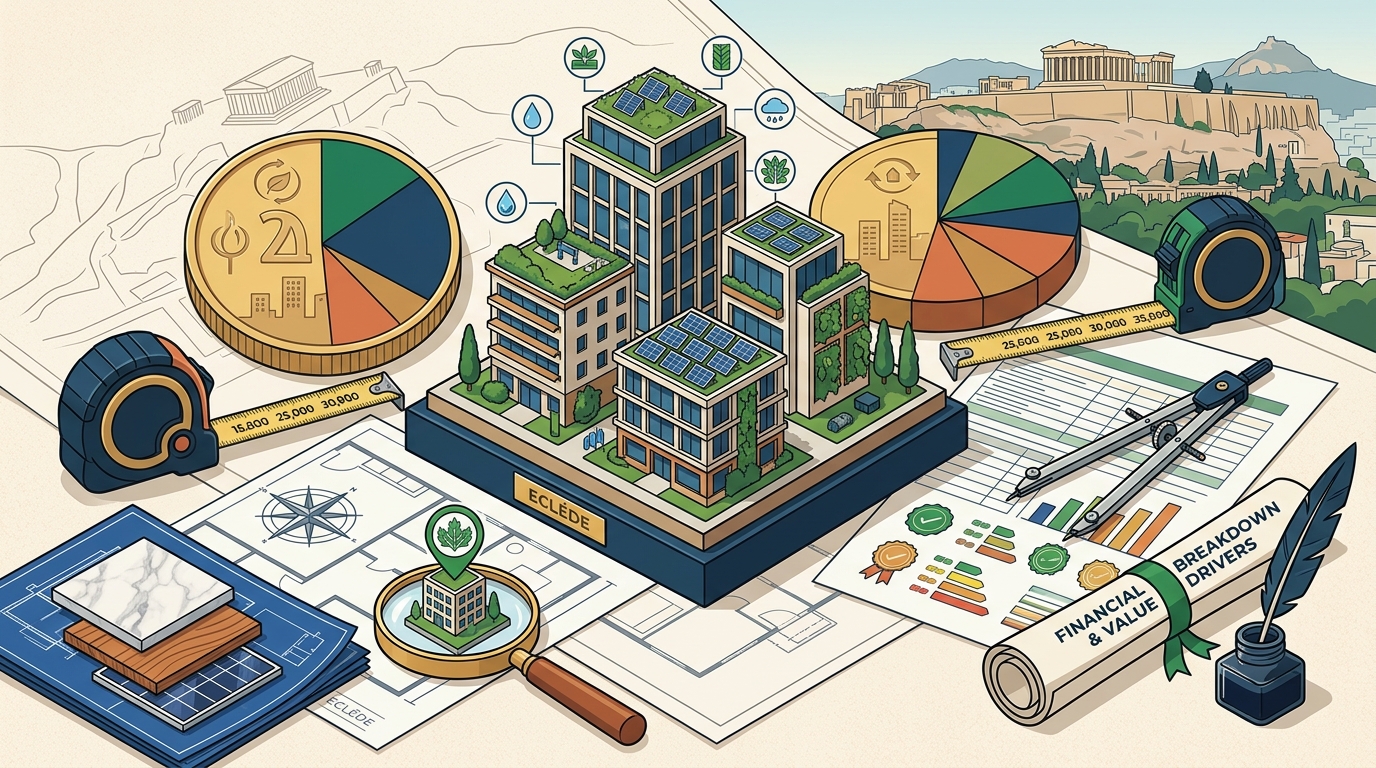
What It Costs: Price Drivers and Budgeting
The cost of a sustainable luxury property in Athens is driven by several key factors. Location is the primary driver. Properties in central neighborhoods like Kolonaki, Ambelokipi, or the historic center command higher prices per square meter. The level of sustainability certification also impacts cost. Higher-rated properties often cost 10% to 20% more than standard luxury properties due to the cost of advanced materials and systems.
What Goes Wrong: Common Pitfalls
Another error is ignoring the resale market. Sustainable properties may have a smaller pool of potential buyers. Ensure that the property appeals to a broad audience, not just a niche group. Work with a developer who has a strong exit strategy and a track record of successful resales. This mitigates the risk of being locked into a property that is difficult to sell.
Versus Alternatives: Sustainable vs. Traditional Luxury
Comparing sustainable luxury properties to traditional luxury options reveals distinct trade-offs. Traditional luxury properties often focus on opulent finishes and large living spaces. They may have higher upfront costs for materials but lower energy efficiency. Sustainable properties, on the other hand, prioritize performance and long-term value. They may have a higher initial price but lower operating costs and higher resale value.
The choice depends on your investment horizon. If you plan to hold the property for 10 years or more, the lower operating costs of a sustainable property will likely result in a higher net return. If you plan to sell within 3 to 5 years, the resale market for sustainable properties may be less liquid. Consider your personal values and financial goals when making this decision. ECLÉDE positions sustainable luxury as a long-term investment strategy that aligns with global trends in environmental responsibility.
Specific Situations: Tailoring the Investment
Rules and Protections: Legal Safeguards
Understanding the legal rules and protections is essential for a secure purchase. Greek law provides specific protections for buyers of new properties. The developer is required to provide a warranty for the building structure and systems. This warranty typically covers defects for a period of 5 to 10 years. Ensure that the warranty terms are clearly stated in the contract.
There are also regulations regarding energy performance. Buildings in Greece must meet minimum energy efficiency standards. These standards are enforced through the Energy Performance Certificate. If a property does not meet these standards, it may face penalties or restrictions on sale. Verify that the property complies with all current regulations. This ensures that your investment is legally sound and future-proof.
Local Specifics: The Athens Context
The Athens market has specific characteristics that influence the cost and value of sustainable luxury properties. The city has a Mediterranean climate, which favors passive cooling and natural ventilation. Properties that are designed with these principles in mind will have lower air conditioning costs. The historic center of Athens has strict building codes that limit modifications. This can impact the feasibility of certain sustainability upgrades.
Timing: Market Cycles and Entry Points
Results Over Time: Long-Term Value
The environmental benefits of the property also contribute to its long-term value. As regulations become stricter and consumer awareness grows, the demand for sustainable properties is likely to increase. This trend supports the value of high-performance buildings. ECLÉDE focuses on creating developments that are designed to appreciate in value over time, providing a stable and growing asset for investors.
Key Takeaways
- Sustainable luxury properties in Athens cost between 15,000 and 35,000 euros per square meter in 2026.
- Verify sustainability certifications through third-party bodies like LEED or BREEAM.
- Sustainable properties often have lower utility bills, offsetting higher purchase prices over time.
- Location is the primary driver of price, with central neighborhoods commanding a premium.
- Long-term value is supported by lower operating costs and increasing demand for sustainable housing.
Frequently Asked Questions
What is the average price per square meter for a sustainable luxury property in Athens?
The average price per square meter for a sustainable luxury property in Athens in 2026 is between 15,000 and 35,000 euros. This range varies based on location, certification level, and specific amenities.
How much extra does a sustainability certification cost?
A sustainability certification typically adds a premium of 10% to 20% to the base price of the property. This cost covers advanced materials, systems, and third-party verification. Learn more: Vassilis Siafaricas ECLEDE Eclectic.