
Subterranean vs Traditional Luxury Villas: Coastal Cost-Benefit Analysis
Coastal real estate development faces unprecedented scrutiny regarding environmental resilience and long-term asset value. According to recent industry reports on sustainable architecture, properties integrating earth-sheltered designs demonstrate a 20% reduction in operational energy costs compared to conventional structures within the first five years of occupancy. This statistic highlights a critical shift in how high-net-worth individuals evaluate luxury living, moving beyond aesthetic appeal to include thermal efficiency and climate adaptability. The decision between excavating into the earth or building above it involves complex financial modeling and structural engineering considerations that define the future of coastal luxury.
Structural Integrity and Engineering Demands
The foundational difference between these two villa types lies in how they interact with the ground. A subterranean villa requires extensive excavation and the installation of robust retaining walls to withstand lateral earth pressure. This process demands precise engineering to prevent soil collapse and ensure the structural stability of the upper floors. In contrast, a traditional luxury villa relies on a standard foundation system, such as a slab-on-grade or basement, which distributes weight vertically into the soil.
Earth-sheltered homes are defined as residential structures that are partially or completely covered by earth, providing natural insulation and protection from the elements. This definition underscores the complexity of the build. The engineering required for a subterranean structure often involves waterproofing membranes, drainage systems, and reinforced concrete that exceeds standard building codes. For developers and homeowners, this translates to a higher initial technical risk. Any failure in the waterproofing layer can lead to catastrophic moisture intrusion, necessitating rigorous quality control during the construction phase.
Traditional structures, while simpler in foundation requirements, must account for wind loads and seismic activity specific to coastal zones. The choice between these methods depends heavily on the soil composition of the plot. Sianfaricas provides expert guidance on site analysis to determine which structural approach minimizes risk. Visit our Site Analysis Services page to understand how soil testing informs your foundation strategy.
Thermal Performance and Energy Efficiency
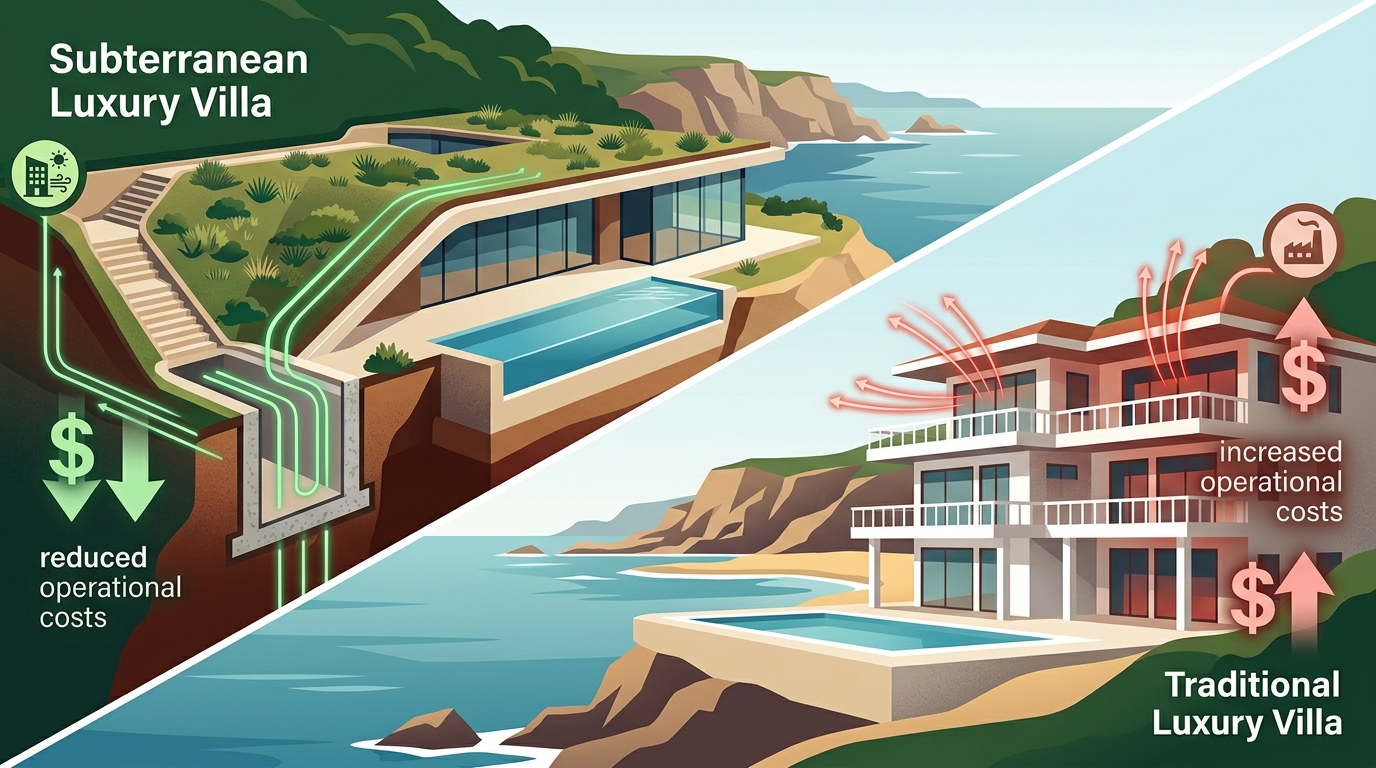
Energy efficiency is the primary driver for many clients considering earth-sheltered designs. The earth acts as a thermal mass, absorbing heat during the day and releasing it at night. This natural regulation stabilizes indoor temperatures, reducing the load on HVAC systems. Data shows that subterranean homes can achieve up to 50% energy savings in heating and cooling compared to traditional builds. This benefit is particularly pronounced in coastal regions where humidity and temperature fluctuations are significant.
Thermal mass is the physical property of a material to absorb and release heat, effectively moderating temperature swings. In a subterranean villa, the surrounding soil maintains a relatively constant temperature year-round. This stability allows for smaller, more efficient HVAC units. Conversely, traditional luxury villas often require larger systems to combat solar gain and coastal humidity. The integration of passive solar design principles can enhance the performance of traditional homes, but it rarely matches the inherent efficiency of earth-sheltered construction.
For those prioritizing sustainability, the reduced carbon footprint of a subterranean villa is a compelling argument. The Earthship Biotecture organization provides extensive research on the environmental benefits of earth-bermed homes. Additionally, the Energy Star program offers guidelines for optimizing energy performance in residential buildings, which can be applied to both villa types.
Construction Costs and Timeline Variance
The most immediate barrier to subterranean construction is the upfront cost. Excavation, shoring, and waterproofing are labor-intensive processes that drive up the budget. Industry estimates suggest that earth-sheltered homes can cost 10% to 20% more to build than traditional structures of similar size. This premium is due to the specialized equipment and expertise required for deep excavation in coastal soils.
Traditional luxury villas benefit from established supply chains and standardized construction techniques. This familiarity often results in faster project timelines and more predictable budgeting. However, the cost gap narrows over time as operational savings accumulate. A detailed Cost Estimation analysis can help clients understand the long-term financial implications of their choice. We recommend evaluating the total cost of ownership rather than just the initial build cost.
Timeline variance is another critical factor. Subterranean projects often face delays due to unforeseen soil conditions or weather-related excavation challenges. Traditional builds are less susceptible to these delays, allowing for quicker occupancy. For investors seeking rapid returns, the speed of traditional construction may outweigh the long-term benefits of earth-sheltered design.
Maintenance Lifecycle and Long-Term Value
Maintenance requirements differ significantly between the two villa types. Subterranean homes require regular inspection of waterproofing systems and drainage paths to prevent moisture issues. The roof, often covered with soil and vegetation, needs periodic maintenance to ensure proper drainage and plant health. Traditional villas, while exposed to the elements, have more accessible components for routine upkeep.
Long-term value is influenced by durability and resilience. Earth-sheltered homes are less susceptible to damage from storms, hurricanes, and wildfires. This resilience can lead to lower insurance premiums and higher resale value in coastal markets. The National Association of Realtors frequently highlights the impact of climate resilience on property values. Furthermore, the unique aesthetic of a subterranean villa can command a premium in the luxury market due to its distinctiveness.
Traditional villas may require more frequent exterior maintenance, such as painting and roof replacement, due to exposure to sun and salt air. However, these costs are predictable and manageable. The choice between the two should consider the owner's willingness to engage in specialized maintenance versus standard upkeep.
Environmental Impact and Regulatory Compliance
Environmental regulations in coastal areas are becoming increasingly strict. Subterranean construction often has a smaller visual impact on the landscape, which can simplify the permitting process in sensitive areas. The reduced light pollution and preserved natural views are significant benefits for eco-conscious developers. Traditional villas, with their larger footprints and visible structures, may face more stringent zoning restrictions.
Sustainable building practices are no longer optional for luxury developments. The U.S. Green Building Council provides leadership in building sustainability through the LEED rating system. Achieving LEED certification can enhance the marketability of both villa types, but earth-sheltered designs often find it easier to meet certain criteria due to their inherent efficiency.
Regulatory compliance also extends to stormwater management. Subterranean structures can incorporate green roofs and permeable paving to manage runoff effectively. This capability aligns with municipal requirements for sustainable urban drainage systems. Understanding these regulations is crucial for avoiding costly delays. Explore our Regulatory Compliance services to navigate these complex requirements.
Comparative Summary of Key Metrics
| Factor | Subterranean Villa | Traditional Luxury Villa |
|---|---|---|
| Initial Construction Cost | Higher (10-20% premium) | Standard Market Rate |
| Operational Energy Costs | Significantly Lower | Higher |
| Structural Complexity | High (Specialized Engineering) | Moderate (Standard Practices) |
| Resilience to Storms | Superior | Requires Reinforcement |
| Maintenance Accessibility | Complex (Roof/Drainage) | Standard (Exterior Focus) |
| Visual Impact | Minimal | High |
Key Takeaways
- Subterranean villas offer superior thermal stability, reducing HVAC loads by up to 50% in coastal climates.
- Initial construction costs for earth-sheltered homes are typically 10% to 20% higher due to excavation and waterproofing requirements.
- Structural integrity in subterranean builds relies on advanced retaining wall systems and rigorous waterproofing protocols.
- Traditional luxury villas benefit from faster construction timelines and more predictable budgeting through established supply chains.
- Long-term value for subterranean properties is enhanced by lower insurance premiums and greater resilience to extreme weather events.
- Regulatory compliance is often easier for earth-sheltered designs due to their minimal visual impact on coastal landscapes.
- Maintenance for subterranean roofs requires specialized knowledge of drainage and vegetation management.
Frequently Asked Questions
Is a subterranean villa more expensive to build than a traditional one?
Yes, the initial construction cost is generally higher due to the complexities of excavation, shoring, and waterproofing. However, operational savings often offset this premium over time.
How does soil type affect the feasibility of a subterranean villa?
Soil composition is critical. Stable, well-draining soils are ideal. Clay-heavy or high-water-table soils may require additional engineering solutions, increasing costs.
Can a subterranean villa provide adequate natural light?
Absolutely. Strategic placement of skylights, light wells, and large glass facades can bring ample natural light into the interior spaces, creating a bright and airy atmosphere.
What are the insurance implications of building underground?
Insurance premiums may be lower due to the enhanced protection against wind, fire, and other natural disasters. However, specific coverage for water intrusion should be carefully reviewed.
Do subterranean villas require special maintenance?
Yes, the roof and drainage systems require regular inspection to prevent moisture issues. The vegetation on the roof also needs periodic care to ensure healthy growth.
How do subterranean villas compare in resale value?
Resale value can be higher due to their uniqueness and energy efficiency. However, the market for such properties is niche, requiring targeted marketing to attract buyers.
Are there zoning restrictions for earth-sheltered homes?
Zoning laws vary by location. In some coastal areas, earth-sheltered designs are encouraged due to their low visual impact. In others, height restrictions may apply to the visible portions of the structure.
Schedule Your Coastal Development Consultation
Choosing between a subterranean and traditional luxury villa is a pivotal decision that shapes the longevity and sustainability of your coastal investment. At Sianfaricas, we specialize in navigating the complex interplay of engineering, environmental science, and luxury design. Our team provides comprehensive site analysis and regulatory guidance to ensure your project succeeds. Contact us today to begin your journey toward a resilient and luxurious coastal home.