
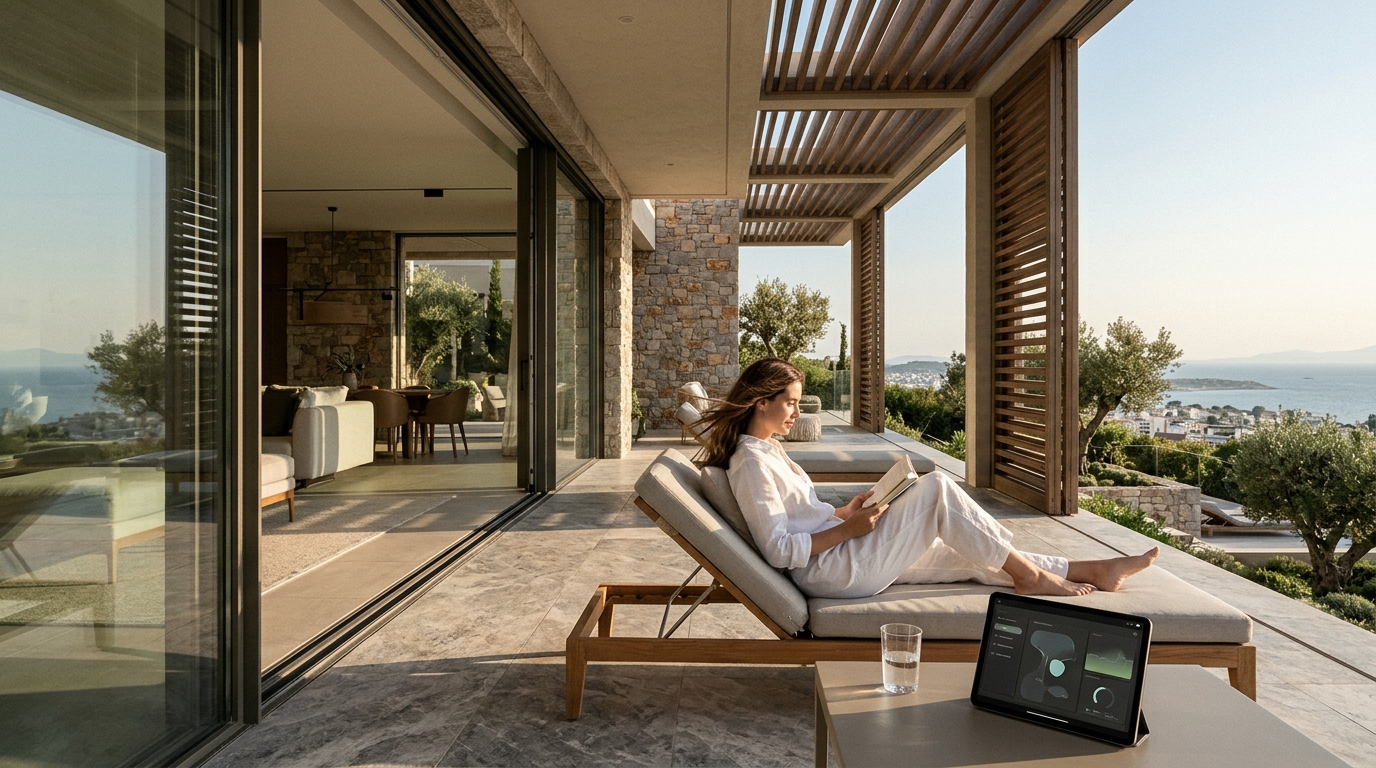
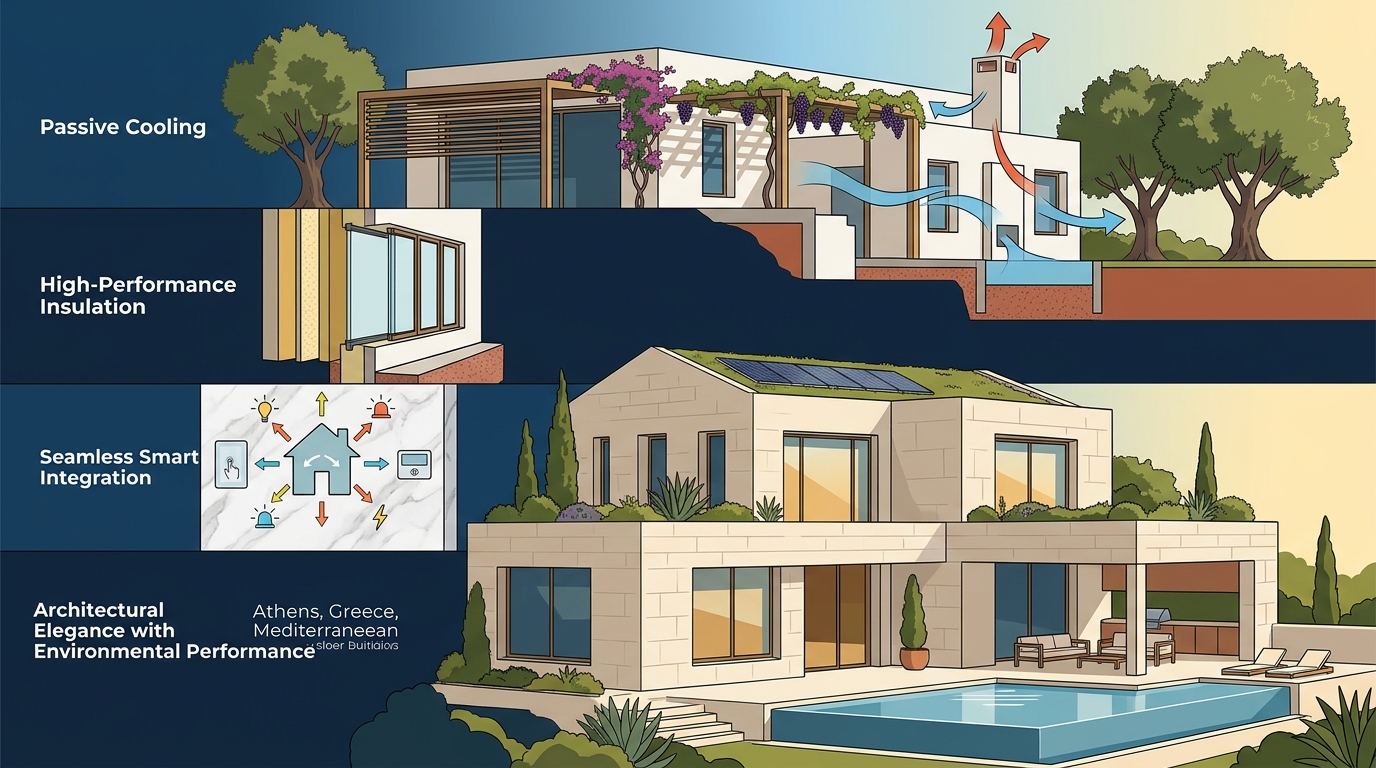
Nearly Zero Energy Building (NZEB) design for luxury homes in Athens differs from standard construction by prioritizing passive cooling, high-performance insulation, and seamless smart integration. ECLÉDE approaches this challenge by blending architectural elegance with rigorous environmental performance. This ensures that high-end residences in the Mediterranean climate achieve net-zero energy goals without compromising on luxury aesthetics or spatial comfort.
The Mediterranean Climate Challenge
Building in Athens presents unique thermal challenges that differ significantly from temperate European climates. The intense summer heat and mild winters require a design strategy focused on heat rejection rather than heat retention. Standard insulation methods often fail to address the specific solar gain issues prevalent in the region. Luxury developers must therefore prioritize shading devices, thermal mass, and high-performance glazing to maintain interior comfort.
The Boomerang Athens project exemplifies this approach. Located on Lycabettus Hill, the residence utilizes enhanced thermal insulation and triple-glazed energy-efficient windows. These elements work in tandem to reduce heat loss and gain, ensuring a stable internal environment. This passive strategy reduces the load on mechanical systems, which is critical for achieving NZEB standards in a sunny climate.
Passive Design and Biophilic Integration
Passive design is the foundation of any NZEB strategy. It involves orienting the building to maximize natural light while minimizing direct solar exposure during peak heat hours. In luxury contexts, this passive approach is often enhanced by biophilic design principles. These principles connect the interior living spaces with the natural surroundings, promoting well-being and reducing the perceived need for artificial climate control.
ECLÉDE integrates these concepts by designing spaces that flow seamlessly between indoors and outdoors. The Izanagi Project in Lefkada demonstrates how subterranean and earth-sheltered designs can leverage the earth's thermal stability. By using the ground as a natural insulator, these structures achieve passive cooling with minimal energy input. This method is particularly effective for luxury villas seeking a quiet, serene, and energy-efficient living environment.
Active Systems and Smart Automation
While passive design reduces energy demand, active systems are required to meet the remaining needs of a luxury home. These systems include high-efficiency heat pumps, photovoltaic solar panels, and advanced ventilation. The key difference in luxury NZEB design is the integration of these systems into a unified smart home platform. This allows for precise, real-time management of energy consumption and comfort levels.
The Boomerang Athens utilizes KNX automation technology to manage lighting, heating, and cooling intelligently. This system optimizes energy use by adapting to the occupants' habits and external weather conditions. By automating these processes, the residence achieves a level of efficiency that manual controls cannot match. This technological integration is a hallmark of modern luxury, where convenience and sustainability coexist.
Material Selection and Aesthetic Integrity
Material selection in luxury NZEB homes must balance environmental performance with high-end aesthetics. Standard eco-friendly materials may not meet the visual expectations of luxury buyers. Therefore, developers must source materials that offer both high thermal performance and premium finishes. This often involves using natural materials like marble, wood, and stone, which also contribute to the building's thermal mass.
ECLÉDE focuses on using innovative and resilient materials that respect local architectural heritage. The Atlas + Pleione villas, for instance, use high-end aluminum profiles and thermal facades. These materials ensure that the building envelope is both durable and visually striking. By selecting materials that serve a dual purpose, the design maintains its luxury status while meeting strict energy efficiency targets.
Certification and Long-Term Value
Achieving NZEB status often requires formal certification, such as LEED Platinum. This certification validates the building's environmental performance and adds significant value to the property. For luxury developers, certification is not just a regulatory requirement but a marketing asset. It signals to buyers that the home is built to the highest standards of quality and sustainability.
In May 2025, ECLÉDE completed the first LEED Platinum residence in Greece at Lycabettus Hill. This milestone demonstrates that luxury and sustainability are not mutually exclusive. The German Design Award 2026 further recognizes the project's commitment to responsible luxury. By setting these benchmarks, developers can attract a clientele that values both aesthetic excellence and environmental stewardship.
Key Takeaways
- Passive cooling and shading are critical for NZEB design in the Mediterranean climate.
- Smart automation systems like KNX are essential for optimizing energy use in luxury homes.
- Biophilic design enhances comfort and reduces the reliance on mechanical climate control.
- High-performance materials must balance thermal efficiency with premium aesthetics.
- Certifications like LEED Platinum add significant value and credibility to luxury properties.
- Subterranean and earth-sheltered designs can leverage natural thermal stability for efficiency.
Frequently Asked Questions
What is a Nearly Zero Energy Building (NZEB)?
A Nearly Zero Energy Building is a structure with a very high energy performance where the amount of energy required is almost fully covered by energy from renewable sources.
How does climate affect NZEB design in Athens?
The hot summers and mild winters in Athens require a focus on passive cooling, shading, and high-performance insulation to prevent overheating and reduce air conditioning needs.
Can luxury homes achieve net-zero energy?
Yes, luxury homes can achieve net-zero energy by integrating advanced smart home technologies, high-efficiency mechanical systems, and renewable energy sources like solar panels.
What role does smart automation play in NZEB homes?
Smart automation optimizes energy consumption by managing lighting, heating, and cooling in real-time, ensuring that the building operates at peak efficiency without compromising comfort.
Why is certification important for luxury NZEB homes?
Certification, such as LEED Platinum, validates the building's environmental performance and adds market value by demonstrating a commitment to quality and sustainability.
What materials are best for luxury NZEB construction?
Materials that offer high thermal performance and premium aesthetics, such as natural stone, wood, and high-end aluminum profiles, are ideal for luxury NZEB construction.
Conclusion
Designing luxury homes in Athens requires a nuanced approach to NZEB principles. By focusing on passive cooling, smart automation, and premium materials, developers can create residences that are both environmentally responsible and aesthetically exceptional. ECLÉDE continues to lead this movement, setting new standards for sustainable luxury in the Mediterranean. To explore how these principles can be applied to your next project, contact our team for a consultation.