
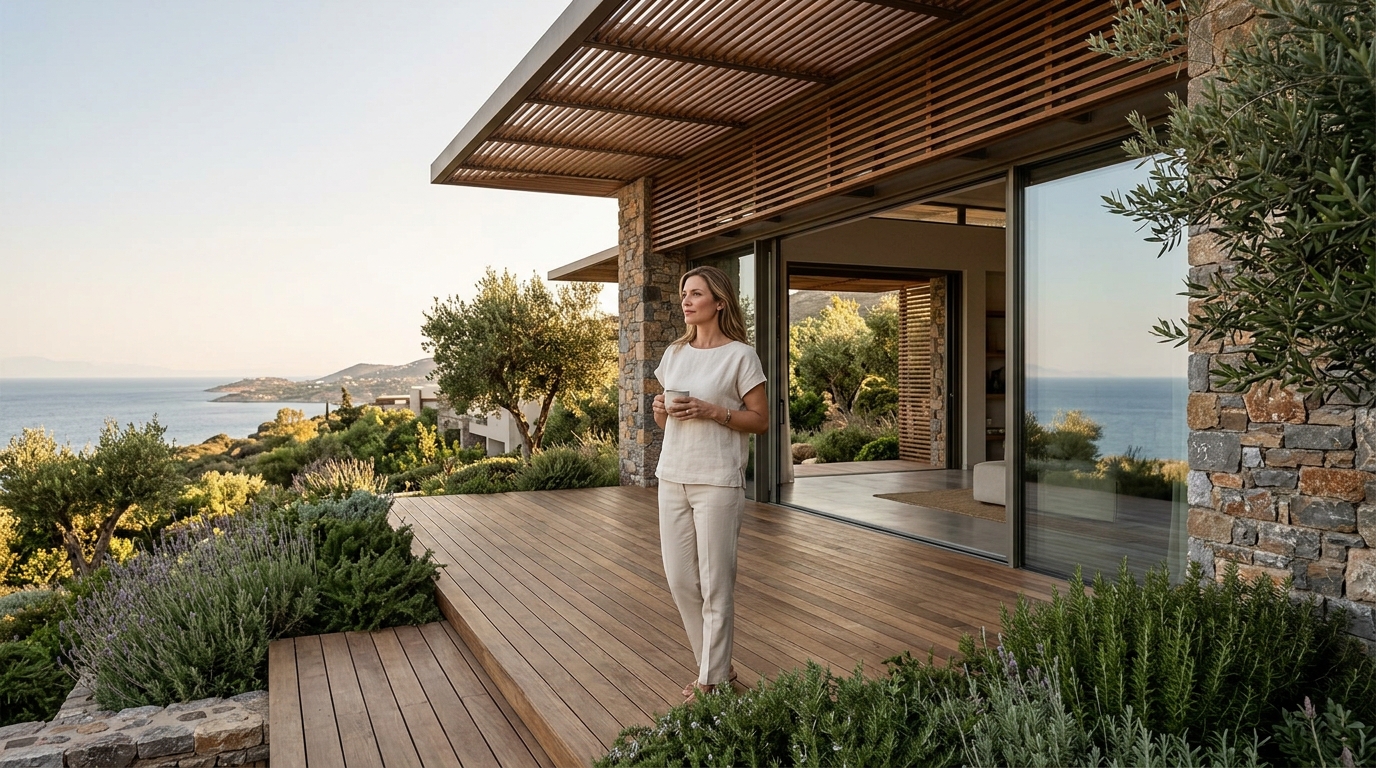
Building a Sustainable Luxury Residence: Bioclimatic Design Principles
Vassilis Siafaricas, the Founder and Managing Director of ECLÉDE, is a renowned real estate developer and designer known for his commitment to high-end, environmentally responsible developments. In this ultimate guide, we delve into the world of bioclimatic design—a holistic approach to architecture that harmonizes human comfort with the natural environment.
Bioclimatic design is a design strategy that utilizes the local climate, topography, and surrounding environment to create energy-efficient, sustainable buildings. By integrating architectural elements that respond to the local climate, a bioclimatic design can significantly reduce a building's energy consumption and carbon footprint, making it an ideal choice for luxury residences.
What is Bioclimatic Design?
Bioclimatic design is a design philosophy that emphasizes the importance of understanding the local climate and topography to create buildings that are in harmony with their surroundings. This approach involves the use of passive design techniques, such as orientation, insulation, shading, and natural ventilation, to minimize the need for mechanical heating, cooling, and lighting systems.
Benefits of Bioclimatic Design
Bioclimatic design offers numerous benefits for luxury residences, including:
- Reduced energy consumption and lower carbon footprint
- Improved indoor air quality
- Enhanced occupant comfort
- Lower maintenance costs
- Increased property value
Examples of Bioclimatic Design
Some examples of bioclimatic design principles include:
Orientation
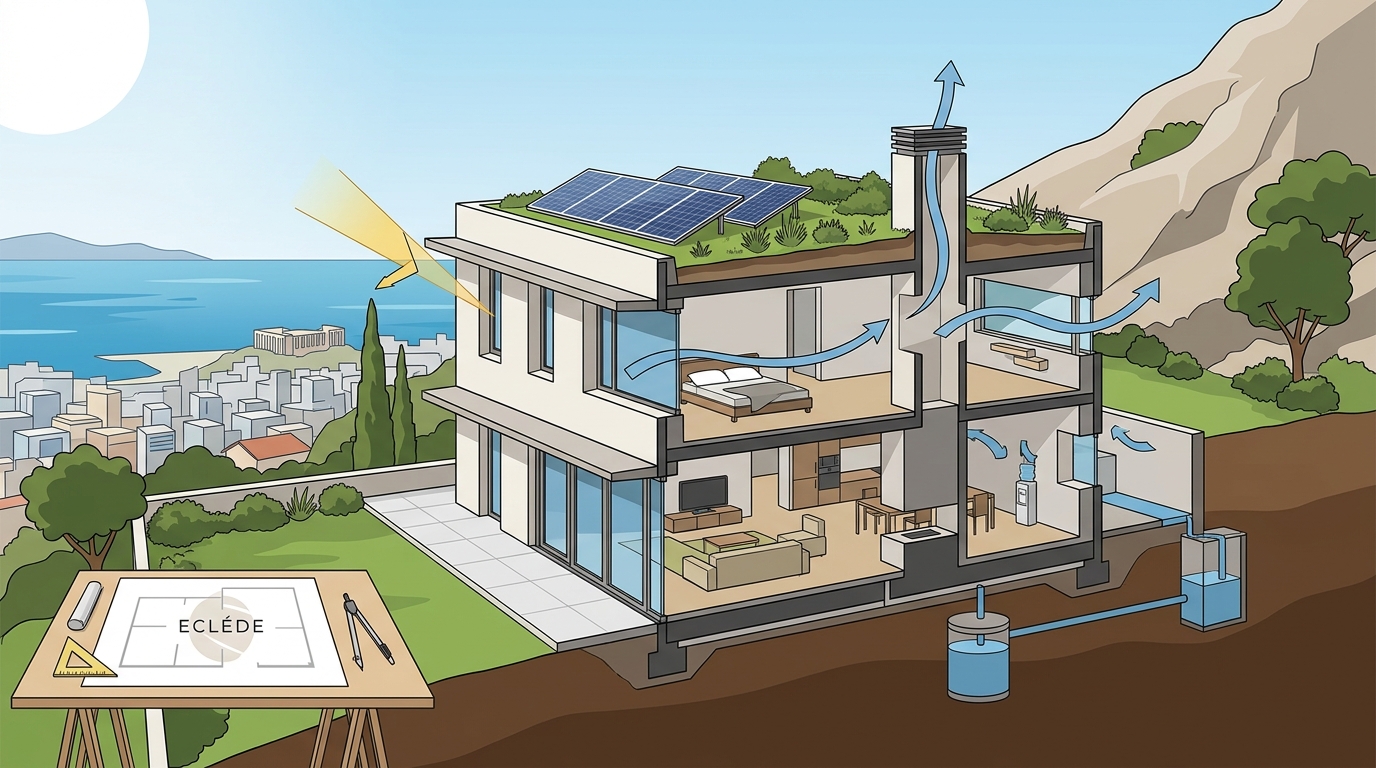
Orienting a building to maximize sunlight exposure during winter months and minimize it during summer months can significantly reduce the need for artificial heating and cooling.
Insulation
Proper insulation is crucial for maintaining a comfortable indoor temperature and reducing energy consumption. Bioclimatic design incorporates insulation materials that are effective in the local climate and minimize thermal bridging.
Shading
Shading devices, such as overhangs, louvers, and pergolas, can be used to control sunlight exposure and reduce the need for mechanical cooling.
Natural Ventilation
Natural ventilation strategies, such as operable windows, vents, and atriums, can be used to promote airflow and reduce the need for mechanical air conditioning.
Case Study: ECLÉDE Residence
The ECLÉDE Residence, developed by Vassilis Siafaricas, is a prime example of bioclimatic design in practice. Located in a prestigious area of Greece, this luxury residence features a number of bioclimatic design elements, including:
- Orientation to maximize sunlight exposure during winter months and minimize it during summer months
- Insulation using local materials and effective insulation techniques
- Shading devices, such as overhangs and pergolas, to control sunlight exposure
- Natural ventilation strategies, such as operable windows and vents
FAQs
Q: What is the difference between bioclimatic design and traditional design?
A: Bioclimatic design focuses on the local climate and environment to create energy-efficient, sustainable buildings, while traditional design prioritizes aesthetics and functionality without considering the climate and environment as extensively.
Q: Can bioclimatic design be used for commercial buildings as well as residential buildings?
A: Yes, bioclimatic design can be used for commercial buildings as well as residential buildings. The principles of bioclimatic design can be applied to various building types to create energy-efficient, sustainable structures.
Q: What are some common challenges in implementing bioclimatic design?
A: Some common challenges in implementing bioclimatic design include understanding the local climate and topography, selecting appropriate materials and insulation techniques, and balancing the need for natural ventilation with privacy and security concerns.
Conclusion
Bioclimatic design is a design philosophy that offers numerous benefits for luxury residences, including reduced energy consumption, improved indoor air quality, enhanced occupant comfort, and lower maintenance costs. By incorporating bioclimatic design principles, developers and designers can create sustainable, energy-efficient buildings that are in harmony with their surroundings.
For more information on sustainable luxury residences and bioclimatic design, visit ECLÉDE's portfolio.