
Subterranean Architecture: Sustainable Luxury Foundations in Athens
The integration of subterranean design into modern luxury real estate is no longer a niche experiment but a critical strategy for environmental resilience and aesthetic innovation. According to recent industry analyses, sustainable building practices are now driving over 30% of new high-end development projects in Mediterranean climates, where thermal mass and energy efficiency are paramount. This shift reflects a broader movement toward architecture that respects the earth while elevating human experience through refined, underground living spaces.
The Founder's Vision for Underground Luxury
Vassilis Siafaricas, the Founder and Managing Director of ECLÉDE, brings over two decades of multidisciplinary experience to the realm of subterranean development. His approach bridges civil engineering precision with creative architectural vision, ensuring that underground structures are not merely functional but aesthetically refined. Siafaricas views design as the intersection of inspiration, functionality, and responsibility, a philosophy that is particularly critical when working with the earth itself.
His work challenges the traditional notion that luxury must be above ground. Instead, he advocates for a holistic approach where subterranean spaces enhance human experience through thermal stability, acoustic isolation, and a seamless connection to natural surroundings. This forward-thinking perspective has earned him recognition in Architectizers TOP 100 Vision Creators for 2026, highlighting his role in redefining modern living through environmentally responsible developments.
For those interested in exploring this philosophy further, learn more about the founder's background and his unique blend of real estate development and technology innovation.
Technical Engineering of Subterranean Structures
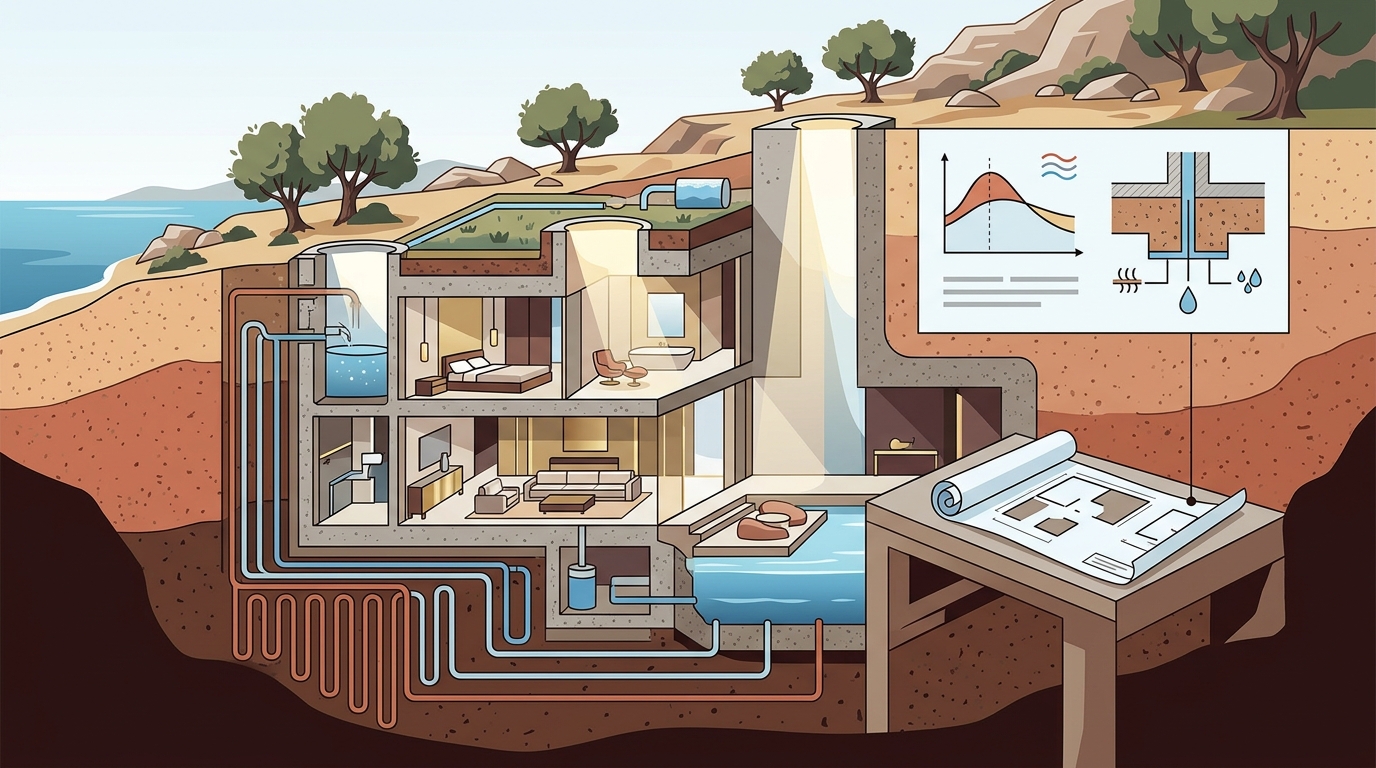
Building below grade requires rigorous engineering to manage hydrostatic pressure, soil stability, and moisture control. Subterranean architecture is defined as the practice of constructing habitable spaces within or beneath the earth's surface, utilizing advanced waterproofing and structural reinforcement techniques. In Athens, where seismic activity is a consideration, the integration of reinforced concrete cores with flexible foundation systems ensures long-term integrity.
The engineering challenges are significant but manageable through precise planning. Key considerations include:
- Hydrostatic Pressure Management: Implementing drainage boards and sump pumps to prevent water ingress.
- Thermal Mass Utilization: Leveraging the earth's constant temperature to reduce HVAC loads.
- Light Well Design: Creating atriums and light wells to bring natural illumination deep underground.
These technical elements are not just engineering necessities but design opportunities that define the character of the space. For a deeper dive into the technical aspects of sustainable development, view the ECLÉDE portfolio to see how these principles are applied in practice.
Sustainability and LEED Platinum Standards
Sustainability is at the core of ECLÉDE's mission. The development of the first LEED Platinum residential project in Greece set a new benchmark for sustainable luxury living in the region. LEED Platinum is defined as the highest level of certification awarded by the U.S. Green Building Council for exceptional performance in energy efficiency, water savings, and materials selection.
Subterranean buildings naturally excel in energy efficiency due to their reduced surface area exposed to the elements. This thermal envelope minimizes heat loss in winter and heat gain in summer, leading to significant reductions in carbon footprint. According to data from the U.S. Department of Energy, buildings with high thermal mass can reduce heating and cooling energy use by up to 20% compared to conventional structures.
ECLÉDE's commitment to Net Zero Energy Buildings (NZEB) further amplifies these benefits. By integrating renewable energy systems with passive design strategies, these structures produce as much energy as they consume. This approach aligns with global trends in green building, where LEED certification standards continue to evolve to address climate change more aggressively.
Design Aesthetics in Earth-Bermed Homes
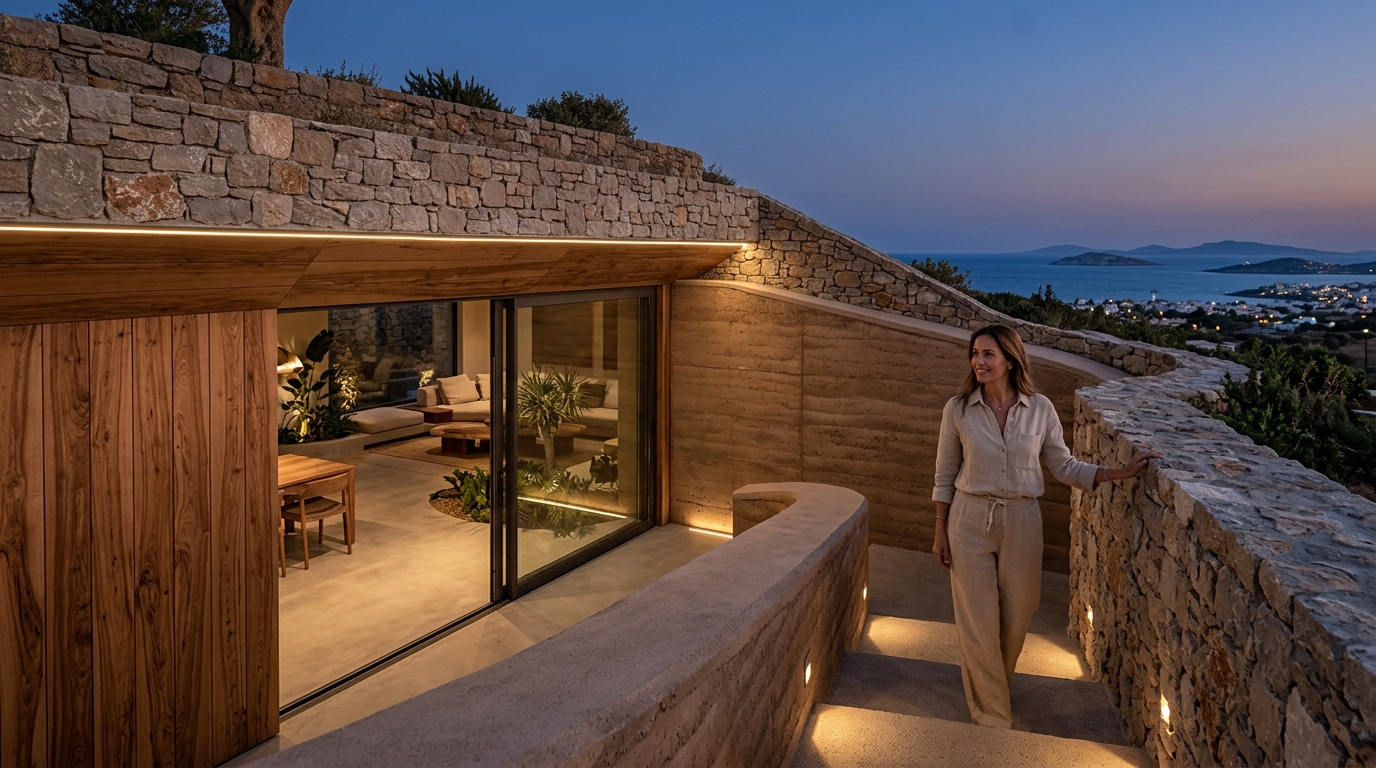
One of the most common misconceptions about subterranean architecture is that it feels oppressive or dark. ECLÉDE counters this by employing earth-berming techniques, where soil is piled against the exterior walls to create a seamless transition between the building and the landscape. This method not only enhances insulation but also allows for expansive glazing on the upper levels, flooding the interior with natural light.
The aesthetic goal is minimal, clean architectural lines that disappear into the environment. This is achieved through the use of natural materials such as stone, wood, and concrete, which age gracefully and blend with the surrounding terrain. The result is a home that feels both grounded and expansive, offering a sense of privacy and tranquility that is difficult to achieve in above-ground constructions.
For inspiration on how earth-bermed homes can be integrated into urban settings, read the latest news on ECLÉDE's recent projects and design innovations.
Case Studies: Athens and Beyond
ECLÉDE's portfolio includes several landmark projects that demonstrate the versatility of subterranean and sustainable design. Each project is approached as a long-term asset with purpose, identity, and environmental integrity. Below is a summary of key projects and their distinguishing features.
| Project Name | Location | Key Feature | Sustainability Focus |
|---|---|---|---|
| Boomerang Athens | Athens, Greece | Urban Integration | Energy Efficiency |
| Dynasty Villas | Greece | Luxury Residential | Net Zero Energy |
| Atlas + Pleione | Greece | Architectural Innovation | LEED Platinum |
These projects highlight the firm's ability to adapt subterranean principles to different contexts, from dense urban environments to secluded luxury retreats. The success of these developments is a testament to the growing demand for homes that offer both comfort and environmental responsibility.
Key Takeaways
- Vassilis Siafaricas is a multidisciplinary entrepreneur with over 20 years of experience in luxury real estate and prop-tech.
- ECLÉDE developed the first LEED Platinum residential project in Greece, setting a regional benchmark for sustainability.
- Subterranean architecture offers superior thermal mass, reducing energy consumption by up to 20% in Mediterranean climates.
- Earth-berming techniques allow for seamless integration of underground homes into natural landscapes.
- Net Zero Energy Buildings are a core focus, combining passive design with renewable energy systems.
- Architizer A+ Awards and German Design Awards 2026 recognize ECLÉDE's innovative approach to sustainable luxury.
- The firm operates from Athens, Greece, and New York, USA, serving a global clientele.
Frequently Asked Questions
What is subterranean architecture?
Subterranean architecture is the practice of designing and constructing buildings that are partially or fully below ground level, utilizing the earth's thermal mass for energy efficiency and stability.
How does ECLÉDE ensure waterproofing in underground homes?
ECLÉDE employs advanced drainage boards, sump pumps, and reinforced concrete membranes to manage hydrostatic pressure and prevent water ingress, ensuring long-term durability.
Are subterranean homes energy efficient?
Yes, subterranean homes are highly energy efficient due to their reduced exposure to external temperature fluctuations, which minimizes the need for heating and cooling.
What is LEED Platinum certification?
LEED Platinum is the highest level of certification awarded by the U.S. Green Building Council for buildings that demonstrate exceptional performance in sustainability, energy, and water efficiency.
Where is ECLÉDE based?
ECLÉDE is headquartered in Athens, Greece, with a presence in New York, USA, allowing it to serve international clients with a focus on sustainable luxury development.
What awards has Vassilis Siafaricas received?
Vassilis Siafaricas has received multiple A’ Design Awards, a German Design Award 2026, and a Special Mention from the Architizer A+ Awards for his contributions to architecture and design.
Can subterranean homes feel open and airy?
Yes, through the use of light wells, atriums, and expansive glazing, subterranean homes can feel open and airy, blending indoor and outdoor living seamlessly.
Contact ECLÉDE
Ready to explore the future of sustainable luxury living? ECLÉDE invites you to discuss your vision for a high-performance, environmentally responsible development. Whether you are interested in Net Zero Energy Buildings or LEED Platinum residential projects, our team is here to guide you.
Contact us today to schedule a consultation and discover how subterranean architecture can transform your property. Visit our contact page to get in touch with our Athens or New York offices.