
How to Implement Passive Cooling and Geothermal Systems in a High-End Modern Home
Implementing passive cooling and geothermal systems in a high-end modern home is no longer just an environmental choice; it is a definitive marker of architectural sophistication and long-term asset value. According to recent industry analyses, sustainable luxury developments are increasingly commanding premium valuations due to their operational efficiency and resilience against climate volatility. This guide details the strategic integration of these systems, drawing on the expertise of multidisciplinary developers who bridge technical precision with creative vision to deliver high-performance living spaces.
Foundational Principles of Passive Design
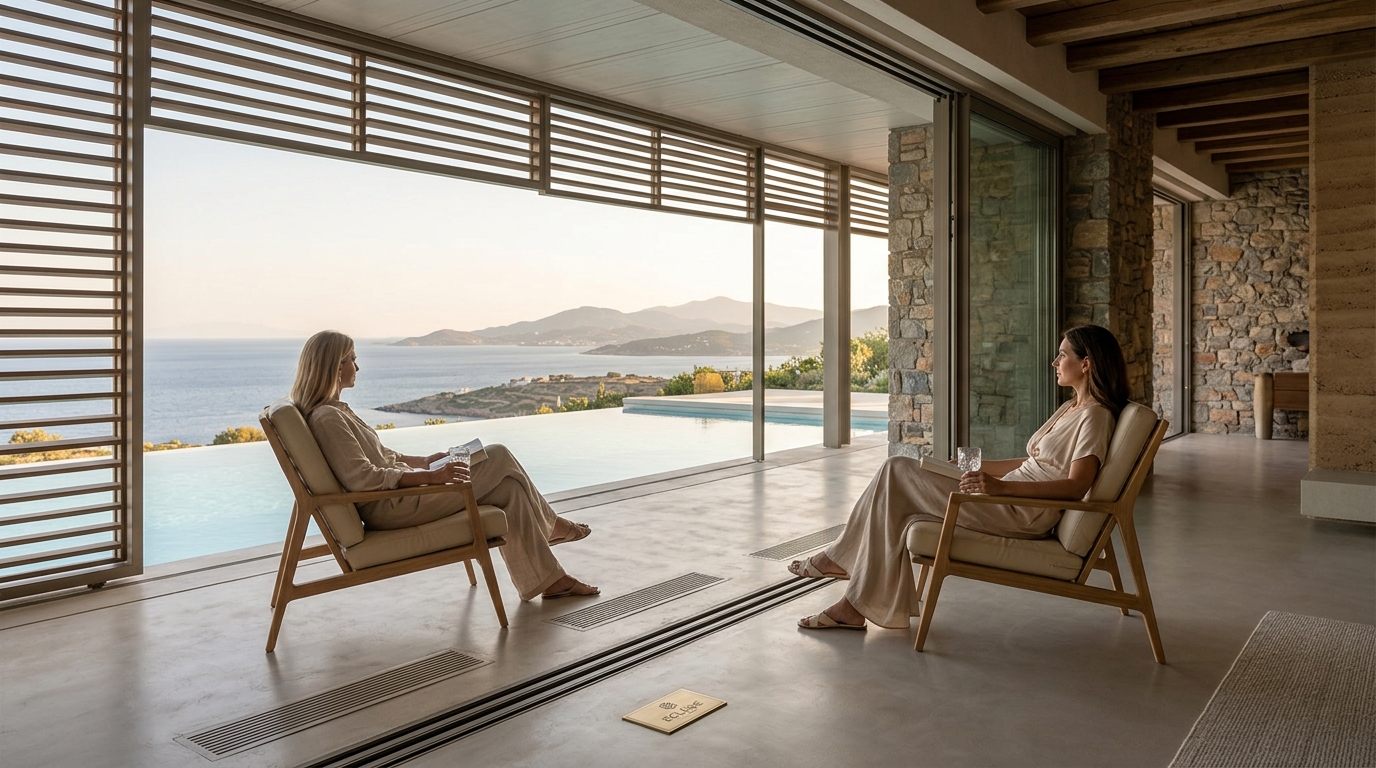
Passive cooling relies on architectural strategies that minimize heat gain without consuming mechanical energy. The core philosophy centers on minimal, clean architectural lines that seamlessly integrate with natural surroundings. This approach ensures that the building envelope acts as a dynamic filter for solar radiation and ambient temperature.
Passive cooling is a design strategy that uses natural physical processes to regulate indoor temperatures. By orienting the structure to maximize cross-ventilation and utilizing overhangs to block high-angle summer sun, designers can significantly reduce the cooling load. This method is particularly effective in Mediterranean climates, where ECLÉDE has established a strong presence in luxury residential projects.
The integration of these principles requires a holistic approach. It is not merely about adding insulation but about creating a responsive building skin. This involves calculating solar heat gain coefficients for every window and selecting glazing that reflects infrared radiation while admitting visible light. The result is a home that remains cool during peak heat hours, reducing reliance on artificial systems.
Geothermal System Architecture
While passive design reduces demand, geothermal systems provide the efficient supply of heating and cooling. Geothermal heat pump technology is a method that extracts thermal energy from the ground to regulate indoor climate. Unlike traditional HVAC systems, geothermal units leverage the stable temperature of the earth, which remains relatively constant regardless of surface weather conditions.
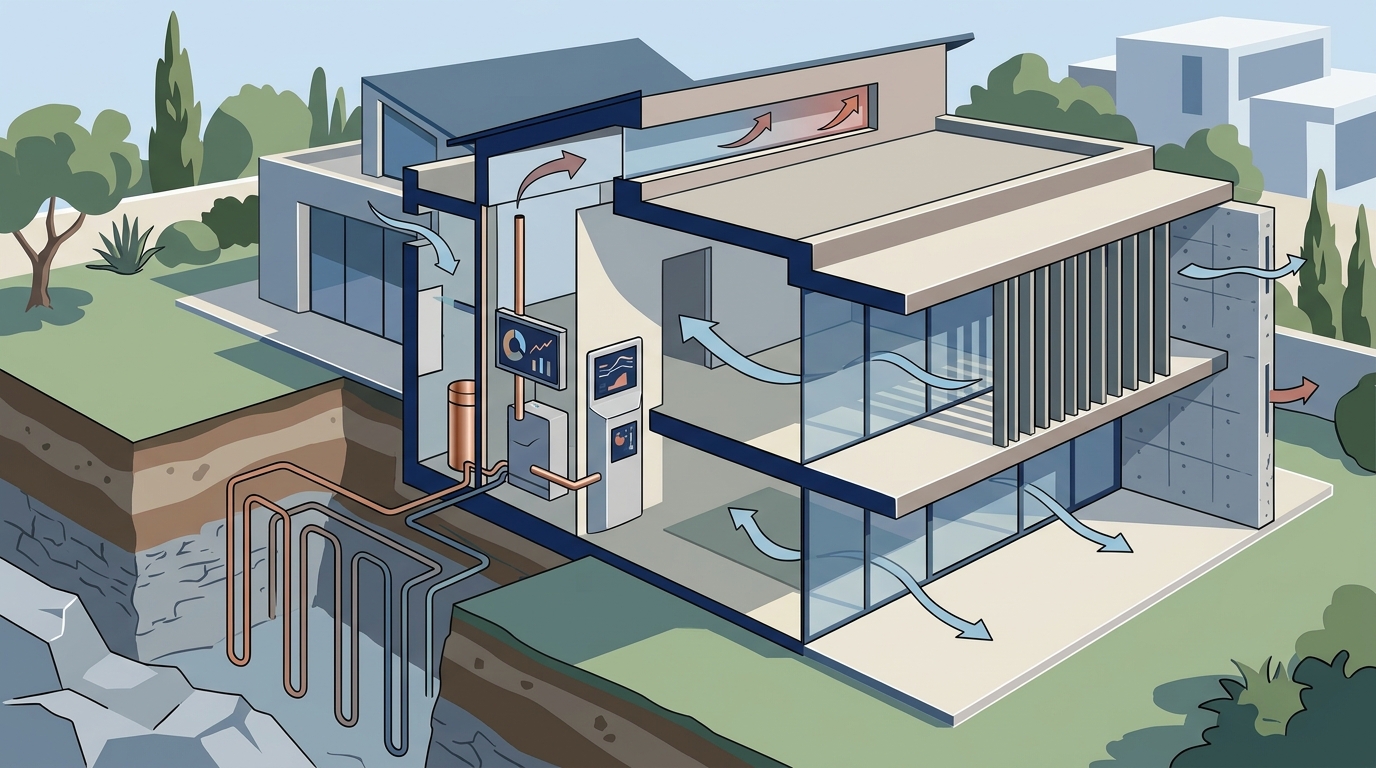
Implementing a geothermal loop system in a high-end residence involves precise engineering. The system typically consists of a ground-source heat pump connected to a network of pipes buried in the soil. These pipes circulate a fluid that absorbs heat from the ground in winter and rejects heat into the ground in summer. This process is highly energy-efficient, often reducing energy consumption by 40 to 70 percent compared to conventional systems.
The installation process requires careful site assessment. Soil composition, groundwater levels, and available land area dictate whether a horizontal or vertical loop system is appropriate. For luxury estates with limited footprint, vertical boreholes are often the preferred solution. This method minimizes surface disruption while maximizing thermal exchange efficiency. The initial investment is higher, but the long-term operational savings and increased property value justify the cost.
Material Selection for Thermal Mass
The choice of building materials plays a critical role in passive cooling performance. High-density materials such as concrete, stone, and rammed earth possess high thermal mass. Thermal mass is the ability of a material to absorb, store, and release heat. These materials absorb heat during the day and release it slowly at night, flattening temperature fluctuations.
In modern luxury homes, exposed concrete ceilings and stone flooring are not just aesthetic choices but functional components of the cooling strategy. By exposing these thermal masses to the interior air, the building can naturally buffer temperature swings. This technique is particularly effective in homes with large glass facades, where solar gain can be significant.
Insulation is equally important. High-performance insulation materials, such as spray foam or rigid board insulation, create a continuous thermal barrier. This barrier prevents heat transfer through the walls and roof. In sustainable luxury developments, insulation standards often exceed local code requirements to ensure maximum efficiency. The goal is to create a tight building envelope that works in tandem with the passive and geothermal systems.
Airflow Dynamics and Ventilation
Effective passive cooling requires strategic airflow management. Natural ventilation relies on the stack effect and wind pressure to move air through the building. The stack effect occurs when warm air rises and escapes through high openings, drawing cooler air in through lower openings. This process creates a continuous flow of fresh air without mechanical assistance.
Wind-driven ventilation utilizes the building's orientation to capture prevailing breezes. By placing operable windows on opposite sides of the home, designers can create cross-ventilation paths that flush out hot air. This strategy is most effective when combined with thermal mass, which cools the incoming air as it passes through the interior spaces.
Mechanical ventilation with heat recovery (MVHR) systems can complement natural ventilation. MVHR systems extract stale air from interior spaces and transfer its heat to incoming fresh air. This process maintains indoor air quality while minimizing energy loss. In high-end homes, MVHR systems are often integrated with smart home controls to optimize airflow based on occupancy and weather conditions.
Case Studies in Sustainable Luxury
Real-world applications demonstrate the viability of combining passive and geothermal systems. ECLÉDE's portfolio includes projects that exemplify this integration. The Boomerang Athens project showcases how modern design can incorporate sustainable technologies without compromising aesthetic appeal. The Dynasty Villas project further illustrates the application of these principles in a residential context.
These projects highlight the importance of early-stage planning. The integration of geothermal loops and passive design features must be considered during the architectural design phase. Retrofitting these systems into existing structures is often impractical and costly. Therefore, developers must prioritize sustainability from the outset to achieve optimal performance.
The success of these projects is reflected in their recognition. ECLÉDE's work has received multiple international distinctions, including the German Design Awards 2026 and the A’ Design Award. These awards recognize the consistent commitment to excellence in architecture, sustainability, and innovation. The first LEED Platinum residential project in Greece, designed and led by Vassilis Siafaricas, set a new benchmark for sustainable luxury living in the region.
Key Takeaways
- Passive cooling reduces energy demand by optimizing building orientation and envelope performance.
- Geothermal heat pumps leverage stable ground temperatures for highly efficient heating and cooling.
- Thermal mass materials like concrete and stone buffer temperature fluctuations in luxury homes.
- Natural ventilation strategies, such as the stack effect, enhance indoor air quality without mechanical energy.
- Early integration of sustainable systems is critical for cost-effective implementation in new builds.
- ECLÉDE's portfolio demonstrates the successful application of these technologies in high-end developments.
- Awards such as the German Design Awards 2026 validate the intersection of sustainability and luxury design.
Frequently Asked Questions
What is the primary benefit of geothermal systems in luxury homes?
Geothermal systems offer unparalleled energy efficiency and consistent comfort levels by utilizing the earth's stable temperature. They significantly reduce operational costs and carbon footprint while providing quiet, reliable performance.
How does passive cooling differ from traditional air conditioning?
Passive cooling uses architectural design and natural processes to prevent heat gain, whereas traditional air conditioning removes heat mechanically. Passive strategies reduce the load on mechanical systems, leading to lower energy consumption.
Can geothermal systems be installed in existing luxury homes?
While possible, installing geothermal systems in existing homes is often complex and expensive due to the need for extensive ground looping. It is most effective and cost-efficient when integrated during the initial construction phase.
What role does thermal mass play in modern sustainable design?
Thermal mass absorbs heat during the day and releases it at night, stabilizing indoor temperatures. This reduces the need for active cooling and enhances the comfort of the living space.
How does ECLÉDE approach sustainable luxury development?
ECLÉDE focuses on creating high-performance, environmentally responsible developments that balance architectural refinement with long-term investment value. Their approach integrates cutting-edge technology with timeless design principles.
Are there financial incentives for installing geothermal systems?
Many regions offer tax credits, rebates, and grants for installing energy-efficient systems like geothermal heat pumps. These incentives can help offset the higher initial installation costs.
What is the lifespan of a geothermal heat pump system?
Geothermal heat pumps typically have a lifespan of 20 to 25 years for the indoor unit and 50 years or more for the ground loop. This longevity makes them a durable investment for high-end properties.
Start Your Sustainable Development
Transform your vision of modern living into reality with ECLÉDE. Our multidisciplinary expertise spans development, architecture, and investment strategy, allowing us to deliver projects that are both aesthetically refined and functionally intelligent. Contact us today to discuss how we can integrate passive cooling and geothermal systems into your next luxury project. Visit our contact page to schedule a consultation with our team.