
The global construction industry is responsible for approximately 39% of annual carbon dioxide emissions, a statistic that has fundamentally shifted how high-end residential projects are conceived and built. This data shows that sustainability is no longer an optional add-on but a core requirement for modern architecture. At ECLÉDE, we believe that true luxury is defined by the harmony between human comfort and environmental responsibility. Our approach integrates rigorous engineering standards with aesthetic minimalism to create spaces that are both visually striking and ecologically sound. This guide outlines the essential practices we employ to deliver Net Zero Energy Buildings and sustainable luxury residences that stand the test of time.
Energy Efficiency and Net Zero Goals
The foundation of any sustainable modern home is its energy performance. Net Zero Energy Buildings are structures that produce as much energy as they consume over the course of a year. Achieving this requires a holistic approach that begins with the building envelope.
Passive Design Strategies
Passive design leverages the local climate to reduce the need for mechanical heating and cooling. This involves orienting the building to maximize natural light while minimizing heat gain during peak summer months. According to the U.S. Department of Energy, passive solar design can reduce heating and cooling costs by up to 50%. We utilize advanced simulation tools to model sun paths and wind patterns, ensuring that every window and overhang serves a functional purpose.
High-Performance Insulation
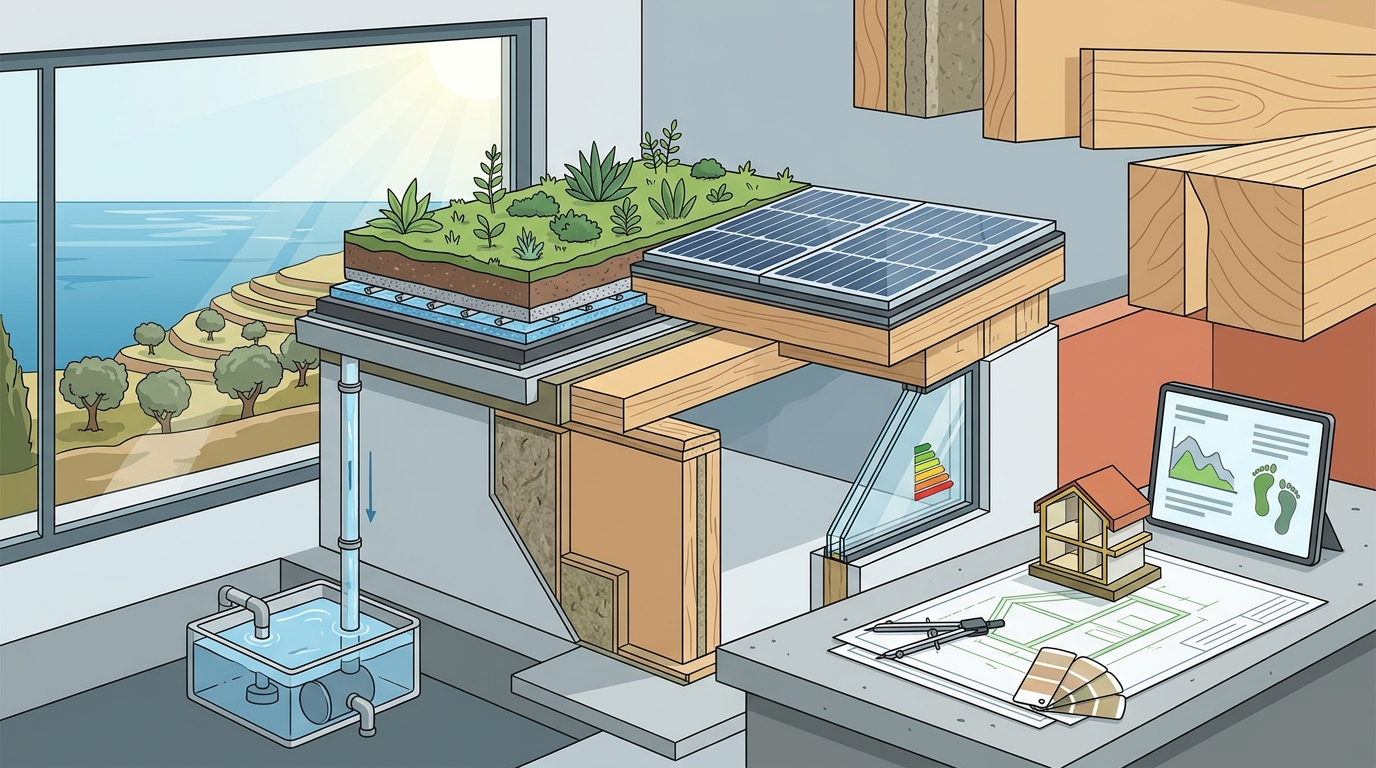
Thermal bridging is a common flaw in conventional construction that leads to energy loss. By using continuous insulation layers and high-performance glazing, we eliminate these thermal bridges. This creates a tight building envelope that maintains consistent indoor temperatures regardless of external weather conditions. The result is a home that feels comfortable year-round while significantly lowering utility bills.
Material Selection and Lifecycle Analysis
The materials used in construction have a profound impact on the environment. Embodied carbon refers to the total greenhouse gas emissions generated during the manufacturing, transportation, and installation of building materials. Choosing low-carbon materials is critical for reducing this footprint.
Locally Sourced Resources
Transportation emissions are a significant component of a building's carbon footprint. By sourcing materials locally, such as stone and timber from regional suppliers, we minimize these emissions. This practice also supports the local economy and ensures that materials are suited to the regional climate. For example, using local limestone in Greek projects provides both aesthetic continuity and environmental benefits.
Recycled and Reclaimed Materials
Incorporating recycled steel, reclaimed wood, and repurposed concrete reduces the demand for virgin resources. These materials often bring unique character and history to a space, aligning with the minimalist aesthetic by allowing the material's natural beauty to speak for itself. The German Design Awards 2026 recognized this approach by highlighting projects that successfully blend innovation with resource conservation.
Spatial Design and Natural Integration
Sustainable design is not just about technology; it is about creating a seamless connection between the interior and exterior environments. Biophilic design is the practice of connecting building occupants more closely to nature. This connection has been shown to improve mental well-being and productivity.
Seamless Indoor-Outdoor Flow
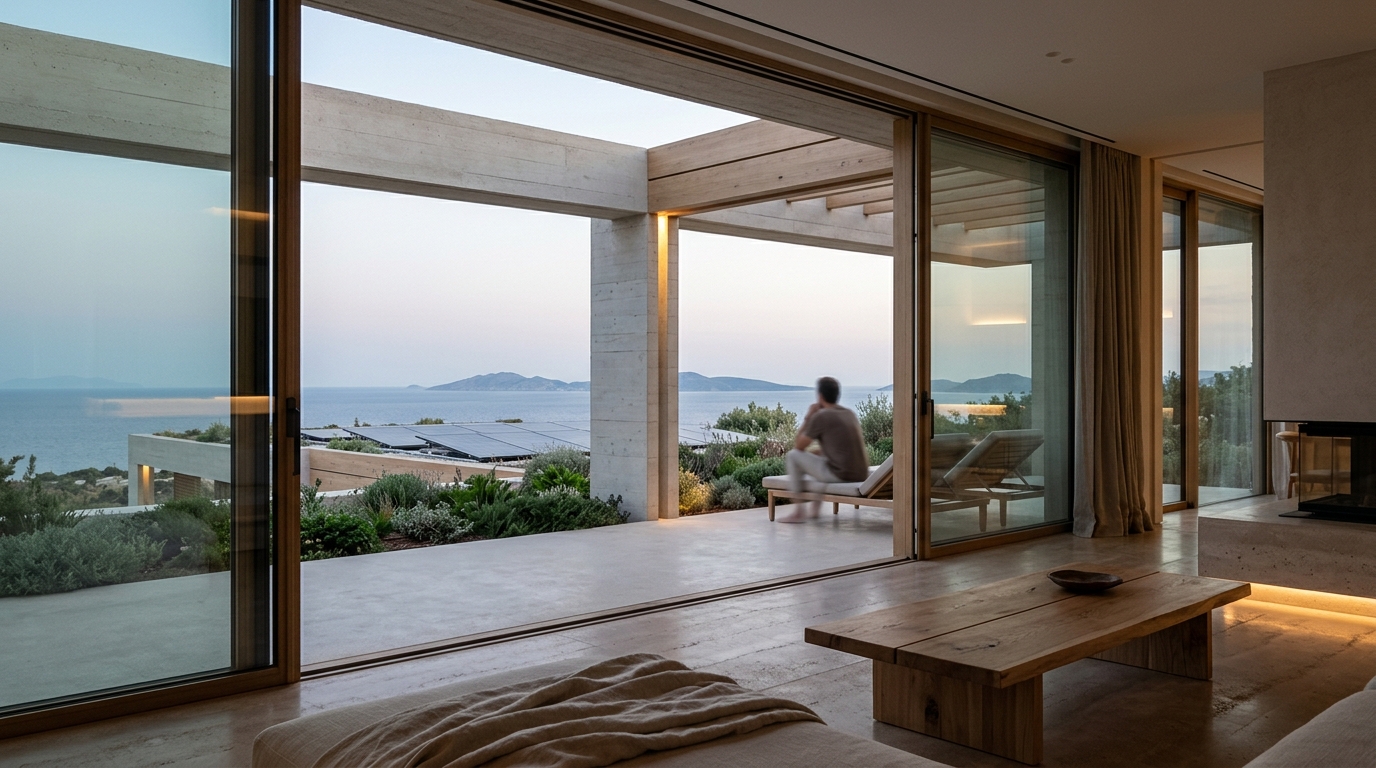
Large sliding glass walls and open floor plans blur the boundaries between inside and outside. This design strategy allows natural ventilation to cool the home during warmer months, reducing reliance on air conditioning. It also maximizes daylight penetration, which reduces the need for artificial lighting during the day. The result is a space that feels larger and more inviting.
Green Spaces and Landscaping
Integrating green roofs and vertical gardens helps regulate building temperature and improves air quality. These living elements also provide habitats for local wildlife, contributing to urban biodiversity. At ECLÉDE, we view landscaping as an integral part of the architectural design, not an afterthought. Our projects in Athens and beyond reflect this commitment to environmental harmony.
Water Conservation Systems
Water scarcity is a growing global concern. Sustainable homes must address water usage through efficient fixtures and alternative sources. Greywater recycling is a system that reuses water from sinks, showers, and laundry for irrigation and toilet flushing.
Rainwater Harvesting
Collecting rainwater from roofs and storing it for later use reduces demand on municipal water supplies. This system is particularly effective in regions with regular rainfall patterns. The collected water can be filtered and used for landscaping, car washing, and other non-potable purposes. This practice not only conserves water but also reduces stormwater runoff, which can cause erosion and pollution.
Low-Flow Fixtures
Installing low-flow faucets, showerheads, and toilets can reduce water usage by up to 30% without compromising performance. These fixtures are now standard in high-end sustainable homes. They work by aerating the water or limiting the flow rate, ensuring that every drop is used efficiently. This simple upgrade contributes significantly to the overall sustainability of the home.
Technology Integration for Performance
Modern sustainable homes rely on smart technology to optimize energy and resource usage. Building Management Systems (BMS) provide real-time monitoring and control of HVAC, lighting, and security systems.
Smart Energy Monitoring
Smart meters and sensors allow homeowners to track their energy consumption in real time. This data enables users to identify inefficiencies and adjust their behavior accordingly. For instance, if a room is unoccupied, the system can automatically adjust the temperature or turn off lights. This level of control ensures that energy is only used when and where it is needed.
Renewable Energy Integration
Integrating solar panels and battery storage systems allows homes to generate their own power. This reduces dependence on the grid and provides energy independence. In Greece, where sunlight is abundant, solar energy is a particularly effective solution. The first LEED Platinum residential project in Greece demonstrated the viability of this approach, setting a new benchmark for sustainable luxury living.
Comparing Sustainable Approaches
Understanding the differences between various sustainable design strategies helps in making informed decisions. The table below summarizes key approaches and their benefits.
| Design Strategy | Primary Benefit | Implementation Complexity | Long-Term Value |
|---|---|---|---|
| Net Zero Energy | Eliminates carbon footprint | High | Maximum energy independence |
| Passive House | Ultra-low heating/cooling needs | Medium | Significant utility savings |
| Biophilic Design | Enhances well-being | Low to Medium | Increased property appeal |
| Greywater Recycling | Conserves water resources | Medium | Reduced water bills |
Key Takeaways
- Net Zero Energy Buildings produce as much energy as they consume, setting a new standard for luxury living.
- Embodied carbon is the total emissions from material production, making local sourcing critical.
- Biophilic design connects occupants to nature, improving mental health and comfort.
- Greywater recycling reuses water for irrigation, reducing municipal demand.
- Smart energy monitoring provides real-time data to optimize usage and reduce waste.
- Passive design leverages climate to reduce mechanical heating and cooling needs.
- LEED Platinum certification represents the highest level of sustainable building performance.
Frequently Asked Questions
What is the difference between Net Zero and Passive House standards?
Net Zero focuses on balancing energy production and consumption, while Passive House prioritizes ultra-low energy demand through superior insulation and airtightness. Both are complementary approaches to sustainable design.
How does biophilic design improve living spaces?
Biophilic design incorporates natural elements like light, plants, and views to reduce stress and improve cognitive function. It creates a sense of well-being that is essential in modern urban environments.
Are sustainable homes more expensive to build?
While initial costs can be higher, the long-term savings on utilities and maintenance often offset the investment. Additionally, sustainable homes typically have higher resale values due to their efficiency and durability.
What is the role of local materials in sustainability?
Local materials reduce transportation emissions and support regional economies. They also ensure that the materials are appropriate for the local climate, enhancing the building's performance.
How does ECLÉDE ensure sustainability in its projects?
ECLÉDE integrates rigorous engineering standards with aesthetic minimalism, focusing on energy efficiency, material selection, and natural integration. Our projects, such as Boomerang Athens, exemplify this commitment.
Can existing homes be retrofitted for sustainability?
Yes, existing homes can be retrofitted with better insulation, smart technology, and renewable energy systems. This can significantly improve their energy performance and comfort.
What is the significance of the German Design Awards 2026?
The German Design Awards 2026 recognized projects that successfully blend innovation with resource conservation, highlighting the importance of sustainable design in modern architecture.
Start Your Sustainable Project
Creating a modern, functional, and sustainable living space requires expertise in both architecture and engineering. At ECLÉDE, we combine these disciplines to deliver high-end developments that respect the environment and enhance human experience. Our portfolio includes award-winning projects like Dynasty Villas and Atlas + Pleione, which showcase our commitment to excellence. Contact us today to discuss how we can bring your vision to life. Visit our portfolio page to see our latest work. For more information on our philosophy, read about our founder's vision. You can also explore our awards and recognitions to understand our industry standing. To get in touch, please use our contact form or call us directly. Let us build a sustainable future together.