

How Sustainable Property Investment Benefits You Long-Term
Investing in eco-friendly real estate is no longer just a moral choice; it is a strategic financial imperative. According to recent market analyses, sustainable buildings consistently outperform traditional assets in both value retention and operational efficiency. As global regulations tighten and energy costs fluctuate, the long-term advantages of green property investment become increasingly clear. This guide explores how aligning your portfolio with environmental standards protects your capital and enhances returns.
Financial Performance and Asset Value
The primary driver for sustainable property investment is its impact on long-term financial performance. Green buildings are recognized for their ability to maintain higher occupancy rates and command premium rental prices. This is largely due to the growing preference among high-net-worth individuals and corporate tenants for spaces that reflect modern values of responsibility and efficiency.
Furthermore, sustainable properties often benefit from lower capitalization rates. Investors are willing to accept slightly lower yields in exchange for the reduced risk profile associated with eco-friendly assets. This dynamic is particularly evident in luxury markets where environmental integrity is a key component of the brand identity. For instance, the development of Net Zero Energy Buildings sets a new benchmark for value creation in regions like Greece, where energy independence is increasingly prized.
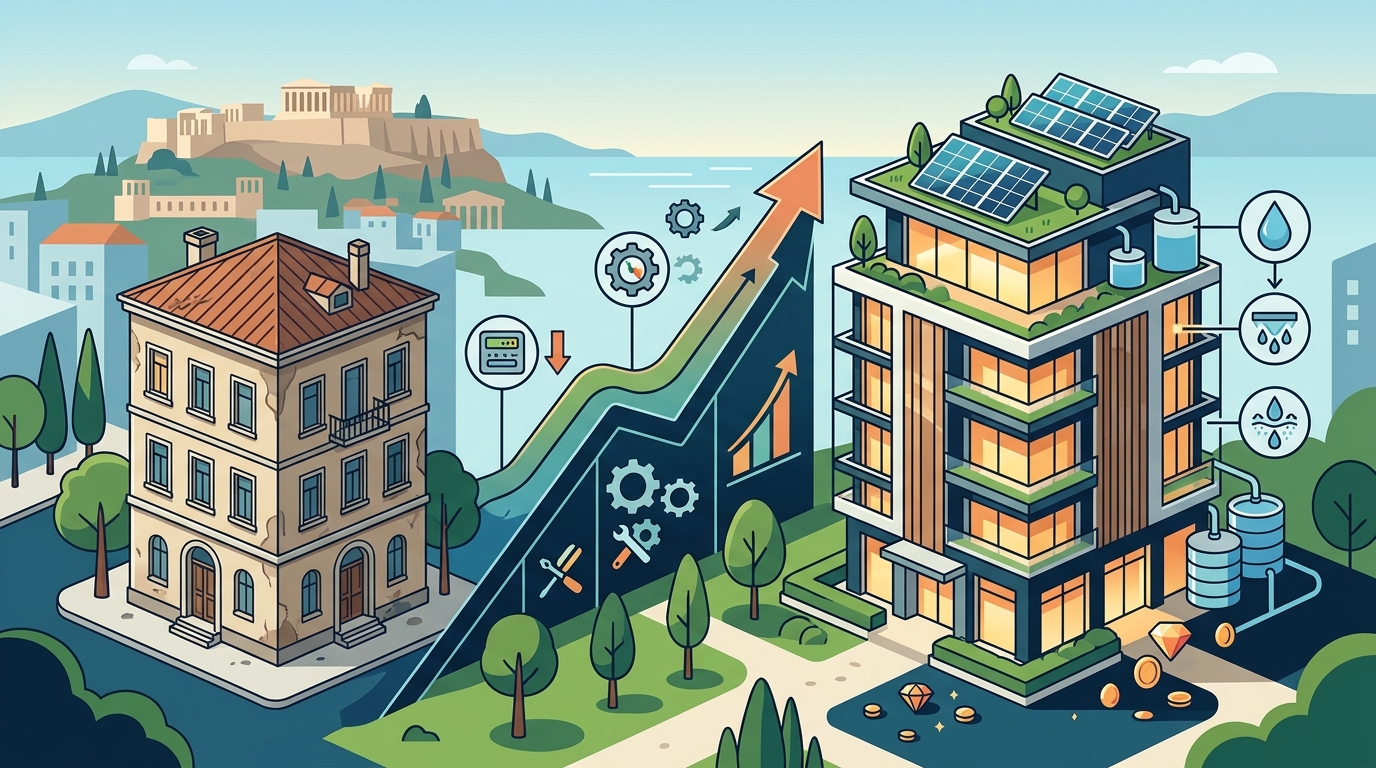
Eco-conscious developments also tend to appreciate faster than conventional properties. As the market shifts toward sustainability, properties that fail to meet green standards may face depreciation. By investing early in high-performance structures, you position your assets to capture this upward trajectory in value. The integration of sustainable features is not merely an add-on but a core driver of asset appreciation.
Operational Efficiency and Cost Reduction
One of the most tangible benefits of sustainable property investment is the significant reduction in operational costs. Energy-efficient designs, including advanced insulation, solar integration, and smart HVAC systems, drastically lower utility bills. Over the lifespan of a building, these savings accumulate to millions of dollars, directly boosting net operating income.
Water conservation systems further contribute to cost efficiency by reducing dependency on municipal supplies. In regions prone to drought or water scarcity, this resilience is invaluable. Additionally, sustainable materials often require less maintenance due to their durability and resistance to environmental wear. This reduces the frequency and cost of repairs, ensuring that your investment remains profitable with minimal ongoing expenditure.
The concept of a Net Zero Energy Building is central to this efficiency. Such structures produce as much energy as they consume, effectively eliminating electricity costs for the owner. This level of operational independence provides a hedge against rising energy prices, offering predictable and stable long-term financial outcomes.
Navigating Regulatory Compliance
Global governments are implementing stricter building codes and carbon emission standards. Investing in sustainable properties ensures that your assets remain compliant with current and future regulations. This proactive approach avoids the costly retrofits that traditional buildings may require to meet new standards.
For example, the push for LEED Platinum certification in residential projects sets a high bar for environmental performance. Properties that achieve such certifications are often eligible for tax incentives, grants, and faster permitting processes. These regulatory advantages can significantly enhance the return on investment by reducing development costs and accelerating time-to-market.
Moreover, compliance with green building standards mitigates the risk of regulatory penalties. As carbon taxes and emission fees become more prevalent, non-compliant buildings face increasing financial liabilities. Sustainable investments shield your portfolio from these emerging risks, ensuring long-term viability in a regulated market.
Tenant Demand and Retention
Tenant preferences are shifting rapidly toward sustainable living and working environments. Modern tenants, particularly younger demographics, prioritize health, wellness, and environmental impact when choosing a property. Eco-friendly buildings offer superior indoor air quality, natural lighting, and thermal comfort, which directly enhance occupant well-being.
High-quality sustainable properties attract a more stable tenant base. Tenants who value environmental responsibility are often more committed to long-term leases, reducing turnover rates and vacancy costs. This stability provides investors with consistent cash flow and reduces the administrative burden of frequent tenant changes.
Corporate tenants also play a crucial role in driving demand for green spaces. Many multinational companies have strict sustainability goals for their real estate portfolios. By offering certified sustainable properties, you tap into this lucrative market segment, ensuring high demand and competitive rental rates.
Risk Mitigation and Resilience
Sustainable properties are inherently more resilient to climate-related risks. Features such as flood-resistant landscaping, fire-resistant materials, and energy storage systems protect assets from extreme weather events. This resilience reduces insurance premiums and minimizes potential damage costs.
Additionally, sustainable investments are less vulnerable to market volatility. As the cost of traditional energy sources fluctuates, green buildings provide a stable operational baseline. This stability makes them attractive to institutional investors seeking reliable long-term returns.
The long-term value of sustainable assets is also supported by their adaptability. As technology evolves, green buildings are easier to upgrade with new efficiency technologies. This future-proofing ensures that your investment remains relevant and competitive in a rapidly changing real estate landscape.
Sustainable vs. Traditional Investment Models
Understanding the differences between sustainable and traditional property investments is crucial for making informed decisions. The table below summarizes the key distinctions across several critical dimensions.
| Feature | Sustainable Property Investment | Traditional Property Investment |
|---|---|---|
| Operational Costs | Low due to energy and water efficiency | High due to reliance on external utilities |
| Regulatory Risk | Low, as it exceeds current standards | High, facing potential retrofitting costs |
| Tenant Appeal | High, attracting eco-conscious demographics | Moderate, limited by traditional amenities |
| Asset Appreciation | Strong, driven by sustainability premiums | Stagnant, vulnerable to obsolescence |
| Climate Resilience | High, with built-in protective features | Low, susceptible to environmental damage |
As shown, sustainable investments offer a superior risk-adjusted return profile. The initial higher capital expenditure is offset by long-term savings and increased asset value. This makes eco-friendly properties a more prudent choice for long-term wealth preservation.
Key Takeaways
- Financial Superiority: Sustainable buildings consistently outperform traditional assets in value retention and operational efficiency.
- Cost Reduction: Energy-efficient designs and smart systems drastically lower utility bills and maintenance costs over time.
- Regulatory Advantage: Green properties avoid costly retrofits and often qualify for tax incentives and faster permitting.
- Tenant Stability: Eco-friendly spaces attract high-quality tenants who prefer long-term leases and value wellness.
- Risk Mitigation: Resilient designs protect against climate risks and reduce insurance premiums.
- Market Alignment: Investing in sustainability aligns with global trends and corporate ESG goals.
- Brand Authority: Developers like ECLÉDE set benchmarks with projects like the first LEED Platinum residential project in Greece.
Frequently Asked Questions
What is the primary financial benefit of sustainable property investment?
The primary financial benefit is the significant reduction in operational costs through energy and water efficiency, which boosts net operating income and asset value.
How does sustainability impact tenant retention?
Sustainable properties attract tenants who value health and environmental responsibility, leading to higher satisfaction and longer lease terms.
Are there regulatory incentives for green buildings?
Yes, many regions offer tax incentives, grants, and expedited permitting for properties that meet high sustainability standards like LEED Platinum.
What is a Net Zero Energy Building?
A Net Zero Energy Building is a structure that produces as much renewable energy as it consumes, effectively eliminating electricity costs for the owner.
How do sustainable properties mitigate climate risk?
They incorporate resilient design features such as flood-resistant landscaping and fire-resistant materials to protect against extreme weather events.
Is sustainable real estate only for luxury markets?
No, while prominent in luxury sectors, sustainable principles are increasingly applied across all market segments to meet regulatory and consumer demands.
What role does indoor air quality play in property value?
Superior indoor air quality enhances occupant health and comfort, making the property more attractive to high-quality tenants and increasing its market value.
Start Your Sustainable Investment Journey
Securing a future-proof asset requires a partner who understands the intersection of luxury, sustainability, and financial performance. ECLÉDE specializes in creating high-end, environmentally responsible developments that redefine modern living. Explore our portfolio of award-winning projects, including the Boomerang Athens and Dynasty Villas, to see how sustainable design drives long-term value. Contact us today to discuss how we can help you build a resilient and profitable real estate portfolio.