
How Does a Sustainable and Eco-Friendly Property Investment Benefit Me Long-Term?
Investing in sustainable real estate is no longer just an ethical choice; it is a strategic financial imperative. According to recent market analyses, green-certified buildings consistently outperform traditional properties in both value retention and operational efficiency. As global energy costs rise and regulatory frameworks tighten, the long-term advantages of eco-friendly investments become increasingly clear for discerning investors.
Financial Performance and Asset Value
The primary driver for sustainable property investment is its impact on long-term financial performance. Green buildings are recognized for their superior resilience and adaptability in volatile markets. This resilience translates directly into higher asset values and stronger rental yields over time.
Increased Property Valuation
Properties with recognized sustainability certifications, such as LEED or BREEAM, often command a premium in the marketplace. This premium is not merely speculative; it is backed by data showing that energy-efficient homes and commercial spaces sell for significantly more than their conventional counterparts. Investors benefit from this capital appreciation as the market increasingly rewards environmental responsibility.
Lower Risk Profile
Sustainable investments are inherently lower risk. As governments worldwide implement stricter carbon emission standards, older, inefficient buildings face the risk of becoming "stranded assets." These are properties that lose value because they cannot meet new regulatory requirements. By investing in eco-friendly developments, you future-proof your capital against such devaluation.
Operational Efficiency and Cost Reduction
One of the most tangible benefits of sustainable property is the dramatic reduction in operational costs. This efficiency stems from advanced building technologies and design principles that prioritize resource conservation.
Energy Savings
Net Zero Energy Buildings (NZEBs) represent the pinnacle of this efficiency. These structures produce as much energy as they consume through the use of solar panels, high-performance insulation, and smart energy management systems. For property owners, this means drastically lower utility bills and a predictable cost structure that is immune to energy price spikes.
Water Conservation
Water usage is another critical area where sustainable properties excel. Advanced plumbing fixtures, rainwater harvesting systems, and drought-resistant landscaping reduce water consumption by up to 50 percent compared to traditional buildings. This not only lowers utility costs but also reduces the strain on local municipal resources.
Maintenance and Durability
Eco-friendly materials are often chosen for their durability and low maintenance requirements. Sustainable construction practices emphasize quality and longevity, reducing the frequency of repairs and replacements. This long-term durability contributes to a lower total cost of ownership over the life of the asset.
Regulatory Compliance and Future-Proofing
The global regulatory landscape is shifting rapidly toward sustainability. Governments are introducing stricter building codes, carbon taxes, and incentives for green development. Understanding these trends is crucial for any long-term investor.
Adapting to Carbon Regulations
As carbon pricing mechanisms expand, buildings with high carbon footprints will face increasing financial penalties. Sustainable properties, by design, have minimal carbon emissions. This positions them favorably in a carbon-constrained economy, avoiding future costs and potential legal liabilities associated with non-compliance.
Incentives and Grants
Many jurisdictions offer financial incentives for sustainable development, including tax credits, grants, and expedited permitting processes. These incentives can significantly improve the return on investment (ROI) during the development or acquisition phase. Investors who stay ahead of regulatory trends can capitalize on these opportunities before they become standard.
Health, Wellbeing, and Tenant Retention
Sustainability is not just about the environment; it is also about human health. Green buildings are designed to provide healthier indoor environments, which has a direct impact on tenant satisfaction and retention.
Indoor Air Quality
Traditional buildings often suffer from poor indoor air quality due to the use of volatile organic compounds (VOCs) in paints, adhesives, and furnishings. Sustainable properties use low-VOC materials and advanced ventilation systems to ensure clean, fresh air. This reduces the risk of respiratory issues and allergies among occupants.
Thermal and Acoustic Comfort
High-performance insulation and glazing not only improve energy efficiency but also enhance thermal and acoustic comfort. Tenants in green buildings report higher levels of satisfaction and productivity. This leads to lower vacancy rates and reduced turnover costs for property owners.
Biophilic Design
Many sustainable developments incorporate biophilic design principles, integrating natural elements such as green walls, indoor plants, and natural light. This connection to nature has been shown to reduce stress and improve mental wellbeing, making the property more attractive to potential tenants and buyers.
Comparing Traditional vs. Sustainable Assets
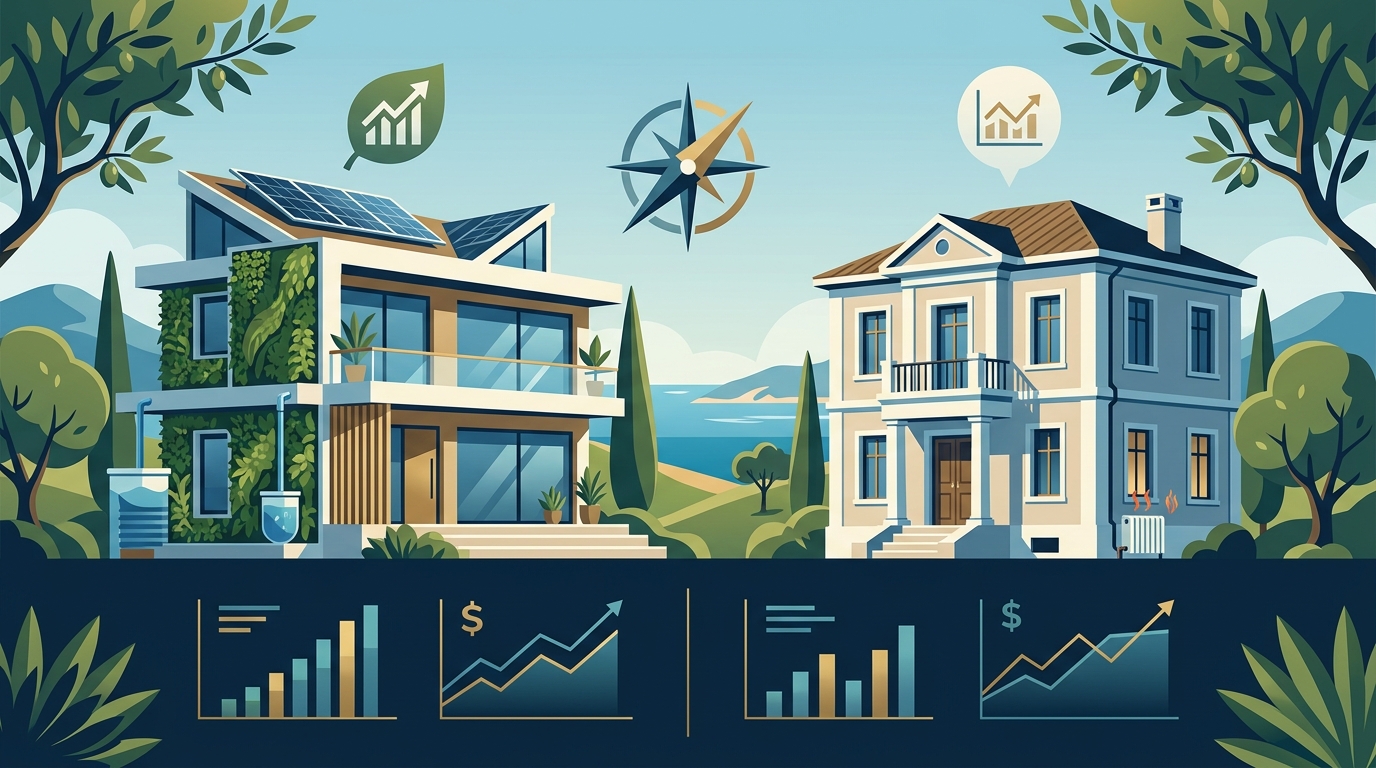
To understand the full scope of benefits, it is helpful to compare traditional and sustainable property investments across key metrics.
| Feature | Traditional Property | Sustainable Property |
|---|---|---|
| Energy Costs | High and volatile | Low and predictable |
| Regulatory Risk | High (stranded asset risk) | Low (compliant by design) |
| Tenant Retention | Standard | High (health benefits) |
| Asset Value | Market average | Premium valuation |
| Maintenance | Higher frequency | Lower frequency |
Key Takeaways
- Financial Resilience: Sustainable properties offer superior long-term financial performance through lower operational costs and higher asset values.
- Regulatory Safety: Investing in eco-friendly developments protects against future carbon taxes and regulatory penalties.
- Health Benefits: Green buildings provide healthier indoor environments, leading to higher tenant satisfaction and retention.
- Brand Authority: Aligning with sustainability enhances the reputation of the investor and the property.
- Innovation Leadership: Early adoption of sustainable practices positions investors as leaders in the evolving real estate market.
- Environmental Impact: Sustainable investments contribute to global efforts to reduce carbon emissions and combat climate change.
- Long-Term Value: The combination of cost savings, regulatory compliance, and market demand ensures lasting value for eco-friendly assets.
Frequently Asked Questions
What is the definition of a Net Zero Energy Building?
A Net Zero Energy Building is a structure that produces as much energy as it consumes over the course of a year, typically through the use of renewable energy sources and high-efficiency design.
How do sustainable properties impact tenant retention?
Sustainable properties often feature better indoor air quality, thermal comfort, and biophilic design elements, which lead to higher tenant satisfaction and longer lease terms.
Are there financial incentives for green real estate?
Yes, many governments offer tax credits, grants, and expedited permitting for sustainable developments to encourage environmentally responsible construction.
What is the role of biophilic design in sustainability?
Biophilic design integrates natural elements into the built environment to improve human wellbeing, reduce stress, and enhance the aesthetic appeal of the property.
How does sustainability protect against regulatory risks?
Sustainable buildings are designed to meet or exceed current and future environmental regulations, reducing the risk of penalties or devaluation due to non-compliance.
What are the main components of a green building?
Key components include energy-efficient systems, sustainable materials, water conservation technologies, and healthy indoor environmental quality standards.
Is sustainable real estate only for luxury markets?
No, sustainable principles can be applied to residential, commercial, and industrial properties across all market segments to improve efficiency and value.
Start Your Sustainable Investment Journey
Discover the future of real estate with ECLÉDE. Our portfolio features high-end, environmentally responsible developments that redefine modern living. Explore our latest projects, including Boomerang Athens and Dynasty Villas, to see how sustainable design creates long-term value. Contact us today to learn more about our approach to sustainable luxury.