
How Does a Sustainable and Eco-Friendly Property Investment Benefit Me Long-Term?
The global shift toward green living is no longer a niche trend but a fundamental restructuring of the real estate market. According to recent industry analyses, sustainable buildings are increasingly outperforming traditional assets in both value retention and operational efficiency. Investors who prioritize eco-friendly properties are not just supporting environmental goals; they are securing their financial future against rising energy costs and regulatory changes. This guide explores the tangible long-term benefits of integrating sustainability into your property portfolio.
Financial Performance and Asset Value
One of the most compelling arguments for sustainable property investment is the direct correlation between green certifications and asset valuation. Eco-friendly buildings often command higher rental premiums and sell at a premium compared to conventional properties. This phenomenon is driven by a growing pool of environmentally conscious tenants and buyers who are willing to pay more for lower utility bills and healthier living spaces.
Green Premiums Are Real. Studies indicate that properties with energy-efficient features can see an appreciation rate significantly higher than the market average. As energy prices fluctuate, the stability offered by low-energy consumption becomes a key financial driver. Investors benefit from reduced vacancy rates because sustainable homes are in high demand among modern demographics.
Furthermore, access to green financing is expanding. Many financial institutions now offer preferential loan terms, lower interest rates, and tax incentives for developers and buyers of eco-certified properties. This reduces the cost of capital and improves the overall return on investment (ROI). For more insights on how technology is reshaping property valuation, explore our portfolio of innovative developments.
Operational Efficiency and Cost Reduction
Sustainability is fundamentally about efficiency. Eco-friendly properties are designed to minimize waste and maximize resource utilization. This translates directly into lower operational costs for both owners and occupants. From solar panels to advanced insulation, every element contributes to a leaner, more cost-effective building lifecycle.
Energy Independence. By integrating renewable energy sources, properties can reduce or even eliminate reliance on the grid. This protects investors from volatile energy markets. For example, a building equipped with smart HVAC systems can adjust energy usage based on occupancy, leading to substantial savings. You can learn more about our approach to sustainable development philosophy to understand how we implement these technologies.
Water conservation is another critical area. Low-flow fixtures and rainwater harvesting systems reduce water bills significantly. In regions prone to drought, these features are not just cost-savers but essential risk mitigations. The long-term financial impact of these efficiencies compounds over time, enhancing the net operating income of the property.
Regulatory Compliance and Future-Proofing
Governments worldwide are tightening building codes to meet climate goals. Properties that do not meet these standards face the risk of becoming obsolete or requiring expensive retrofits. Investing in sustainable properties now ensures compliance with current and future regulations, avoiding costly penalties and upgrades later.
Avoiding Stranded Assets. As carbon taxes and energy efficiency mandates increase, non-compliant buildings may lose value or become unsellable. Sustainable properties are future-proofed against these regulatory shifts. They align with global standards such as LEED and BREEAM, which are becoming benchmarks for commercial and residential real estate. For a deeper look at how we navigate these industry standards and awards, visit our awards page.
Moreover, sustainable buildings often qualify for government grants and tax rebates. These incentives can offset initial construction costs, improving the project's financial viability. Staying ahead of regulatory curves provides a competitive advantage in the market.
Health, Wellbeing, and Tenant Retention
The health benefits of sustainable living are well-documented. Eco-friendly buildings typically feature better indoor air quality, natural lighting, and non-toxic materials. These factors contribute to improved physical and mental health for occupants. For investors, this translates to higher tenant satisfaction and retention rates.
Tenant Loyalty. Tenants who value health and sustainability are less likely to move. High retention rates reduce turnover costs, such as marketing and renovation expenses between leases. This stability provides predictable cash flow, which is crucial for long-term investment success. We prioritize client engagement and transparency to ensure our developments meet these high standards.
Natural light and green spaces have been shown to boost productivity and reduce stress. In commercial real estate, this can lead to higher lease rates. In residential settings, it enhances the quality of life, making the property more desirable. These intangible benefits often drive the decision-making process for high-net-worth individuals.
Comparing Sustainable vs. Traditional Investments
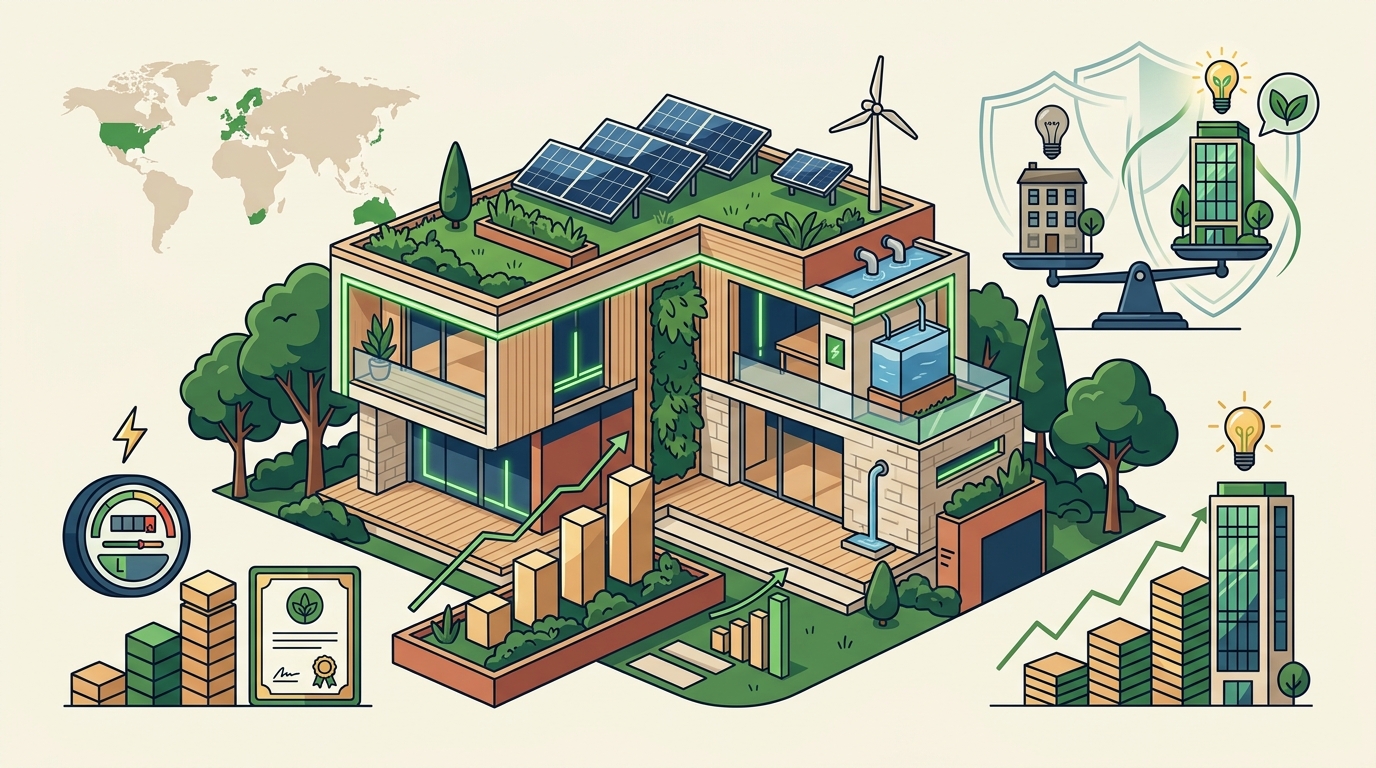
Understanding the differences between sustainable and traditional property investments is key to making an informed decision. While traditional properties may have lower upfront costs, they often incur higher long-term expenses and face greater regulatory risks.
| Feature | Sustainable Property | Traditional Property |
|---|---|---|
| Energy Costs | Low (Renewable Integration) | High (Grid Dependent) |
| Regulatory Risk | Low (Compliant) | High (Potential Penalties) |
| Tenant Demand | High (Health-Conscious) | Moderate |
| Asset Value Growth | Strong (Green Premium) | Market Average |
| Maintenance | Efficient (Smart Systems) | Standard |
This comparison highlights the strategic advantages of sustainable investments. While the initial outlay may be higher, the long-term financial and operational benefits are substantial. For more details on our latest news and project updates, stay connected with our developments.
Key Takeaways
- Financial Growth: Sustainable properties often appreciate faster due to the green premium and lower operational costs.
- Cost Savings: Energy and water efficiency lead to significant long-term reductions in utility bills.
- Regulatory Safety: Future-proof your investment against tightening environmental laws and carbon taxes.
- Tenant Retention: Health-focused features attract and retain high-quality tenants, reducing vacancy rates.
- Financing Advantages: Access to green loans and tax incentives can improve ROI.
- Brand Value: Eco-friendly developments enhance the reputation of the investor and the property.
- Market Demand: Growing consumer preference for sustainable living drives higher rental and sale prices.
Frequently Asked Questions
What is a green premium in real estate?
A green premium is the additional value or rental income that a sustainable property commands over a conventional building due to its energy efficiency and environmental benefits.
How do sustainable buildings reduce operational costs?
They use advanced insulation, renewable energy sources, and smart systems to minimize energy and water consumption, leading to lower utility bills.
Are there tax incentives for eco-friendly property investments?
Yes, many governments offer tax rebates, grants, and preferential loan terms for properties that meet specific sustainability certifications.
Why is tenant retention higher in sustainable properties?
Tenants value the health benefits, lower utility costs, and modern amenities associated with eco-friendly buildings, making them less likely to move.
What is the impact of regulatory changes on traditional properties?
Traditional properties may face higher costs due to retrofits needed to meet new building codes or penalties for non-compliance with energy standards.
How does indoor air quality affect property value?
Superior indoor air quality improves occupant health and comfort, which is a key factor for tenants and buyers, thereby increasing demand and value.
What certifications should I look for in sustainable properties?
Look for recognized certifications such as LEED, BREEAM, or Passive House, which verify the building's energy efficiency and environmental performance.
Start Your Sustainable Investment Journey
Investing in sustainable property is a strategic move that secures financial returns while contributing to a healthier planet. By choosing eco-friendly developments, you align with global trends and future-proof your assets. Contact us today to explore our latest projects and discover how we can help you build a sustainable future. Visit our contact page to schedule a consultation.